@scottjwillis I think this is broadly right. Saka is definitely in that first category, but given his role and fitness, I wonder if his ideal load is going to be 80-90% of minutes. I’d probably put Havertz and Timber there too – 'the guy', but load-managed.
Special podcast today: Canada assistant coach Ewan Sharp joined @TheAthleticFC’s Tactics podcast to go behind the scenes on #CANMNT’s World Cup prep. So much to learn on this one.
They let me co-host, which I hope didn’t make it worse. Have a listen:
https://t.co/jQ30h7IYqN
In 24 hours, Mikel Arteta took Arsenal to first league in 22 years, Andoni Iraola took Bournemouth to Europe for first time ever and Unai Emery took Aston Villa to first European trophy in 44 years, first of any kind in 33 years. All born within 30 miles of each other. Gipuzkoa.
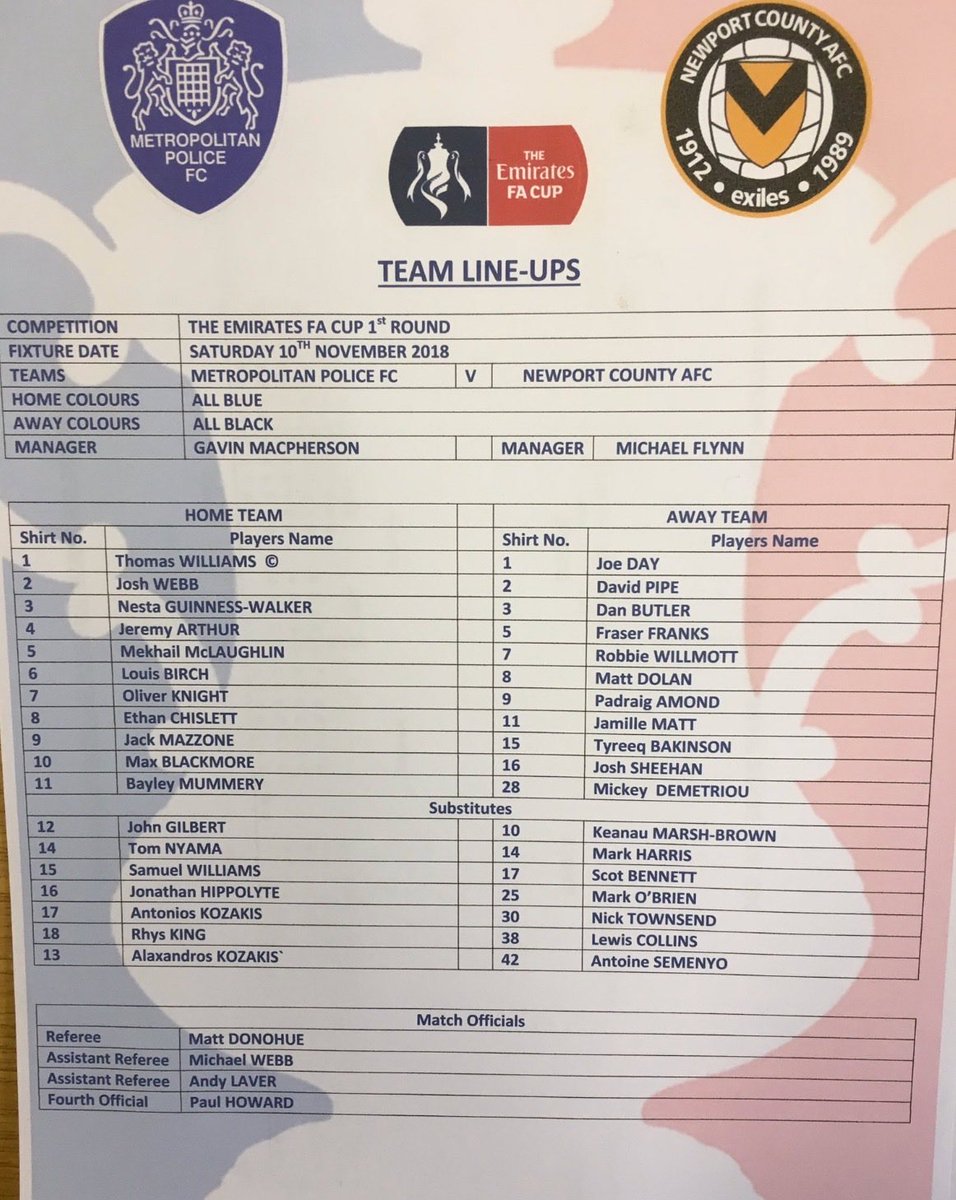
Antoine Semenyo is a great FA Cup final winning goalscorer: someone who made his FA Cup debut as a sub away at (now) tenth-tier Met Police (see below), who was part of a proper giantkilling when Newport beat Leicester, and is now the hero at Wembley. ⬇️
https://t.co/KOz66BXvXe
How long have you got to live and live healthily? It’s well known that people in less deprived areas live longer. Let’s look at a boy born in 2023 in the most deprived tenth of areas. They can expect to live 10 years fewer than a boy born in the least deprived tenth of areas.
New BTOS AI Supplement released by Census today. See: https://t.co/kprUCs9AwK
AI use for any business function varies dramatically across sectors and firm size. Employment-weighted use in AI intensive sectors in 60-70% range compared to 32% economy-wide.
Very striking report showing the cost to poorer families of young people taking apprenticeships rather than staying in full time education. The benefit system penalises apprenticeships. It shouldn't. https://t.co/TRSYeDFahA
Is AI killing jobs?
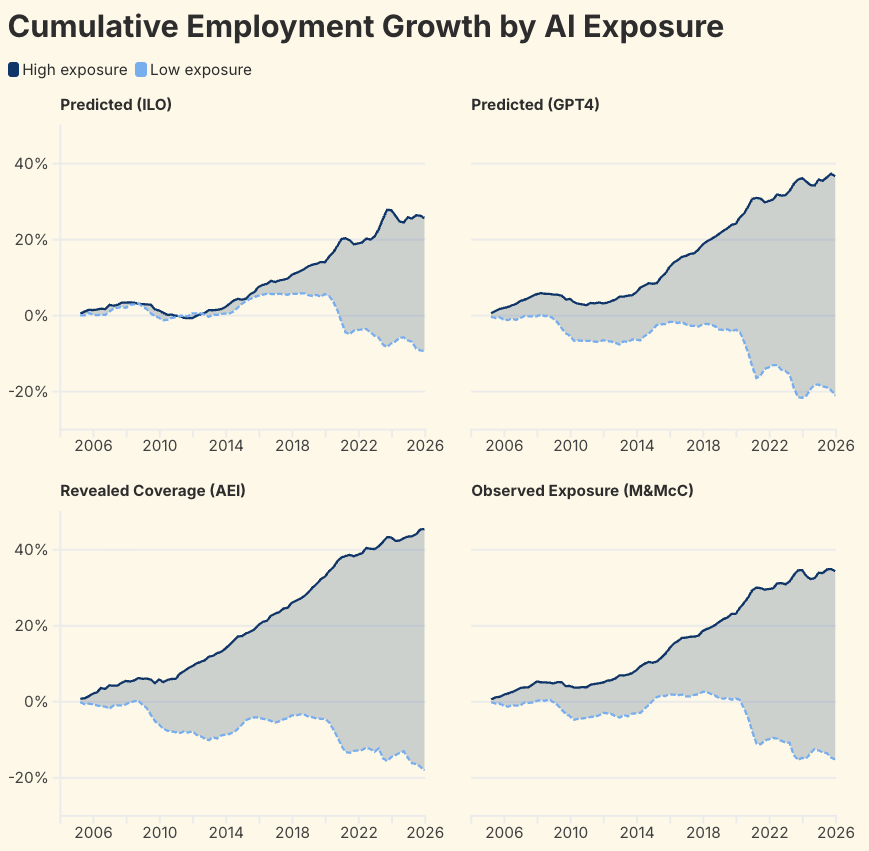
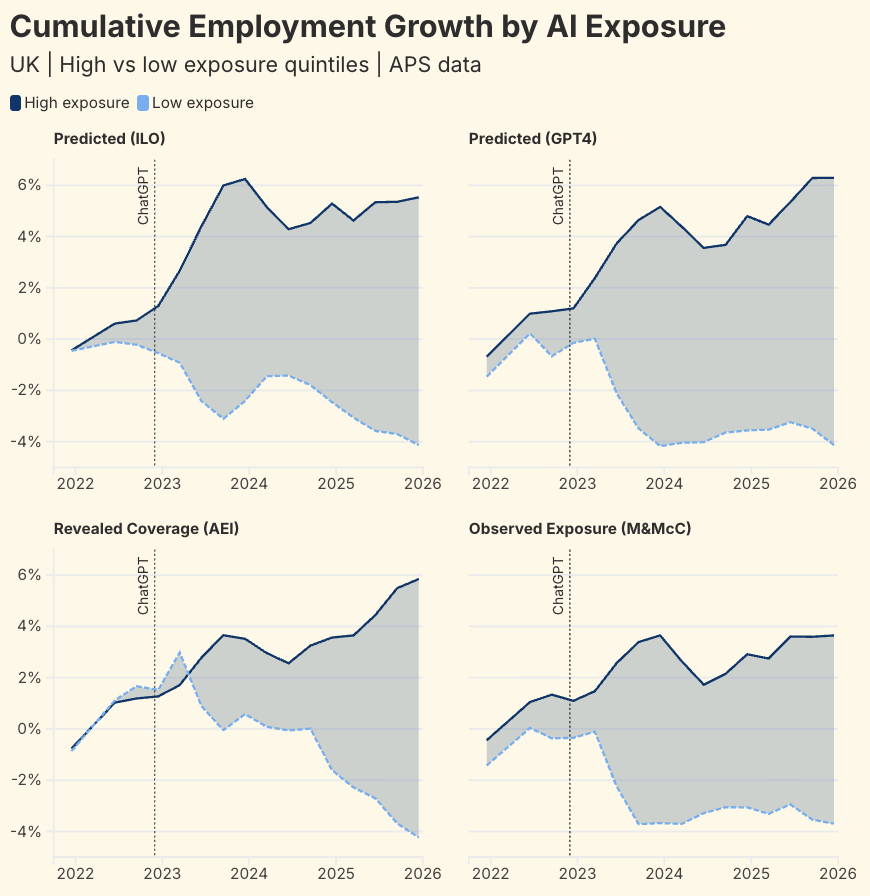
New data shows that, more than three years after the release of ChatGPT, there is no evidence for a significant impact of AI on overall employment in the UK.
In our new report, we break down the labour force into different occupations and use four measures of AI exposure to determine how likely they are to be affected by the technology.
Surprisingly, occupations with higher exposure to AI have grown faster than least-exposed ones, not slower. This holds across all four measures, and across two different data sources.
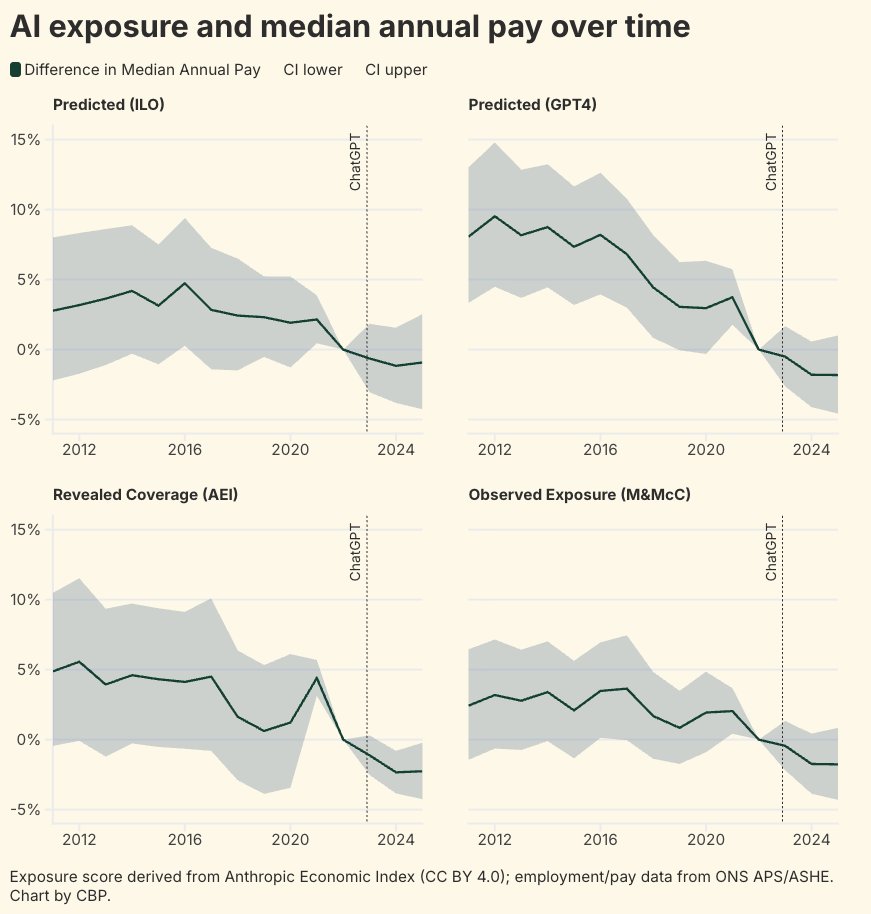
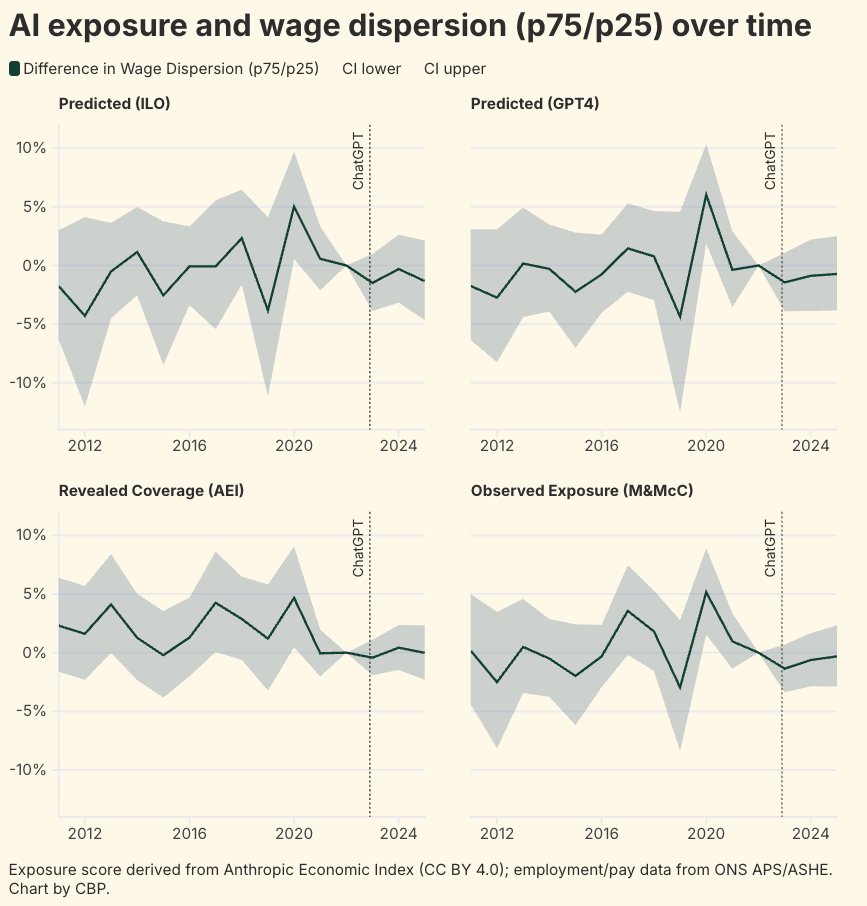
The wage picture is different. Pay in AI-exposed occupations has lagged the rest of the labour market since 2019.
But that gap opened three years before ChatGPT, which makes AI an unlikely candidate for the observed wage compression.
This flattening of the wage structure is visible across the within-occupation distribution and strongest at the top quartile, which is consistent with labour market dynamics that predate generative AI.
This by @MITSloan PhD Michael Caosun & @sinanaral formalizes nicely the points that
1. if AI use reduces worker skill by reducing learning opps over time, and
2. firm & worker incentives are misaligned
(e.g. short-termism, externalities)
You get too-high AI adoption
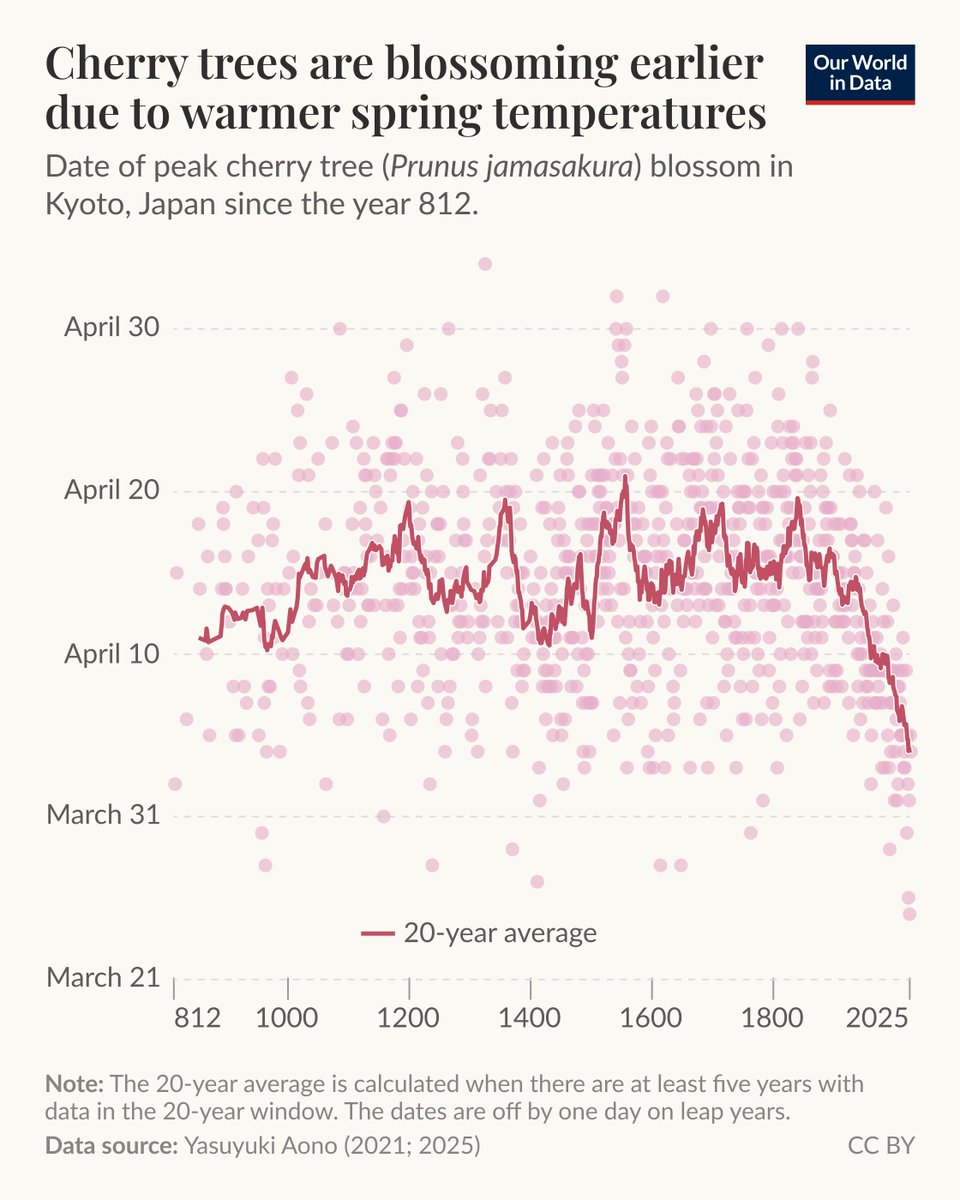
I'm a data scientist @OurWorldinData and I need help from a botanist or someone local to Kyoto, Japan! 🌸
We present one of the world’s longest climate records: 1,200 years of peak cherry blossom dates in Kyoto.
The researcher who maintained it, Professor Yasuyuki Aono, sadly passed away last year.
Many of us are trying to figure out where the AI labor market transition may be going. But that's fundamentally unknowable. So instead of trying to predict the future we can instead look back to try to figure out what may be coming...by reading 19th c english literature 1/
A Blue Moment piece on a sublime concert by the trumpeter Ambrose Akinmusire and the pianist Sullivan Fortner in London last night:
https://t.co/Isp1yIR78L