Congratulations! That is a step up in what Mythos can do.
To all the people panicking: vulnerabilities were found in schemes that aren't considered secure and aren't used in practice. This kind of research helps us root out bad schemes and improves our understanding of how to design good ones.
I would love to see AIs design new cryptographic schemes too. But that seems to still be beyond the capabilities of these tools. Though they are making regular incremental improvements to existing algorithms, e.g., decreasing the qubits needed in Shor's algorithm: https://t.co/tiubAokM4f
Upgrading a consensus protocol to post-quantum is very challenging. That's the main reason major chains have multi-year roadmaps. At QMS we are ripping out Ethereum's consensus protocol and implementing a post-quantum consensus from scratch. It will take us 6 months from first design until a stable testnet.
Honored to be elected by the community to the @Concordium Governance Committee.
My time there shaped how I think about L1 architecture, lessons I now apply as CTO of @QMSNetwork, building a post-quantum-secure PoUW chain. Glad to keep contributing while both ecosystems tackle overlapping challenges.
The community has spoken.
Congratulations to Viktor Ihnatiuk, Christopher Portmann, and Jareau van den Heuvel on being elected to the 2026 Concordium Governance Committee.
Thank you to everyone who voted, every candidate who took part, and the outgoing Governance Committee members for their service and contributions.
🔗 Read more: https://t.co/uLd3hIZXRB
Happy pi approximation day!
Today's date, 22 July, can also be written as the fraction 22/7, which is equal to 3.14285714, an approximation of π, correct to two decimal places.
@helios_stake Yes! A guideline is to minimize user friction. If a new system is too impractical for users to adopt, then we need to find some other solution.
A very good breakdown of the quantum threat to bitcoin, what is being done, and what more to do. No drama, just simple facts and advice. If only all of internet sounded like this.
The first version will be CPUs. Once we can better gauge demand and the computational power needed to meet it, we can optimise the code for GPUs.
Note that our first version will also allow for hybrid quantum-classical miners, where part of the computation is done on a QPU. Admittedly, at the moment these still cost more and produce less, but the design is ready for the next frontier in computing.
As soon as Ethereum pushes the account abstraction feature that we need, we will be able to implement this.
Since Ethereum’s roadmap for a post-quantum (PQ) consensus will take years, we are implementing PQ-consensus ourselves. But the account abstraction features needed to migrate current addresses to quantum safe ones should be released with the Ethereum Hegotá update at the end of the year (hopefully). And since we do not want to reinvent the wheel, we will wait for that and base our PQ-addresses on it.
That’s a brilliant question. The short answer is no, we are exploring the use of hash-based (ZK-)SNARKs for improving verification in the classical case. But for the quantum case, something else is needed.
ZK-proofs are often designed to be short and efficient to verify, so they can be used to shift the burden from the verifiers to the prover (that is what zk-rollups do). They also provide the ZK-property, which in the context of computation verification, could allow a miner to prove that they have done the correct computation without revealing what computation that is (e.g., to preserve confidentiality of the client’s data). So they can be used to improve proofs, but they can’t be used to come up with proofs in a setting where we don’t already know how to generate (large, non-zk) proofs.
In the quantum case, we can verify that the output is correct, but what we don’t yet know how to do, is for a quantum miner to prove that they haven’t pre-computed the output (e.g., they learned about the input before other miners, and get an advantage which doesn’t correspond to their computational power). Classical replayable paths solve the problem, because in the classical case the miners are forced to follow a path that depends on the hash of the last block, so we just need to verify that they did take that path. We are working with academic partners on solving the quantum case.
@OnWavs@QMSNetwork We haven't set a date yet. We first need to reach the public testnet milestone. Then it should be easier to estimate.
Have you joined our waitlist? You will then be informed of such things as soon as we have dates. The link is on https://t.co/f00GLPqOou
Kudos to Ethereum for this ambitious roadmap. It is an incredible piece of engineering. At @QMSNetwork we are writing a new consensus and finality layer from scratch. From first design to first public testnet, it should take us 6 months. And all post-quantum secure from genesis.
Two weeks ago, Ethereum researchers met in Berlin to continue charting the protocol's long-term trajectory, following along discussions with client teams in Svalbard in April.
The updated strawmap is at https://t.co/9e2AQ6rhz6, and I attached a picture of it to this post.
My own high-level takeaways:
* "Lean Ethereum" is not a single one-shot upgrade, it is a collection of improvements that will come online to the Ethereum network over the course of three or four years. But make no mistake, this IS the third major iteration of Ethereum in the same way that the Merge was the second. Almost every major piece of the protocol will be replaced:
- Verification through recursive STARKs, rather than direct re-execution. Recursive STARKs become an enshrined first-class core component of the protocol
- Replacing everything quantum-vulnerable with quantum-safe alternatives
- Consensus: decoupled available chain and finality, one or two-round finality. Theoretically optimal security properties, simpler than today, and faster than today
- Multidimensional gas
- State: not just tree structure, but what *types* of state are available
- Changes to client architecture
...
At the same time, simplification, cleanup and future-proofing. And this will all be done in a way that minimizes disruption to existing application. We've done this before (the Merge), we can do it again.
* H-star (aka Hegota) is probably Ethereum's last thematically "pre-Lean" fork. Starting from I-star, most of everything we do will have a very strong "Lean" feel to it in one way or another.
* Privacy is no longer an afterthought, it is a first class goal. When designing Frames, the mempool, additions to the state tree, we explicitly ask the question "okay, how do quantum-safe, intermediary-free privacy protocol transactions go through this, and what is the overhead?"
* Formal verification of everything for security.
* FV also makes us much more comfortable with canonicalization (having pieces of the protocol that are directly defined as a piece of bytecode expressed in some language). evm-asm is being written in part to become a canonical proof system for the EVM.
* Quantum safety has shifted up a LOT in priority. This adds a lot of work (eg. finalizing a quantum-safe blobs design has become urgent; this work has already been ongoing for months)
* Probably the single most disruptive part of the plan is the changes to state. There is growing consensus around leaving present-day-style "dynamic state" mostly unchanged, but scaling it only a medium amount, and adding new types of state that are more scalability-friendly (eg. no need for builders to sync/store all of it) but more restrictive, and that will scale a large amount.
eg. possible Ethereum in 2030: 2 TB of present-day-style (dynamic) state, and 100 TB of new-style (scalable but restrictive) state
This "new-style" state would work very well for ERC20s, NFTs, many defi use cases, but not eg. highly "central" objects like Uniswap contracts, or onchain order books, or other complex things (which are crucial for Ethereum but which only take up a small percentage of state)
Hence, it will not be *necessary* to rewrite any apps, but it will be *very cost-effective* to eg. rewrite an ERC20 token into a newer design that uses a new type of UTXO storage that is currently being explored, so that it will have >10x lower txfees.
Design of these new state types (current ideas: keyed nonces, ring buffers, UTXOs, statically accessible state, temp state) is an area where we will need a lot of feedback from application developers (incl. privacy-friendly application developers) and probably several rounds of rethinking and iteration.
* In the context of a much larger total state size, we need to figure out the incentive issues around who stores this state and what motivates them to. Even saying "each node stores 1%" is not good enough - why do they store that 1% and why are they willing to serve it? This is being elevated as a first-class research area.
* Ethereum will need to have a "VM" other than EVM in one form or another - at the very least, we need something like leanISA for recursive STARKs - and the gains are large in exposing it to users so that we support programmable privacy and better scalability. Right now, the most likely contenders are leanISA and RISC-V.
My own ideal is that in this world, we adjust the protocol so that the EVM becomes a high-level-language compiler-level feature, and the protocol only "sees" RISC-V / leanISA directly. But this is still far away.
* Gas limit increases, blob increases and slot time decreases will happen many times over the next ~5 years. We expect a large gas limit increase with Glasterdam. Each step of increased scale or decreased slot time is a matter of getting to the point where it is safe to do it, which comes from a combination of client optimization and protocol changes.
Ethereum is CROPS.
Ethereum is scaling.
Ethereum is reinventing itself.
Onward.
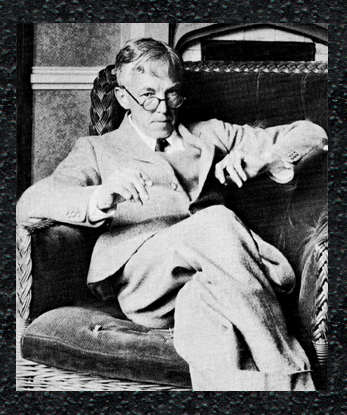
"The mathematician’s patterns, like the painter's or the poet’s must be beautiful.... Beauty is the first test: there is no permanent place in the world for ugly mathematics."
- G.H. Hardy, A Mathematician’s Apology, 1941
@OnWavs@QMSNetwork We haven't set a date yet. We first need to reach the public testnet milestone. Then it should be easier to estimate.
Have you joined our waitlist? You will then be informed of such things as soon as we have dates. The link is on https://t.co/f00GLPqOou