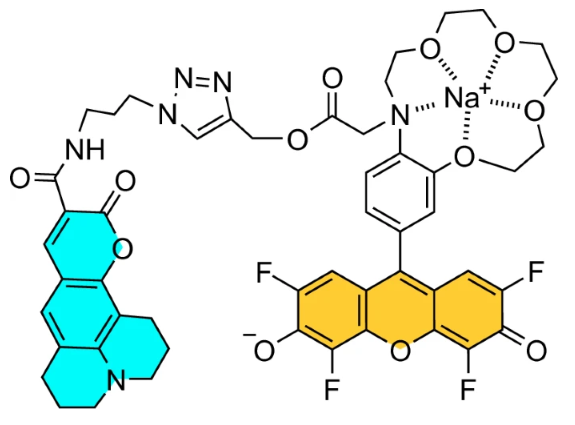
A ratiometric fluorescent reporter of mitochondrial sodium reveals striking heterogeneity in mitochondrial Na+, its dynamic coupling to Ca2+ influx, and its alteration in metabolic stress and mitochondrial disease
https://t.co/3KbLqsRPvr
A new paper presents CANVAS, a computational workflow that converts minimal de novo TIM barrels into enzymes by designing structural lids that generate tailored active sites
https://t.co/RDHDe2gtkc
Customizing the structure of minimal TIM barrels to craft efficient de novo enzymes
"Here, we present CANVAS, a computational workflow that introduces a structural lid into a minimal de novo TIM barrel to anchor catalytic residues and form an active site."
https://t.co/dHynownxNL
For readers interested in the design of next-generation small-molecule kinase inhibitors, here's a comprehensive review https://t.co/1NZlTPiwBR
https://t.co/53pEaaub7u
Direct Quantum Yield Measurement of a Ligand-to-Metal Charge Transfer Photocatalyst via Cyclic Voltammetry | Journal of the American Chemical Society https://t.co/fb4GDiU2NZ
Conditional Localization Pharmacology Manipulates the Cell Cycle with Spatiotemporal Precision | Journal of the American Chemical Society https://t.co/S8Ms6QQw3r
🧬 KRAS is no longer “undruggable”.
A new Cancer Cell review maps how KRAS inhibitors are reshaping therapy across lung, colorectal, pancreatic and other cancers, and what comes next.
🔬 Essentials • RAS alterations drive ~20% of cancers worldwide • KRAS is the most frequent RAS alteration • KRAS G12C inhibitors proved direct RAS targeting works
💊 Current reality 🟢 Sotorasib & adagrasib show meaningful activity in KRAS G12C NSCLC 🟢 CRC responses improve when combined with anti-EGFR therapy 🟢 Activity emerging in PDAC and other tumors
⚠️ Key challenge Most patients eventually develop resistance via: • On-target KRAS mutations • MAPK pathway reactivation • RTK feedback signaling • Non-genetic adaptive escape
🚀 What’s next? Next-generation strategies include: • More potent G12C inhibitors • KRAS G12D & multi-mutation inhibitors • Isoform-selective and pan-RAS inhibitors • Rational combination approaches
Takeaway: KRAS targeting has moved from breakthrough to optimization phase, with broader RAS inhibition now the next frontier.
📖 Full paper in comment ⬇️
#OncoTwitter #MedTwitter #LungCancer #CRC @OncoAlert@myesmo@esmo_open@ASC
Design and Development of DNA Damage Chemical Inducers of Proximity for Targeted Cancer Therapy | Journal of the American Chemical Society https://t.co/FLbRe77OO7