DID YOU KNOW?
" Owning a vessel 🚢 does not automatically make it a Kenyan ship 🇰🇪
✓ Under The Merchant Shipping Act ( Cap 389), a ship acquires Kenyan nationality by being registered in Kenya. ( Sections 17 & 19 of the Merchant Shipping Act)
Don't pay for Higgsfield, use Syllaby
Don’t pay for Notion AI, use Obsidian
Don’t pay for Ahrefs, use Ranked AI
Don’t pay for Jasper AI, use ChatGPT
Don’t pay for Grammarly, use LanguageTool
Don’t pay for Adobe, use Canva Pro
Don’t pay for Zapier, use Make
Don’t pay for Calendly, use TinyCal
Don’t pay for Capcut, use Inshot
Don’t pay for Dropbox, use Google Drive
Don’t pay for Zoom, use Google Meet
Don’t pay for Figma Pro, use Penpot
Don’t pay for HubSpot, use HighLevel
(SAVE THIS before it disappears)
Today's spotlight: Hon. Eric Theophilus Kennedy Okumu Otieno Ogola EBS
Principal Judge, High Court
Appointment to Judicial Service:2011
Profile
Appointed Judge of the High Court in 2011
Served as Presiding Judge at Eldoret and Mombasa High Courts
Served at the Milimani Commercial Division, Nairobi
Serving at Milimani Family Division
Academic and Professional Qualifications
Master of Laws (LLM) in Maritime Law, University of Cape Town
Bachelor of Laws (LLB), University of Nairobi
Post Graduate Diploma in Law, Kenya School of Law
Admitted to the Bar in 1992
Previous Experience
Founding Lecturer at University of Nairobi, Mombasa Campus
Member, Taskforce on Review of Maritime Laws of Kenya
Consultant, at the World Bank
Consultant on Rules and Regulations on Maritime Legislation at the Ministry of Transport
Other Responsibilities
Principal Judge of the High Court since 2022
Chair, High Court Advisory Committee (HiCAC)
Certified Mediator and Trainer of Trainees in the Recovery of stolen Assets (STAR)
Elder of Seventh Day Adventist Church – Nairobi and Mombasa
Bandari Maritime Academy Students to March to KMA Headquarters Over Shipboard Training Row
Bandari Maritime Academy students have announced plans for a protest on Monday, March 17, citing grievances over leadership failures, outdated training programs, and an unfair selection process for shipboard training.
In a joint statement with the Kenya Seafarers Association, the students accused the Kenya Maritime Authority and the State Department of Shipping and Maritime Affairs of mismanagement, corruption, and failing to protect seafarers’ rights.
The group has outlined multiple demands, including leadership changes, reforms in maritime education, and stricter oversight of recruitment agencies.
"PRESS STATEMENT
FOR IMMEDIATE RELEASE
March 17, 2025
URGENT CONCERNS REGARDING BANDARI MARITIME ACADEMY AND KENYA'S MARITIME SECTOR
The Kenya Seafarers Association and Bandari Maritime Academy wishes to draw public attention to a series of critical issues plaguing Kenya's maritime sector that require immediate intervention from relevant authorities and stakeholders.
1. Problems Afflicting Kenyan Seafarers
Kenyan seafarers continue to face numerous challenges including poor working conditions, delayed or unpaid wages, lack of social security, inadequate medical coverage, and limited access to training opportunities. Many work under contracts that do not meet international standards set by the Maritime Labour Convention. Most disturbingly, seafarers who attempt to advocate for their rights often face blacklisting and intimidation. Despite Kenya's strategic position on the Indian Ocean, our seafarers remain marginalized in the global maritime workforce.
2. Operational Deficiencies at Bandari Maritime Academy
Bandari Maritime Academy, which should be a center of excellence for maritime education in the region, suffers from poor leadership and management. The academy is plagued by inadequate facilities, outdated training programs, unqualified lecturers and administrative inefficiencies. Despite significant government investment, the quality of education remains substandard, and graduates struggle to compete in the international maritime job market. Leadership appears more focused on maintaining bureaucratic procedures than on improving educational outcomes or student welfare.
3. Nomination of Cadets for Shipboard Training
The current process for nominating cadets for shipboard training lacks transparency and fairness. Qualified candidates are routinely bypassed in favor of those with political connections or financial means. This has created a systemic barrier that prevents talented young Kenyans from disadvantaged backgrounds from accessing essential training opportunities. The absence of a standardized, merit-based selection process has undermined the integrity of our maritime education system and demoralized aspiring seafarers.
4. Recruitment and Placement of Seafarers
The recruitment and replacement process for Kenyan seafarers is characterized by nepotism, corruption, and lack of transparency. Qualified professionals remain unemployed while positions are filled through irregular channels. Kenyan seafarers face systematic discrimination in hiring practices and remuneration compared to their foreign counterparts. The absence of a centralized, transparent recruitment database has enabled exploitative practices to flourish. Many seafarers are forced to pay bribes or surrender portions of their salaries to secure positions, perpetuating a cycle of corruption within the industry.
5. Substandard Maritime Education and Training (MET) Institutions
Many MET institutions in Kenya operate below international standards, producing graduates who are inadequately prepared for the global maritime industry. These institutions lack modern equipment, qualified instructors, and updated curricula aligned with the International Convention on Standards of Training, Certification and Watchkeeping for Seafarers (STCW). The regulatory oversight of these institutions has been ineffective, allowing them to continue operating despite significant deficiencies in their training programs.
6. Leadership Challenges at the Kenya National Shipping Line
The Kenya National Shipping Line (KNSL) continues to underperform due to incompetent and inefficient leadership. Despite numerous revival attempts and significant government investment, KNSL remains largely inactive in international shipping. Current management has failed to develop viable business strategies, capitalize on emerging opportunities, or establish partnerships that would enable the company to compete effectively. This mismanagement has not only wasted public resources but also deprived Kenyan seafarers of potential employment opportunities.
7. Governance Issues at the Kenya Maritime Authority
The Kenya Maritime Authority (KMA), which is mandated to regulate and oversee the maritime sector, has been hampered by incompetent and inefficient leadership. The authority has failed to effectively enforce maritime regulations, advocate for seafarers' welfare, or position Kenya as a competitive maritime nation. Decisions appear to be made without adequate industry consultation or understanding of international maritime standards. This has resulted in policies that often create additional barriers rather than facilitating growth and development within the sector.
8. Exploitative Practices by Manning and Crewing Agents
Manning and crewing agents operating in Kenya frequently engage in exploitative practices that harm seafarers and undermine the integrity of the maritime sector. These include charging exorbitant and illegal recruitment fees, misrepresenting contract terms, withholding documents, and failing to provide adequate support to seafarers while at sea. Many agents operate without proper licensing or oversight, prioritizing profit over the welfare and rights of seafarers. Complaints against these agents are rarely investigated or addressed by the relevant authorities.
9. Policy Implementation Challenges at the State Department of Shipping and Maritime Affairs
The State Department of Shipping and Maritime Affairs is characterized by clueless and rudderless middle-level officials who lack the necessary expertise and vision to drive Kenya's maritime agenda forward. None has maritime training or expertise and are expected to deliver on what is a globally regulated and very technical sector. Policy implementation is consistently delayed or abandoned, and there is little coordination between different maritime agencies. Officials appear disconnected from industry realities and international maritime developments, resulting in outdated approaches that fail to address current challenges or capitalize on opportunities.
10. Regulatory Collapse at the Kenya Maritime Authority
Beyond leadership issues, the Kenya Maritime Authority has failed in its regulatory mandate to develop and enforce standards that would ensure the growth and integrity of Kenya's maritime sector. Regulatory gaps have allowed substandard operators to flourish while creating unnecessary hurdles for legitimate businesses. The authority has been particularly ineffective in protecting seafarers' rights, ensuring the quality of maritime education, and facilitating Kenya's compliance with international maritime conventions.
11. Unfair and Opaque Nomination Processes for Seaboard Training Programs
The nomination process for seaboard training programs is marred by unfairness, lack of transparency, and corrupt practices. Deserving candidates are systematically excluded while those with connections receive preferential treatment. This has created a situation where access to essential training is determined by factors unrelated to merit or potential. The consequences extend beyond individual careers to undermine the overall quality and competitiveness of Kenya's maritime workforce.
Kenya's brand in an industry where reputation is very important had also been ruined and can either propel or undermine growth of the sector
Call for Immediate Action
We call upon the Ministry of Blue Economy and Maritime Affairs, relevant parliamentary committees, and all concerned agencies to undertake an urgent and comprehensive review of Kenya's maritime sector. Specifically, we recommend:
1. The immediate establishment of an independent commission to investigate corruption and mismanagement across all maritime institutions
2. Implementation of transparent, merit-based systems for cadet nominations and seafarer recruitment
3. Comprehensive reforms of all maritime institutions, including leadership changes where necessary
4. Development of robust regulatory frameworks for manning agents with strict enforcement mechanisms
5. Significant investment in upgrading maritime education facilities and faculty development
6. Creation of a dedicated seafarer welfare fund and support system
The Kenya Seafarers Association stands ready to engage constructively with all stakeholders to address these challenges and build a maritime sector that serves the interests of all Kenyans and contributes meaningfully to our national development.
For further information, please contact:
Kenya Seafarers Association
Bandari Maritime Academy
Capt. Dancan
Phone: +254 722797293
END OF STATEMENT"
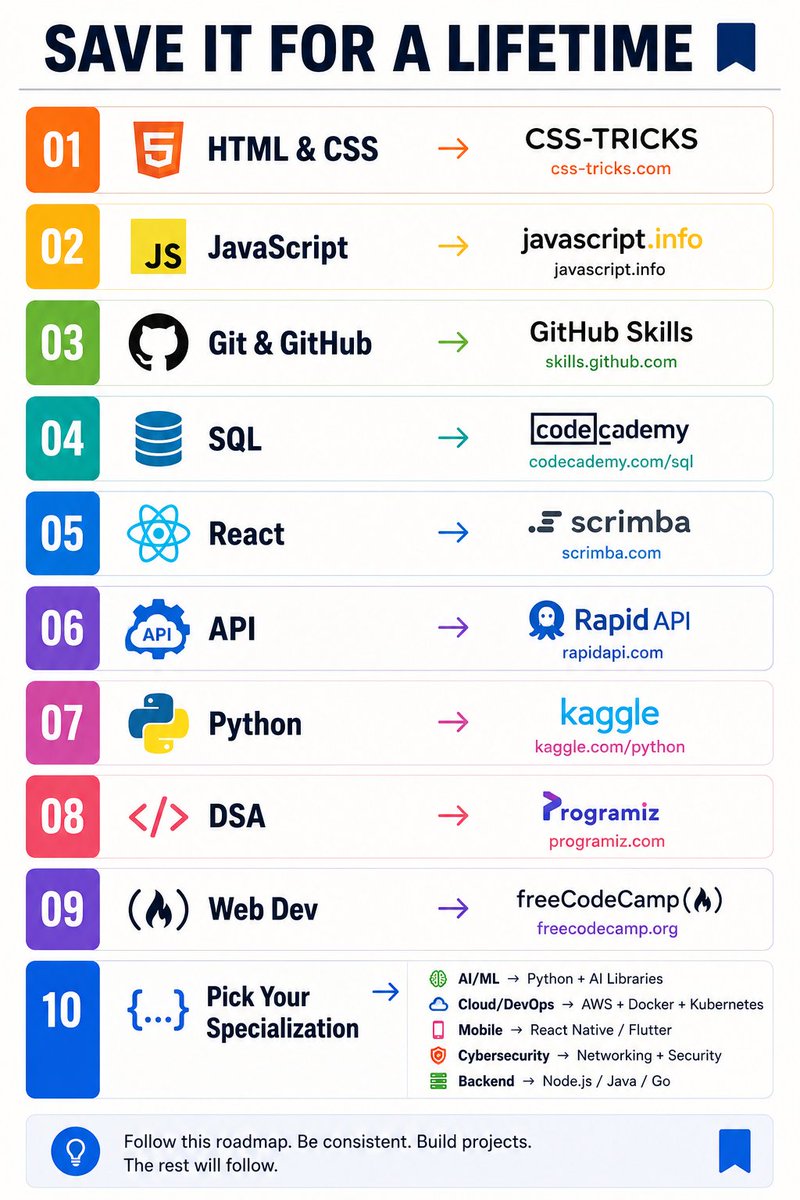
Most beginners learn coding in the wrong order.
They jump between random tutorials, get overwhelmed, and quit.
If I had to start from scratch in 2026, this is the roadmap I'd follow:
📍 STEP 1 — HTML & CSS
Learn how websites are actually built.
🔗 CSS-Tricks
📍 STEP 2 — JavaScript
The language that powers the web.
🔗 https://t.co/MfoStQIpfI
📍 STEP 3 — Git & GitHub
Version control is a superpower.
🔗 GitHub Skills
📍 STEP 4 — SQL
Every developer should know how data is stored and queried.
🔗 Codecademy SQL
📍 STEP 5 — React
Build modern frontend applications.
🔗 Scrimba
📍 STEP 6 — APIs
Learn how applications communicate.
🔗 RapidAPI
📍 STEP 7 — Python
Automation, AI, Data Science, Backend.
🔗 Kaggle Python
📍 STEP 8 — Data Structures & Algorithms
The skill that helps you crack interviews.
🔗 Programiz
📍 STEP 9 — Full-Stack Development
Connect frontend, backend, databases, and APIs.
🔗 freeCodeCamp
📍 STEP 10 — Pick Your Specialization
🤖 AI/ML → Python + AI Libraries
☁️ Cloud/DevOps → AWS + Docker + Kubernetes
📱 Mobile → React Native / Flutter
🔒 Cybersecurity → Networking + Security
⚙️ Backend → Node.js / Java / Go
Most developers fail because they don't have a roadmap.
Not because they lack talent.
Save this.
It can save you months of confusion. 🚀
𝐇𝐨𝐰 𝐭𝐨 𝐌𝐚𝐤𝐞 𝐌𝐨𝐧𝐞𝐲 𝐂𝐥𝐢𝐩𝐩𝐢𝐧𝐠 𝐭𝐡𝐞 𝟐𝟎𝟐𝟔 𝐅𝐈𝐅𝐀 𝐖𝐨𝐫𝐥𝐝 𝐂𝐮𝐩
A Beginner's Step-by-Step Guide (rt and bookmark)
The 2026 FIFA World Cup kicks off June 11
and for clippers this is the biggest window of opportunity you'll see in four years
This guide breaks down exactly how to get started from zero with no experience whatsoever
𝐖𝐡𝐚𝐭 𝐢𝐬 𝐜𝐥𝐢𝐩𝐩𝐢𝐧𝐠?
Clipping is taking sharp moments like goals, drama, reactions and hot takes,
then editing them into short 15–60 second vertical videos for TikTok, YouTube Shorts, Instagram Reels and Facebook Reels,
You post these clips on your own accounts the views get tracked and you get paid per 1,000 views
The reason brands and platforms pay for this is simple,
short-form clips that look like organic content outperform traditional ads because the algorithm pushes them harder
Now you understand lets get started....
𝐒𝐓𝐄𝐏 𝟏 → 𝐂𝐫𝐞𝐚𝐭𝐞 𝐝𝐞𝐝𝐢𝐜𝐚𝐭𝐞𝐝 𝐟𝐨𝐨𝐭𝐛𝐚𝐥𝐥 𝐚𝐜𝐜𝐨𝐮𝐧𝐭𝐬
Don't post on your personal page,
create fresh accounts specifically for World Cup and football content on:
→ TikTok (Preferably create a Uk Tiktok acc)
→ Facebook Reels (Preferably create a Uk Tiktok acc)
Use a football-related username and start posting pre-tournament content now, predictions, group breakdowns, player profiles
so the algorithm learns your niche before kickoff
𝐒𝐓𝐄𝐏 𝟐 → 𝐃𝐨𝐰𝐧𝐥𝐨𝐚𝐝 𝐲𝐨𝐮𝐫 𝐞𝐝𝐢𝐭𝐢𝐧𝐠 𝐭𝐨𝐨𝐥𝐬
Free and all you need to start
→ CapCut → https://t.co/iWyviwF9tr, the number one editor for clippers, auto-captions, effects, transitions
Optional AI tools that make you 5–10x faster
→ Opus Clip → https://t.co/ozkp1Lg4hj, paste a long video and the AI finds the best moments then generates clips with captions automatically (it can even auto post)
→ Ssemble → https://t.co/CwkGWk3hZ9, from $7.50 per month, generates 10 – 15 clips per video in minutes,
Your phone plus CapCut is genuinely enough to start earning
𝐒𝐓𝐄𝐏 𝟑 → 𝐒𝐢𝐠𝐧 𝐮𝐩 𝐨𝐧 𝐜𝐥𝐢𝐩𝐩𝐢𝐧𝐠 𝐩𝐥𝐚𝐭𝐟𝐨𝐫𝐦𝐬
This is where the actual money comes from,
these platforms connect you with campaigns that pay you per 1,000 views on the clips you post, no follower requirements at all
→ Whop, https://t.co/n4f095xu2e, works in 149+ countries, no KYC, daily payouts, $1–$5 per 1,000 views, free to join
→ Reach, https://t.co/GC6GslcKG7, 5-minute signup, weekly payouts via USDT or bank transfer,
→ Vyro, https://t.co/S2rTloj1i1, MrBeast's clipping marketplace, competitive but high-quality campaigns
→ Cliphaven, https://t.co/nxQLc34IFr, performance-based platform, good for sports and entertainment niches
→ AutoClip, https://t.co/Dgg6g9LY78, has an auto-posting feature that handles distribution across platforms so you just focus on finding the best moments
→ ClipAffiliates, https://t.co/M06hfQ9NWy, affiliate-style clipping campaigns across multiple niches
Sign up for at least two or three today and start browsing their active campaigns
𝐒𝐓𝐄𝐏 𝟒 → 𝐊𝐧𝐨𝐰 𝐰𝐡𝐞𝐫𝐞 𝐭𝐨 𝐬𝐨𝐮𝐫𝐜𝐞 𝐲𝐨𝐮𝐫 𝐜𝐨𝐧𝐭𝐞𝐧𝐭
→ Screen record or downlaod highlights from FIFA's official YouTube and TikTok, these are free and publicly posted by FIFA themselves
→ Download match highlights from YouTube using tools like yt-dlp, https://t.co/ixyKiwyMCl or https://t.co/HQ9ICdC64K, most clippers pull their raw footage this way
→ Use press conference and interview footage, these are widely available on YouTube and easy to clip
→ Campaign footage from platforms like Whop or https://t.co/yaumZwFTnW, some campaigns provide the footage for you so all you do is edit and post,
The key thing to remember is don't just repost raw footage with nothing added,
always add your own layer on top whether that's commentary, face cam, text overlay, captions, reactions or analysis,
that's what makes it your content and keeps you safe from takedowns
𝐒𝐓𝐄𝐏 𝟓 → 𝐋𝐞𝐚𝐫𝐧 𝐰𝐡𝐚𝐭 𝐦𝐚𝐤𝐞𝐬 𝐚 𝐜𝐥𝐢𝐩 𝐠𝐨 𝐯𝐢𝐫𝐚𝐥
→ The hook is everything, lead with the most dramatic moment in the first 1–2 seconds
→ Captions are non-negotiable, use CapCut's auto-caption feature with bold readable fonts
→ Emotions beat skills every time, goals are great but tears, celebrations, controversy, underdog moments and fan reactions get shared way more
→ Keep it short, 15 – 30 seconds for maximum reach on TikTok and facebook, 60+ seconds if you're targeting TikTok's Creator Rewards Program which pays on longer videos
→ Use relevant hashtags on every post, #WorldCup2026 #FIFA #Football plus team-specific and player-specific tags
𝐒𝐓𝐄𝐏 𝟔 → 𝐅𝐨𝐥𝐥𝐨𝐰 𝐚 𝐝𝐚𝐢𝐥𝐲 𝐩𝐨𝐬𝐭𝐢𝐧𝐠 𝐬𝐲𝐬𝐭𝐞𝐦
Aim for 3–5 clips per day,
the algorithm rewards consistency and every clip is another chance to go viral,
volume is what separates clippers earning $100 from those pulling $20,000+
Best times to post
→ 30 minutes before kickoff, fans are scrolling and hyped, your clip lands right in front of an active audience
→ Immediately after a match ends, everyone is hunting for highlights and reactions, first to post catches the wave
→ Halftime, fans are on their phones replaying what just happened
→ Morning after a late night match, millions who couldn't watch live are scrolling for what they missed,
Why this matters
→ the algorithm pushes content that gets fast early engagement, post when people are already searching and your clip gets picked up and pushed to more people
Post the same clip across TikTokand Facebook Reels, same work, 2 audiences, 2 chances to earn,
𝐒𝐓𝐄𝐏 𝟕 → 𝐒𝐭𝐚𝐜𝐤 𝐦𝐮𝐥𝐭𝐢𝐩𝐥𝐞 𝐫𝐞𝐯𝐞𝐧𝐮𝐞 𝐬𝐭𝐫𝐞𝐚𝐦𝐬
This is how the money layers up from day one to long-term
Layer 1: Day 1
Clipping campaigns on Whop, https://t.co/yaumZwFTnW and Vyro
$1–$5 per 1,000 views, no followers needed, this is where most beginners make their first money
Layer 2: Week 2 – 4
Platform monetization kicks in as your accounts grow,
→ TikTok Creator Rewards Program: requires 10K followers and 100K views in 30 days, pays per 1,000 qualified views on 60+ second videos,
→ Facebook Reels: monetisation, bonus programs and in-stream ads
Layer 3: Month 1–3
Brand deals: as your account grows, betting companies, sports apps and merch brands will reach out, a 50K-follower football account can command $1000–$5000 per sponsored post,
Layer 4: Long-term
Account selling: niche football accounts built during the World Cup can be sold on https://t.co/pDwpIkcHfu for $500–$5,000+ depending on followers and engagement
𝐒𝐓𝐄𝐏 𝟖 → 𝐂𝐨𝐧𝐭𝐞𝐧𝐭 𝐢𝐝𝐞𝐚𝐬 𝐭𝐡𝐚𝐭 𝐩𝐫𝐢𝐧𝐭 𝐯𝐢𝐞𝐰𝐬 𝐝𝐮𝐫𝐢𝐧𝐠 𝐭𝐡𝐞 𝐖𝐨𝐫𝐥𝐝 𝐂𝐮𝐩
→ Pre-match predictions: "This is why [team] will shock everyone"
→ Fan reactions: film watch parties, street celebrations, pub eruptions
→ Controversy clips: "The referee just ruined the World Cup", these explode every single tournament
→ Player comparisons: "Mbappe 2022 vs Mbappe 2026"
→ Underdog storylines: first-time qualifiers, redemption arcs, aging legends playing their last World Cup
→ Meme moments: every World Cup produces memes, speed wins, be first
→ Post-match hot takes: "3 things nobody noticed in Argentina's match"
𝐘𝐨𝐮𝐫 𝐪𝐮𝐢𝐜𝐤-𝐬𝐭𝐚𝐫𝐭 𝐜𝐡𝐞𝐜𝐤𝐥𝐢𝐬𝐭
→ Create dedicated football accounts on TikTok plus one other platform
→ Download CapCut at https://t.co/iWyviwF9tr and learn the basics
→ Sign up on Whop at https://t.co/n4f095xu2e and https://t.co/yaumZwFTnW at https://t.co/GC6GslcKG7
→ Follow @FIFAWorldCup on TikTok and YouTube
→ Start posting pre-tournament content today
→ Set up notifications for the match schedule, June 11 kickoff
→ Commit to 3–5 clips per day during the tournament
→ Track what performs best and double down on it,
Get to work...
You don't need followers, you don't need expensive gear
you need your phone or PC, CapCut, a clipping platform and the discipline to show up daily
June 11 the window opens, July 19 it closes,
the question is whether you'll be clipping or just watching
Take the shot...
A faceless YouTube channel made $8K last month with Claude
The owner spends 3 hours a week on it.
He’s never appeared on camera.
The channel started 4 months ago.
Here’s the exact system:
Step 1: Pick a niche that pays, not one you like.
Finance channels pull $18-22 RPM. Entertainment pulls $3-8.
500K views on a finance channel = $10K/month from AdSense alone.
Claude analyzes content repeatability, audience size, and monetization depth then tells you which niche to pick. Not based on vibes. Based on math.
Step 2: Build the script system once.
Most people just prompt Claude for a script and get garbage.
The system works differently:
→ Hook that creates a pattern interrupt in the first 30 seconds
→ Open loops that tease the payoff early
→ Spoken English, not essay English
→ Pause markers and visual cues for every scene
→ Soft CTA at the end
This prompt replaces a $200/video scriptwriter.
Step 3: The production pipeline.
Claude writes the script.
ElevenLabs handles voice.
CapCut + Canva edit the video with stock footage from Pexels.
Claude then writes the title, description, tags, and chapter markers.
TubeBuddy checks keywords.
Total tool cost: under $50/month.
Step 4: The ramp.
Week 1-2: 1-2 videos.
Week 3+: 3-4 videos.
Month 2: layer in affiliates and sponsorships on top of AdSense.
One channel. 600K views/month. $18 RPM.
That’s $10,800/month from ads alone before a single brand deal.
The channel is faceless. The system runs itself.
the engineer who built Claude Code just dropped a 28-minute video on how to write prompts that actually work
I've seen $300 courses that don't cover what he shows in the first 10 minutes
CLAUDE.md files, memory shortcuts, parallel sessions, prompting patterns
all in one video and completely free
works whether you're a developer, a beginner, or someone who's been using Claude for months
based on this, I put together 18 things you can copy and use in Claude today
full guide in the article below
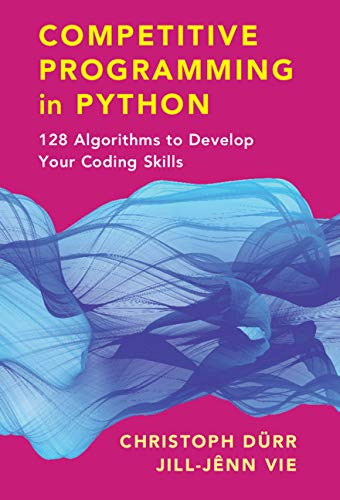
Competitive Programming in Python book for FREE!
Improve your programming skills with these 128 algorithms.
To get your copy, do the following.
- Like and Repost
- Comment "Python Space"
- Follow me so that I can DM you.
If you want to learn AI the right way, start here.
No shortcuts. No hype. No fluff.
Top 10 Stanford's Courses on AI & ML.
CS221: Artificial Intelligence
CS229: Machine Learning
CS229M: Machine Learning Theory
CS230: Deep Learning
CS234: Reinforcement Learning
CS224N: Natural Language Processing
CS231N: Deep Learning for Computer Vision
CME295: Large Language Models (LLMs)
CS236: Deep Generative Models
CS336: Language Modeling from Scratch
When your'e developing complex software systems, you'll need to be able to think critically and logically.
And in this handbook, Han teaches you about fundamental logical principles and how to apply them to software development.
You'll learn about truth tables, contrapositives, argument forms, applying logic to testing, falsification, & lots more - with real-world examples.
https://t.co/oSHPfVDbNp



![Romeo_Onchain's tweet photo. 𝐇𝐨𝐰 𝐭𝐨 𝐌𝐚𝐤𝐞 𝐌𝐨𝐧𝐞𝐲 𝐂𝐥𝐢𝐩𝐩𝐢𝐧𝐠 𝐭𝐡𝐞 𝟐𝟎𝟐𝟔 𝐅𝐈𝐅𝐀 𝐖𝐨𝐫𝐥𝐝 𝐂𝐮𝐩
A Beginner's Step-by-Step Guide (rt and bookmark)
The 2026 FIFA World Cup kicks off June 11
and for clippers this is the biggest window of opportunity you'll see in four years
This guide breaks down exactly how to get started from zero with no experience whatsoever
𝐖𝐡𝐚𝐭 𝐢𝐬 𝐜𝐥𝐢𝐩𝐩𝐢𝐧𝐠?
Clipping is taking sharp moments like goals, drama, reactions and hot takes,
then editing them into short 15–60 second vertical videos for TikTok, YouTube Shorts, Instagram Reels and Facebook Reels,
You post these clips on your own accounts the views get tracked and you get paid per 1,000 views
The reason brands and platforms pay for this is simple,
short-form clips that look like organic content outperform traditional ads because the algorithm pushes them harder
Now you understand lets get started....
𝐒𝐓𝐄𝐏 𝟏 → 𝐂𝐫𝐞𝐚𝐭𝐞 𝐝𝐞𝐝𝐢𝐜𝐚𝐭𝐞𝐝 𝐟𝐨𝐨𝐭𝐛𝐚𝐥𝐥 𝐚𝐜𝐜𝐨𝐮𝐧𝐭𝐬
Don't post on your personal page,
create fresh accounts specifically for World Cup and football content on:
→ TikTok (Preferably create a Uk Tiktok acc)
→ Facebook Reels (Preferably create a Uk Tiktok acc)
Use a football-related username and start posting pre-tournament content now, predictions, group breakdowns, player profiles
so the algorithm learns your niche before kickoff
𝐒𝐓𝐄𝐏 𝟐 → 𝐃𝐨𝐰𝐧𝐥𝐨𝐚𝐝 𝐲𝐨𝐮𝐫 𝐞𝐝𝐢𝐭𝐢𝐧𝐠 𝐭𝐨𝐨𝐥𝐬
Free and all you need to start
→ CapCut → https://t.co/iWyviwF9tr, the number one editor for clippers, auto-captions, effects, transitions
Optional AI tools that make you 5–10x faster
→ Opus Clip → https://t.co/ozkp1Lg4hj, paste a long video and the AI finds the best moments then generates clips with captions automatically (it can even auto post)
→ Ssemble → https://t.co/CwkGWk3hZ9, from $7.50 per month, generates 10 – 15 clips per video in minutes,
Your phone plus CapCut is genuinely enough to start earning
𝐒𝐓𝐄𝐏 𝟑 → 𝐒𝐢𝐠𝐧 𝐮𝐩 𝐨𝐧 𝐜𝐥𝐢𝐩𝐩𝐢𝐧𝐠 𝐩𝐥𝐚𝐭𝐟𝐨𝐫𝐦𝐬
This is where the actual money comes from,
these platforms connect you with campaigns that pay you per 1,000 views on the clips you post, no follower requirements at all
→ Whop, https://t.co/n4f095xu2e, works in 149+ countries, no KYC, daily payouts, $1–$5 per 1,000 views, free to join
→ Reach, https://t.co/GC6GslcKG7, 5-minute signup, weekly payouts via USDT or bank transfer,
→ Vyro, https://t.co/S2rTloj1i1, MrBeast's clipping marketplace, competitive but high-quality campaigns
→ Cliphaven, https://t.co/nxQLc34IFr, performance-based platform, good for sports and entertainment niches
→ AutoClip, https://t.co/Dgg6g9LY78, has an auto-posting feature that handles distribution across platforms so you just focus on finding the best moments
→ ClipAffiliates, https://t.co/M06hfQ9NWy, affiliate-style clipping campaigns across multiple niches
Sign up for at least two or three today and start browsing their active campaigns
𝐒𝐓𝐄𝐏 𝟒 → 𝐊𝐧𝐨𝐰 𝐰𝐡𝐞𝐫𝐞 𝐭𝐨 𝐬𝐨𝐮𝐫𝐜𝐞 𝐲𝐨𝐮𝐫 𝐜𝐨𝐧𝐭𝐞𝐧𝐭
→ Screen record or downlaod highlights from FIFA's official YouTube and TikTok, these are free and publicly posted by FIFA themselves
→ Download match highlights from YouTube using tools like yt-dlp, https://t.co/ixyKiwyMCl or https://t.co/HQ9ICdC64K, most clippers pull their raw footage this way
→ Use press conference and interview footage, these are widely available on YouTube and easy to clip
→ Campaign footage from platforms like Whop or https://t.co/yaumZwFTnW, some campaigns provide the footage for you so all you do is edit and post,
The key thing to remember is don't just repost raw footage with nothing added,
always add your own layer on top whether that's commentary, face cam, text overlay, captions, reactions or analysis,
that's what makes it your content and keeps you safe from takedowns
𝐒𝐓𝐄𝐏 𝟓 → 𝐋𝐞𝐚𝐫𝐧 𝐰𝐡𝐚𝐭 𝐦𝐚𝐤𝐞𝐬 𝐚 𝐜𝐥𝐢𝐩 𝐠𝐨 𝐯𝐢𝐫𝐚𝐥
→ The hook is everything, lead with the most dramatic moment in the first 1–2 seconds
→ Captions are non-negotiable, use CapCut's auto-caption feature with bold readable fonts
→ Emotions beat skills every time, goals are great but tears, celebrations, controversy, underdog moments and fan reactions get shared way more
→ Keep it short, 15 – 30 seconds for maximum reach on TikTok and facebook, 60+ seconds if you're targeting TikTok's Creator Rewards Program which pays on longer videos
→ Use relevant hashtags on every post, #WorldCup2026 #FIFA #Football plus team-specific and player-specific tags
𝐒𝐓𝐄𝐏 𝟔 → 𝐅𝐨𝐥𝐥𝐨𝐰 𝐚 𝐝𝐚𝐢𝐥𝐲 𝐩𝐨𝐬𝐭𝐢𝐧𝐠 𝐬𝐲𝐬𝐭𝐞𝐦
Aim for 3–5 clips per day,
the algorithm rewards consistency and every clip is another chance to go viral,
volume is what separates clippers earning $100 from those pulling $20,000+
Best times to post
→ 30 minutes before kickoff, fans are scrolling and hyped, your clip lands right in front of an active audience
→ Immediately after a match ends, everyone is hunting for highlights and reactions, first to post catches the wave
→ Halftime, fans are on their phones replaying what just happened
→ Morning after a late night match, millions who couldn't watch live are scrolling for what they missed,
Why this matters
→ the algorithm pushes content that gets fast early engagement, post when people are already searching and your clip gets picked up and pushed to more people
Post the same clip across TikTokand Facebook Reels, same work, 2 audiences, 2 chances to earn,
𝐒𝐓𝐄𝐏 𝟕 → 𝐒𝐭𝐚𝐜𝐤 𝐦𝐮𝐥𝐭𝐢𝐩𝐥𝐞 𝐫𝐞𝐯𝐞𝐧𝐮𝐞 𝐬𝐭𝐫𝐞𝐚𝐦𝐬
This is how the money layers up from day one to long-term
Layer 1: Day 1
Clipping campaigns on Whop, https://t.co/yaumZwFTnW and Vyro
$1–$5 per 1,000 views, no followers needed, this is where most beginners make their first money
Layer 2: Week 2 – 4
Platform monetization kicks in as your accounts grow,
→ TikTok Creator Rewards Program: requires 10K followers and 100K views in 30 days, pays per 1,000 qualified views on 60+ second videos,
→ Facebook Reels: monetisation, bonus programs and in-stream ads
Layer 3: Month 1–3
Brand deals: as your account grows, betting companies, sports apps and merch brands will reach out, a 50K-follower football account can command $1000–$5000 per sponsored post,
Layer 4: Long-term
Account selling: niche football accounts built during the World Cup can be sold on https://t.co/pDwpIkcHfu for $500–$5,000+ depending on followers and engagement
𝐒𝐓𝐄𝐏 𝟖 → 𝐂𝐨𝐧𝐭𝐞𝐧𝐭 𝐢𝐝𝐞𝐚𝐬 𝐭𝐡𝐚𝐭 𝐩𝐫𝐢𝐧𝐭 𝐯𝐢𝐞𝐰𝐬 𝐝𝐮𝐫𝐢𝐧𝐠 𝐭𝐡𝐞 𝐖𝐨𝐫𝐥𝐝 𝐂𝐮𝐩
→ Pre-match predictions: "This is why [team] will shock everyone"
→ Fan reactions: film watch parties, street celebrations, pub eruptions
→ Controversy clips: "The referee just ruined the World Cup", these explode every single tournament
→ Player comparisons: "Mbappe 2022 vs Mbappe 2026"
→ Underdog storylines: first-time qualifiers, redemption arcs, aging legends playing their last World Cup
→ Meme moments: every World Cup produces memes, speed wins, be first
→ Post-match hot takes: "3 things nobody noticed in Argentina's match"
𝐘𝐨𝐮𝐫 𝐪𝐮𝐢𝐜𝐤-𝐬𝐭𝐚𝐫𝐭 𝐜𝐡𝐞𝐜𝐤𝐥𝐢𝐬𝐭
→ Create dedicated football accounts on TikTok plus one other platform
→ Download CapCut at https://t.co/iWyviwF9tr and learn the basics
→ Sign up on Whop at https://t.co/n4f095xu2e and https://t.co/yaumZwFTnW at https://t.co/GC6GslcKG7
→ Follow @FIFAWorldCup on TikTok and YouTube
→ Start posting pre-tournament content today
→ Set up notifications for the match schedule, June 11 kickoff
→ Commit to 3–5 clips per day during the tournament
→ Track what performs best and double down on it,
Get to work...
You don't need followers, you don't need expensive gear
you need your phone or PC, CapCut, a clipping platform and the discipline to show up daily
June 11 the window opens, July 19 it closes,
the question is whether you'll be clipping or just watching
Take the shot...](https://pbs.twimg.com/media/HJ0KMr6W4AA0Y0n.jpg)