Hands-on strategy for personal AI agents: can they earn trust and make money? Strategy for AI agents & infra @TikTok. Ex-Meta, Google, McKinsey (banking).
3 takeaways from Personal-AI Real Talk series 🧵
1/ After several weeks of testing Muse, Dot, and Instinct on the same tasks: executing a clear order (e.g., booking dinner) is table stakes. The real gap is judgment calls that involve "is it or isn't it" type of questions - like finding a lamp from a photo.
2/ Payments aren't the bottleneck; checkout is. Muse found me a $1,200 iPhone trade-in deal at AT&T, then couldn't finish checking out despite having my credit card.
3/ And blocking isn't the end of personal agents. It's the start of domain agents. Schwab's Charlie is the early signal: platforms keep the customer by plugging their own agent into yours.
Adding Claude Duet and Grok Bot to round 2. What should I test first?
@lightspeedvp@theamberyang@Machiz Sharp framing. But even if attacks get cheaper, blocking all agents still can't be the answer. Banks need KYA, Know Your Agent, the way KYC verifies people.
@altryne@claudeai Love the school calling example. My Muse needs to step up - it acts boldly but described CapCut function from memory, while GPT got me unstuck.
@aroussi@bot Great tip, and step 2 is where the value shows up. Once connected, my Grok Bot sends me a daily plan built from my real inbox, calendar, and X trends. Context beats prompts.
I love the proactive agents and have been testing Muse, GrokBot, dot, and Instinct. The difficult part for them is knowing what to say when sending proactive message. Dot timely surfaced stuff that got lost in my junk mail; GrokBot creates a personal daily plan for my social media. The real moat lies in personal context.
@stevencheng Sharp breakdown, and the switching-cost point is spot on. I'd add one moat labs can't train in: personal context. Agents are easy to build. Knowing your life is the hard part.
@ConnorTalksAI Depends on what this average person does. Muse is funny and free, but tends to surface outdated information 😂 - until you prompt it to check live. Grok is capable, but could use some humor.
@ishverduzco Familiarity is relative - Muse (comparing to Instinct. Dot/Duet, GrokBot) is the relatively more familiar product for most people. The only other logo with the same advantage is Google - GoogleBot anyone?
@chrisfirst@bot Love that division of labor. Muse is great at shopping, but beware that it tends to skip live retrieval and instead rely on memory instead (it even confessed this behavior in my CapCut test). What makes Grok your day-to-day pick?
@ChrisGPT The gap isn't agents in accounts, it's banks not telling authorized ones vs cyberattacks apart. Customers need a way to grant, limit, and revoke agent access - banks should provide the enabling platform and rules.
@ekuyda Timely on the day banks say they can't tell authorized agents vs cyberattacks apart 😂. Plaid read-only is the right first step: authorized, scoped, and revocable. Curious when Wabi gets to move money, not just track it?
@Musecases Parents! Muse can patiently explain for the 1000th time how to log into their bank accounts - until Muse can safely and compliantly just do it for them. 😂
@DavidSacks I gave Instinct my credit card to buy on my behalf. That's authorized, not an attack. The real gap is banks reliably telling the two apart: authenticate, limit, and revoke agents.
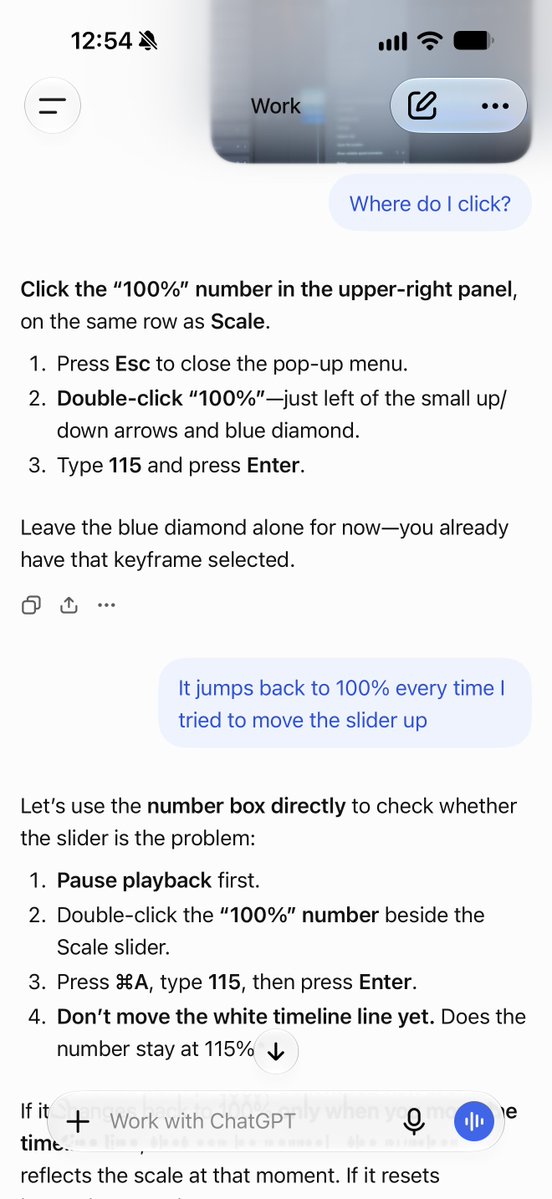
Muse answered from memory. GPT checked live and got me unstuck.
Same CapCut zoom problem but Muse admitted it described an icon "from memory instead of your actual screen." GPT says it pulled CapCut's guides live, then walked me to the fix.
Why would an agent skip a live check? Speed, cost, or overconfidence?