I've seen several people say their Claude accounts were fine for months, then suddenly got hit with KYC after they logged in on a phone. One guy says his friend uses an American number and has never had trouble. Another has sworn off the mobile app entirely.
Maybe they're onto something. But there are quite a few things happening between opening an app and getting flagged by a fraud system, and we have no idea which of them actually mattered.
There's a GitHub project worth reading before making up theories about this:
https://t.co/v5fPlPTFZp
The author reverse-engineered Claude's Android APK, version 1.260930.20. What caught my attention was the Sift integration. The code reads ANDROID_ID, collects SIM-country and carrier information, and enumerates addresses from the phone's network interfaces. The audit also documents traffic to Sift during a cold start, before the user has logged in.
The network-interface part is particularly interesting. Android can have a globally routable IPv6 address on its actual Wi-Fi or cellular interface. Routing your app traffic through a VPN doesn't necessarily remove that address from the interface table. If an app reads the table directly, the VPN exit IP and the locally assigned addresses can tell two rather different stories.
There's also a small technical detail people keep getting wrong. Android has both getSimCountryIso() and getNetworkCountryIso(). A Chinese SIM roaming on a Japanese network can report CN for the first and JP for the second. The audit identifies collection of the SIM-country value. I haven't seen evidence in it that Claude sends the network-country value too. Worth distinguishing before treating screenshots of those fields as proof of anything.
And then there's the part nobody outside Anthropic can really answer. Does Sift feed those values into Anthropic's account-risk decisions? If so, how much weight does each field carry? Does any particular combination trigger verification? We simply don't have that information.
The repository is an independent audit of a particular app build, not a leaked copy of Anthropic's fraud rules. It gives us something concrete to investigate, and I think that's far more useful than another dozen people comparing their login experiences.
I wouldn't tell anyone that opening Claude on Android is guaranteed to trigger KYC. I also wouldn't tell them a desktop browser is safe just because it exposes fewer native device APIs. The desktop client has telemetry of its own, and accounts can be evaluated using information that has nothing to do with Android.
What this has changed for me is how I think about VPNs. A foreign exit IP tells you where a connection appears to originate. It says surprisingly little about what an installed application can read locally. And of course, using an exit IP in another country doesn't change where someone is physically located for the purposes of regional service restrictions.
I'd genuinely like to see someone reproduce the Android findings on newer builds and, separately, gather controlled evidence about verification outcomes. Until then, the mobile-KYC connection is an interesting suspicion. The device telemetry itself is a much better-supported finding.
That's where I'd focus the discussion.
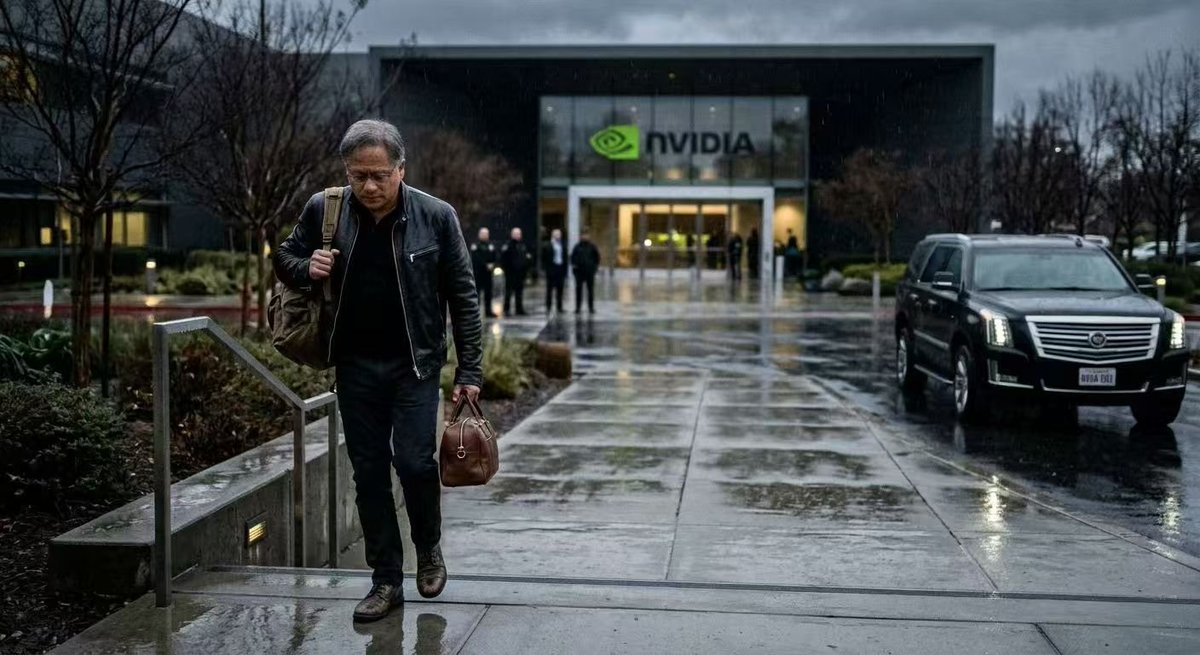
I have enormous respect for what Huang built at NVIDIA. But I don't see why 33 years of achievement should give anyone a lifetime claim to the CEO job.
Sure, if he'd kept a controlling stake, the board might have had a much harder time removing him. But that only tells us who holds the votes. It says nothing about whether his conduct was acceptable or whether the board had good reasons to act.
You can admire Huang, give him full credit for NVIDIA's success, and still hold him accountable. There's no contradiction there.
If you think the board got it wrong, make that case. Pointing to his legacy or arguing that he should have owned more shares doesn't answer it.
You're confusing KYC status with account risk status. not_required simply means Claude isn't currently requiring identity verification. It does not mean the account is risk-free or has passed Anthropic's internal security checks. Likewise, pending indicates an outstanding verification process, not necessarily that the account has been flagged for suspicious activity.
This is a KYC status checker, not a risk detection tool. You're presenting an unsupported assumption as a fact.
Did you even bother reading the fucking screenshot before posting this garbage?
It literally says $12.98 DUE TODAY. The Google AI Pro trial is 12 months, not 24, and the YouTube Premium add-on costs $11.99 a month.
But somehow your genius-level reading comprehension turned that into two years of free everything.
And the Kiro claim? Holy shit. A failed payment supposedly means unlimited access to Opus 5.5? Based on what, exactly? Some random guy's experience? A temporary billing glitch? Your fucking imagination?
Where's the proof that it actually works indefinitely?
You clearly don't know the difference between a free trial, a billing error, and a genuine security vulnerability. But who gives a shit about facts when there's engagement to farm, right?
This is what's wrong with tech influencers these days. Zero verification, zero technical understanding, zero intellectual honesty. Just copy whatever bullshit is trending, slap an outrageous headline on it, and hope enough idiots share it.
You're not exposing vulnerabilities. You're spreading unverified bullshit and pretending it's journalism.
The funniest part is that you probably spent more time coming up with the clickbait headline than actually checking whether any of this shit works.
Next time, try reading the fucking payment screen before embarrassing yourself in public.
You're not a tech expert. You're a rumor mill with an internet connection.
Did you even bother reading the fucking screenshot before posting this garbage?
It literally says $12.98 DUE TODAY. The Google AI Pro trial is 12 months, not 24, and the YouTube Premium add-on costs $11.99 a month.
But somehow your genius-level reading comprehension turned that into two years of free everything.
And the Kiro claim? Holy shit. A failed payment supposedly means unlimited access to Opus 5.5? Based on what, exactly? Some random guy's experience? A temporary billing glitch? Your fucking imagination?
Where's the proof that it actually works indefinitely?
You clearly don't know the difference between a free trial, a billing error, and a genuine security vulnerability. But who gives a shit about facts when there's engagement to farm, right?
This is what's wrong with tech influencers these days. Zero verification, zero technical understanding, zero intellectual honesty. Just copy whatever bullshit is trending, slap an outrageous headline on it, and hope enough idiots share it.
You're not exposing vulnerabilities. You're spreading unverified bullshit and pretending it's journalism.
The funniest part is that you probably spent more time coming up with the clickbait headline than actually checking whether any of this shit works.
Next time, try reading the fucking payment screen before embarrassing yourself in public.
You're not a tech expert. You're a rumor mill with an internet connection.
There's an interesting project here, but the claims surrounding it are getting a little ridiculous.
First, let's get one thing straight: open source doesn't mean free AI. You can run the software yourself, but if you're using GPT, Claude or Grok through their APIs, you're still paying for those models. Hosting, cloud machines and other services aren't free either.
From what I can tell, this is essentially an agent framework that brings different models, MCP integrations and computer-use tools together. That's useful, and there's nothing wrong with building on existing technology. But calling it an open-source version of Grok Bot is a pretty big stretch.
I'd also like to see some actual testing behind those 1,700+ integrations. How many work reliably? How well do the agents handle real tasks? What happens when something goes wrong? And what does the security model look like beyond asking for permission before executing certain actions?
There may be a genuinely useful product here. But bundling a lot of existing tools together doesn't automatically make it a breakthrough.
Let's see what it can actually do before declaring the next AI revolution.
This is Prof. Suad Saleh from Al-Azhar University (Egypt), speaking in 2014 on Hayat TV. She is explaining the classical Islamic ruling on female war captives (“those whom your right hands possess”).
According to her: in a legitimate war, captured women become property and the owner can have sex with them. She also criticizes people who try to apply this outside of actual wartime captivity.
This is standard classical fiqh, not some fringe view. MEMRI has the full clip.
How Much Is Knowing the Future Actually Worth?
Suppose you're given twenty opportunities to make a deal. You see them one at a time, and once you reject an offer, it's gone. You can accept any offer you like, but accepting ends the game.
Now imagine someone sitting next to you who already knows all twenty offers. They can wait for the best one. You can't.
It's an unfair contest, obviously. What surprised me when I first encountered the mathematics is that the advantage of knowing the future can be bounded, at least under a particular set of assumptions.
This is the problem behind prophet inequalities, a branch of optimal stopping theory that has been studied for decades.
Take a sequence of independent, nonnegative random values. Assume their probability distributions are known, although their actual realizations aren't. The prophet sees every value in advance and chooses the maximum. The ordinary decision-maker has to work through the sequence, accepting or rejecting each opportunity without knowing what comes next.
In 1984, Ester Samuel-Cahn showed that a remarkably simple strategy can secure at least half the prophet's expected reward.
The strategy uses a single threshold. Set it at the median of the distribution of the maximum value across all the opportunities. Then accept the first offer that exceeds it.
That's essentially the whole decision rule.
The median matters because it balances two possibilities. Set your threshold too low and you'll frequently accept something mediocre while better opportunities remain. Set it too high and you'll reject everything, including offers you would have been perfectly happy to accept if you knew nothing better was coming.
The mathematics shows that the threshold strategy captures enough value from accepted offers, including their potential upside beyond the threshold, to establish the bound:
E[Your reward] ≥ ½ × E[Prophet's reward]
There's a detail here that tends to disappear when this theorem gets turned into financial advice. The inequality compares expected values. It doesn't promise that you'll capture half the best outcome in every sequence. Some realizations will go badly, and the strategy can finish with nothing.
It also assumes you know the underlying distributions. That is a substantial amount of information.
Still, I find the result interesting for a reason that has little to do with the exact fraction. You can make decisions sequentially, without knowing which opportunity will be best, and nevertheless have a mathematically defensible rule for when to stop searching.
The temptation to apply this directly to trading is understandable. Anyone who has sold a stock and watched it rise another 40% knows the particular misery of making a reasonable decision that looks foolish in hindsight.
But stock prices aren't independent offers drawn from known distributions. Tomorrow's market depends on information arriving today, changing expectations, positioning, liquidity and sometimes the decisions of participants facing constraints of their own.
A 50% prophet inequality doesn't mean a trading system can capture half of every rally. It doesn't establish a universal take-profit level, and it certainly doesn't prove that using a statistical threshold will make an investor profitable.
The distinction matters because a good mathematical analogy can become dangerous once its assumptions are forgotten.
There's a second idea in the underlying research that I find equally interesting. Consider a martingale, a mathematical model in which the conditional expectation of the next value equals the current one. Under the usual bounded-horizon conditions, an ordinary stopping rule doesn't create a positive expected gain simply by choosing when to stop.
Someone who sees the whole path beforehand can do better, because they can pick its highest point.
That advantage is related to the fluctuations of the path. A completely flat path leaves the prophet nothing extra to capture. Larger fluctuations can create more room between the highest observed value and what an ordinary stopping rule can achieve.
There are mathematical bounds connecting these differences to measures of variation. But it's too strong to say that volatility is the prophet's only source of profit, or that one volatility number determines the value of foresight. The path's distribution and the information available to the decision-maker also matter.
And financial markets are not guaranteed to behave like martingales in the first place.
A newer line of research deals with an even less comfortable situation: what if you don't know the distributions either?
Jung-hun Kim and Vianney Perchet have studied sequential decisions in which the underlying rewards are unknown and observations are noisy. Their work uses lower confidence bounds, or LCBs, to account for the uncertainty in estimates while deciding whether an opportunity is worth accepting.
I like the practical intuition behind that approach.
An estimate of 10 isn't equally informative when it comes from ten observations and when it comes from ten thousand. If your model thinks an opportunity is worth 10 but the estimate is extremely uncertain, treating 10 as a reliable value would be foolish. A confidence bound forces the decision rule to acknowledge how much it still doesn't know.
The research goes further than that intuition, of course. Its performance results depend on specific assumptions about the reward model, available features, noise and learning procedure. An LCB is not a guaranteed minimum payoff. Nor does using one somehow eliminate the possibility of a trading loss.
What I take from all this is fairly practical.
Before making an investment, it's worth deciding what information would justify taking profits, what would undermine the original thesis, and how much loss the portfolio can absorb. Those decisions should be made while the position is still emotionally manageable.
That doesn't mean blindly selling at a fixed percentage gain or treating every price decline as evidence that the investment was wrong. The appropriate rule depends on what you're investing in, why you bought it and how your position fits into the rest of your portfolio.
A price target based on uncertain assumptions needs to be revisited when those assumptions change. A stop-loss can limit exposure under ordinary conditions, but gaps and poor liquidity can produce much worse execution than expected. Even a carefully designed strategy can fail when the underlying model no longer describes the market.
The useful discipline is to make your assumptions explicit enough that you can recognize when they've stopped working.
I suspect this is why optimal stopping theory appeals so strongly to investors. It addresses a frustration that markets never really remove: you have to decide before you know whether your decision was right.
The prophet gets to choose after seeing the outcome. Everyone else has to live with incomplete information.
Mathematics can tell us quite a lot about what is possible under carefully defined conditions. It cannot spare us the work of deciding whether those conditions have anything to do with the market we're actually trading.
That's the part worth remembering the next time a beautiful theorem turns into a supposedly foolproof trading strategy.
I think False Transformation might end up being one of the most interesting parts of this whole model, especially with AI becoming so good.
Someone can now build an app, write an impressive essay, or launch a business without really understanding half of what they're doing. Which is pretty incredible. But I'm curious how you'd account for that in HUMAN 3.0. Has that person actually developed, or have they just gotten access to a much more powerful tool? I suppose knowing how to direct AI is a skill in itself, but it's different from understanding the work. Take the AI away, or have it confidently give a wrong answer, and you might get a very different picture of someone's abilities.
That also made me wonder about the levels. I like the NPC → Player → Creator idea, but how would you tell whether someone has genuinely reached 3.0? A person could read all the right books, learn the terminology, talk about integrating perspectives, and still be completely unable to reconsider a belief when somebody challenges it. I'd love to see some actual cases where someone looks like a Synthesist but turns out to be stuck at an earlier level. What would make you change your assessment of their Metatype?
There's another thing I kept thinking about while reading the part about maximizing your stats. What if someone has already figured out how much is enough? Say they have a decent income, enjoy their work, and would rather spend their evenings with their kids than build another business. I don't see why that should count against their Vocation development. Maybe being able to walk away from a game you could probably win is a sign of development too. And obviously, someone dealing with health problems or serious family responsibilities doesn't have the same freedom to experiment across all four quadrants.
The Glitches section is where I'd be a little more careful. AI, psychedelics, PEDs, and putting yourself under financial pressure seem like very different kinds of shortcuts, with very different risks. Some of the biological claims in the archetype examples also deserve more evidence. I know you said you want this to be non-dogmatic and as science-backed as possible, so I think it would help to make it clearer which parts are research-based and which parts are your own interpretations.
I'd actually be interested in seeing you apply HUMAN 3.0 to a few ordinary people over several months. Where did you initially place them? What problem did they try to solve? Did the Channel idea help? Where did the model get something wrong?
The unsuccessful examples might teach us more than the success stories. I'd be much more inclined to use the framework if I could see how it handles people who don't progress the way the map predicts.
Starting with a simple prototype before adding art was a good call. For the next update, I’d love to see one complete battle showing how the tactical commands and direct hero control affect each other.
A comparison would be especially useful: fight the same enemy with a frontal attack, then try pinning them with infantry and flanking with cavalry. Show how casualties and the outcome change—and when taking control of the general actually helps.
The footage already shows interesting details like formation disruption and rear attacks. Explaining those during combat would make the gameplay much easier to appreciate. One concrete example of an AI-generated feature, what initially went wrong, and how you fixed it would also make the development process more useful to learn from.
I’d prioritize a small, satisfying, repeatable battle before adding more content or increasing army size. That would be a convincing next milestone for this project.
Most traders don't need better predictions.
They need a plan they'll actually follow when the market moves against them.
Here's a simple example.
You're buying a stock at $100. Its 14-day ATR is $3, meaning its recent daily price swings average roughly $3.
Before buying, set two levels:
Stop-loss: $94 (2× ATR below entry)
Take-profit: $112 (4× ATR above entry)
You're risking $6 to potentially make $12 per share. A 2:1 reward-to-risk ratio.
Now comes the part most people overlook.
Say your account has $10,000 and you're willing to risk 1% on this trade.
That's $100.
Divide $100 by your $6 risk per share, and you get 16 shares.
If the stock hits your stop at $94, your planned loss is $96, assuming execution at that price.
At a 2:1 payoff ratio, you need to win just over 33.3% of your trades to break even before costs.
Of course, none of this guarantees a profit. ATR doesn't predict direction, those multiples aren't magic numbers, and price gaps can push losses beyond your plan.
But that's the point.
You don't need to sell at the exact top or buy at the exact bottom.
You need to know how much you're willing to lose, what you're trying to make, and when you're getting out.
Decide those things before the trade.
Not while you're watching your money disappear.
The New Geography of American Power
For years, investors have been taught to think of U.S. Treasury yields as the anchor of global asset pricing. That is not wrong. The risk-free rate still shapes the cost of capital, equity multiples, credit spreads, mortgage rates, infrastructure finance and the relative appeal of almost every major asset class. But it does not tell us very much about why some industries suddenly become strategically indispensable, why capital keeps flowing into projects that look uneconomic on a narrow spreadsheet, or why governments are willing to tolerate years of poor returns in particular sectors.
Those questions increasingly lead away from the bond market and toward geopolitics.
The change is not subtle. Energy security, semiconductor capacity, critical minerals, military technology, supply chains and artificial intelligence are no longer separate policy conversations in Washington. They are being folded into the same broad problem: how much economic vulnerability the United States is willing to tolerate in a world where trade, technology and industrial capacity can all become instruments of state power.
That does not mean geopolitics has replaced financial economics. It means the two have become harder to separate.
A useful place to start is energy, because the contrast with twenty years ago is unusually clear.
The Strait of Hormuz remains one of the most important energy chokepoints in the world. A serious disruption there would still matter enormously for oil prices, shipping costs and global inflation. The United States, however, is no longer exposed to the region in the same way it once was. According to the U.S. Energy Information Administration, crude oil imports passing through Hormuz represented about 7% of total U.S. crude imports and roughly 2% of petroleum liquids consumption in the first half of 2025. Around 89% of the crude oil and condensate moving through the strait was headed instead to Asian markets.
That does not insulate the American economy from a Middle Eastern war. Oil remains globally priced, and an external supply shock would still show up in gasoline, inflation expectations, corporate costs and Federal Reserve policy. What has changed is the degree of direct dependence.
The shale revolution gave Washington something it did not possess two decades ago: room to maneuver.
American crude production is now enormous, but the composition of that production matters. U.S. shale tends to be light and relatively low in sulfur, while a large share of American refining capacity was built to process heavier crude. That is one reason Venezuela still matters despite the domestic production boom.
Venezuela’s heavy-oil resources fit parts of the U.S. refining system unusually well. After Nicolás Maduro was removed in January 2026, Washington moved to deepen its influence over the Venezuelan energy sector. An agreement announced in August covered long-term concessions involving 17 oilfields with reported proven reserves of roughly 65 billion barrels. Whether those reserves can be developed economically, how quickly they can be brought online and how durable the legal framework will prove are all separate questions. Underground reserves are not the same thing as immediately available production.
Still, the direction is clear enough. The United States has an obvious interest in moving more of its strategic energy exposure into the Western Hemisphere, where transport routes are shorter and military disruption is less likely to be dictated by events thousands of miles away.
That is not energy independence in the literal sense. It is something more useful: a greater ability to influence the conditions under which energy reaches the American economy.
Greenland fits into the same picture, although the logic is different.
The September 2026 agreement among the United States, Denmark and Greenland expanded the framework for American defense activity in the Arctic. It did not transfer sovereignty, and any serious account of the arrangement has to say that plainly. Greenlandic self-determination remains part of the political framework, as does cooperation with Denmark and NATO.
The strategic value, though, is hard to miss. Greenland sits in a part of the world that matters for surveillance, military access, northern shipping routes and the defense of North Atlantic approaches. Its mineral potential adds another layer.
Rare earth deposits are often discussed as if the problem were simply one of mining more rock. It is not. The real bottleneck sits further down the chain.
China’s strength is not merely that it has access to rare earths. It has built capacity in separation, refining and permanent-magnet manufacturing. That industrial system is much harder to reproduce than an ore deposit. Opening a mine in Greenland or Australia does not eliminate dependence if the material still has to pass through Chinese processing before it can be used in an electric motor, missile system or advanced manufacturing line.
For investors, that distinction matters. The obvious opportunity may appear to be mining, but the more durable bottlenecks could sit in refining, specialty chemicals, magnet production, industrial equipment or engineering expertise. At the same time, strategic importance is not the same thing as profitability. Governments may decide that a supply chain must exist even when its private return on capital is mediocre.
That is a recurring theme in this entire story.
The American economy is gradually being reorganized around a smaller number of vulnerabilities that Washington considers unacceptable.
In the Western Hemisphere, energy and supply-chain security matter. In the Arctic, military access and resource security matter. In East Asia, the problem becomes much more difficult because some of the most advanced industrial capacity in the world remains concentrated in a region exposed to geopolitical tension.
Taiwan still sits at the center of leading-edge semiconductor fabrication. South Korea is indispensable in memory, especially the high-bandwidth memory now used in AI accelerators. Japan supplies materials, equipment and industrial technologies that are difficult to replace quickly.
Together they form a production network of extraordinary sophistication.
They also represent a concentration risk.
The American response has not been to abandon Asia. It has been to keep the alliances while trying to duplicate enough of the industrial base at home that a crisis would not immediately shut down critical sectors. That is the logic behind domestic semiconductor subsidies, fabrication investment and a broader effort to rebuild industrial capacity.
Artificial intelligence belongs inside this geopolitical story because AI is increasingly difficult to treat as an ordinary software boom.
The easiest mistake is to think of it as another version of smartphones, cloud computing or the internet: a new technology enters the market, consumers adopt it, companies monetize it, and investors decide which firms earn the best returns.
Part of that is happening. But the current AI buildout has another character as well.
Advanced computing now touches military systems, intelligence, cyber operations, scientific research, industrial automation and strategic competition. That makes AI infrastructure politically important even before consumer demand has fully justified the spending.
The scale of projected investment shows why this matters. A widely discussed estimate reported by The Wall Street Journal puts U.S. data-center and related AI infrastructure investment between 2025 and 2032 at roughly $10.3 trillion, or about 3.6% of GDP per year on average. That is a projection, not a commitment, and investors should treat it accordingly. But even a materially smaller number would still represent an enormous capital cycle.
Most of that spending will not go into GPUs alone.
It will flow into memory, networking, cooling, power generation, transmission, transformers, land, construction and a long chain of suppliers that rarely appear in consumer discussions about AI. This is one reason the cycle looks more like a hybrid of a technology boom and a national infrastructure program.
The money itself is still mostly private. Governments are not writing every check. They influence the direction through procurement, security requirements, subsidies, regulation and the political consequences of falling behind.
That distinction matters because it explains why capital expenditure can remain strong even before the final consumer use cases have fully matured.
One company buys chips. Another builds fabrication capacity. Data-center operators contract for electricity. Utilities expand the grid. Cooling companies add production. Construction companies build the physical infrastructure. Each firm’s capital expenditure becomes somebody else’s revenue.
For a while, that loop can sustain itself.
But eventually the loop has to connect to an end user willing to pay enough money to justify the capital that was spent.
That is where the investment question becomes more interesting.
Railroads transformed the United States. Telecommunications transformed the economy. The internet transformed almost everything. None of those facts guaranteed good returns for every investor who financed the buildout.
A technology can be historically important and financially disappointing at the same time.
AI may end up being one of the most important technologies of the century. That does not tell us whether every current AI valuation is sensible, whether every data center will earn its cost of capital or whether today’s market leaders will keep their margins once capacity catches up with demand.
The distinction between infrastructure demand and final demand is going to matter much more as the cycle matures.
The same is true for inflation.
Building data centers on this scale means competing for electricity, construction labor, transformers, cooling equipment, specialized components and capital. If investment grows faster than supply, prices rise. At the same time, an oil disruption in the Middle East can push transportation and production costs higher through a completely different channel.
The Federal Reserve ultimately has to respond to the combined effect.
This is why Treasury yields cannot simply be dismissed as secondary to geopolitics.
Strategic policy may help determine where investment goes. Yields still determine how expensive that investment is and how much investors are willing to pay for the future cash flows it is supposed to create.
A rise in long-term yields caused by stronger growth is not the same thing as a rise driven by inflation fears, fiscal uncertainty or weakening confidence in government debt. Those environments can produce very different equity outcomes.
The same caution applies to the dollar.
A stronger dollar can lower the domestic cost of imported machinery, components and raw materials. That can be useful during a capital-intensive expansion. But exchange rates are not policy knobs that Washington can set at will. Interest-rate differentials, capital flows, fiscal conditions, trade balances and risk appetite all matter.
Gold complicates the picture further. Dollar strength does not automatically imply weaker gold. Geopolitical stress can support demand for the dollar as a reserve asset while also increasing demand for gold as insurance against monetary or political instability.
This is the point where macro narratives often become too neat.
A government may prefer a strong dollar for one reason and a weaker dollar for another. An investor cannot jump from that preference to a reliable timing signal. The same goes for oil, rates and industrial policy. Understanding what policymakers want is useful. It does not mean markets will cooperate on schedule.
From an investment standpoint, the sector opportunities are fairly obvious. The harder part is deciding which of them will actually produce acceptable returns.
Semiconductors sit near the center of the buildout. AI accelerators, high-bandwidth memory, advanced packaging, networking chips and semiconductor equipment are all critical. Government policy reinforces that importance, but it cannot abolish the semiconductor cycle. New capacity can create oversupply. Customers can optimize spending. New architectures can weaken incumbent products. High valuations make small disappointments expensive.
Power infrastructure may be even easier to understand. Data centers need electricity. That creates demand for generation, transmission, transformers, cooling and grid modernization. Yet utilities and infrastructure businesses are capital intensive and often heavily exposed to borrowing costs and regulation. Rising demand does not automatically become high shareholder returns.
Defense and aerospace have their own version of the same problem. Autonomous systems, cybersecurity, surveillance and AI-enabled military technology are likely to attract sustained spending, but procurement cycles are long, implementation is difficult and government budgets are not frictionless.
Consumer AI may eventually be larger than all of these markets.
If the infrastructure now being built actually produces useful, affordable applications, robotics, wearables, intelligent personal devices and embodied AI could push advanced computing much further into daily life. That would open a new stage of demand.
The timing is the problem.
The industry still has to prove that enough of these applications can be delivered at a price that consumers and businesses are willing to pay.
This is also why arguments about an AI bubble tend to get confused.
There can be speculative excess and a genuine technological revolution at the same time.
Strategic importance may keep investment going longer than a conventional valuation model would suggest. Governments and companies may continue spending because falling behind is considered too dangerous, even if near-term returns look weak.
That can prolong the capital cycle.
It does not protect shareholders from overpaying.
A strategically important industry can grow for years while the market values of its leading companies fall sharply. In fact, very large capital inflows can eventually create the conditions for lower returns by producing excess capacity.
So the key question for an investor is not whether AI matters. It plainly does.
The question is whether the future cash flows of a particular company justify the price being paid today.
That distinction becomes especially important as the United States heads toward the November 2026 midterm elections. Markets are already dealing with an awkward combination of geopolitical risk, elevated energy prices, high Treasury yields and growing scrutiny of AI spending.
The strategic direction can remain intact while financial markets become far more volatile.
That is not a contradiction.
A country can rationally decide that securing semiconductor capacity, power infrastructure or AI leadership is worth enormous expenditure. Private investors still have to earn a return on the price they pay.
Those are different objectives.
National security can justify projects that would never pass a conventional private-sector hurdle rate. Governments care about resilience, redundancy and strategic control. Investors care about free cash flow, margins, returns on capital and valuation.
Sometimes those interests line up beautifully.
Sometimes they do not.
That is probably the most useful way to think about the next phase of the American investment cycle. Geopolitics is becoming more important in deciding where capital goes and which industries receive protection, subsidies and strategic attention. It is much less useful as a substitute for valuation.
Energy security, critical minerals, semiconductors, power infrastructure, defense and AI are all likely to remain central to American strategy.
Some of them will also produce extraordinary investments.
The difficult part is that those are not necessarily the same statement.