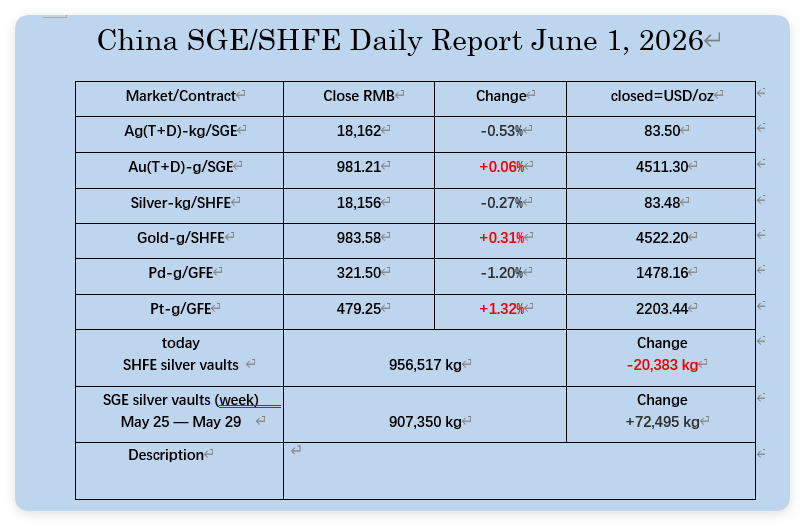
Effective immediately, major CN banks have comprehensively lowered the entry threshold for the Accumulate Gold transactions, extended trading hours, reduced transaction fees to 0.2%, and exempted transactions from taxes to encourage public participation in the Accumulate Gold.
This is genuinely shocking, and says so much about our approach to China.
I decided to check for independent reviews of the English version Xi Jinping's latest book, published a year ago, to see what people had to say about it since I hadn't read it myself.
To my surprise, I couldn't find any: not a single thoughtful review about the book out there! Even on Amazon, check it for yourself (https://t.co/1LVlhACA53): the book has only 3 ratings, that's it.
No matter where you stand on China, you’ve got to admit that’s pretty crazy: the sitting president of the world's rising superpower publishes a 700-page book explaining exactly what he's doing and why, and we don’t even care to look.
If there ever was a fact that illustrates just how willfully ignorant we are about China, this is it.
All the more because we then go spew the usual clichés around how secretive and impenetrable the Chinese system is: the book is on Amazon for $21 for crying out loud!
Anyhow, this felt so wrong that I figured I'd fix it. I bought the book, read it attentively and wrote what I hope you'll agree is a thoughtful review of it.
The book contains genuinely surprising passages, such as Xi writing that oversight of the Communist Party by "the judiciary, the public, and the media" was not just something the Party must “readily accept,” but something that he framed as historically decisive - an essential component to "escaping the historical cycle of rise and fall" that has doomed every dynasty in China's history.
Other passage that I'm sure would surprise many: a common narrative out there is that China blames the West for the century of humiliation and is driven by revenge. Well, Xi explains that's not true at all: the century of humiliation was China's own mistake, originated in the Ming Dynasty's disastrous "policy of national seclusion" that "resulted in China missing out on the opportunities presented by the Industrial Revolution" and "led to China’s decline."
All in all, the book is remarkably self-reflective and thoughtful. For instance Xi recognizes that his drive for “full and rigorous internal governance” - including to rid the Party of corruption - risked "instill[ing] fear and apprehension, or intimidate members into inaction.” He emphasizes the need for pragmatism in this regard, codified in a framework called the “Three Distinctions” that separates honest mistakes - made while experimenting, reforming, or operating without precedent - from deliberate violations committed for personal gain.
And many other surprises still. I found it a genuinely fascinating read for anyone interested in how the Chinese system works and how Xi thinks - or anyone interested in governance, period, as so much of what he writes is pretty universally applicable.
This is the link to my review of the book, an article I titled "The Book the West Refuses to Read": https://t.co/DYowWEESOd
This has to happen and for too many it will be too painful:
We need to collectively break the glass ceiling. Throughout our turbulent history we have been here before and failed. This time we will succeed.
Individually, for that to happen, we have to stop running away from ourselves and face who we truly are head on and deal with our inner trauma.
Relief from the inner trauma has to start by healing the inner self. Then collectively we can begin to heal the wounds so prevalent on a global scale.
We reset the world by rebooting individually and then collectively.
Those who have developed their own emotional intelligence will understand this because they have already healed themselves.
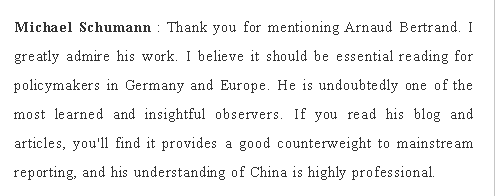
Very honored by this: Michael Schumann, chairman of the Board of the German Federal Association for Economic Development and Foreign Trade (@BWA_Vorstand), was asked about me during an interview by @realguancha and here is what he had to say 👇
I agree with him 😏
His interview, as is always the case with Michael (one of the all-too-rare senior European deciders with the intellectual courage to be unideological on China) is full of fascinating insights and well-worth reading in full.
For instance he is remarkably candid about the self-inflicted nature of Germany's industrial decline - energy costs, digital infrastructure, bureaucracy - and explicitly says Germany shouldn't use China as an excuse to avoid its own homework.
He also explains that, in their overwhelming majority and despite the political narrative, German firms remain firmly committed to China: 93% of German firms in China have no plans to leave and 53% plan to increase investment.
All in all, he frames the current trade tensions between the EU and China in the way they should be framed, and a way that reflects reality: European concerns about trade imbalances and industrial erosion are legitimate worries - Europe is indeed losing in competitiveness - but it's very unhelpful (and might actually worsen the problem) to scapegoat China and frame these issues through the lens of conflict.
Link to the Guancha interview: https://t.co/m0dl2U4WHt
The most ludicrous aspect of the futility of humanity is our inability to grasp a golden age which is there for the taking.
An alarmingly number of people are so badly scared by their own internal conflict that they can't see there is a path to a future which they imagine to be an impossibility.
We in the West are going to have to go through a catharsis on an individual and collective basis and for many it will be too traumatic to bear.
There is no other choice and it is why being informed matters more than many can comprehend. The age of being entertained needs to end because it is hugely destructive and feeds the internal conflict.
A letter written by a 27-year-old facing the final stages of cancer.
Before her death in 2018, Holly Butcher left behind a deeply moving letter that touched millions of people around the world. Written as she faced Ewing’s sarcoma at just 27 years old, her message offered a powerful reminder to cherish life, appreciate good health, and keep everyday problems in perspective.
Rather than dwelling on what she was losing, Butcher encouraged others to focus on what truly matters—time with loved ones, meaningful experiences, and gratitude for the simple gift of waking up each day healthy. She also spoke about the importance of helping others, highlighting blood donation as a small act that can make a life-changing difference.
Years later, her words continue to resonate because they serve as a timeless reminder to slow down, live in the present, and place greater value on the people and moments that make life meaningful.
This is a really fascinating paper that everyone interested in China's industrial policy should read.
It destroys so many myths (see below), and is written by deeply credible people who conducted over three years of fieldwork in China and interviewed 60+ Chinese officials, entrepreneurs, and engineers. When it comes to China studies, it literally doesn't get more rigorous than this.
First myth it destroys: contrary to popular belief, Beijing's industrial policy didn't build the companies that became China's EV champions. They rose largely **despite** it, through its cracks.
For sure, Beijing did favor EVs as an industry and pushed hard for it but their big bet was SOEs (State Owned Enterprises): research grants, pilot programs, licenses, cheap credit - virtually all of it flowed to state firms.
The result? China's actual EV champions - BYD, Geely, NIO, XPeng, Li Auto, etc. - are overwhelmingly private firms that succeeded despite Beijing favoring their SOE competitors.
How so? Because, when favoring SOEs, the central government didn't just pick winning companies, it picked winning cities, each SOE being anchored in a specific city: Shanghai (SAIC), Changchun (FAW), Wuhan-Shiyan (Dongfeng), etc.
Which means that every city not on the list, that wanted a piece of the auto boom, had only one option left: team up with private entrepreneurs who were equally excluded from central government favor.
That's what truly fueled China's EV miracle: an alliance of the excluded, between local private entrepreneurs and local mayors.
This is the biggest misconception this paper destroys: the reality is that the "Chinese state capitalism" that many in the West think powered the EV boom actually tried to block many of these companies from existing. In effect, it was closer to an obstacle course that local actors (mayors and provinces) learned to game.
Geely - now the third largest automaker in China - is a fantastic example of this.
First of all, it started off illegal since, to build passenger cars, you had to have a central government license and they couldn't get one. Zhejiang Province told them to go ahead regardless because the province had hundreds of auto parts suppliers but no carmaker of its own.
It's only a couple of years later, recognizing the fait-accompli that Geely was producing cars and was competitive, that the central government admitted them to the National Sedan Catalog - effectively legalizing them retroactively because there were facts on the ground.
Then there was the Volvo acquisition in 2010, which is fair to say - looking back - proved to be the most strategically valuable acquisition in Chinese automotive history. Despite it being presented at the time (and still described this way today) as "China buying Volvo", all 3 major state-backed banks in China (Export-Import Bank, China Development Bank, Bank of China) refused to finance the deal. The only state-bank money Geely managed to get was a $200 million loan from a provincial branch of China Construction Bank - a tiny fraction of what the deal required.
Geely actually did the deal with Goldman Sachs money via Hong Kong plus loans and equity from four local governments (Chengdu, Zhangjiakou, Daqing, Shanghai's Jiading district), each of which bought in by securing a Volvo plant or headquarters for itself.
In effect, the doors that Beijing controlled were largely closed to Geely, but it made it because the doors subnational actors controlled were opened.
Which all means this paper destroys another very common myth: the big merit of the central government in all this was to be relatively chill about it, to NOT be dictatorial.
I just imagine if that had happened in France and you had - say - the mayor of Lyon or Marseilles open, fund and promote an unlicensed carmaker against Renault: the préfet would shut it down within weeks, and the mayor would be lucky to escape prosecution.
That's the irony: on industrial policy, the supposedly "totalitarian" Chinese state proved more tolerant of local defiance than most Western liberal democracies would be. Beijing's greatest contribution to the EV miracle wasn't the plan - it was looking the other way while the plan was being violated.
To be sure, the paper doesn't hide the costs of this system: ferocious local competition also produced what's known today in China as "involution" (内卷-Neijuan, basically a hypercompetitive price war), as well as some spectacular failures. For instance one county lost 6.6 billion yuan on a carmaker that never really made cars.
But that's precisely the point: this is a high-risk, high-reward model of decentralized experimentation, the very opposite of the careful central planning Westerners imagine.
I've repeated this countless times but it bears repeating again: the single greatest misconception people have about China is - probably because we wrongly associate communism with centralized control - that it is a monolith run from Beijing. Some even say it's run by "one man."
The reality is the exact opposite: China is, in practice, one of the most decentralized countries on earth. Roughly 85% of government spending in China happens at the subnational level - against about 30% in the average OECD country (and even less in France, which is actually one of the most centrally controlled countries on earth). A Chinese mayor commands fiscal resources, land, investment funds and policy latitude that virtually no Western mayor could dream of.
Last but not least, I'd be remiss not to mention what the paper has to say on the positive legacy of Mao and its role in the rise of EVs (given I myself wrote an article titled "Mao's economic record wasn't bad, actually": https://t.co/1NZgHqBHwg).
When it comes to China myths, none is more entrenched than the idea that Mao left behind nothing but ruins.
This paper confirms a key argument of my article: Mao's deliberate dispersal of industry across China (during the Great Leap Forward and Cultural Revolution decentralizations) left dozens of cities with their own small auto works. Inefficient, yes - but these scattered factories survived into the 1990s and became the seed stock of everything that followed: the industrial base, the engineers, and the production licenses that EV startups would use to enter the market.
The paper even says it outright: the fragmentation that industrial policy "sought to eradicate" is "precisely" what "ironically enabled" the EV sector's rapid rise.
This is exactly the mechanism I described in my Mao article: structures built in the Mao era - communes becoming township governments, commune enterprises becoming TVEs, Third Front factories seeding interior industrialization - became load-bearing foundations of the reform miracle.
Fittingly, the spark for China's first municipal carmaker adventure was literally a TVE (Township and Village Enterprise), the institutional descendants of Mao's commune enterprises: Tongbao, a kit-car maker in Wuhu whose success stunned local officials into building what became Chery (one of China's biggest carmakers today). You can't tell the story of China's EV miracle without crediting the legacy of Mao.
What's the biggest lesson in all this for Western policymakers?
The obvious one is that the part of industrial policy that most people assume China does and that they sometimes want to copy - i.e. the state picking winners - is actually the part that failed.
The part that did succeed is the China nobody in the West believes exists: a radically decentralized system with a high degree of tolerance for disobedience and experimentation.
We imagine China as a country where nothing happens without Beijing's approval when the reality is closer to the opposite: China's EV miracle happened precisely because localities asked for forgiveness rather than permission.
All in all, and this is the lesson I often come back to, this is yet another illustration of the importance of understanding China for what it is as opposed to the caricature we've built of it. This matters whichever "camp" you're in. If you see China as a rival, you can't compete with someone you don't understand. If you see them as a source of lessons, you can't emulate what you've misunderstood. Whatever you want from China - to compete with it or learn from it - the entry fee is the same: genuinely understanding it.
Absolutamente increíble. Lo que hoy ha hecho Barcelona se recordará mucho tiempo. La Sagrada Familia, Gaudí y los que durante 140 años han creído en ello, lo merecían.
I confirm a 2,000 tons military grade warehouse is being built near the airport to store physical gold as part of the plan to re-launch the HK Gold Exchange. If the government plan is successful, the duo Shanghai-HK will replace Comex-LBMA as global hubs for gold trading.
As someone who partially grew up among European elite kids like him, this reminds me just how incredibly hollow some of them are.
For a quick background, I went to one of the poshest high schools in France (Janson de Sailly, for those who know) and, afterwards, to what was at the time - and probably still is - the most expensive undergraduate school in Europe (EHL in Lausanne, Switzerland).
Needless to say, many of my classmates were from unbelievably privileged backgrounds. Just in my classroom in Lausanne I had the son of a (very famous) Russian oligarch, the son of Italy's largest real estate developer and the son of Spain's largest real estate developer (funnily, the latter two were flat mates).
Another classmate of mine came from the richest family in Naples, Italy and - while we were at school - his father (known in Naples under the nickname "Il Sultano") got arrested for having bribed half of Naples's city council - which, if you know Naples, ought to tell you something.
These were the kids I was doing group projects on business ethics with (literally) 😅
Anyhow, my story, and probably my luck, was that - before going to high school in Paris - I was raised in very normal public schools in the South of France where my friends were anything but wealthy. Their parents were farmers and everyday workers.
Which means - and I'd come to realize this was very important in life - that it was easy for me to understand how big a mistake it is to see money as identity and meaning - and to confuse someone's net worth with their actual worth.
What really struck me at the time was the contrast with my "poor" classmates of earlier in my life. They couldn't define themselves by what they had - by definition - and this forced them to reach deeper for their identity: their skills, knowledge, humor, etc.
Rich kids can skip that entire process, and the tragedy is that most of them do: they reach for the readymade identity that money provides. I remember being incredibly frustrated by many of my classmates, like "ok, I get it, your dad is rich and you own a lot of nice things but who are YOU, what else is there?" The answer, more often than not, was nothing.
To be fair, there were exceptions. One of my classmates I was most impressed by came from one of Zurich's wealthiest families (which, if you know Zurich, means insanely wealthy) yet he was almost OCD in not showing he had money: driving the shittiest car imaginable, living in a small studio, etc. He was very intellectual, very contrarian, and clearly at war with the idea that his family's wealth ought to define who he was.
I only discovered who he actually was when I started my first company and he approached me to invest: to discuss the investment I went to one of his family homes, which it turned out was a literal palatial castle on the shores of Geneva lake. The guy had decided to live in a small rundown studio when he literally had a castle sitting empty a 5-min drive away.
THAT I was impressed by: it's easy to see that money isn't meaning when you don't have any. To see it when you have more than almost anyone - when everyone around you is organized around the opposite assumption - is much harder. But to actually live it, to choose the studio when you have the castle keys in your pockets - with no audience to applaud you for that - that shows real depth.
At the end of the day, I think, the real distinction isn't between rich and poor but between people who exist from the inside out and people who exist from the outside in.
Wealth just happens to make it incredibly easy to be the latter, to skip the work of becoming someone and settle for a borrowed identity that glitters from the outside but is hollow all the way through. A Potemkin village identity.
This is actually a real societal issue, and magnified by social media (with idiotic posts like this one 👇): the more "outside in" folks out there, the less people with genuine internal anchors, the more fragile everything becomes.
When you think about it, everything that genuinely matters in a society is built by people who think for themselves: they take the world in, pass it through something genuinely their own, and give back something that didn't exist before: an idea, a conviction, a stand.
Every reform, every invention, every act of moral courage in history came from someone with an internal anchor strong enough to resist the current. Remove those people and all you have left is the current.
This isn't new, by the way. Most ancient traditions warn against exactly this, from the Bible (the golden calf story) to Confucius, who built his entire ethics around the distinction between the exemplary person (the Junzi, 君子) - oriented around internal cultivation and righteousness - and the petty person (Xiaoren, 小人), oriented around profit and gain. The junzi builds himself from the inside, the xiaoren chases what's outside.
So please, do not make the mistake of being impressed by wealthy people flaunting their wealth. Don't focus on the glitter, focus on the hollowness it's trying to hide.
🚨🇷🇺🇺🇸 Russia and the US will sign an agreement tomorrow on a tunnel across the Bering Strait, says Kirill Dmitriev.
▪️The countries will continue designing a tunnel between Russia and the US.
▪️"Tomorrow we are signing an agreement to continue designing the tunnel. The tunnel will be built. This will be one of the major infrastructure projects between our countries," said the head of the RDIF.
▪️Earlier, Dmitriev noted that a tunnel connecting Russia and Alaska across the Bering Strait could be built in less than eight years, and its cost would not exceed $8 billion.
Keep this in mind as the West continues to unravel:
Friends are not there for you when the sun is shining, they are always there when the darkness descends and the nightmares begin.






![RnaudBertrand's tweet photo. This is genuinely shocking, and says so much about our approach to China.
I decided to check for independent reviews of the English version Xi Jinping's latest book, published a year ago, to see what people had to say about it since I hadn't read it myself.
To my surprise, I couldn't find any: not a single thoughtful review about the book out there! Even on Amazon, check it for yourself (https://t.co/1LVlhACA53): the book has only 3 ratings, that's it.
No matter where you stand on China, you’ve got to admit that’s pretty crazy: the sitting president of the world's rising superpower publishes a 700-page book explaining exactly what he's doing and why, and we don’t even care to look.
If there ever was a fact that illustrates just how willfully ignorant we are about China, this is it.
All the more because we then go spew the usual clichés around how secretive and impenetrable the Chinese system is: the book is on Amazon for $21 for crying out loud!
Anyhow, this felt so wrong that I figured I'd fix it. I bought the book, read it attentively and wrote what I hope you'll agree is a thoughtful review of it.
The book contains genuinely surprising passages, such as Xi writing that oversight of the Communist Party by "the judiciary, the public, and the media" was not just something the Party must “readily accept,” but something that he framed as historically decisive - an essential component to "escaping the historical cycle of rise and fall" that has doomed every dynasty in China's history.
Other passage that I'm sure would surprise many: a common narrative out there is that China blames the West for the century of humiliation and is driven by revenge. Well, Xi explains that's not true at all: the century of humiliation was China's own mistake, originated in the Ming Dynasty's disastrous "policy of national seclusion" that "resulted in China missing out on the opportunities presented by the Industrial Revolution" and "led to China’s decline."
All in all, the book is remarkably self-reflective and thoughtful. For instance Xi recognizes that his drive for “full and rigorous internal governance” - including to rid the Party of corruption - risked "instill[ing] fear and apprehension, or intimidate members into inaction.” He emphasizes the need for pragmatism in this regard, codified in a framework called the “Three Distinctions” that separates honest mistakes - made while experimenting, reforming, or operating without precedent - from deliberate violations committed for personal gain.
And many other surprises still. I found it a genuinely fascinating read for anyone interested in how the Chinese system works and how Xi thinks - or anyone interested in governance, period, as so much of what he writes is pretty universally applicable.
This is the link to my review of the book, an article I titled "The Book the West Refuses to Read": https://t.co/DYowWEESOd](https://pbs.twimg.com/media/HLoLNd2agAAsWoq.jpg)