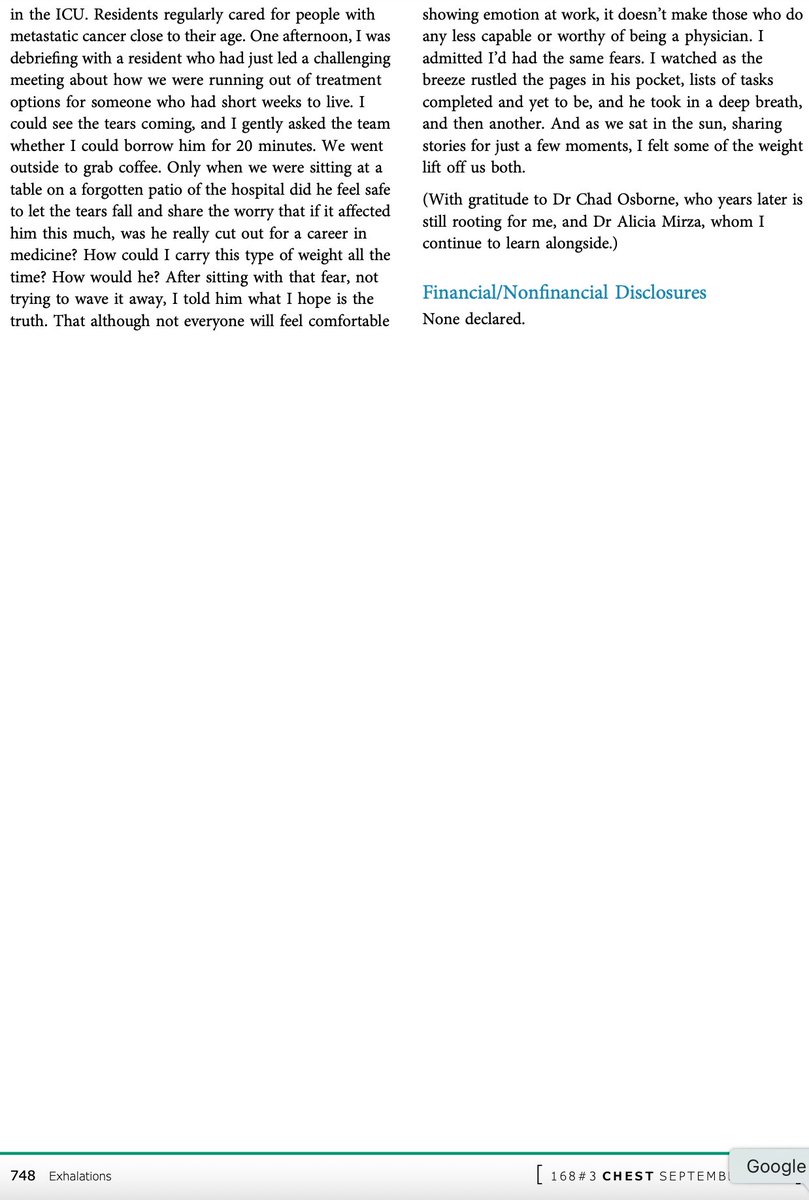
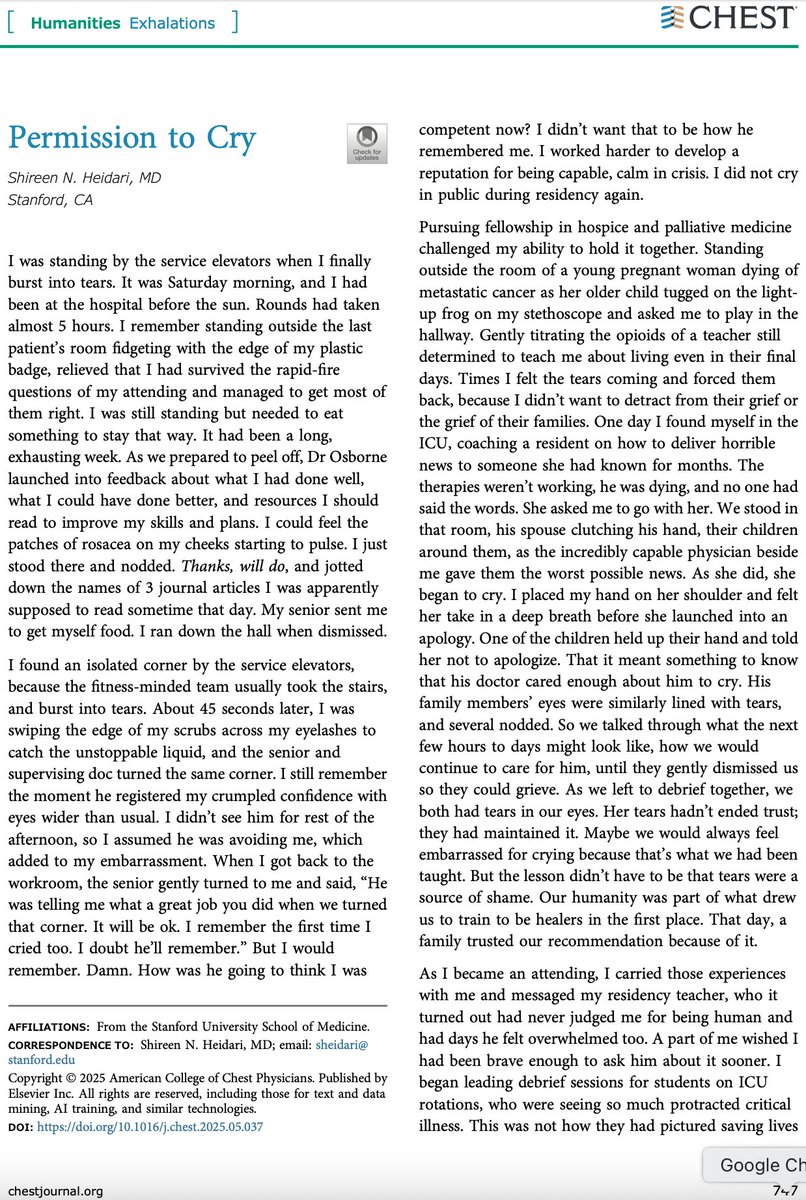
I like teaching high-achieving students, but my favorite students are the overwhelmed, anxious, average to below-average learners who doubt themselves. Medicine doesn’t need doctors steeped in self-doubt. My favorite compliment you is: "You helped me believe I could do it."
🔍 New Study: Initial fluid resuscitation with lactated Ringer’s solution, compared with 0.9% saline, might be linked to improved outcomes in patients with sepsis-induced hypotension.
➡️ Read the research from CCM: https://t.co/W0Zl9xPiGv
#sepsis#SCCM#CritCareMed@SCCM
1/
I still vividly remember what it was like to be an intern — the fear and uncertainty of stepping into the role of “doctor” for the first time. So I drew this comic series to reflect on things I’d tell a younger version of myself (patient story generalized for confidentiality)
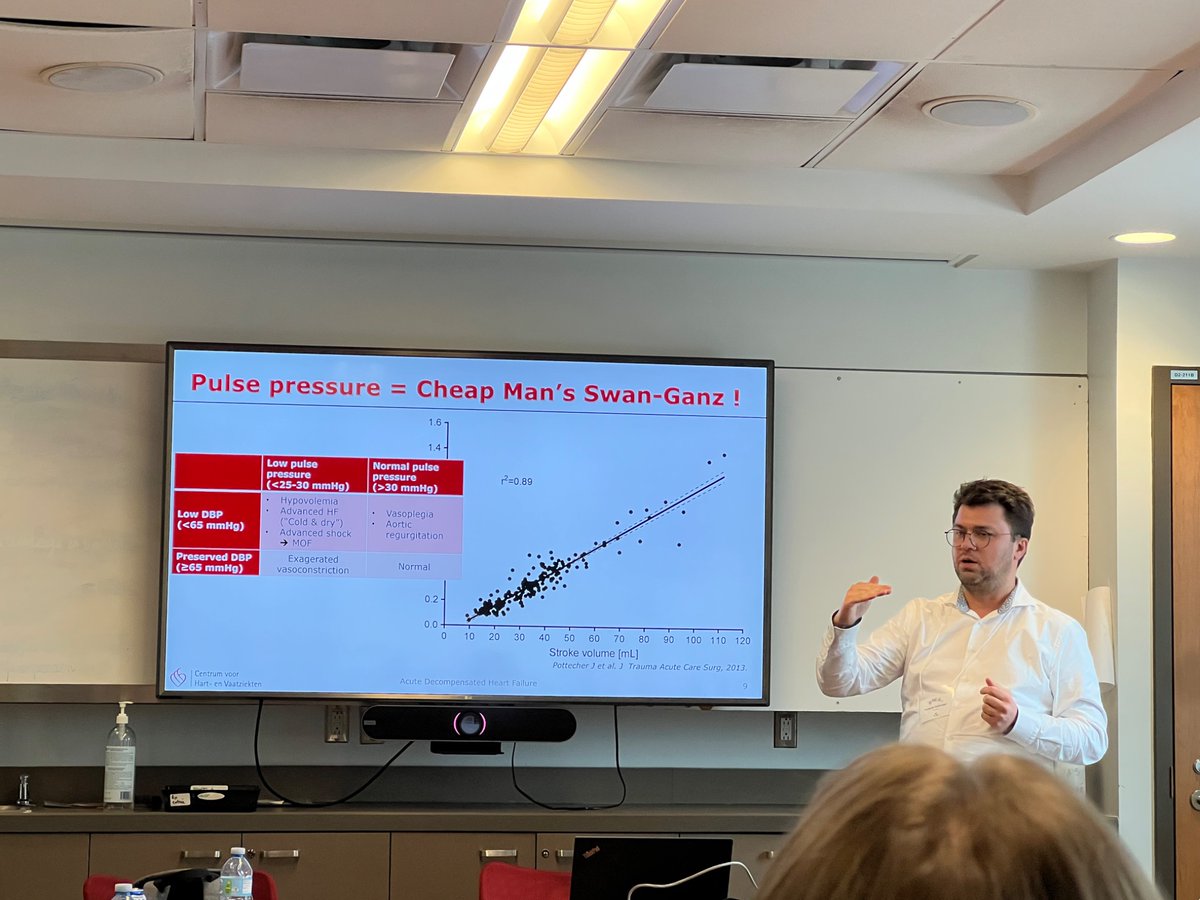
ICU Hemodynamic Secrets – The role of ScvO2:
There is not such a thing as a “normal” cardiac output (CO). A CO of 3.5 l/min may be adequate for a 90 years’ old, 100 pounds sedated patient but inadequate for a 40 years’ old, 250 pounds patient with septic ARDS. Ideally,
@NephCCM El punto no es perfección, es transparencia y honestidad. Mientras sea vox populi que eso faltó durante muchos años, no confiaré en aquellos que esta demostrado utilizaron el dinero de impuestos para su enriquecimiento ilícito sin hacerse responsables.
This JAMA Clinical Guidelines Synopsis summarizes the 2024 Society of Critical Care Medicine guidelines on use of corticosteroids in sepsis, acute respiratory distress syndrome, and community-acquired pneumonia.
https://t.co/MrFIHsGxXR
There is a lot of buzz about our new paper in Nature Medicine on the effects of LLMs (GPT-4) on physician management reasoning! I had TONS of fun working on this -- but what it MEANS requires some unpacking.
A 🧵⬇️
https://t.co/yLZJw1U5IE
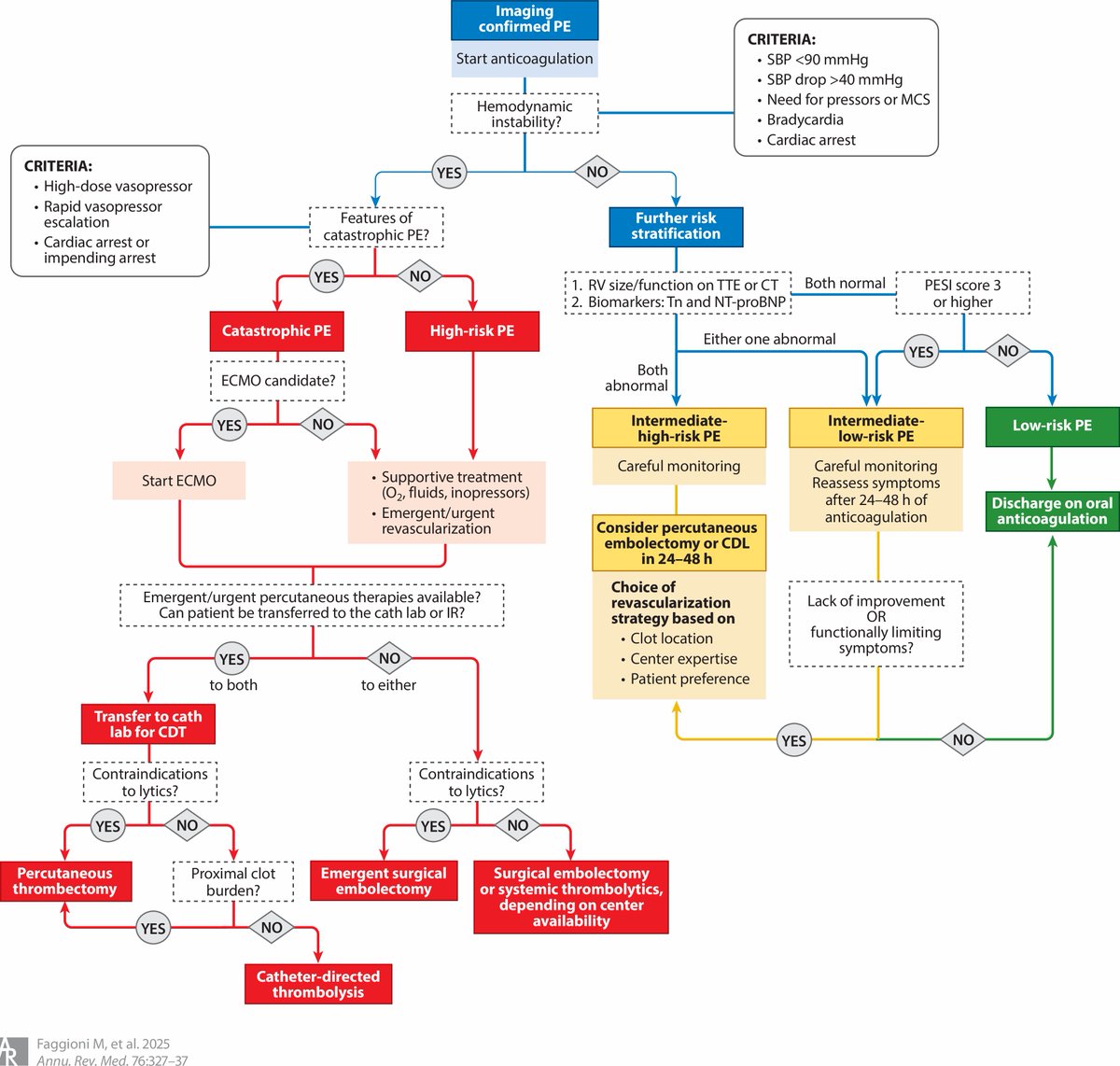
A Rational Approach to the Treatment of Acute Pulmonary Embolism
CCR Journal Watch
https://t.co/Sp06oA6IDG
Get the latest critical care literature every weekend via the CCR Newsletter - subscribe at https://t.co/nitMzacLrj
I had a med student once ask “will rounds always take so long?” after we finished at 11am. I truly hope they’re now thriving in the surgical subspecialty of their choice.
Intravenous vasopressor infusions are amongst the most common pharmaceuticals we use in critical care medicine - 1 in every 4 patients admitted to ICU receive them.
Are “oral pressors” here to replace them?
🧵Read below for our take on available evidence and the ongoing pursuit that is to reduce the burden of IV vasopressors 👇🏼
1/