@CKCapitalxx I think the "former" allies of US will be reluctant to rely on American weapon systems going forward - after the recent actions and threaths - keep that in mind in your projections.
🚨NEWS: Shocking scenes out of France as it appear a member of the press intentionally tripped a Police Officer dealing with migrant riots https://t.co/kNLX2MztHt
@Dalbjerg@LeandinhoDK Dorgu's korte hjørnespark var håbløse - selv efter scoringen forsøgte han med de korte igen - det førte til et gult kort og efterfølgende scoring til 3-2.
Helt unødvendigt 🤯
The world's top 5 cuisines among gourmands
1. German (pictured)
2. British (close second)
3. French (French fries)
4. American (pizza)
5. Spanish (olives)
Pudsig måde at date kvinder på. Nå, men sådan er kulturelle normer jo så forskellige. Vi skal ikke dømme, men prøve at forstå. Etnisk danske mænd slår jo også ihjel. Intet at se på her.
Ville fx @saschafaxe og @trinemach sige.
Disse mænd er jo også spændende i al deres ‘farlighed’, er der mange venstrefløjskvinder, der synes. Derfor har de stemt for indvandring af flere og flere af dem. Det vil de fortsætte med, venstrefløjskvinderne, indtil de bliver slået ihjel.
For så kan man jo i sagens natur ikke stemme længere 😬
Yesterday, President Trump said that the US will ask Europe to repay the money the US spent on Ukraine.
My thoughts on that:
First and foremost, the people of Ukraine are deeply grateful to the United States for all the assistance provided!
Indeed, Ukraine has received real and massive military assistance from the United States - $67.8 billion in committed defense articles and services: over 10,000 Javelin systems, over 3,000 Stingers, dozens of HIMARS, Patriot, and NASAMS systems, Abrams tanks, Bradley and Stryker fighting vehicles, howitzers, and millions of artillery shells.
Part of the U.S. assistance was provided as non-repayable grants. Aid to Ukraine also included U.S. defense spending and orders placed with American industry. The cost of aid to Ukraine and the economic and security benefits for the U.S. existed simultaneously.
First, the U.S. did not transfer $195 billion to Ukraine. This figure represents the total budgetary framework of the U.S. response to the war, which includes not only weapons and financial aid to Ukraine, but also U.S. troops in Europe, the replenishment of U.S. military stockpiles, purchases from its own military-industrial complex, logistics, and agency operations. As of March 31, 2026, out of $195 billion, $177.8 billion had been obligated and $116 billion actually disbursed. Moreover, roughly $4.2 billion within this system already came from allies via the PURL, PURL, rather than from the American taxpayer.
Second, nearly $50 billion of this amount was not aid to Ukraine at all - it was U.S. spending on its own troops in Europe. This includes EUCOM, the European Deterrence Initiative, troop deployments, transport, logistics, infrastructure, and sustaining the U.S. military presence. These were real U.S. budget expenditures caused by the war, but Ukraine never received these funds. Presenting them as an American "gift to Ukraine" that Europe must now compensate for is incorrect.
Third, nearly $46 billion more was allocated to replenish the U.S.’s own arsenals. The U.S. provided weapons to Ukraine from its own stockpiles, after which the Pentagon received funds to replace them. In effect, Ukraine might have received an older system, while new budget funds went to American manufacturers to produce new weapons for the U.S. As a result, these expenditures simultaneously funded the rearmament of the U.S. military and the operations of American factories.
In other words, tens of billions of dollars in military assistance did not go directly to Ukraine - they were converted into defense contracts inside the United States. Through USAI, new systems, ammunition, and military services for Ukraine are funded through manufacturers. Through replenishment, U.S. companies produce replacements for what the Pentagon transferred to Ukraine. The beneficiaries include Lockheed Martin, RTX, General Dynamics, Boeing, BAE Systems, Oshkosh, AM General, AeroVironment, L3Harris, and a large network of suppliers.
Fourth, the United States gained just corporate revenue from this spending, but also new production capacity. Funds went toward expanding production of 155mm ammunition, PAC-3 MSE, GMLRS, Javelins, and other systems. The war exposed shortages in the U.S. military-industrial complex while at the same time providing the Pentagon with funding to address them. In other words, part of the assistance to Ukraine became an investment in America’s own defense industrial base.
Fifth, direct transfers of money to the Ukrainian government were far smaller than the political claims about "hundreds of billions." The largest block of direct budget support amounted to around $30 billion and was provided mainly through the World Bank for civilian expenditures - salaries for Ukrainian teachers and medical workers, pensions, and social payments. There were also humanitarian, energy, and economic programs. This was real financial assistance to Ukraine. But that is precisely why it should be distinguished from the tens of billions spent by the Pentagon inside the United States.
Sixth, the narrative that America was paying instead of Europe does not reflect the scale of European assistance. The EU and its member states estimate their total support for Ukraine and Ukrainians at more than €220 billion. According to U.S. accounting, the United States committed $67.8 billion in military assistance, while total security assistance from allies and partners amounted to around $130 billion. The accounting methodologies differ, so these figures should not be mechanically compared dollar for dollar. But they certainly do not show a situation in which America paid while Europe did not.
Seventh, Europe is already financing American weapons for Ukraine. Through PURL, allies transfer funds to the United States for the supply of the American weapons to Ukraine and for the replenishment of American stockpiles.
By March 2026, the figure was already approximately $4.2 billion. And in the first half of 2026, European donors purchased at least €3 billion worth of weapons for Ukraine from U.S. defense companies. In other words, part of the current system literally works in the opposite direction: European money → the U.S. military-industrial complex → weapons for Ukraine.
Yes, the United States provided aid to Ukraine, but not as some enormous free transfer made in place of Europe. In reality, Ukraine received critically important assistance for which we will remain grateful, Europe spent vast sums of its own money, and a significant share of U.S. spending remained inside the United States itself - in the form of new weapons, replenished stockpiles, a strengthened military presence, and multibillion-dollar contracts for the U.S. military-industrial complex.
@SteffenFrolund Fremragende fremlæggelse af deprimerede realiteter - der som du nævner er en selv-fremkaldt ulykke som folk med faglige indsigt har kunne følge i slowmotion - under højlydt benægtelse af fakta fra de der udløste den.
“In my day son we drove our furniture and it was made of red velvet or green Corinthian leather and smelled of cigars, cigarettes, martinis and other stuff. This is what they took away from you!”
Midt under valgkampen sniger Energistyrelsen og EA Energianalyse en stor fejlrettelse af deres atomrapport ud 👀
De siger intet til nogen om det. Er det ikke relevant at venstrefløjen og antiatomkraft folk har fyret forkerte ting af om landets energipolitik? Det skulle jeg mene danskerne fortjener at vide højt og klart.
Men vi ved at folk fra erhvervslivet har fundet en graverende fejl i måden man opgjorde omkostningerne til atomkraft. Selvfølgelig til den fordyrende side.
Det har EA været nød til at rette.
Så nu er casen for atomkraft i Danmark yderligere forbedret. Men de prøver at få det til at lyde som om konklusionen ikke er ændret. Men den nye udgivelses hovedkonklusion har de ændret i. Se screenshots. Der er en væsentlig detalje ændret.
Men ændringer trækker jo tæppet væk under alt det vrøvl man har skulle høre på, i direkte modstrid med dataen, om at det måske giver mening omkring 2050.
Den originale version:
"Hvis varmen kan nyttiggøres, er økonomien tæt på balance"
Den nye:
"Hvis varmen kan nyttiggøres, er økonomien i balance"
Der er en verden til forskel på om det giver mening i 2040, eller anti-atomkraft typerne kan bilde folk og journalister ind, at "tæt på" betyder efter 2040, og man derved har et figenblad til at sige 2050. Det har sågar været overskrifterne på flere klima- og energimedier. Disse artikler er nu nul and void og kræver reelt set en rettelse. De burde været dygtigere end det.
Det lille luske-figenblad er altså nu væk. Atomkraft i Danmark giver mening i 2040 i det ene scenarie - og før 2040 i de 2 andre scenarier. Det er sjovt, hvis det ikke var så alvorligt.
Own up til jeres fejl. Sig det vidt og bredt. Lad danskerne høre det:
Skal vi have det bedste energisystem, så skal vi altså koble atomkraft på senest i 2040.
For at kunne det, så skal vi igang nu.
Stem LA og lad os komme i sving 🫡
Smukt. Antallet af underskrifter på dette borgerforslag er mere end fordoblet på kun et døgn. Fra 1.850 til små 4.000. Sådan. Tak. 💪🏻🇩🇰
#dkpol#dkmedier
https://t.co/ksKBNvFEr1
Don’t look away. The richest nations, the strongest military alliance in the history of the world are right next door and choose every day not to stop this. All while Ukrainian soldiers defend their cozy complacency.
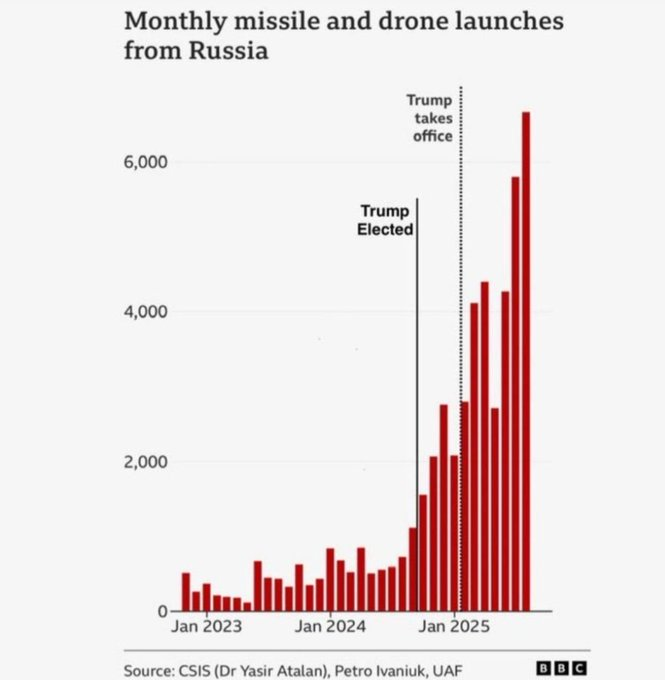
Trump loves to claim that Putin didn't invade Ukraine while he was president (forgetting that the war continued for all 4 years of his first term), but does not seem to have noticed that Putin vastly expanded his killing in Ukraine during Trump's second term.
@MichaelVektor@SteffenFrolund Det søkabel man laver til sjælland er på 1,2 GW så Danmark kan ikke få mere strøm - vi har i forvejen rigeligt grøn strøm på sjælland når det blæser - det afspejles i tallene der viser at energiø Bornholm ilkke har særlig stor effekt på vores CO2