As the EPA revisits parts of its #PFAS drinking water regulations, questions about exposure and health monitoring remain central.
National Academies guidance outlines evidence-based approaches for PFAS testing and clinical follow-up: https://t.co/3pQWTPQXmH
The @theNASEM have set up a web resource to answer scientifically vetted responses to common questions on the Ebola virus. This will evolve as as the situation changes. Please share.
Federal scientists, a great American invention: a letter to our federal colleagues - Lawler - Frontiers in Ecology and the Environment - Wiley Online Library https://t.co/cUp72u1Mm3
Advances in #SyntheticBiology could transform medicine, energy, and more.
Our new report examines #biosafety, #biosecurity, and environmental considerations for #SyntheticCells, offering guidance to reduce risks while supporting innovation.
Learn more: https://t.co/DfZ552Yi1g
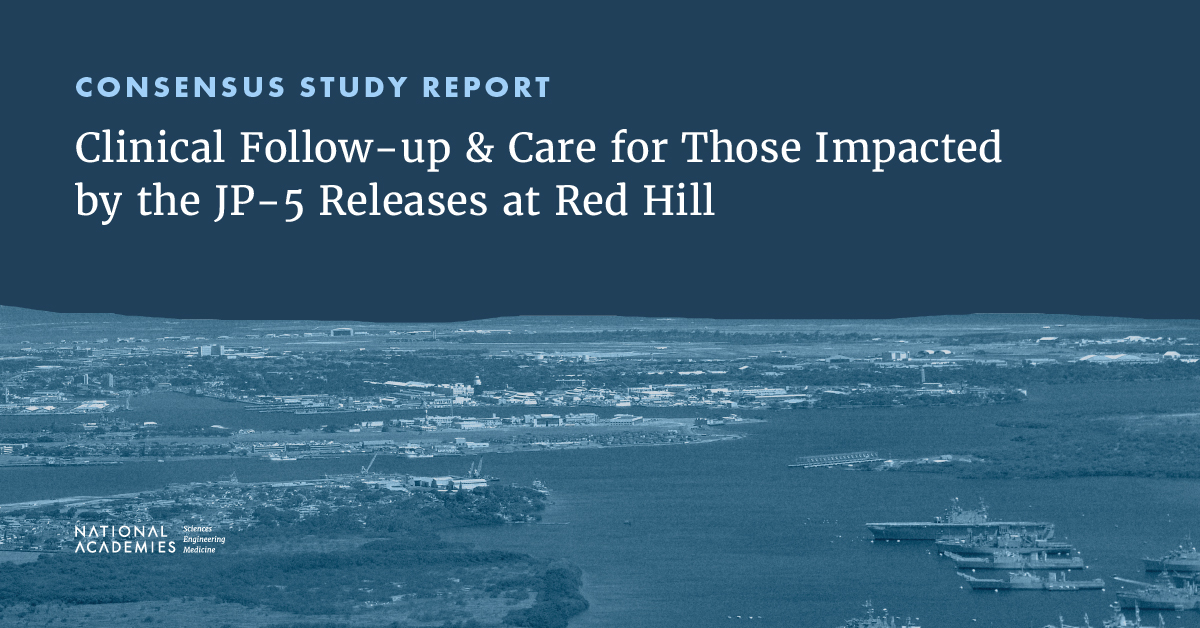
When environmental exposures affecting #PublicHealth occur, clear clinical guidance matters.
Our new report outlines how clinicians can assess symptoms and provide care after drinking water was contaminated with jet fuel in O'ahu.
Explore the findings: https://t.co/jdJKAG356l
Have experience in Science Communication? Interested in working with National Park Service staff? @ESA_org is pleased to host an Info Webinar on Mar 9 at 3pm ET about the Science Communication in the Parks (SCIP) Fellowship Program and how to apply! https://t.co/KPvTeLO7yC
Today, the Trump administration repealed the endangerment finding: the ruling that served as the basis for limits on tailpipe emissions and power plant rules. Without it, we’ll be less safe, less healthy and less able to fight climate change — all so the fossil fuel industry can make even more money.
The War on Science continues. EPA Research, NIH, CDC, now this. Administration Plans to Break Up Premier Weather and Climate Research Center https://t.co/cLMeR82CkD via @NYTimes