Stock design is one of the most talked-about parts of a rifle setup, and some of what gets said about it holds up, other stuff not-so-much.
I’ve withheld strong opinions because I’ve always felt the only way to figure out reality is side-by-side comparisons. You get a qualitative feel for things pretty quick. Adding in the @triggercam_official adds the ability to do some quantitative analysis.
I’m deep into a stock design project right now. Nearing a couple hundred rounds of .308 downrange across a bunch of different designs, testing two things specifically: what a stock actually does for felt recoil, and what it does for follow-up shots, getting back on target quicker.
Some of it is undeniable. You feel it and you see it on target, no argument. And some of it I just don’t notice. But I also have noticed some things that don’t get discussed much. Lots of learning on my end that I don’t think I’d ever know unless I sat down and did this.
This one’s got a bunch more hours of analysis and editing ahead.
A constitutional right to hunt and fish sounds like the thing that finally protects us. But what is it really? I’ll be honest, I didn’t fully understand it, and I wasn’t going to pretend I did.
24 states have it. Colorado doesn’t, and we still beat back a hunting ban at the ballot without it. So is it real protection, or does it just sound good on paper?
I had Dan on to explain it. What it actually means, where the real value is, and how it gets used strategically to defend our hunting rights.
Thanks for coming on Dan!
#PursuitWithCliff
Every elk hunter in the West has wondered about New Zealand. More game, fewer crowds, an easier mountain?
Evan just got back from a hunt down there with Jurgen and I wanted his read on all of it. Tougher or easier than the West? More game or less? What actually transfers and what doesn’t.
Evan’s one of the best elk hunting guides in North America. Always enjoy having him on.
"The US may be the land of the free. But New Zealand is the land of the big game hunter."
That's the line Jurgen used to describe his home country, and it stuck with me long after we stopped recording.
What made the conversation worth having is that Jurgen actually understands both sides. He's guided hunters in the United States. He grew up hunting New Zealand. So when he draws the contrast, it's not a tourism pitch. It's an honest read from a guy who's lived it.
We covered the differences in access, the kind of country a hunter can still find down there, what an American hunter should actually expect, and the parts of NZ hunting that don't make it into the brochures.
Enjoyed every minute of it. Episode is up.
There’s a whole pile of guys out there with $2,000 in optics and a tripod head that won’t stay tight.
Use the set screws.
You’re welcome to tell me how obvious this is or admit that you had no idea they existed…
Most folks using max point blank range are fooling themselves.
They look at a trajectory chart, see the path runs 2 inches high at 100 yards and 10 inches low at 300 yards, and call it good.
Center hold, send it.
That trajectory line isn’t where your bullet lands. It’s where the center of your group lands. The dispersion stacks on top. Sometimes above the line, sometimes below. Combine that with a path already near the edge of the kill zone and you’re missing at an unacceptable rate.
Do the honest math with your real group size at distance, not your best three shots, and the picture changes fast. Most hunters shoot 9-10” groups at 300 yards in real hunting situations.
That’s why hunters who actually shoot a lot of animals past 250 end up dialing.
MPBR isn’t wrong. It’s oversold to guys who haven’t accounted for the dispersion already built into their system.
The vast majority of hunters would be better off if they taped their magnification at 8x-10x power. Period.
Cranking it higher is one of the most common mistakes in the woods. More magnification doesn’t make you more accurate. It makes you more likely to blow a wind call. More likely to miscall whether you hit the animal. More likely to be incapable of getting a follow-up shot. And for a lot of guys, it cranks up the buck fever, because the wobble zone looks bigger and more erratic than it actually is.
Most folks assume “everything gets used” is marketing copy. I get it… and I’m one of those guys who has to go see for himself.
In Africa, it checks out. Without exception, every animal we shot was eaten by us, eaten by the staff, or sold in the commercial market the same way beef gets sold in a grocery store back home. Nothing wasted.
Here’s the part that surprised me. Game meat in Africa isn’t a premium product. It’s cheaper than domestic beef. That’s the inverse of how it works here. In the US, wild game is mostly accessed by people with enough disposable income to hunt. In Africa, it’s the affordable protein. The cheaper option on the shelf. Kinda cool.
On average, from what I saw, game is more utilized in Africa than it is in the US.
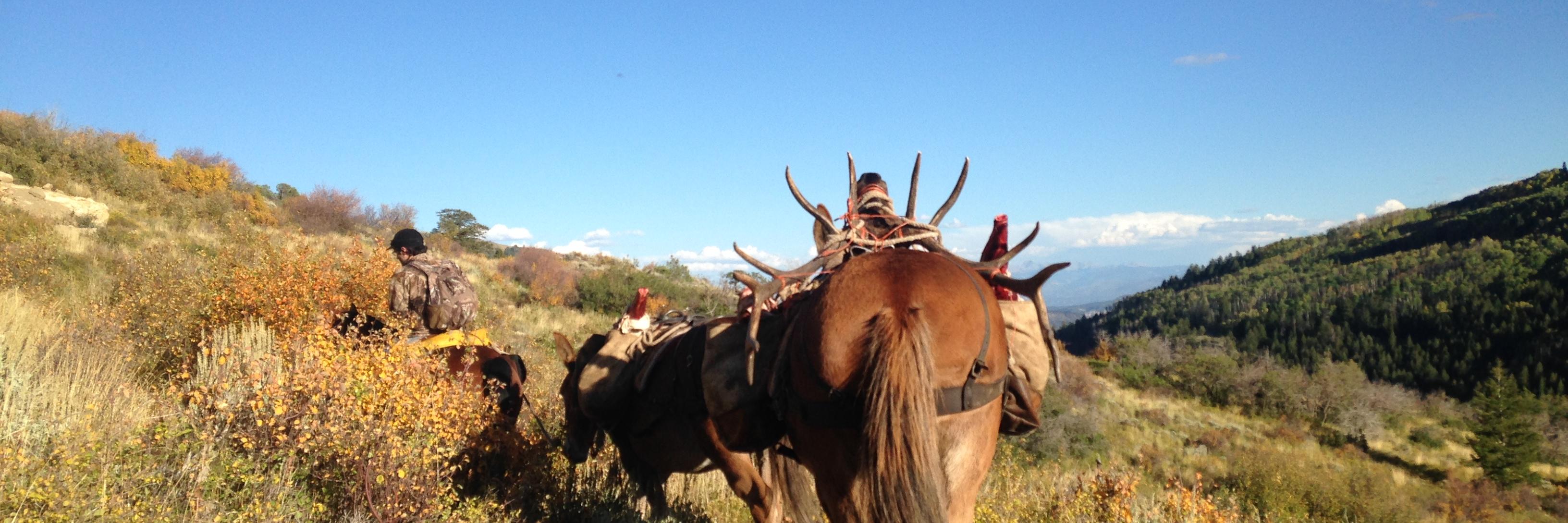
Nothing humbles a packout like a full body bull elk hide. Big, sloppy, and a nightmare to deal with. The fix is mantying it up!
Fold it tight, lock it down, turn that mess into a clean package your horse or your backpack can deal with.
The never-ending elk caliber question. You can’t actually answer it for somebody else. Everybody’s different and everybody’s optimizing for something different.
But here’s the gist. Most hunters are way overgunned for the actual distances their skill set suggests they should be shooting. Big magnums build bad habits. Flinching, anticipating, jerking the trigger. In most cases the damage recoil is doing to your capabilities far outweighs the marginal increase in damage you are getting from a larger caliber.
Shoot a smaller cartridge you’ll actually practice with. Get close. Understand anatomy well enough to pick angles.