Climate #TippingPoints: why do they happen, how might they affect us, can we predict them? Climate #scicomm blog led by @dvdmckay & seed-funded by ReCoVER
NEW: We've started a #FactCheck series on some recent, widely circulated, but flawed claims that various #ClimateTippingPoints have been triggered and so catastrophic warming is now near-inevitable. Read our Intro to find out more: https://t.co/Zg3gK2ju4D
PBS Terra has a new documentary about the risk that the Atlantic Meridional Overturning Circulation (#AMOC) is heading for collapse. 🌊
Well worth watching!
I do have a few quibbles, though.
In case you're interested, they are in my Bluesky thread.
https://t.co/FUghPMRrDf
New post: Are Earth's natural carbon sinks collapsing? https://t.co/aZWt7ubyVD
Following recent stories on the global carbon sink "collapsing" in 2023, we look at recent claims & put them in context of the latest research.
#ClimateCrisis#ClimateFeedbacks#CarbonSinks#SciComm
I've got a commentary out today in the new @DialoguesCC journal, summarising progress so far in research on climate #TippingPoints, and reflecting on their implications for climate action & the outlook for future research:
https://t.co/2JqMjqidyP
#ClimateChange#OpenAccess
A new perspective in Nature Climate Change argues that the discourse around climate tipping points risks "oversimplifying the diverse dynamics of complex natural and human systems and for conveying urgency without fostering a meaningful basis for climate action." https://t.co/b8B54CBe6U
New post from me at @ClimateTipPoint on recent stories on carbon sinks "collapsing" last year and Earth's "buffering capacity" reaching its limits, putting it in to context of past trends and future projections. A bit of a lukewarm take by now, but hopefully a useful explainer!
New post: Are Earth's natural carbon sinks collapsing? https://t.co/aZWt7ubyVD
Following recent stories on the global carbon sink "collapsing" in 2023, we look at recent claims & put them in context of the latest research.
#ClimateCrisis#ClimateFeedbacks#CarbonSinks#SciComm
The dangers of a collapse of the main Atlantic Ocean circulation, known as Amoc, have been “greatly underestimated” and would have devastating impacts, according to an open letter by 44 experts. One of the signatories, @rahmstorf tells me why https://t.co/3b2YRJqNs9
🚨 New episode alert! 🚨 There's tons of talk right now about climate tipping points — this idea that planet Earth is on the brink of irreversible climate disaster.
So ... what's the science?? Are we really on a knife's edge?
@spotifypodcasts
https://t.co/7xWXzebvTd
Our work with @GlacierThwaites has uncovered known and unexpected processes shaping #ThwaitesGlacier and West Antarctica
Latest models predict:
📈 accelerating ice loss in the 21st/22nd centuries
💧 collapse of the West Antarctic Ice Sheet in the 23rd
➡️ https://t.co/aH0cJmzoGx
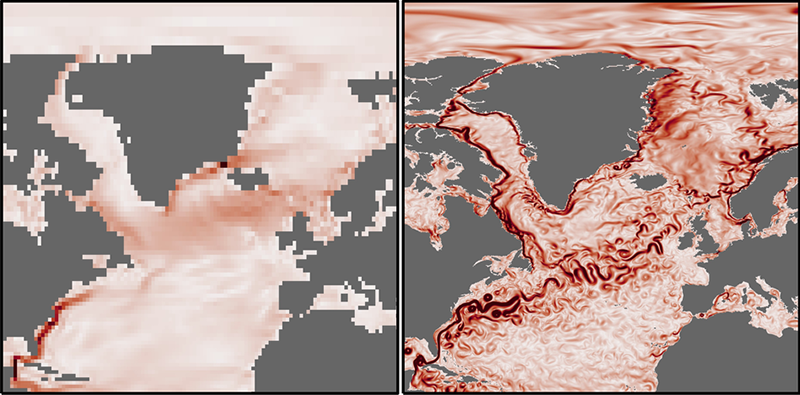
As Earth’s climate warms, the Gulf Stream and other Atlantic Ocean currents will slow down. A new and detailed simulation shows that the slowdown could vary from place to place, with some seas experiencing an abrupt collapse in circulation. https://t.co/yncy2EXJKf
Our new paper out today in @NatureGeosci!
We identify the possibility of rapid changes in the distance warm water can intrude - and melt - the bottom of ice sheets.
https://t.co/pEBMKTZQYC
@BryonyFreer and I wrote an explainer for @CarbonBrief
https://t.co/F5Q9m396sP
@wodecki54@richardabetts There is some new stuff, e.g. the 2050 tipping potential map combining renalysed datasets to gauge risk, and the updated rainfall threshold analysis (as per methods section https://t.co/FEDw8oTZPS), but other parts are mostly synthesising existing work & data.
New #TippingPoint study out on Amazon dieback, with comment here from coauthor @richardabetts: https://t.co/g4XAj9iFp1
A key point is lowering safe boundaries (NB *not* tipping thresholds, but precautionary guardrails before TPs) to 10% deforestation (vs 15% now) & 1.5C warming.