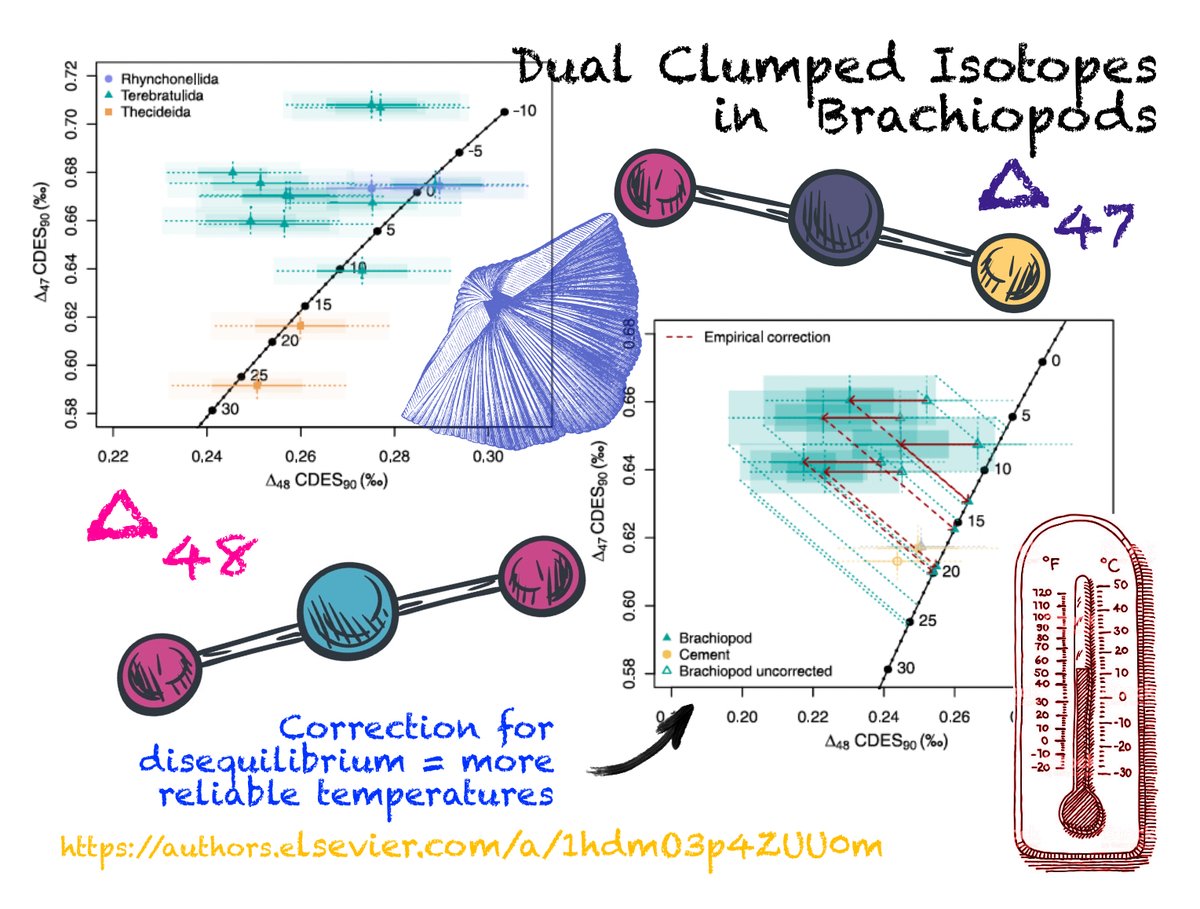
Check out our latest research! We measured isotopic disequilibrium in the dual clumped isotope composition of brachiopod calcite (that’s ∆47 and ∆48)...see below for more! https://t.co/Tod0N13FlX
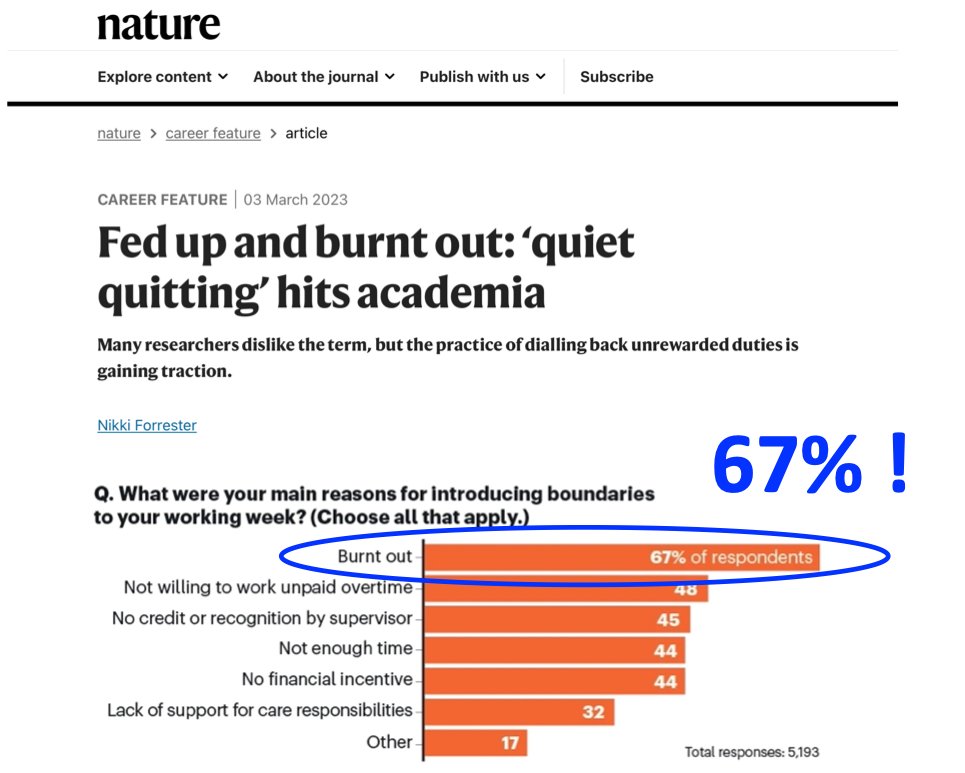
No reward - no duties. 75% of respondents have reduced the hours spent on academic duties since 2020 (Nature polls).
Mostly due to burnout and unwillingness to work for free.
This included attending conferences, peer reviewing manuscripts and grant proposals, committees, mentoring and even teaching.
Why?
Because scientists are tired of not being able to do #science.
- Students are tired of being unappreciated and overloaded
- Faculties are tired of “community duties” that become overwhelming (conferences, committees, reviewing, outreach, etc)
And everyone is tired of small salaries, zero empathy and little credit.
The problem is greatly summarized by Isabel Müller (in the article):
“There’s so little acknowledgement that people have difficult, complicated lives outside of work.”
A year ago, Nature described how PhD students don’t want to be postdocs and faculties are leaving academia. Now, we see that those who stayed are trying to resist the system from the inside.
But the problem is - the system is too rigid, too traditional and too elitist.
So, as a community, we can change it only by raising our voices and expressing distaste with the status quo. I applaud Nature for writing about these issues so regularly. The academic world has too many interdependent parts which should be addressed concurrently.
This is why we should stay united and strong as a community.
Regarding the academic environment we all hope to have, I loved how Isabel Müller put it in the article:
- I hope it becomes the new normal to say: “My life matters. My work is an important part, but I decide what my life looks like, not my employer”.
#AcademicTwitter #education
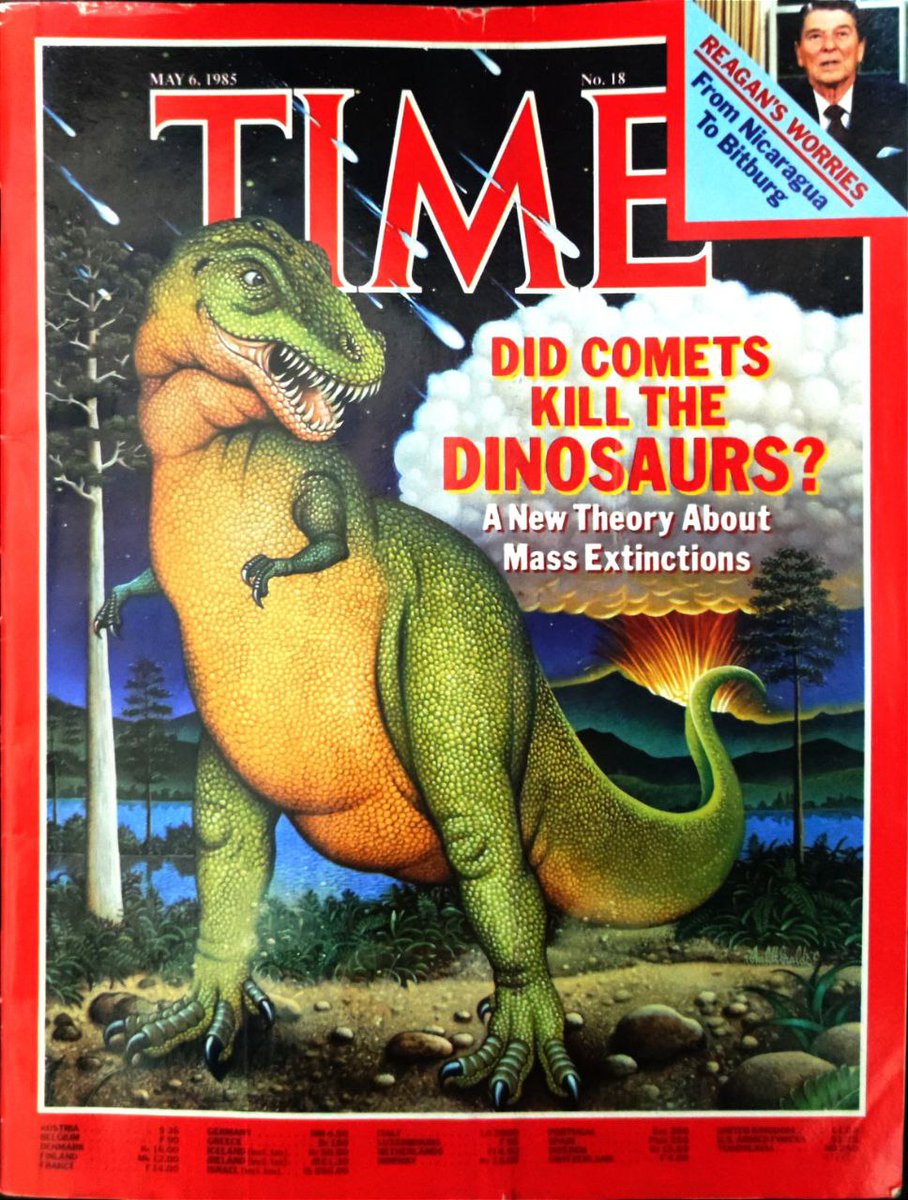
Pleased to announce that our Encyclopedia of Biodiversity (3rd Ed.) chapter ‘#Dinosaurs, Extinction Theories for', co-authored w/ @SteveBrusatte, is out now! https://t.co/4CjB7DLp50
🦖☄ A short thread 👇1/6
Great to see @ThePalaeoverse paper out in @MethodsEcolEvol https://t.co/RZGvjXJHT3 This #Rstats package aims to make data cleaning & processing more streamlined & easily reproducible for paleobiologists. Thanks to a great team of coauthors & to @LewisAlanJones for leading 1/4🧶👇
Troodon made its eggs like modern reptiles, the slow way, despite its similarities to birds, which are known for their speedy egg mineralization. The findings provide insight into the evolutionary transition from dinosaurs to birds. https://t.co/dS9VsAT0wF
@staitis@NielsJdeWinter Potentially it could, but Troodon eggshell are some of the least porous in dinosaurs. Since they are partially exposed instead of being completely buried they to need to reduce their gas exchange with the external atmosphere. We screened them for diagenesis anyway.
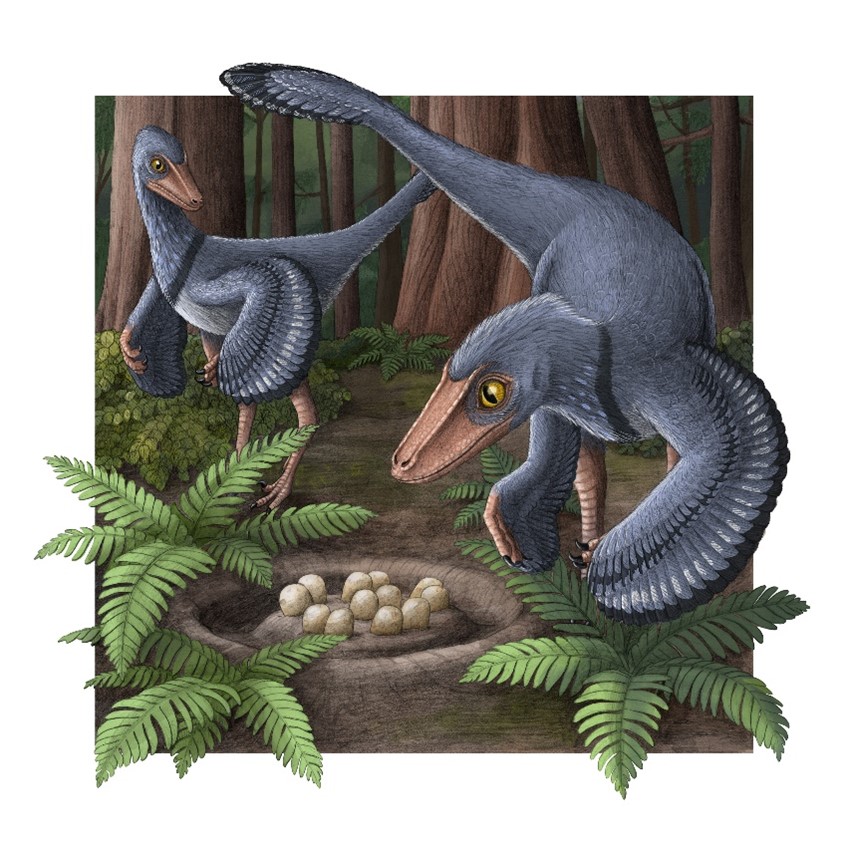
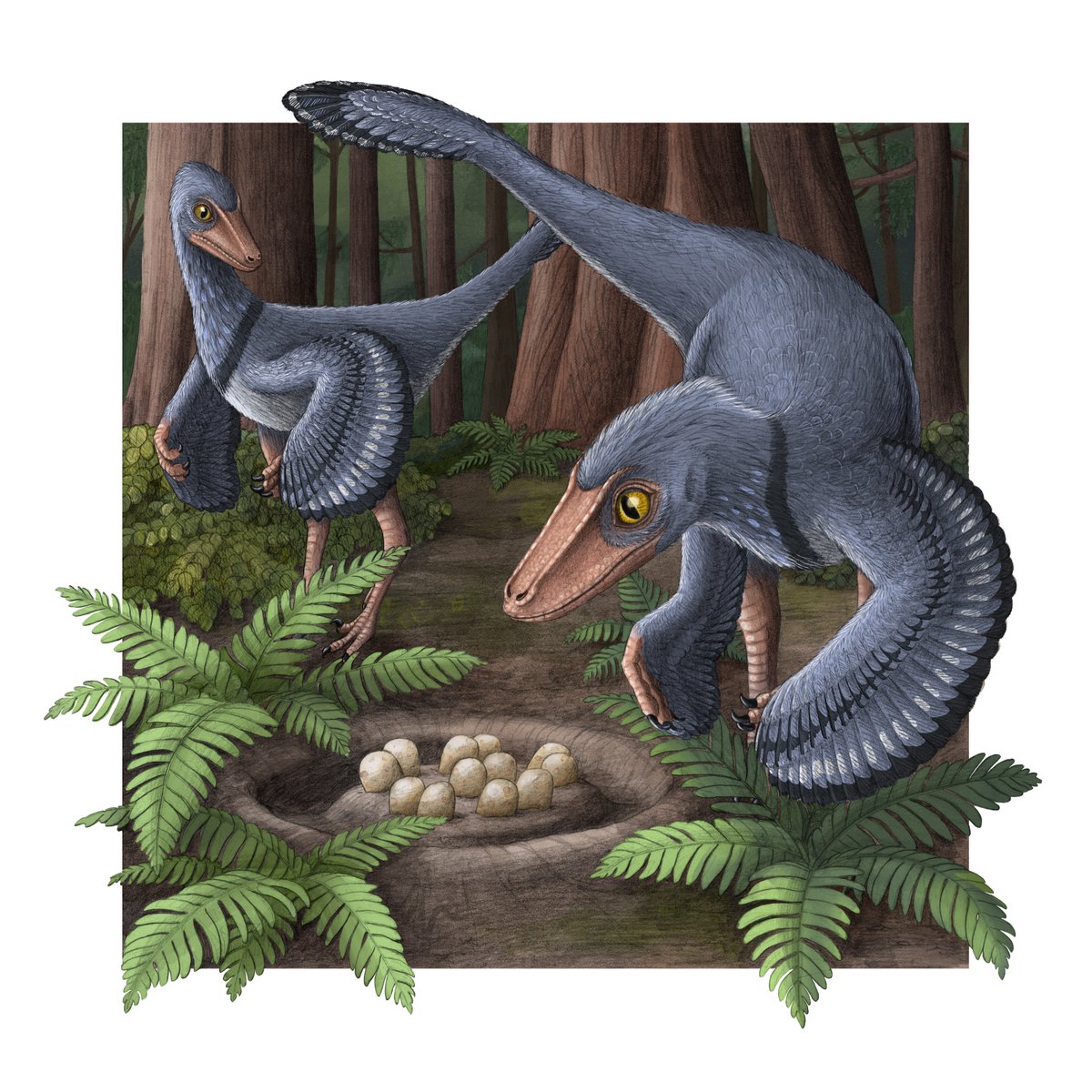
In my view, the most interesting conclusion of our last work is that we were able to tell that 2-4 Troodon females shared a single communal nest, like modern ostriches.
This aspect has been beautifully pictured by @AlexBoersma_Art with the support of @PNASNews.
Seventy-five million years ago in Alberta, a river flooded, burying the eggs of bird-like dinosaurs nesting on the nearby plain. Now, tiny pieces of those fossil egg shells offer new evidence about how dinosaurs lived, bred and evolved into birds.https://t.co/tbbek40f7n