Hey Elon, what's the shortest realistic timeline you think we could actually pull off for getting millions of people living on Mars full-time?
And if that ends up happening way after your lifetime, how do you picture your work keeping the momentum going out there on Mars long-term?
What kind of real impact do you think today's efforts would still have on the people and the place generations from now?
OpenAI just unveiled “Jalapeño” — its first custom AI inference chip, developed with Broadcom in just 9 months
That’s incredibly fast (normal ASIC cycles take 2–4
years)
How?
1. Deep software-hardware co-design
2. Used their own AI models to accelerate chip design & optimization
Early results: Much better performance-per-watt, aiming for ~50% cheaper inference costs.
Timing is key: This dropped right before OpenAI’s GPT-5.6 release (Sol, Terra, Luna), which the US government asked them to limit to “trusted partners” only for national security reasons
What it means:
1. OpenAI is going vertical: owning more of the stack (models + silicon) to cut costs and reduce Nvidia dependence.
2. Strengthens their IPO story (they filed confidentially in June, likely targeting 2027 for higher valuation).
3. Signals the new AI race: not just better models, but full infrastructure control + growing government oversight.
The era of pure software AI companies is ending
Hardware + regulatory navigation is becoming the real moat
The competitive landscape just got more intense
I just finished binge-watching Denis Villeneuve’s Incendies, and I can’t stop thinking about this incredible visual parallel
There is a moment where Nawal’s daughter, Jeanne, is riding a bus through the Middle East. Villeneuve frames her in the exact same posture, angle, and hollow, shell-shocked expression as her mother, Nawal, decades earlier
It’s a brilliant piece of foreshadowing. The bus in Nawal's past represents the exact moment her life was violently derailed by war. By placing Jeanne in that identical frame, the film visually tells us that trauma is hereditary. Jeanne isn’t just investigating her mother’s past, she is physically retracing her steps, trapped in the exact same cycle of history
Here’s a clear chart comparing his key numbers to what an elite World Cup goalkeeper typically produces in a tough, high-pressure match:
Why This Performance Was Sensational
Beiranvand didn’t just make saves, he completely outperformed expectations from both the team and the media
Belgium created ~1.8 expected goals (xG). A normal result would have been 1 or 2 goals conceded. Beiranvand turned that into zero.
He saved every single shot on target (7/7) — including multiple point-blank and diving stops.
Iran were under heavy pressure for long periods (Belgium had ~70% possession), yet he kept a clean sheet even after Belgium went down to 10 men
This is the kind of performance that wins points in major tournaments and keeps knockout dreams alive
Crazy stats
SK Hynix just overtook Samsung as South Korea’s most valuable company. Back in 2022-23 HBM was a niche product, but the AI boom turned it into the critical bottleneck
By Q1 2026, SK Hynix captured 60% HBM share (vs Samsung’s 35%), driving premium margins and the market cap flip. Classic picks and shovels win in the AI supply chain, the race for memory just keep going
Fun fact: This guy ran away from home at 12, lived homeless, washed cars... then set two Guinness World Records for the longest throw (61m) and longest drop kick (78m).
The Persian Wall doesn't miss stories OR shots 🔥
9 of Japan’s last 10 World Cup goals have come in the 2nd half
This is not luck, it's cultural engineering 🇯🇵
The Samurai Blue practice Kaizen (改善)—continuous optimization. They treat the first 45 mins like a chess match, absorbing data and studying defensive cracks. Then, they execute adjustments with absolute, ruthless precision.
From grinding a 31% possession deficit to Daichi Kamada hammering an 89th minute equalizer against the Netherlands, they simply refuse to break. Meticulous on the pitch, immaculate in the locker room.
As their Tunisia match about to an end with 4th score already, the ultimate second-half powerhouse is heading to the knockout
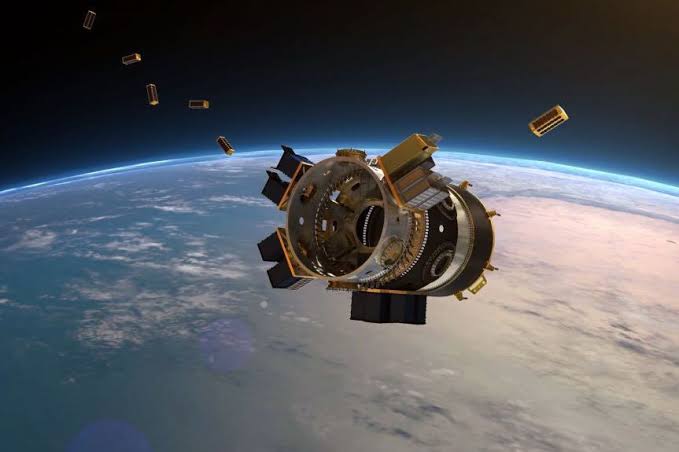
The engineering scale of Starlink is genuinely hard to wrap your head around.
Right now, Starlink operates over 10,000 active satellites. That means ONE company is responsible for roughly 75% of ALL active maneuverable satellites orbiting Earth
From an experimental idea to connecting 12M+ people globally, even in the most remote corners of the world. Incredible feat of modern engineering 🛰️🌐
BREAKING: President Trump praises Starlink while speaking about the new Air Force One.
"We have communication equipment up there that nobody's ever seen before, it's the highest level and including Starlink, my friend Elon is going to be very happy."
A remarkable moment for Starlink, as the satellite internet network continues to gain recognition at the highest levels of government and aviation.