I had the profound honour of speaking with @TimoLugayizi, @FERDINANDIUS, @bikochrispus, @CoSsekyewa, @LuletiBob889417, @MakabayiMercie, and @MuyaakaAlfred about the crushing weight of backlog on lawyers and litigants across this nation. Backlog is not just an inconvenience; it is a crisis that strikes at the heart of justice. Please listen in if you can #NobodyCanStopReggae #JSCCONVERSATIONS #Article142(2)
⚠️ *X -Space Alert*⚠️
*Join Us for JSC Conversations — LIVE on X-Space!*
*Topic: The Reality of Backlog: Stories from Uganda & the Push for Reform*
📅 *Wednesday, 7PM*
IN CASE YOU MISSED IT: Here is the full presentation of our High Profile Case Unit (HPCU) Case No. 1 in the offing as presented by our Most Perpendicular Head Rule of Law, Ms. @afraapio1 on behalf of our #RadicalNewBar President, @IsaacSsemakadde .
Watch AND READ . . .
#BangTheTable
#BackOnTrack
#RNBVision2060
#LawPracticeTip
"Being a young lawyer is a phase of transition. If you aspire to start your own law firm, it is essential to first undergo mentorship, at least until you obtain your third Practicing Certificate."
— C.E.P. Rtn. @kalikumutima1#KalikumutimaAt8@femalelawyernet
Hey @DearYoungLawyer .
Here’s an opportunity to represent young lawyers on the @ealawsociety Governing Council.
I understand the nomination fee is USD 1,000 (approximately UGX 3,700,000), which is undeniably steep, but I am offering to contribute UGX 1,000,000 for you, because I believe in you. Yes, the fee could be overwhelming, perhaps even more than what the current @ug_lawsociety leaders paid during their nominations, but I want to support you because I believe in your potential….One of my senior’s message read in part.
But even with the Senior’s generous support, I can’t cover the balance of UGX 2,700,000. Perhaps, with more contributions, I might have managed.
But then I realized there was another hurdle, I needed to have practiced for a minimum of five years. I have always understood a "young lawyer" to be someone with less than five years of practice. When did this definition change?
@ealawsociety and @ug_lawsociety, when did the category of “young lawyer” start including those with a minimum of five years in practice?
Additionally, what is the rationale behind the hefty nomination fees?
Do these requirements align with your stated values of non-discrimination and fairness towards young lawyers?
These are young professionals who are just beginning their journey in the legal profession and often face significant financial constraints.
Let’s reflect on how these policies impact access and inclusion for young lawyers.
#DearYoungLawyerSeries
This Friday in Harvest Money 🌾:
Best farmers marvel at Dutch innovations 🇳🇱
How top Ugandan farmers are inspired by the agricultural advancements from the Netherlands. Get your copy or subscribe to our #EPAPER 👉🏿 https://t.co/afbDlmK30t
#HarvestMoney#VisionUpdates
LAND LAW NEWS: A CAVEAT IS LIKE AN INJUNCTION. IT PROHIBITS ANY DEALINGS ON LAND IN QUESTION, ONCE IT IS REGISTERED
1. The word “Caveat” is a latin expression which means “let him or her be aware.”
2. The registration of a Caveat on a property prohibits the Registrar of Lands and Deeds from registering or making any entries on the Lands Register with the effect of detrimentally affecting the interest protected by the Caveat.
3. A Caveat (whether registered rightly or wrongly) can only be removed by Court Order or withdrawn by a Caveator or his attorney in writing.
4. Thus, there is no legal basis upon which a Registrar can impliedly or by conduct remove a Caveat.
5. The Registrar is vested with authority to exercise various other powers under the miscellaneous provisions pursuant to Section 84 of the Lands and Deeds Registry Act, but none of them include affecting change of ownership of property that is subject to a Caveat.
6. A Certificate of Title issued when a Caveat is still in force or registered is liable to be cancelled for having been issued fraudulently or improperly.
By
Steven Bwalya
Senior Associate Advocate @ Christopher, Russell Cook & Co. | Head of Litigation
Read more
https://t.co/SkjWLeynOb
CLARIFICATION: Our Governing Council consists of 10 members, including representatives from the Attorney General and the Solicitor General.
We sincerely apologize for the previous post.
Congratulations once again to the new Governing Council!
Away from #LDCLegalAlert, we’re pleased to also 🚀 the Judicial Decisions Monitor ( #LDCJDM ) - @pmpaulmukiibi Head , Department of Law Reporting , Research and Law Reform #LDCUgCT
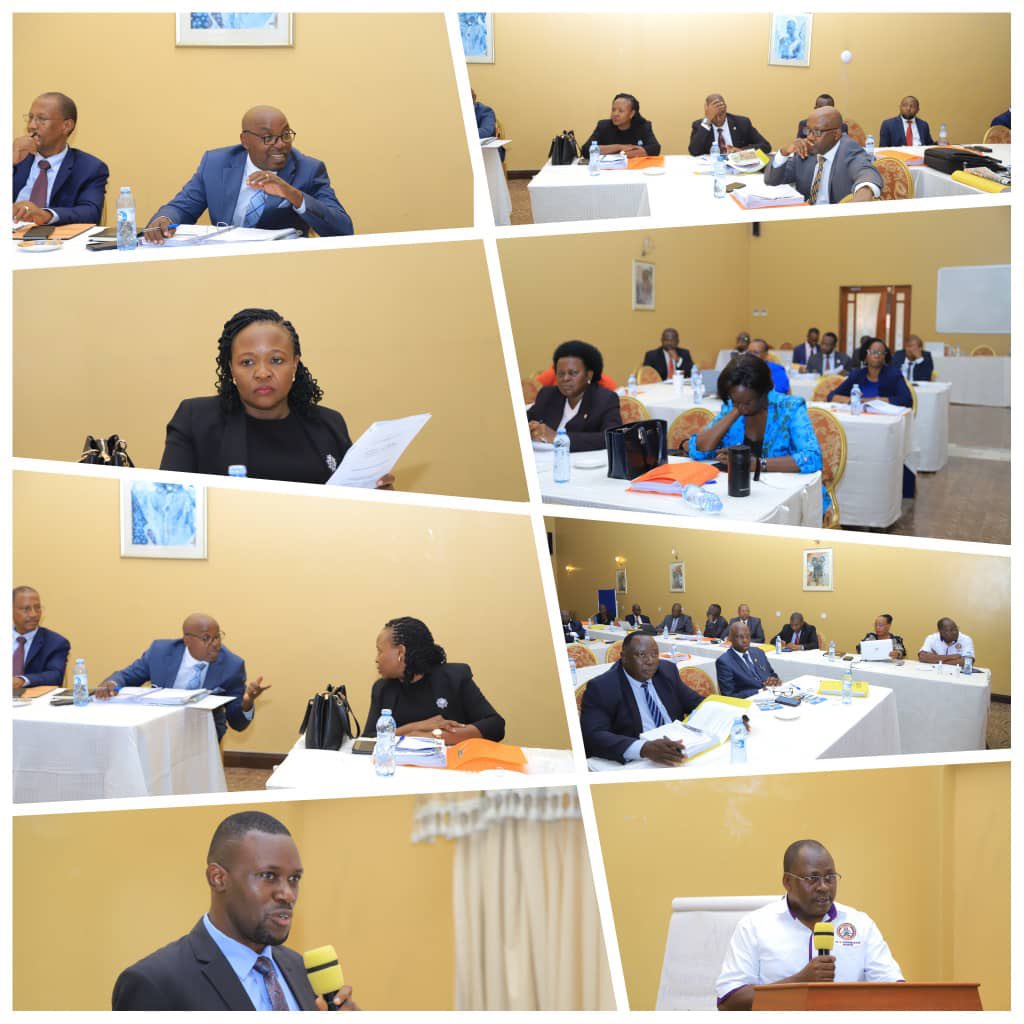
Happening now: Day II of the Quarterly Review Retreat for the Heads of Divisions and Circuits of the High Court, chaired by the Deputy Chief Justice, Justice Richard Buteera, is currently underway at the Imperial Golf Hotel, Entebbe.
The Retreat, which focuses on evaluating the court's performance, involves judges making presentations on the overall performance over the past Quarter. The discussions aim to address challenges within the judicial system and explore strategies for improving efficiency in case management.
The retreat provides an opportunity to adopt best practices from other courts and consider their applicability within their own jurisdictions.
Notably present; The Principal Judge, Justice Dr. Flavian Zeija, the Chief Registrar, HW Sarah Langa Siu, Prof Andrew Khaukha, the Judiciary Technical Advisor as well as a team from the International Development Law Organization led by Mr Samson Asiimwe.
The session is moderated by the Registrar High Court HW Rosemary Bareebe and HW James Ereemye Jumire Mawanda, the Judiciary's Public Relations Officer
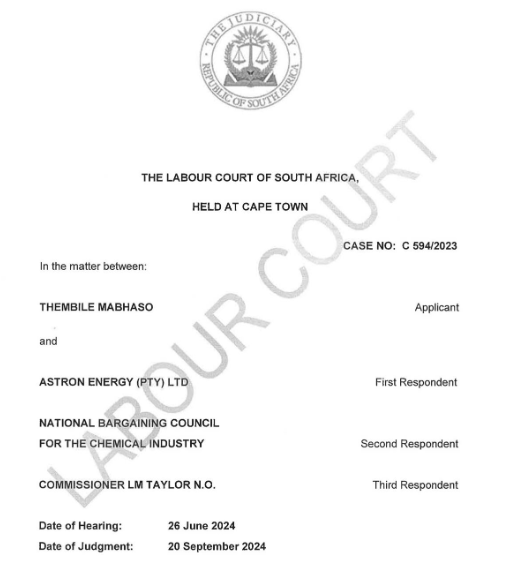
An Interesting Case of an Employee Fired for Misusing Company Funds Intended for University Fees
The applicant, Mr. Mabhaso, began working at Astron Energy in 2012 as an Operating Standards Specialist. In 2019, he enrolled in a course at the University of Cape Town, for which the company deposited R25,500 into his bank account to cover the tuition. However, Mabhaso’s account was overdrawn, and instead of paying the full amount to the university, he only paid R10,000, without informing the company.
When Astron Energy requested proof of full payment, Mabhaso could not provide it, leading to a disciplinary hearing. He was subsequently dismissed for misappropriation or unauthorized use of company funds, which had been specifically allocated for his studies.
Commissioner’s Findings
At the bargaining council, the commissioner found the dismissal to be fair, noting that the charge of misappropriation was serious and directly impacted the trust inherent in the employment relationship. Furthermore, the commissioner emphasized that as a senior employee, Mabhaso should have understood the gravity of his actions.
Review and Condonation Application
Mabhaso sought condonation for the late submission of his review application and an order to set aside the arbitration award. He received the award in August 2020, but only filed the condonation and review applications in January 2024.
The delay, according to Mabhaso, was due to the failure of his legal representative to act on his instructions. However, the court found this explanation unsatisfactory, particularly for someone considered educated and sophisticated. Mabhaso failed to provide any details of his communications with his attorney during this time and showed no responsibility for following up on his case.
Court's Ruling
The court concluded that the payment from Astron Energy was specifically earmarked for university fees and was not intended for personal expenses or debt management. Mabhaso’s actions amounted to misappropriation of funds, a serious breach of trust, especially given his senior position. More troubling was his attempt to have the company cover the outstanding amount, which included the portion he had misappropriated.
Given the severity of the misconduct and the lack of a compelling explanation for the delay, the court dismissed the condonation application, stating that Mabhaso had no prospects of success.
Read more
https://t.co/zSd0s6bdn4
Hon. Dr. John Chrysestom Muyingo, State Minister for Higher Education, is currently visiting schools and education projects in Lyantonde.This visit is a testament to his commitment to improving education in Uganda.Dr. Muyingo has been instrumental in shaping education sector.
Happening Now: The Principal Judge, Dr. Flavian Zeija, is presiding over the launch of a Video Conferencing System at Mubende High Court. This system enables remote witness testimonies and hearings, eliminating the need to physically transfer detainees, thus enhancing security, reducing costs, and improving judicial efficiency.
The System was set up with support from the United Nations Development Programme (UNDP).
Hon. Justice Karemani Jamson Karemera (Resident judge Kiboga High Court Circuit), presided over a criminal matter to assess the effectiveness and functionality of the system.
The launch has been witnessed by; Justice Madrama Izama Christopher (Justice Supreme Court and Chairperson of the Judiciary ICT & Documentation Committee), Justice Collins Acellam (new Mubende High Court Circuit Resident Judge), HW James Ereemye Jumire Mawanda (Registrar, Communications and Public Relations), HW Rogers Kinobe (Deputy Registrar Mubende High Court Circuit), Chief Magistrates; HW Kabugho Byakutaga Caroline (Mubende) and HW Ociba Gloria Nimungu (Kyenjojo ) among other Judicial Officers.
The UNDP has been represented by, Mr. Ian King (Deputy Resident Representative) and Ms. Martha Agaba (Goverance and Peace Officer).
The objective of the System is to integrate digital solutions into justice services to enhance access, improve the administration of justice, foster greater cooperation between legal authorities, elevate the quality of services, boost system efficiency, and ensure accountability throughout the justice delivery process.
After the formal launch, the Court will proceed to hold an Open Day to be presided over by the Principal Judge.
The activities of the Day are being held under the theme; *"A People Centered Approach to Justice."*
Follow the proceedings using the link below;
https://t.co/MtbFWltgcX
Meeting ID: 934 4094 9167
Passcode: VCS2024
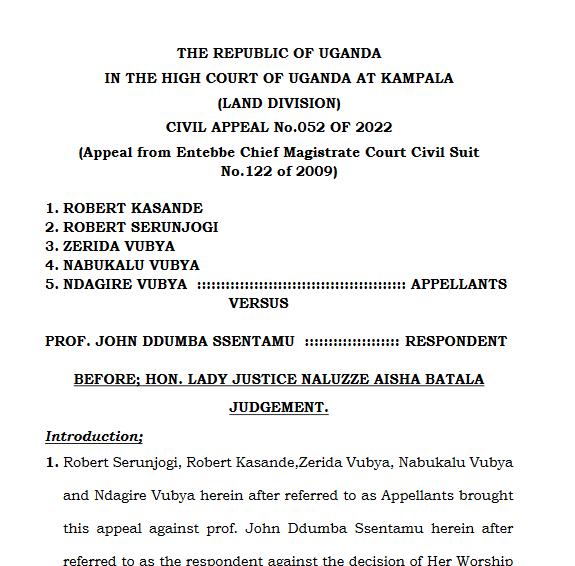
LAND LAW. High Court Reaffirms Requirements for Lawful Occupants of Land
In a recent ruling, the High Court reaffirmed that for a person to claim lawful occupancy of a piece of land, they must prove—on a balance of probabilities—that they lawfully settled on the land.
Referencing the decision in Prince Keefa Wasswa vs Joseph Kiyimba (H.C.C.S No. 482 of 2011), the Court emphasized that failure to provide sufficient evidence of lawful occupancy would result in the dismissal of the claim.
The Court further referenced Section 29(1) of the Land Act (as amended), which defines a "lawful occupant" as:
(a) A person occupying land under repealed laws such as:(i) The Busuulu and Envujjo Law of 1928,
(ii) The Toro Landlord and Tenant Law of 1937, and
(iii) The Ankole Landlord and Tenant Law of 1937;
(b) A person who entered the land with the consent of the registered owner, including purchasers;
(c) A person who had occupied land as a customary tenant but whose tenancy was not disclosed or compensated for when the registered owner acquired the leasehold certificate of title.
Case analysis
In this case, the appellants claimed to be lawful occupants of a kibanja (a form of customary land holding), which they argued entitled them to the "first option" to purchase the land before it was offered to the respondent for sale.
However, upon reviewing the evidence, including the court's site visit (locus in quo), it became apparent that:
The land claimed by the appellants as their father's kibanja was distinct from the land purchased by the respondent.
During the site visit, the appellants failed to clearly identify the boundaries of the land they claimed, with one appellant (DW1) only learning of the boundaries on the day of the visit. This contradicted her earlier testimony, where she claimed to have been cultivating the land since 2007.
The respondent, on the other hand, successfully demonstrated his lawful purchase of the land, supported by the seller's testimony. At the time of purchase, the land was described as "bushy." Court observations confirmed that structures on the land, such as a house and kiosk, were newly constructed, with one witness (DW4) confirming he built the house in 2019.
The Court concluded that the appellants had failed to prove their claim as lawful occupants under the Land Act. Additionally, without evidence of lawful occupancy, they could not claim the right to the "first option" to purchase the land.
Read more
https://t.co/lOJSDgTymw
Happening Now: The Court of Appeal is holding a Civil Appeals Session in Kampala, running from today, September 23 to September 26, 2024.
The session will handle 25 civil appeals and applications.
It is being presided over by Lady Justice Irene Mulyagonja, Justice Oscar Kihika, and Justice Moses Kawumi Kazibwe.
The Court’s Registrar, HW Rukundo Allen Owembabazi, said the cases to be handled during this session involve matters related to land, contracts, fraud, financial loss, and Breach of Loan Agreements.
Other claims include Punitive and General Damages, Stay of Execution, and Striking Out Notices of Appeal, among others.
Present in Court are advocates and some of the parties involved in the Appeals
Supreme Court’s Lady Justice Monica Mugenyi chaired the first meeting of the new Judiciary Integrity Committee at the Supreme Court in Kampala. The meeting aimed to review the Committee’s functions and outline activities to create a work plan.
Lady Justice Mugenyi highlighted the Committee’s key roles, which include promoting integrity among judiciary staff, popularizing the Uganda Code of Judicial Conduct and the Public Service Code of Conduct, and fostering cooperation with institutions like the Inspectorate of Government.
She also noted that the Committee would conduct nationwide visits to ensure compliance with these codes.
Justice Mugenyi also emphasized the importance of members understanding the regulations guiding the Committee’s establishment, as they are essential for promoting ethical conduct.
She pointed out that while some of the Committee’s activities would take place at the head office, others require field visits. Additionally, she suggested updating the 2003 code of conduct to align with international standards.
Justice Mugenyi stressed the need for the Committee to develop short-term, medium-term, and long-term goals in the work plan as well as consider merging the Public Service Code of Conduct with the Judiciary Service Code to address the needs of both judicial and non-judicial staff.
During the meeting, members discussed the importance of reviewing the current Judiciary Strategic Plan, set to expire in 2025, which incorporates core values like integrity and actions against corruption.
The meeting also discussed the relationship between the Integrity Committee and the Inspectorate of Courts. They talked about the role of peer committees, which are going to be organized by region and court level, and suggested improving their structure and coordination.
Members proposed activities including sensitization efforts, working with the Inspectorate of Courts and the Communications and Public Relations Registry to gather feedback, and benchmarking against other institutions to understand best practices. Members proposed focusing on areas identified through these sources and prioritizing nationwide visits based on this information.
They also emphasized the need for meetings with stakeholders and how to coordinate these with nationwide visits. Additionally, they proposed printing and distributing the Codes of Conduct and Information, Education and Communication (IEC) materials during the visits.
Members of the committee who were present included Lady Justice Irene Mulyagonja (Court of Appeal), Justice Michael Elubu (Head of Criminal Division), HW Ssali Harriet Nalukwago (Registrar, Supreme Court), HW Lamunu Pamella Ocaya (Inspector of Courts), HW Ereemye Jumire James Mawanda (Registrar, Communications and Public Relations), HW Rukundo Allen Owembabazi (Registrar, Court of Appeal) and Ms. Sheila Wamboga (Principal Communications Officer)