Coach B is back. Chalk Talks is rolling again: plain language options education, real dollar examples, no hype.
New episodes are live now, with more every week.
What should I cover next?
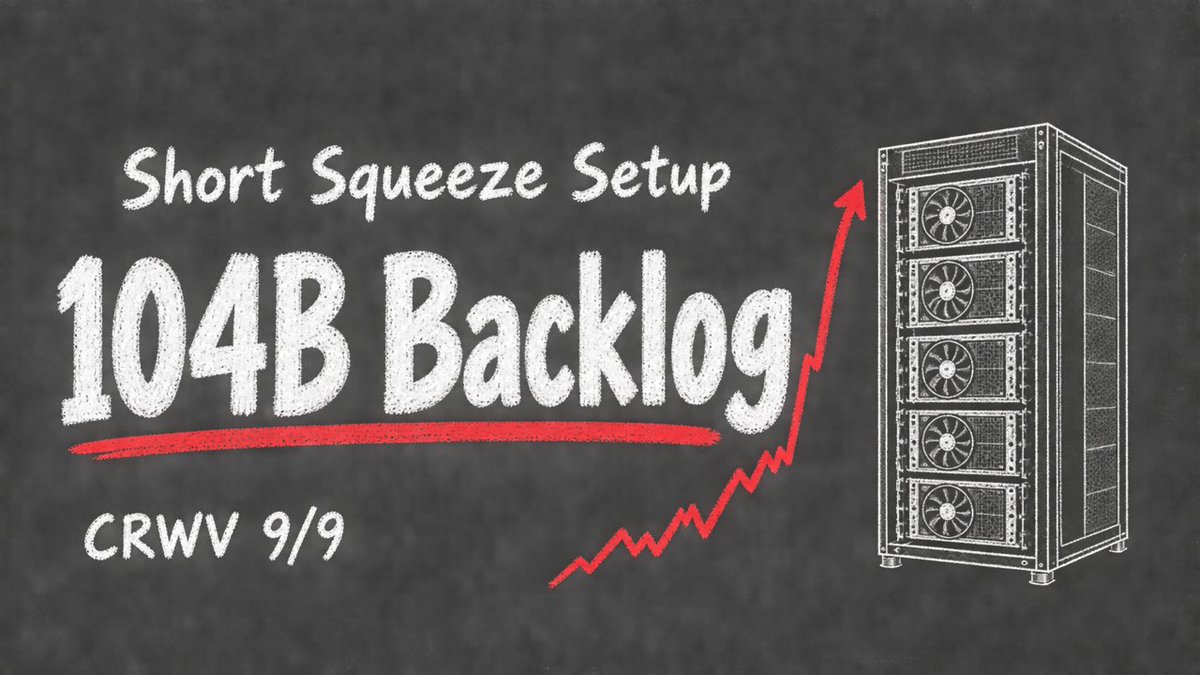
$104 billion in revenue backlog. A gross margin north of 65 percent. And CoreWeave is still one of the most heavily shorted stocks in the market, about 18 percent of the float. Today I break down why, and how I'd think through a setup like this one.
Even now, the options chain 32 days out is pricing only about a 10 percent move, while the stock already did 17.4 percent in a single session. That gap between implied and realized is the lesson, and the full teardown is live.
Here is what the beat hid. About 86 cents of that $2.92 was a one-time tariff refund. And the Q3 guide came in at 93 to 98 cents against a Street estimate near $2.43, roughly 60 percent light. Third guidance cut this year.
Two inflation reports land within 24 hours of each other this week, and the market only gets four trading days to work with before any of it hits.
Monday is closed for Labor Day. Thursday at 8:30am brings August PPI, then Oracle and Adobe both report earnings after the close that same day. Friday at 8:30am brings August CPI, the last major inflation read before the Fed's meeting on September 16.
Last week was flat and the VIX sat near 14.5. That calm matters here because the market has not really priced any of this stack yet.
The Week Ahead breaks down the full calendar and the option math behind Thursday's double earnings print.
Oracle closed near $159 Friday with October options pricing about a 16.5% move either way. Adobe closed near $267 with about a 12% move priced in for the same date. Same afternoon, same sector, and the market is pricing meaningfully more uncertainty into one of the two.
The S&P 500 ended this week almost exactly flat, and GoPro still ran 183% inside those same five days.
Both are true for one quiet-looking week. The index barely moved while single names scattered hard in both directions. Nvidia and Super Micro closed at fresh highs, up roughly 6% and 7%. Palantir went the other way and dropped 6.4%. GoPro's jump was a short squeeze off a sub-dollar base, not a fundamental turn.
A still index makes it easy to assume the market did nothing that week. The single-name tape says otherwise, and a spread this wide is one of the cleanest ways to see what divergence really means. Sharing it as study, not advice.
Full week recap sits in the reply, including how Friday's hot August jobs report put a lid on rate-cut expectations heading into the Fed.
GoPro went from 60 cents to $1.23 in two days. Half a billion shares in one session. It looks like free money until you read the options chain.
Out at the $4 strike, implied volatility is running 317%. That is the market charging a fortune for a lottery ticket. You can be right that GoPro keeps running and still watch the call melt, because the day the story cools the premium goes with it.
The full breakdown is live: how the IV skew climbs, what a 317% call really costs, and where the crowd stacked its bets.
Most traders get stopped out of a good trade for one reason. They put the stop on the most obvious number on the chart.
Support looks like it is holding at a round level, so the stop goes right on that line, the same line everyone else can see. When a cluster of orders all sits at one visible price, that price becomes a magnet. Price only has to poke a few cents below to trip the whole wave, and once those orders fire there is nobody left to hold the floor.
Overcorrect and it is just as costly. A stop so loose it never really protects you turns a genuine breakdown into a far bigger loss than you planned for.
The real skill is knowing the one price where your thesis is actually broken, then giving the stop just enough room to survive normal noise and no more. My new video builds that out with illustrative numbers and walks through exactly how to find the level on your own chart.
Two "safe" utility stocks dropped about 20% in a single day on Monday, and it had nothing to do with earnings, a lawsuit, or fraud.
PG&E fell 20.1% and Edison International 23.1% in the same session, off one clause getting stripped out of a wildfire bill in Sacramento.
This is regulatory tail risk, the kind almost nobody prices until it detonates a position, and it is worth learning to spot for yourself before you ever go near a name that swings on a single headline.
My new breakdown walks through how one legislative clause repriced these two utilities more than 20% in a day, and the California-only wrinkle called inverse condemnation behind it.
You buy the 2x version of a stock because you are bullish. Two weeks later the stock is sitting right back where it started, it went nowhere, and your leveraged fund is somehow down money.
That gap trips up more people than almost anything in the market. It is called volatility decay, and it traces to one design choice: these funds reset every single day, so a round trip to flat does not leave you flat.
The new video builds the whole thing from scratch with plain arithmetic, teaching the mechanics only, and it even covers the stretch where that same daily reset quietly pays you extra. Learn the machine, then do your own homework.
Know what you are actually holding.
Earnings season has a trap built into it.
A company can beat last quarter and still fall the same afternoon. This is education, not financial advice, just how the tape tends to work.
Last quarter's number is already spent. What gets bought or sold is the guide for the quarter ahead, so a strong beat next to a soft outlook trades on the outlook.
The beat writes the headline. The guide writes the move.
Two tests this week, about 40 hours apart.
Wednesday after the close: Broadcom reports, the second read on whether the AI capex boom is still accelerating. The chain is pricing an ~11.6% swing.
Friday at 8:30am: the August jobs report. Last month payrolls actually shrank, so this one lands squarely on the Fed.
The new Week Ahead walks all five names on the board, each a teaching example of how the expected move changes the read by your timeframe, never a buy or sell call.
Which of the five should I break down the morning after Broadcom reports?