This is l what I mean when I say that losing coaches love hard work.
Useless practice where no one gets better? Well that doesn’t feel very good.
Ending useless practice with “conditioning” so that you can equate tired with having accomplished something? Way easier on the ego.
We’ve got a kid that came in last semester and was, respectfully, not fast.
Yesterday, he hit a 0.99 fly 10 and is consistently a 20 MPH guy now.
He was telling me his old school ran fifty (50) 110’s first day of summer.
You CAN train speed.
You can also train to be slow.
It was great seeing everyone last night at our GBS fundraiser pickle ball tournament. We also want to thank @TinaInTheWildd from @ESPNWestPalm for stopping by. If anyone is interested in learning more how to help this cause please DM us. #GRIT#SeahawkFast 🦅💨 #DefendTheBeach
Some of the most underrated jobs in football❗️
The guy making sure the headsets are connected.
The one hunting down an extra mouthguard.
The one fixing a helmet 30 seconds before kickoff.
And of course the one who somehow always knows where everything is, everyone has one of those guys lol
These guys are the real MVP!
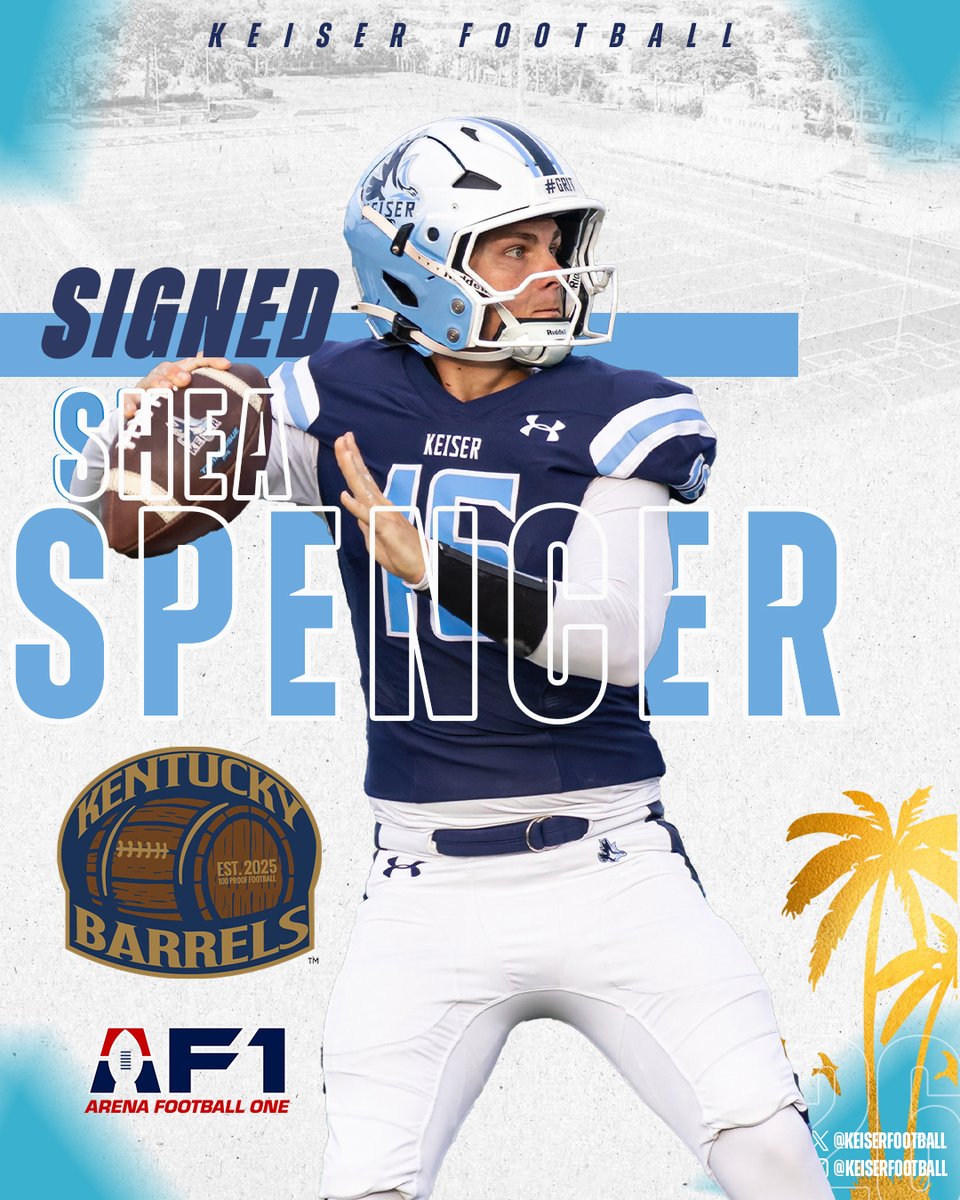
Another Seahawk in the Pros❗️
Congrats @Shea_Spencer_16 on signing with Kentucky. Seahawk Nation is looking forward to watching your future success. Good luck in the AF1 #GRIT#SeahawkFast 🦅💨 #DefendTheBeach
Come join us on 🗓️ April 20th as we bring awareness to Guillain-Barre Syndrome. Starting at ⌚️ 5:30PM for 💲20 dollars a team you can help us slap 🏓 around this disease. This will be held on the @KeiserUFlagship campus. Young and old are invited to crown the 🏆. #GRIT
This same logic applies for football as well.
Going back to the Unbreakable Uncle @KurticusHester RIP.
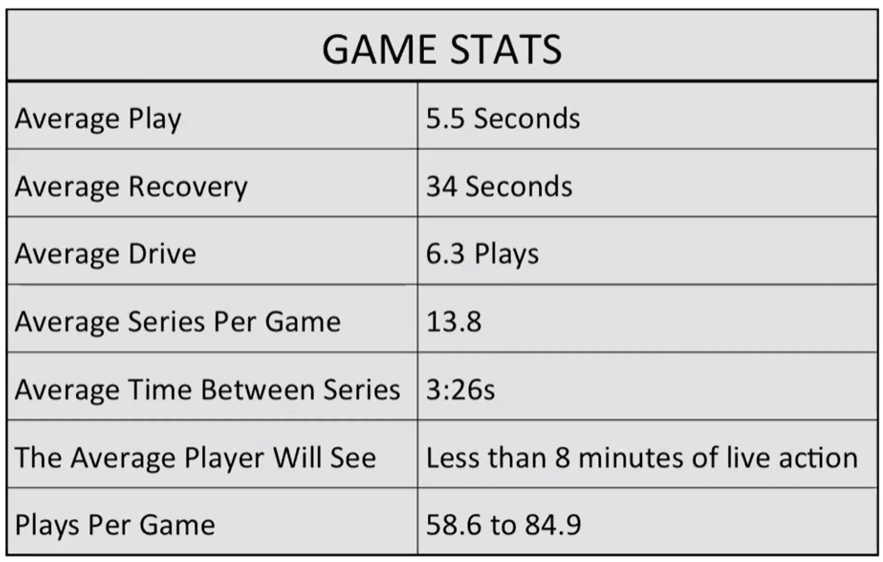
A football game might take 3 hours of total time, but look at the demands of the sport.
An average play is 5.5 seconds.
There's ~34s of recovery between plays.
At around 59-85 plays a game the average player will see less than 8 minutes of live action.
When it comes to practice, would you rather have them run for 8 minutes, slow, sloppy, zero intention, zero effort?
Or would you have them intentional, sharp, fast, and fresh, with the same amount of rest they'd see on game day? Including the 3:26 of rest they'd have between series?
Is this an oversimplification of energy systems? Sure. But are you going to focus on the 90% or the 10% in practice? In conditioning?
The Kelce brothers accidentally explained one of the longest-running training mistakes in professional sports in under 30 seconds.
A pitcher's delivery takes 1.5 seconds. The rest period before the next pitch is roughly 20 seconds. A starter who throws 100 pitches in a game produces somewhere between 2 and 3 minutes of total physical exertion across a 3-hour window. The work-to-rest ratio is approximately 1:20.
That ratio maps almost perfectly to the ATP-CP energy system, the anaerobic pathway that powers movements lasting under 10 seconds. Sprinting. Jumping. Swinging a bat. Throwing a 97 mph fastball. Every meaningful action in baseball lives in this system.
Distance running trains the opposite system. Aerobic metabolism. Slow-twitch muscle fibers. Type I fibers that are smaller, produce less force, and prioritize fatigue resistance over power output. Elite sprinters carry 60-80% fast-twitch fibers. Elite endurance athletes carry 60-95% slow-twitch. A 2008 study on collegiate baseball players found that combining endurance training with power training produced measurable drops in power output.
You are literally remodeling the engine in the wrong direction. Training the aerobic system when every sport-specific action runs on anaerobic fuel.
The tradition started decades ago because games last 3 hours and coaches confused game duration with physical demand. A game lasting 3 hours does not mean the athlete is exerting for 3 hours. A pitcher standing on the mound between pitches is recovering, not working. The correct training analog is a sprinter who runs 100 meters, walks back, and goes again.
Driveline Baseball, Eric Cressey, and every major sports science program has been publishing this data for over a decade. Strength coaches at the MLB level largely moved to sprint-based and med ball protocols years ago. But the foul-pole-to-foul-pole jog still persists at the high school and college level because the coaches who played in the 90s trained that way and never updated.
The Kelces just explained it to 3 million people faster than any journal ever could.
One thing I’m not going to do is argue with other strength coaches about training protocols.
I could not care less about what other people are doing or not doing.
My thoughts on training pertain directly to who’s in front of me and what they need.
A new Seahawk in the Pros❗️Congrats @PorchaRico on signing with the 🐊. Seahawk Nation is looking forward to watching your future success. Good luck in Finland 🇫🇮 #GRIT#SeahawkFast 🦅💨 #DefendTheBeach
Things you THINK are improving your performance but are massively overrated:
(Team sport athletes)
1. Sand training
2. Speed ladders
3. Constant 1 rep max lifts
4. Miles of running
5. Bodybuilding splits
6. CrossFit workouts
7. “Ab finishers.”
8. Training until exhaustion
What a joke. @nfl now please overlay kalon Barnes with Xavier worthy. They won’t bc we know who wins by A FULL STEP and who ran a 4.1 40. Pussies with a busted timing system will never do that overlay.