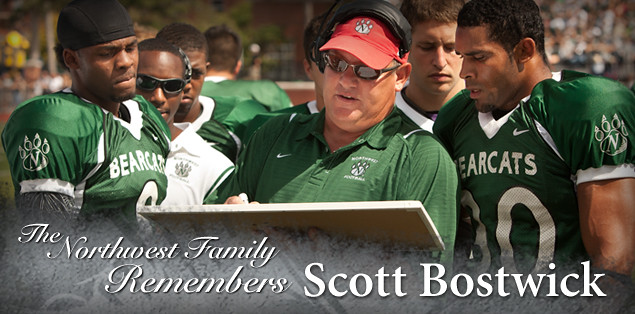
Fifteen years ago today, we lost a truly great man. Scott's love for his players, his passion for Northwest, and the legacy he built continue to impact us every day. Today, we honor his memory and the traditions he established that still unite and inspire us.
#Family#OABAAB
CONFIRMED
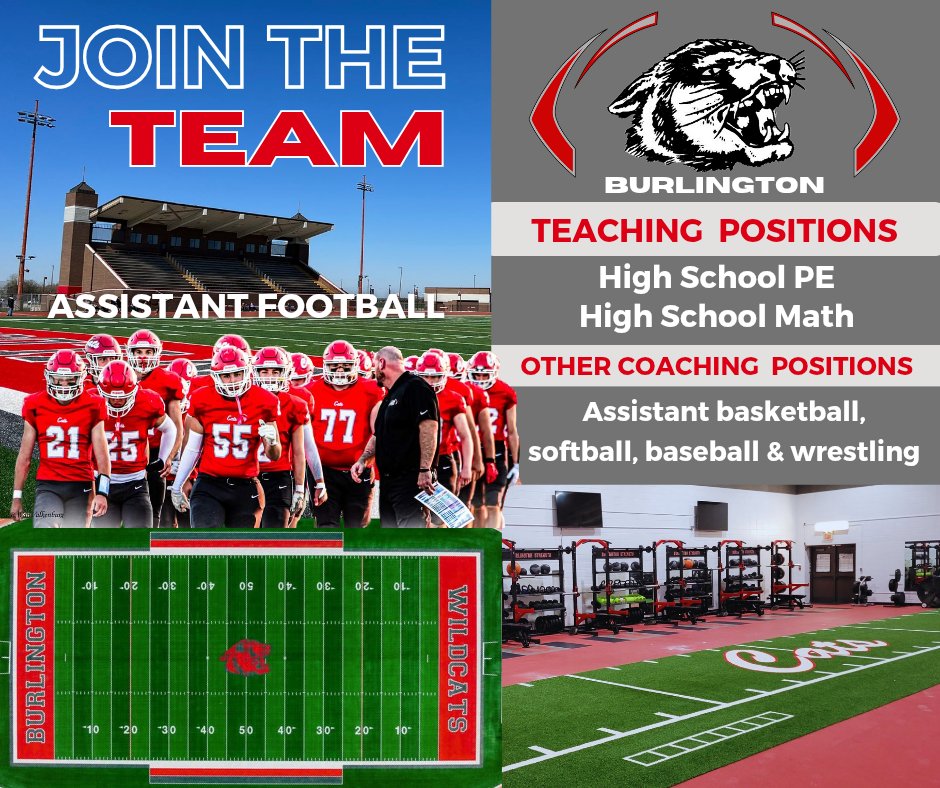
The Burlington (KS) Wildcats are running it back with this beauty in '26!
Great logo with just a bit of chrome and a unique 🐾 stripe
Huge thanks to @CoachCarlson78 and the Wildcats for their continued support of @417helmets!
It's not about raising the most successful athlete.
It’s about raising a person who is coachable, resilient, and committed to giving their best no matter the outcome.
That's a reflection of something deeper than talent.
It’s a reflection of what they’ve been taught at home.
Buzzer beater in 2OT to survive. Buzzer beater in 3OT to advance 🤯
Burlington (KS) is headed to the championship for the first time in 22 years 🔥
@Burlingtonhoop
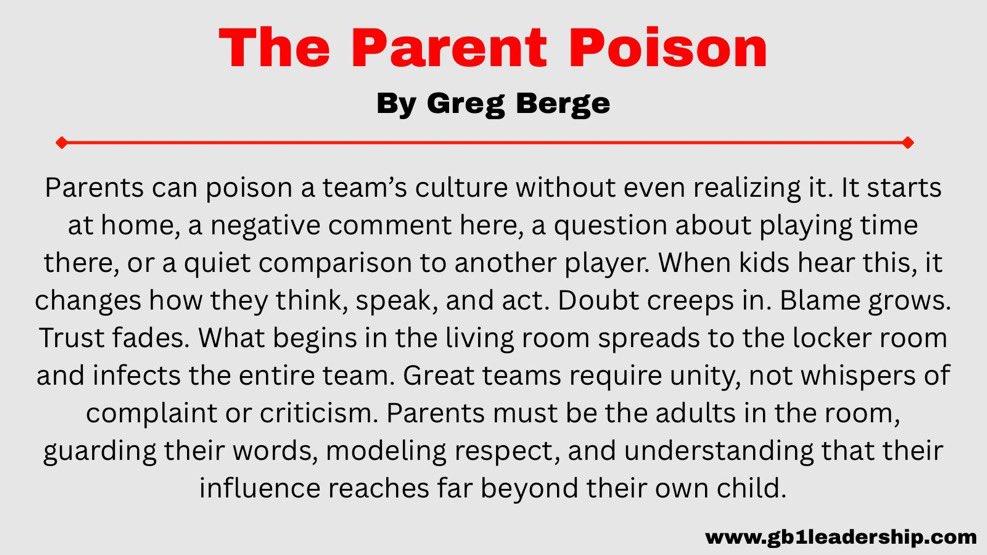
The Parent Poison…
Most parents want the best for their kids.
But sometimes, without realizing it, they slowly poison the very team their child is part of.
It rarely starts with something dramatic.
It starts small.
A comment in the car ride home.
“Why didn’t the coach play you more?”
A comparison.
“You’re better than that kid.”
A quiet complaint at the dinner table.
“That coach doesn’t know what he’s doing.”
Kids hear everything.
And when they hear it, something changes.
Doubt creeps in.
Blame grows.
Trust fades.
The mindset shifts from team first to me first.
What begins in the living room eventually shows up in the locker room.
You see it in body language.
You hear it in conversations.
You feel it in the culture.
Instead of unity, there are whispers.
Instead of accountability, there are excuses.
Instead of growth, there is resentment.
Great teams cannot survive that environment.
Because the best teams are built on three things:
Trust.
Sacrifice.
Shared purpose.
When players start believing the problem is everyone else, those things disappear.
Parents play a powerful role in a team’s culture whether they realize it or not.
The healthiest teams have parents who:
Support the program.
Encourage resilience.
Teach their kids to handle adversity.
They remind their children:
Work harder.
Be a great teammate.
Control what you can control.
They don’t feed excuses.
They build character.
And here’s the truth most people miss:
A parent’s influence extends far beyond their own child.
It affects the locker room.
It affects the culture.
It affects the entire team.
Great teams require unity, not whispers of criticism.
So the challenge for parents is simple.
Be the adult in the room.
Guard your words.
Model respect.
Support the team.
Because what starts at home always finds its way onto the court, the field, or the locker room.
And the best parents don’t poison the culture.
They protect it.
Girls. Training. And ACL Tears.
Girls don't need a 3 day ACL program or a 5 minute ACL Warm up.
Girls don't need a 6-8 wk bootcamp.
It is not a one off thing you do in a 3 day clinic or a 10 minute warm up. It's not a bootcamp right before the season just to not continue with training while in-season.
Girls need sound, progressive and comprehensive S&C 2-3x wk for at least 40 wks during the year during their off and in-season competition periods.
Quad Strength. Glute strength. Landing mechanics. Deceleration. Pivoting/Twisting. Taking contact. Conditioning. Agility. Isometrics. Power work. Etc.. cannot be neglected for weeks or MONTHS on end. It is total negligence to go months without a weight room session or even a break in a kids schedule to make time for training.
It's a year round plan of attack to do the best we can to mitigate risk.
Girls sports and those involved need to do better and what is in our power/control.
@Coach_Hinton231@HelmetMissouri Coach do you guys still use game stat? I'm looking to find a system that actually works - done with hudl. when you have a moment can you dm me please. Appreciate it!
Ok y'all are nice saying we should run our new ad REAL GIRLS ROCK on the Superbowl... you do realize a :30 second ad during the Superbowl is $8M!
We're a start up! We need viral views!
So share it please. Don't just like. Share!
Why Early Loading Heals Tendons Faster Than Rest
For many years, tendon injuries were initially managed with rest... or ice for a few days, followed by time in a brace or a boot. Pain was taken as a signal to avoid load, and recovery was expected to occur with time.
Mechanical stress was viewed as something to delay until symptoms settled.
Research from Denmark has shown that this approach is wrong.
Much of this work comes from the Copenhagen muscle and tendon research community, particularly from groups led by Michael Kjaer at the University of Copenhagen and collaborators at Bispebjerg Hospital, as well as from clinical research by Håkan Alfredson. Their combined laboratory and clinical studies have clarified how tendons respond to injury and recover function.
In several controlled studies, including work on Achilles and patellar tendon injuries, researchers compared outcomes between early, structured loading and delayed loading following a period of rest.
When controlled loading was introduced within the first few days after injury—often around day two—return to function occurred far sooner than when loading was delayed until day seven to nine, or later. Some papers reported that athletes in the early mobilization group were back 25% sooner than those in the delayed group.
Tendons are mechanosensitive tissues. Mechanical strain activates tendon fibroblasts through integrin-based signaling, leading to intracellular pathways such as MAP kinase activation that stimulate collagen synthesis and alignment. This process is necessary for restoring tendon alignment, stiffness, and load tolerance. When tendons are unloaded for prolonged periods, collagen remodeling is reduced, and structural organization worsens.
Rest can reduce pain, but it does not restore tendon capacity. In fact, prolonged unloading leads to decreased tensile strength and increased sensitivity to load reintroduction.
The worst thing we can do is to brace or boot these injuries for a period of time.
The tendon may feel better temporarily, but it is often less prepared to tolerate stress. The benefit of early loading depends on how the load is applied. The Danish studies emphasized controlled, progressive loading rather than a return to unrestricted sport. Early loading typically involved isometric or slow resistance exercises rather than elastic or high-velocity strain. The goal was to provide a mechanical stimulus sufficient to promote remodeling without provoking excessive irritability.
This distinction is important. Early loading does not mean ignoring pain or continuing normal training. It means modifying the load rather than eliminating it. In real life, that often means starting isometric exercises of a short duration… and progressing as comfort improves.
Clinically, this helps explain why many tendon injuries take longer to recover. Symptoms may improve with rest, but when activity is resumed, pain returns, and the cycle repeats. Tendon capacity was never rebuilt.
The work from the Copenhagen tendon research groups supports a different approach: tendons recover best when they are exposed early to appropriate mechanical loads adjusted to tissue tolerance (pain).
Tendons do not recover in a brace over time. They recover through progressive mechanical loading applied early enough to influence remodeling.
“If you’re a high school athlete you better be lifting year round. You’re competing with transfer portal athletes who train 48 weeks a year. You’re a baseball player who lifts for 3 months in the off season then says “I have travel ball” or “I’m not lifting in season” you are already behind. Lifting is the X factor for baseball players”
@ZachDechant TCU @IAStrengthCoach
Stop blaming ACL tears on female anatomy and hormones when your girls are failing to get into the gym , and don’t even know their strength numbers.
https://t.co/9Z2VrGOL02
Class of 2026.
I think this message is important to share with you before your Senior Year of Football. You don’t realize it now but someday you will. It’s going to be one of the most amazing times of your life.
You’re going to have a town, a community following you and watching your every move. Take a look around, see all the kids that show up to support you. You were once one of those little kids that played football during the game, looking at the boys on the field as if they were Gods.
Thank your family and support system for supporting you to become the player you are now. They went thru a lot to get you here, you didn’t do this alone. Tell them that because at the end of the day they are the ones that will be there for you after all this passes. They believe in you.
I’m 36 years old and I still think about it often. The memories you have with your brothers and what you achieve because of the hard work you put in for years and years.
Do all you can to leave everything on the field. Become the leader you once saw from an older teammate. Sit down and look around from time to time, take in the moments for they will be memories you’ll have for a lifetime.
Focus on your team now, not recruiting. This is the best team sport in the world. It’s time to focus like there is no tomorrow, you never know when there is no tomorrow in your football playing career. ✌🏼
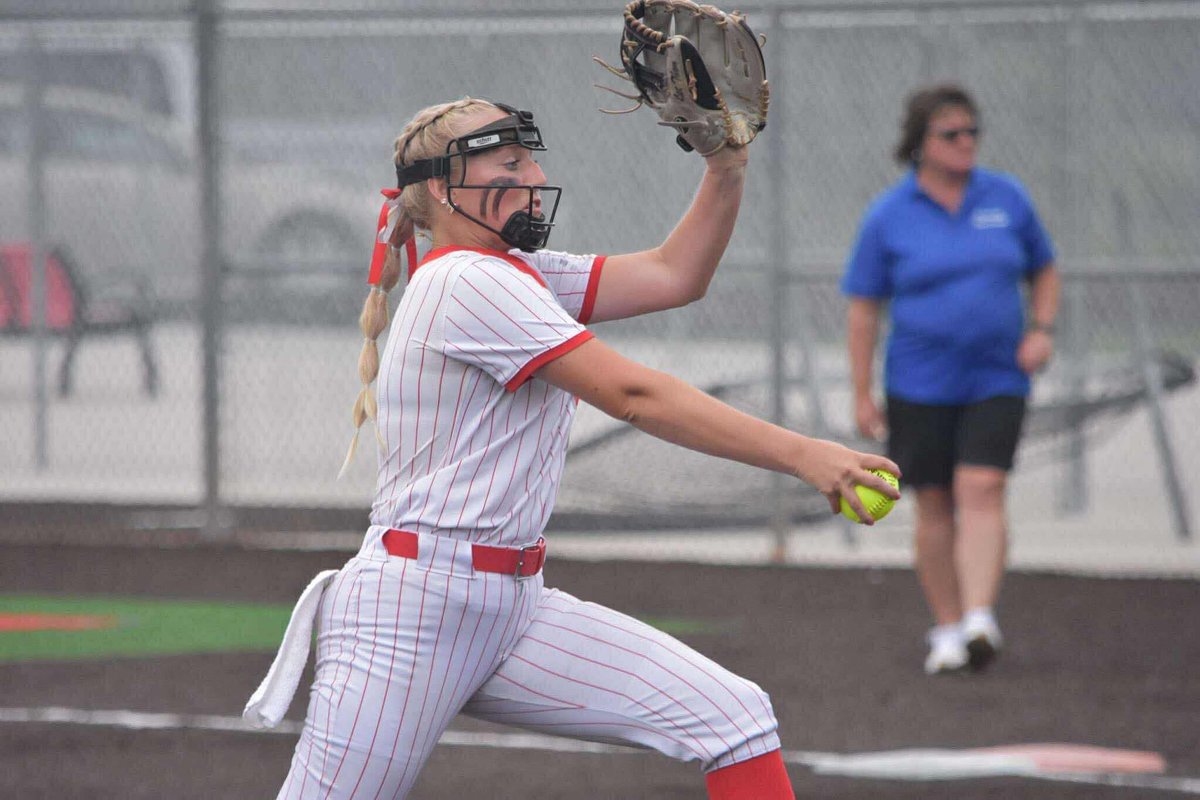
Grace Birk (Burlington, Sr.) broke the single season strikeout record again for Burlington. She has 262 strikeout on the year surpassing her previous record of 243 last year. Birk is still building onto her record as the LadyCats are headed to state next week in Topeka. Birk is a 2x SIK All-State pick and also had the game winning grand slam in extra innings to win the regional championship last night. #sportsinkansas
Photo: Randall Vanvalkenburg