The winners were competing when no one else was.
They won in:
• Sleep
• Nutrition
• Lifting
• Mobility
• Hydration
• Visualization
Success isn’t an accident
The people in the podium in May were making choices in January that no one saw
This is excellent and highly worth the three minutes.
The mental “conditioning” aspect is by far the most underdeveloped component to CREATING real EXCELLENCE in anybody’s life.
There’s plenty of good content out there.. cool drills, workout programs, private coaches, but I don’t see nearly enough of what truly teaches how to CONDITION your mind to stay in the right state when it matters most. That piece is critical.
Not to mention the enormous role of family and friends. The PRESSURE we put on our young people to perform is UNIMAGINABLE. Yet, we don’t give our kids, or our athletes, the actual skills and tools they need to deal with that pressure!!
QUIET TIME. Being alone with your own thoughts. That space is everything if you want to CREATE instead of CONSUME.
Quality stuff….
Mental health and mental toughness at the elite level (and in life) isn’t about “just sucking it up”.
It’s about building the mind the same way we build the body.
Glory to God. Built, not born. 💪
If you are an athlete… The WORST thing you can do is structure your training like this:
1. Leg day
2. Shoulder day
3. Arm day
Etc.
Body part splits are stunting your progres, leading to injuries etc
Training should be built around upper/lower body splits, centered around the concept of what you are training in terms of sprints, jumps & POWER based movements
For our older athletes on 3-4 day per week splits, we generally separate training into upper/lower splits. The lower body splits are segmented into acceleration (horizontal focused jumps/strength) & top speed (vertical focused jumps/dynamic effort lifts)
Upper body will then be separated into more traditional strength based days & potentially a day more built on upper body plyometrics, throws & FASTER, power driven lifts
Team sport athletes aren’t bodybuilders. Stop training them like they are!
I’ve spent more years on the sideline coaching/officiating than I have as a parent. The actions of parents and the need to express their opinions about everything that happens in the game is unsettling. To the parents that seek the far corner and keep to yourself, I salute you!
This is l what I mean when I say that losing coaches love hard work.
Useless practice where no one gets better? Well that doesn’t feel very good.
Ending useless practice with “conditioning” so that you can equate tired with having accomplished something? Way easier on the ego.
Coaches — if your athletes are sore and dragging by week 2 of summer, this is why.
Week 1 isn't max effort. It's foundation work. Movement quality. Tissue prep. Getting everyone to a point where they can actually train hard without breaking down.
#StrengthCoach#SummerBlueprint
These are harder to do, but awesome if possible:
✅ 3 writeups = transferred into another elective. Awesome if you can have a gen pop PE the same periods for easy removal
✅ Seniors able to move to another elective after their final season if they don’t want to continue training
If a school wants to add performance training into the school day, here’s how to do it right.
✅ S&C coach
✅ Schedule whole teams in one period
✅ Head coaches present for their team’s lift
✅ Non-athletes get their own period. Only allowed in athletic periods with permission
41 years of coaching football taught me that while scheme, and coaching are important, the biggest indicator or predictor of success is player, parental and communities Investment! When everyone puts in the quality time to outwork & out prepare your opponents, success happens.
Duke women’s basketball HC Kara Lawson talks about adversity her team suffered starting the season 3-9, faced 6 ranked teams. Winners of 16 straight! People called for her job. I asked her about the heated discussions. “We don’t get to determine the length of our adversity”
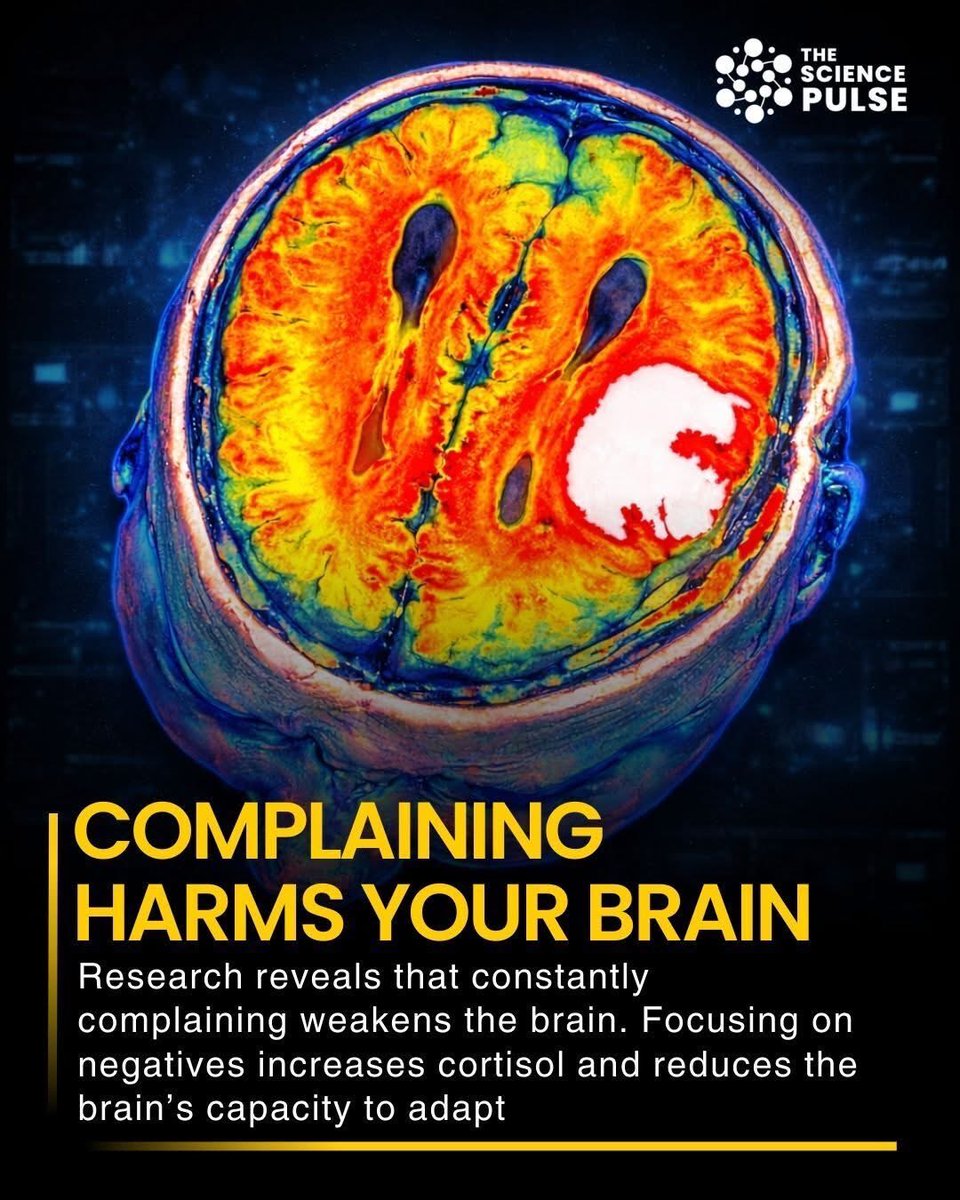
New research reveals that constant complaining does more than annoy those around you—it can actually weaken your brain.
Every time you focus on what’s wrong, your body releases stress hormones like cortisol, which interfere with neural function and reduce the brain’s ability to adapt and learn.
The impact is not just mental. Elevated cortisol levels can impair memory, decision-making, and problem-solving skills.
Over time, a habit of negativity can make your brain less resilient, affecting emotional regulation and overall cognitive performance. Essentially, the more you complain, the harder it becomes for your brain to handle challenges effectively.
Shifting your focus from problems to solutions isn’t just good advice—it’s backed by science.
Practising gratitude, positive thinking, and constructive problem-solving can lower stress hormones, strengthen neural pathways, and help your brain remain agile and adaptable throughout life.
#TheSciencePulse
#BrainHealth #PositiveMindset
In Discussion board during my Master’s program someone said:
“Activities & Athletics is the best advertisement for how your district cares about its students.”