@AntrobusN Recommend using https://t.co/QVTLgU7TwL from the transcription that helps with the reflection and breakdown!
Not my software but I’ve used it for my coaching course assignments as part of my reflection
The biggest jump I’ve seen in player development happens before age 12… and it has almost nothing to do with team tactics.
More touches.
More small sided games.
More time just playing with the ball.
Every session without high ball engagement is a missed window.
What are you prioritizing with your young players right now? ⚽️
Agreed. We need more coaches who actually want to specialize in the younger age groups and understand player and child development not just everyone chasing the “top” teams or 11v11 teams.
@DanAbrahams77 Similar connection for me Dan. I did an activity with scores between four teams. Before the last rep I told the players, if you finish last you do ‘suicide runs’ the intensity immediately shifted.
We discussed at the end, why an external factor shouldn’t dictate your levels HPM!
I’ve been thinking about one of those ideas in American youth soccer that gets repeated so often it starts to feel like a fact: After two or three years, a player should move on to a new coach.
The logic is familiar, a new coach brings a fresh voice, different ideas, different demands, a new way of seeing the player. I understand that. But I’m starting to wonder whether we’ve accepted the other side of the trade-off too casually.
What if constantly changing coaches is actually costing players something important?
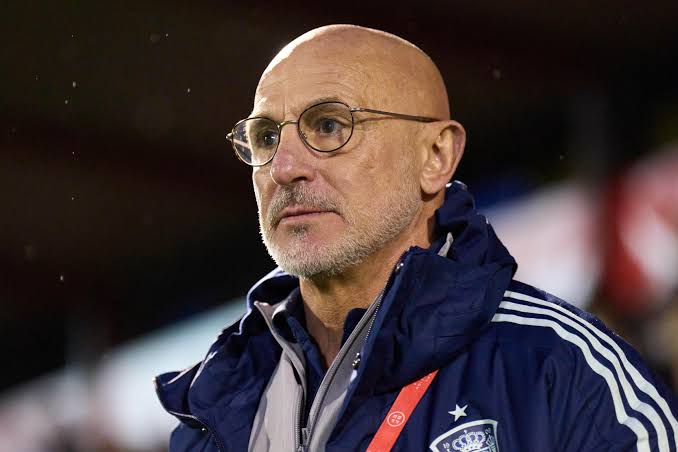
I was reading about Spain’s women’s national team this week and one detail stood out. Sonia Bermúdez and Iraia Iturregi both came through the youth national-team coaching structure, and are now working at senior level with players they already knew and had coached when they were younger. The same with Luis de la Fuente.
If I coach a player at 13, then again at 14 and 15, and 16, I’m accumulating far more than opinions about whether they are technical, athletic or talented. I’m learning what they look like when they’re confident, what happens after mistakes, when they need more information and when more information makes them worse, which football problems they already understand and which still create uncertainty.
The player accumulates something too: trust, shared language, shared references, a history of experiences together.
We talk constantly about long-term player development, but then often organize coaching in a way that repeatedly resets the relationship. New coach, new language, new expectations, new interpretation of the player.
And after 2 or 3 years we say, “They need a different voice.” But do they?
I’m not arguing that players should stay with the same coach forever. A new coach can absolutely expose blind spots, challenge habits or give a player a different perspective. But perhaps the answer isn’t always to replace the coach, perhaps sometimes it’s to add another voice, bring in a new assistant coach with different experiences, different eyes and different relationships with the players, without throwing away all the developmental knowledge that has already been built.
I don’t think “new” is automatically the same as “better.”
I think a better way to think about it is how much developmental knowledge disappears every time we break continuity. We spend years developing players, then sometimes expect the next coach to understand them after three training sessions, and the handover is often shallow: position, strengths, weaknesses, attitude.
What football problems has this player learned to solve? What still creates uncertainty? What helps them become more decisive? What has genuinely changed in their game over the last year?
So I think the question should be less, “Has this player been with the same coach too long?” and more, “Is this coaching relationship still helping the player develop, and if it is, can we add a new perspective without throwing away everything we already know?”
There’s been so many years that I’ve used different platforms, SSP, Tactical Pad, just to name a few, but now with the help from technology, I’m building my own!
Includes full integration with periodization, game models, player profiling, KPIs, IDPs!
Excited to see it grow!
@HighyieldHarry Difference being, champions league clubs, and clubs in general around Europe are not franchises, trying to maximize revenue in different countries. They do this organically.
Great tip from a USYNT coach regarding college recruits.
When a player emails a college coaches, CC their own club coach.
Club coaches: reach out separately to that coach and start the conversation on that player.
HELP YOUR PLAYERS OUT!
@_ToddBeane I don’t think it’s one league, it runs through the system. Teams that ‘want to play’ are the outliers, and are perceived to be ‘wrong’. I’d always ask, have you seen the top NWSL and WSL teams? If the answer is no, their opinion is subjective.
WOW.
Marcelo Bielsa is 70 years of age, and his parting message to Uruguay carries a lesson every coach should sit with.
No group is the same.
No individual is the same.
Nobody.
Bielsa admits he has never tried to be the “friendly” coach. He values order, discipline, seriousness, obsession. That has made him one of the most respected minds in football.
But even Bielsa seems to accept something powerful here:
That approach does not work for every player.
It does not work in every environment.
And knowledge alone is never enough.
As a coach, you have to find a way to connect.
Quote us on this:
“You can have all the knowledge in the world, but it is absolutely useless if the people playing don’t like you.
Player management and people management might not be on coaching courses, but don’t be kidded by associations.
It is the most important quality a coach can have.”
Football is about tactics, detail, preparation and standards.
But above all, it is about people. So many coaches out there fail to grasp this, they think they can shout their way to development or success, and this day and age you simply can't.
@_ToddBeane@CBSSportsGolazo Conscious bias. Most coaches will teach what they see on TV from games, instead of challenging the norm. Same reason there was a flip from traditional wingers to inverted.
🔴⚪️ URGENT HELP NEEDED: My uncle Paul is a lifelong #SAFC fan currently in palliative care with Stage 4 cancer. Trying to get him to a game at the Stadium of Light. Coordinating from the USA. Can anyone at the club help? @SunderlandAFC@RedAndWhite2017@RokerReport@FansMuseum