Blessed to have received the opportunity to compete at the Oregon 2026 relays. Won first overall in the open 300 hurdles and ran a pr of 38.92 that placed me #23 in california! . More work ahead. AGTG🙏✝️
(Lane 7) 4/4/26
#track#hurdles#athlete#fyp
Had the opportunity to compete at the Inland Empire Championship (4/18/26) in the 110h, 300h and 4x4. Ran a pr in the 300h (38.78) but not a pr in the 110 (14.95) placed 2nd overall in the 110h and 300h also 3rd in the 4x4 @lqybfit
College coaches, check out the recruiting profile for
@ColtonLaCrone ‘27 RB/LB
5’8” 185 lbs
3.9 GPA
All-CIF D8
1st team DEL RB
2nd team DEL LB
#LQfootball@CoachMattWard
https://t.co/TxcLtFsNhX
6'2" 225lb Defensive End • Class of '28 • 3.3 GPA
📍 La Quinta High School (CA)
Heavy hips, quick feet, and a lethal get-off. Perfecting the technique before Season .@CoachRuiz75@CoachMattWard@LaQuintaFB
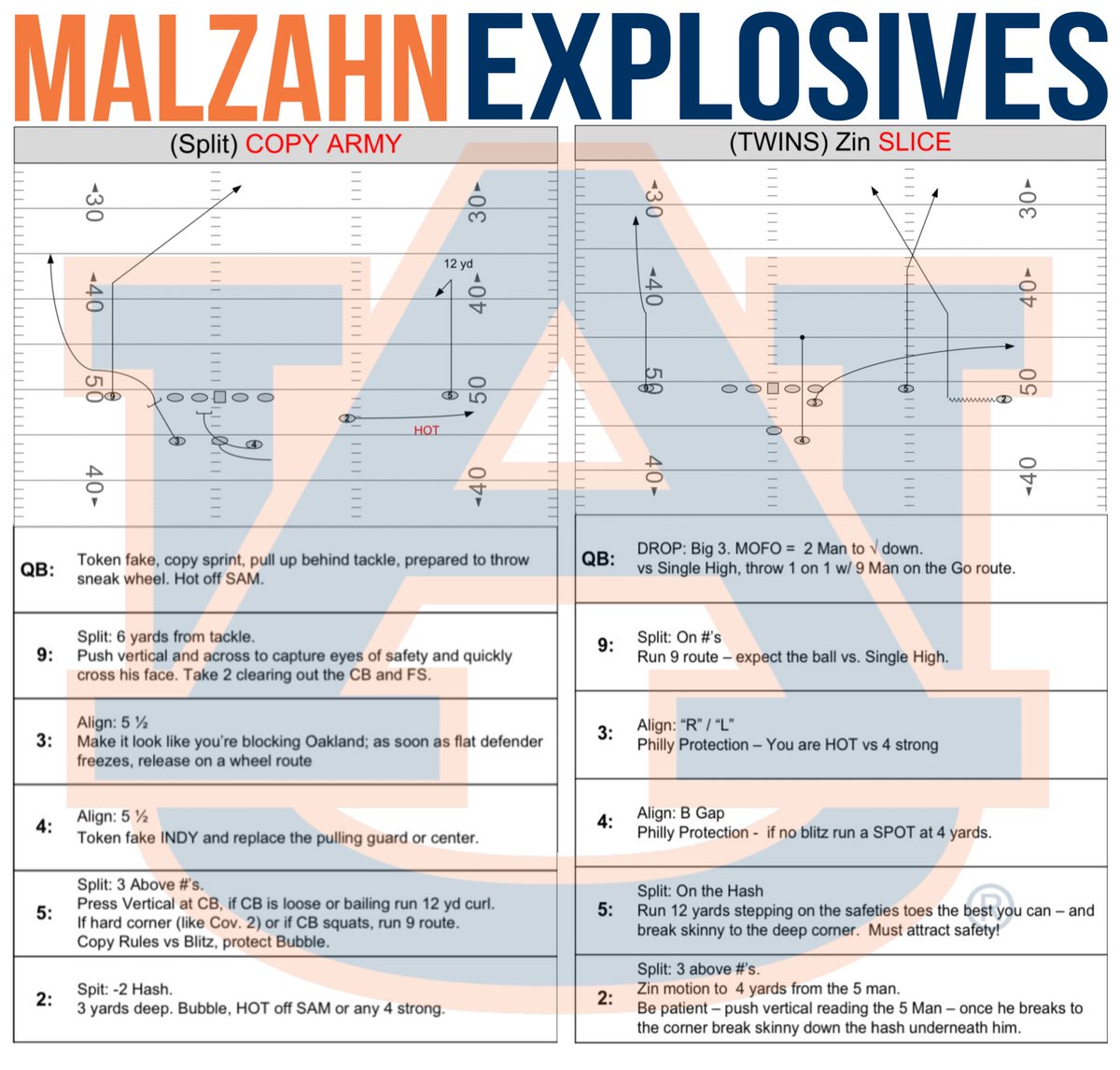
That 2010 Auburn offense created explosive plays by forcing defenses into conflicting run-fit and coverage responsibilities. Gus Malzahn consistently used motion, QB run structure, and vertical stress together instead of treating them as separate ideas.
On the first concept, the token fake and copy action pull second-level defenders downhill while the delayed wheel attacks the space created behind the fit. On the second, the defense is already overcommitted to stopping the run game, so Auburn isolates single high leverage and attacks vertically off play action.
Cam Newton changed the structure of the defense because he counted as a real run threat. That altered box numbers, safety behavior, and pursuit angles. Auburn understood where the defense became vulnerable once those adjustments happened and attacked it immediately.