DAMIAN LILLARD ON ACCOUNTABILITY
“I make sure that I’m on time to the gym. I get there early. I make sure I’m the most coachable. That shows I am accountable for myself, now I can hold other guys accountable.”
~via @Dame_Lillard @Eastbay
Our ownership group is growing ⭐️
A star-studded group of leaders across sports, business, and culture coming together around a shared belief in the future of volleyball.
This is just the beginning.
“We are together the whole time. We not just teammates, we are a family. That’s why we play with passion, with love. We feel that jersey,” Eugenio Suarez
Relentless competitors play for something more than themselves.
"The biggest deterrent to culture is the word compromise."
Culture isn’t built on compromises; it’s built on commitment.
Championship teams don’t cut corners—they hold the line.
Build a culture where the standard isn’t just set; it’s protected by everyone, every day.
Champions don’t negotiate with their standards.
The standard isn’t about being great when it’s convenient—it’s about being great when it’s not.
Because at the end of the day, there’s no room at the top for anyone who picks comfort over consistency.
What a morning for @vaughan_anoai as she was featured on @nbcnews Daily as the first Black and Samoan volleyball player at @GeorgetownUniversity! She spoke on her road to the Hilltop, her Block Back Pledge and her family's wrestling dynasty!
#HoyaSaxa
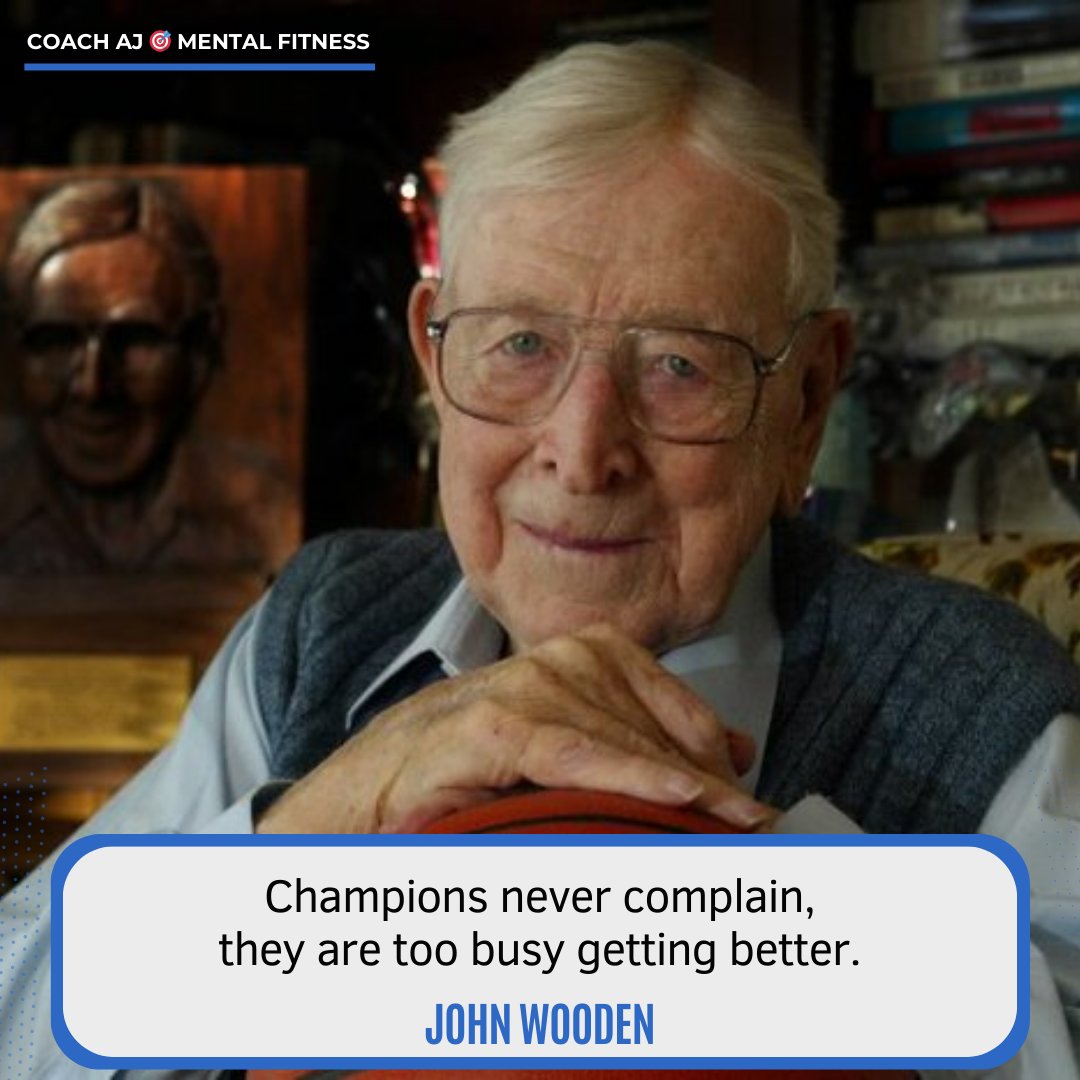
John Wooden said, "Champions never complain, they are too busy getting better."
The only thing complaining changes is your attitude and for the negative.
• It brings stress.
• It brings negativity.
Focus on what you can control.
Complaining isn't a solution, it's a distraction from action, gratitude, and growth.
Anyone can complain, but great leaders rise above complaining to find a way.
5 Phrases to Choose Instead of Complaining👇
1. "What is within my control in this situation?"
By focusing on what you can control, you take ownership and responsibility to make meaningful changes. It shifts your attention from external factors, over which you have no influence, to your own actions and decisions. You start to focus on where you can make a real difference.
2. "What can I do to make things better?"
This question encourages proactivity. By asking yourself what positive steps you can take, you move away from a passive stance of complaining to an active role in improving the situation. You choose to focus your mindset on productive thoughts.
3. "I accept the circumstances, but I won't let them consume me."
Acceptance is not about resignation, it's about acknowledging reality and your environment. Once you accept what you cannot change, it frees up mental energy to focus on what you can influence. This mindset helps you focus on what matters and reduces your stress and frustration.
4. "I am going to take action; complaining won't change anything."
This is about recognizing the futility of complaining. Taking action, even in small ways, leads to a sense of accomplishment and ownership. It can actually bring about change, unlike complaining. This mindset helps you focus on action instead of stagnation.
5. "I choose to be grateful for what I have because in another life, I might not be that lucky."
Living with gratitude means choosing to focus on what you appreciate. Gratitude shifts your focus from what's wrong to what's right in your life. Recognizing and appreciating your blessings, no matter how small, can significantly improve your overall sense of well-being and happiness.
"Complaining is one of the ego's favorite strategies for strengthening itself." - Eckhart Tolle
- - -
Follow @coachajkings for more posts like this!
“When I’m gone, if I can’t go to heaven, take me back to Georgetown.”
John Thompson left his mark on the game of college basketball forever
#MarchMadness