Ninety percent of success can be boiled down to consistently doing the obvious thing for an uncommonly long period of time without convincing yourself that you're smarter than you are.
Point72's head of business development Chandler Bocklage on what he learned sitting next to Steve Cohen for over a decade:
"The amazing thing about Steve is that he has been doing this for a very long time, but he's still exceptionally inquisitive. He wants to learn something every day."
"You have to be intellectually honest and you have to be intellectually flexible."
"Steve never gets kind of stuck on an idea that this has to be right. It has to be right. No, you have to be willing to say, okay, something's changed, it's time to move on."
"This is a hard job, man. The dedication and the sacrifice that is required is complete."
"I am going to try and keep up with the man, and see if I can. And I don't know if I ever did, but closer than most, put it that way."
Point72's founder Steve Cohen on what he screens for when he hires a PM:
"Do they want to be right or they want to make money?"
"A lot of people like to be right in this world, in our world, and they get rolled over by the markets."
"The average PM is only right 53, 54, 55% of the time. That means you're wrong a lot."
"And the question is, when you're wrong, what do you do about it?"
"Ultimately, I'm going to be working with this person, hopefully, for the next five to 10 years. And so I want to know who they are, what makes them tick, and do they fit in this firm."
Good Paul Tudor Jones quote from May of 2009 (h/t to GS Tony P). Might as well be from today
“These days, there are many more deep intellectuals in the business, and that, coupled with the explosion of information on the Internet, creates an illusion that there is an explanation for everything and that the primary task is simply to find that explanation... I see the younger generation hampered by the need to understand and rationalize why something should go up or down. Usually, by the time that becomes self-evident, the move is already over”
Balyasny's founder Dmitry Balyasny on the young PM who bought a Ferrari with his first bonus:
"The right psychology and mindset is probably the most important."
"I remember interviewing a young PM years ago. He'd only been trading for a short period of time, and it randomly came up that he used his first bonus check to buy a Ferrari. Not a good sign."
"You want people that are fairly humble, that are always trying to get better, always trying to learn, a real craftsman mentality, as opposed to a real hubris type of mentality where they think they have it all figured out, because the market will definitely humble you."
"One of the things that helped me when I was starting off was just going around to different offices and sitting next to different top traders, and just asking questions and learning about what they did."
Cooper Kupp's mindset is a blueprint for the inner game of performance.
“From Monday through Saturday, I do everything I can to be the best version of myself…Once I step on the field, it doesn’t matter. The results don’t matter. I get to play from victory, not for victory.”
You can’t play free until you’ve done the work.
Preparation builds confidence. Detachment unlocks freedom.
When you combine the two, you perform from a place of peace, not pressure.
📹: The Pivot Podcast
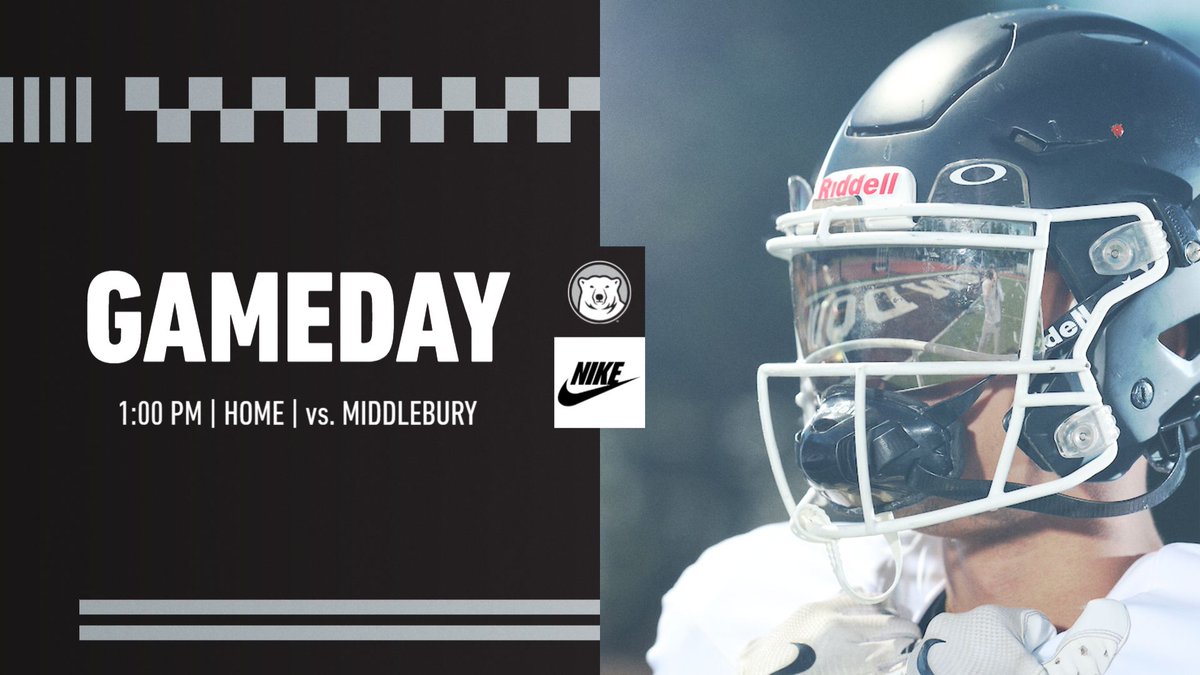
Game Day!!!
Welcome Back Alums for Homecoming bring the energy today!
🥊: Bowdoin VS Middlebury
🏟️: Whittier Field @ Bowdoin College
⏰: 1:00 pm Kickoff
#GoUBears
Scientists found that studies show the creatine supplement millions take for muscle gains is quietly raising brain energy levels and slowing early Alzheimer's cognitive decline by 30%
The best competitors aren’t chasing someone else. They’re chasing the best version of themselves.
“I don’t compete with other people. I compete with what I’m capable of.” — Michael Jordan
That’s the standard.
Compete with your potential.
As long as the PM is willing to admit the weaknesses/lack of resources highlighted in the final section internally to the team and - this is good to go.
Citadel, Millennium, Point72 and BAM are richer, smarter, and faster than you. Here's how small hedge funds can win regardless:
Alix Pasquet (@alixpasquet), managing partner of hedge fund Prime Macaya Capital Management, explains:
"A lot of game theory is very technical and mathematical, but it really reduces to one thing: play weaker players. Don't get into the ring with Mike Tyson. That's not what you want to do."
"We don't try to compete with the pods. They are richer than we are, smarter than we are, move faster than we are, have more resources, and in many cases are better looking. That's bad for our self-esteem, for our ego, and also our wallet."
"We don't compete with them on who they hire. They're interviewing sophomores and juniors in college now. I can't afford to pay an analyst $300,000 plus a bonus including half a million dollars. But the analytical turnover inside these shops is high enough that you get to hire these kids afterwards."
"Whereas pods have been lengthening their trades to weekly, monthly, we like dynamics that are six to 18 months and above. There's names we've owned forever, and there's names we'll own expecting 18 months where the upside happens in weeks."
"Some of these hedge funds pay the Wall Street banks more to get the first one-on-one meeting with management, so they can trade on it. We don't do that."
"I'm rewriting my business plan for the age of AI, and one of the sections is: we have no requirement in our process that says you have to meet management teams. No requirement that says you need alt data. No requirement for Wall Street research. No requirement to hire from certain schools. Strategy is about trade-offs. Let them have that. We'll be right here. There's a lot more advantage here than you would think."