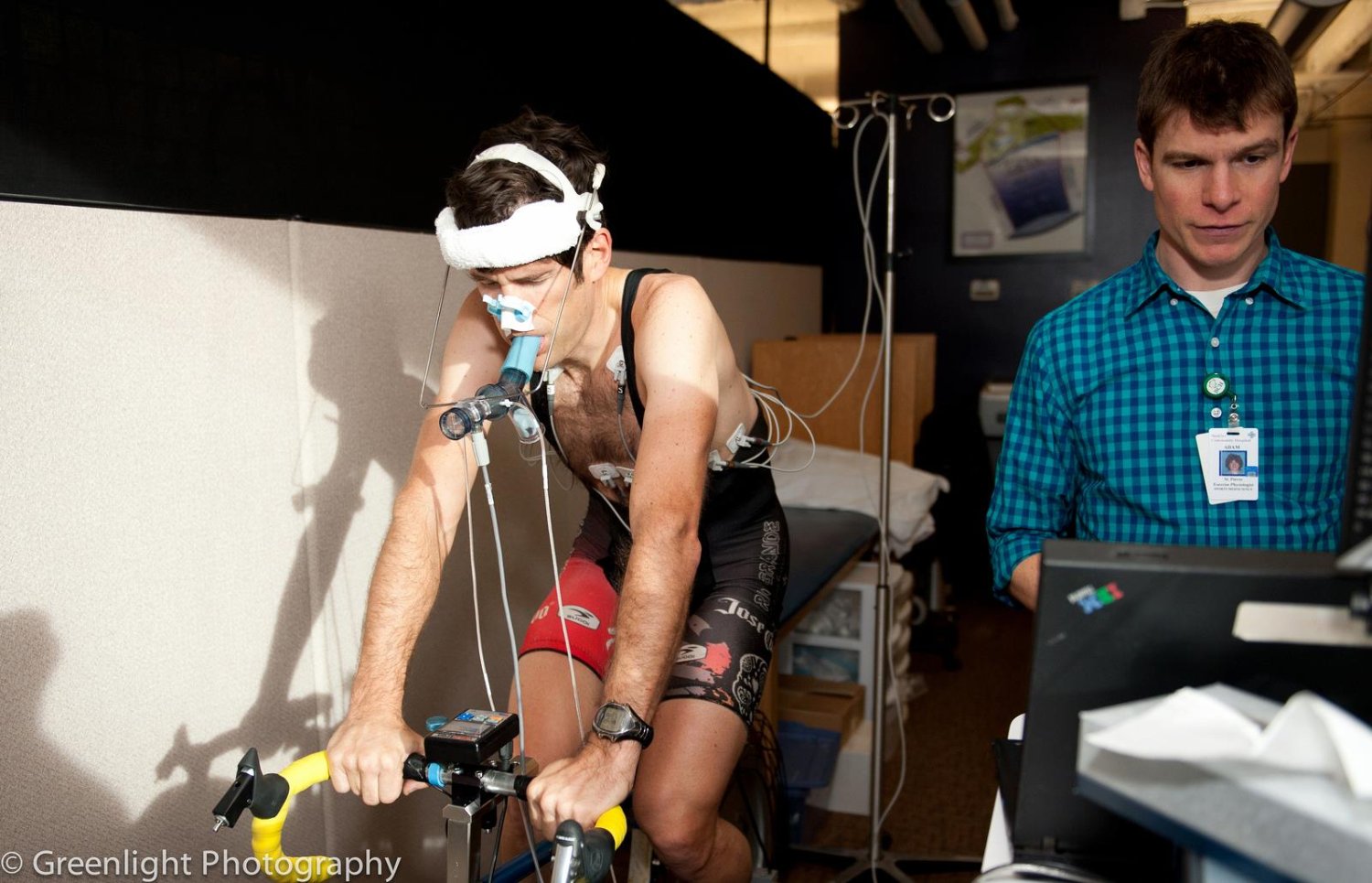
At Zone 2, mitochondria are at metabolic equilibrium and at the highest operating capacity. This is why it is a challenging intensity for well-trained athletes (it must be).
Lactate is being produced at a meaningful rate as glycolytic rate is moderate, but the mitochondrial lactate oxidation complex (mLOC) is clearing it at the same rate, converting it back to pyruvate and feeding it directly into oxidative phosphorylation. The lactate shuttle, both within and between cells and tissues, is running at full capacity.
Fat oxidation is at its peak. The NAD⁺/NADH ratio is stable, reflecting a healthy redox environment in which glycolysis and mitochondrial processing remain tightly coupled. The system is maximally stimulated while still in balance.
This is precisely why Zone 2 is probably one of the most powerful sustained training stimulus for mitochondrial adaptation. Mitochondrial biogenesis requires that the organelle be pushed close to its capacity. Zone 2 does that, while keeping the internal environment stable enough that the stimulus can be sustained for a prolonged period and recovered from it efficiently.
-And with all this said, high intensity training is absolutely key for performance.
https://t.co/CWkZyRnJKl
What makes for good science and why a single study doesn't mean "backed by science" regardless of how well conducted it was? This is what we talked about with @EELBrock on our most recent episode of Fast Talk.
https://t.co/sVnYRUnGw9
Had a lot of fun seeing the inner workings of TrainingPeaks and some of their new features!
Inside TrainingPeaks Analyze360: Visualize data like never before https://t.co/PAWhz480Wl via @YouTube
Most cyclists now use power meters, but how do they work and how have they advanced over the last 3 decades. Couldn't ask for someone better to answer those questions with us than this week's guest, Pat Warner, with @stagescycling.
https://t.co/4Lq6e2D8Ou
A new study shows the difference between podium finishers at spring classics compared to riders outside the top 5. They showed some interesting differences, but did they miss the boat. We talked about whether the differences were training or pack skills?
https://t.co/RMaODWj4nl
Now I know why @hornerakg does race commentary. He knows his race strategy and has a lot of great stories! We got him on Fast Talk this week and he shared a lot of great secrets about how to race smart!
https://t.co/KtUj5hjjtc
Weightloss is always a tough conversation, particularly when athletes are trying to lose weight in season. But, dietician @AndieRd made it very interesting on this week's episode of Fast Talk!
https://t.co/KATCYIqI0O
This review is a great example of difficult balance between things that can help recovery but may actually hurt adaptations...
Antioxidants and Exercise: A RedoxInformed Framework for Training Adaptation, Performance, and Recovery https://t.co/0vhZZdwjCL
Dr Stacey Brickson (@SBricko) always has a lot of great information to share when she comes on Fast Talk. Really interesting conversation with her today about how unique the pedal stroke is and what we need to do to adapt!
https://t.co/wflorpDrGm
I do have a bias that diet plays a role in all disease. But when it comes to conditions of the gut like Ulcerative Colitis, the impact of an inflammatory diet is enormous. Here's an interesting study showing more evidence of that...
https://t.co/EigDVLW92l
Interesting review! It's correlational, but shows interesting trends over a long period of time and also identifies an oxidative pathway to explain the correlation.
https://t.co/CcH3EQAz1s
@Jeukendrup The problem is that this is a 3-day study and doesn't factor in the third compartment of sodium storage (https://t.co/NjSHbqrdGa) in epithelial cells, like our skin which is impacted by long term sodium levels in the diet. Sweating is likely much more impacted by long-term diet
I love talking about the immune system and our gut! They have a huge impact on our training, recovery, and health. Our guest today, Dr Fred Chaleff the owner of @ScimeraMD knows as much about the topic as anyone we've had. It was fascinating conversation!
https://t.co/KWrzeAWB4L
This was an interesting study in Nature. Main message I got from it - when you just generalize to vegans and meat-eaters, there aren't many clear conclusions. It really comes down to the specifics of their diet.
https://t.co/uT6Lc18zUA
Interesting study with positive and negative connotations. Cardiac remodeling is an adaptation to endurance training that can help performance, but it's also a necessary pre-cursor to conditions like Atrial Fibrillation.
https://t.co/oZHHDZ8ktf
As someone who's been on Zwift for 10 years and is getting close to level 100, it was exciting to talk with Zwift's Product Developers @NickKalkounis and Ryan Cooper about how Zwift became what it is and where it's going.
https://t.co/uM1RFX3Ads
Big thanks to @brentbookwalter for joining @chrisjustincase and I on our Zwift ride this morning! We had a good group asking a lot of questions and Brent always had great answers!
What's important about this study is that it was a controlled trial and both groups ate a healthier diet (more fruits and vegetables, less sugar.) The low-carb diet reduced visceral fat, which is the type of fat that leads to conditions like MetX.
https://t.co/TaFOgc0yyU