Sociological studies have found that, compared to the average American family man, devout Christian men who attend church regularly are the most loving husbands and more engaged fathers.
They have the lowest rates of divorce. And astonishingly, they have the lowest rate of domestic violence of any major group in America.
By contrast, nominal Christian men, which means they are not particularly devout and attend church rarely if at all, have the highest rates of divorce and domestic violence—even higher than secular men.
These numbers are staggering: They tell us that men who claim the evangelical label often exhibit worse behavior than men who are outright secular.
Nominal men skew the statistics, creating the false impression that evangelical men as a group are abusive and domineering and divorce more often.
(sources in The Toxic War on Masculinity)
Sad & shocking rates of mental illness/drug use among LGB. Report, blames "erasure" ignores that:
"Gay men 657% more likely, and lesbians 2,200% more likely to have been molested as children"
We don't need LGBTQ "visibility." We need child protection. https://t.co/V1jX0U92Ix
Interesting that you have dismissed entirely all the other Scriptures that relate to this and chosen Hebrews 11:1 as the sole source of info on defining faith.
A typical understanding of this passage is that Heb 11:1 is describing what faith looks like in a person’s life, not what faith is as a concept.
In other words, “a person who has faith will live like the future expectations we have are certainly coming realities.” This is why the chapter goes on to list a number of people who exhibited such faith, even though those people had lots of evidence to cause faith in the first place. Familiarizing yourself with the stories of the Old Testament saints shows they were living in ways that showed confidence about the future (an example of faith) but that they were not without evidence in justifications for such confidence.
An example today could be a Christian who has lots of evidence for God, the Bible and the resurrection of Jesus, living in such a way that demonstrates she is willing to lose her own life in the hope of what God will do. Perhaps standing up to a Taliban execution squad. Her faith, which is demonstrated in her willingness to die for her beliefs, is itself proof of her confidence and her conviction related to it. Faith is hugely important here but this passage is not saying “faith is belief without evidence.”
This seems like an innocent claim but it can turn out to have a pretty bad impact on people.
1. An examination of the Greek term “pistis” (translated as “faith” in the NT) shows that it does not include the idea of “without evidence.”
2. In the Bible, God frequently calls people to have faith as a direct response to evidence.
3. Even our central belief, the resurrection of Jesus, was demonstrated with several proofs. “He presented himself alive to them after his suffering by many proofs, appearing to them during forty days and speaking about the kingdom of God.” Acts 1:3 ESV
- The empty tomb
- Multiple appearances of Jesus in front of individuals and crowds.
- The confirmation of prophecy (road to Emmaus)
- Jesus presenting His wounds for inspection.
Etc.
4. The danger of teaching that faith is belief without evidence is that it can result in people actually thinking we have zero evidence for the Christian faith!
5. Romans 1 shows that even belief in God’s existence is something required of us because of the overwhelming evidence.
6. Christians who claim faith is belief without evidence are contradicting Scripture and unintentionally feeding into the excuses of those who deny there is any evidence for Christianity. That’s a pretty significant mistake.
We asked every potential 2024 GOP presidential candidate to answer six key questions on the war in Ukraine. As promised, their full responses are below.
@prageru You stand on the shoulders of giants — learn from those throughout history who, in the face of suffering…
1. Put others before themselves
2. Have perspective
3. Do the right thing even when it’s hard
Last week, I taught an apologetics boot camp for 100+ teenagers. During the Q&A about half the questions were about theology, not apologetics.
That’s fine, but it points to a deep need for both in youth ministry.
Don’t just entertain them with pizza parties. Train them.
Imagine the Supreme Court finally not granting a federally protected right to slavery. Then imagine a President encouraging slave “owners” to cross state lines so they can do whatever they want to “their” slaves. Then look at what @potus is doing today.
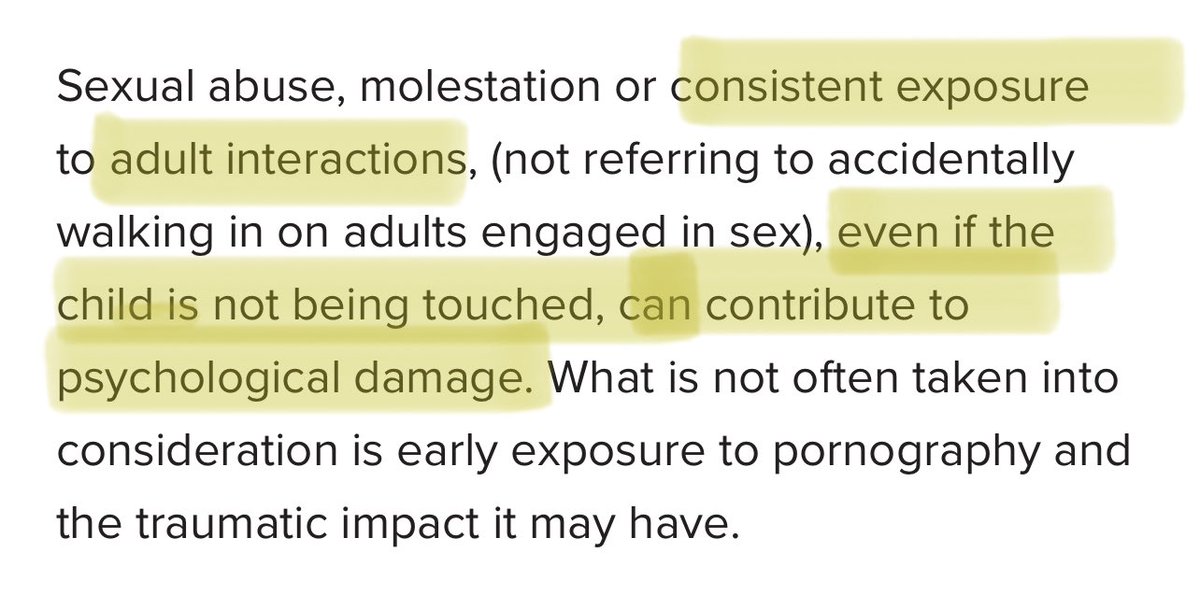
@LevineJonathan Kids do not have the cognitive or emotional capacity to process exposure to sexual content & situations for a reason: their bodies are not ready for it.
Premature exposure to sexual content blurs the protective line between kids & sex which primes them for sexual abuse.
There’s nothing more dangerous than a man with nothing to do and no one to live for. This has been true in every place for all of time. Our young men are drowning in idleness, purposelessness & godlessness, and we’re paying for it.