The Coaching Family - Retweeting, Sharing and Connecting football/soccer coaches, providing an open platform for discussion & networking via Twitter since 2010
⚽️2️⃣4️⃣𝙍𝙤𝙣𝙙𝙤𝙨 COLLECTION has a SPECIAL OFFER: 20% OFF!
🎯Code : RONDO24
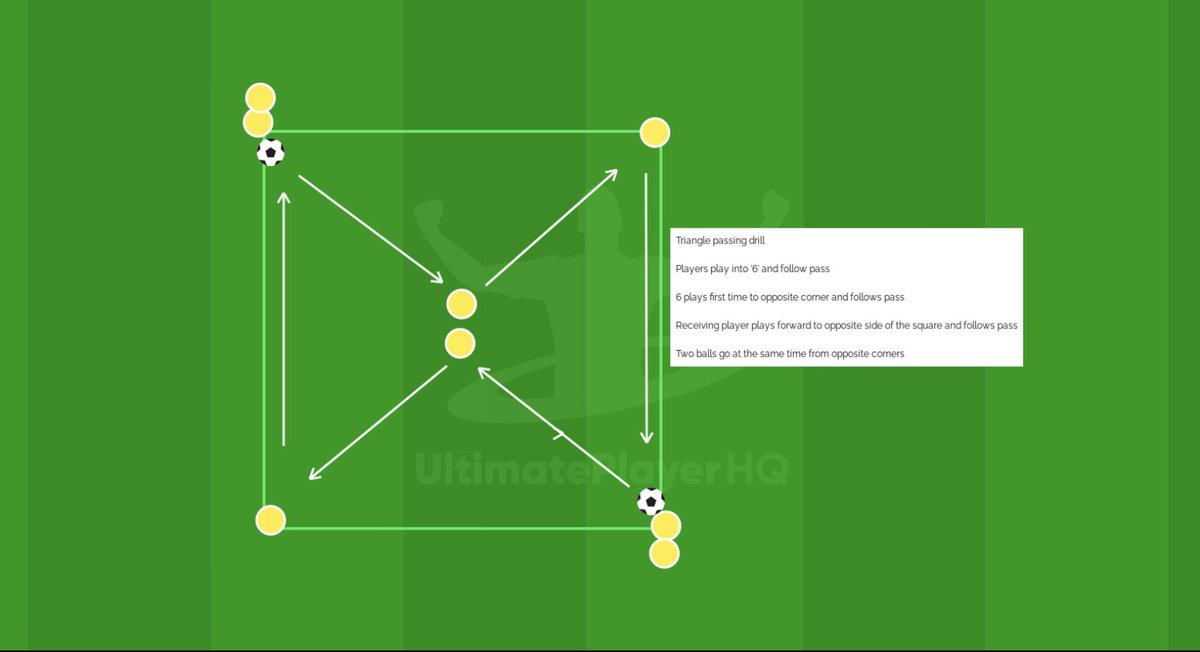
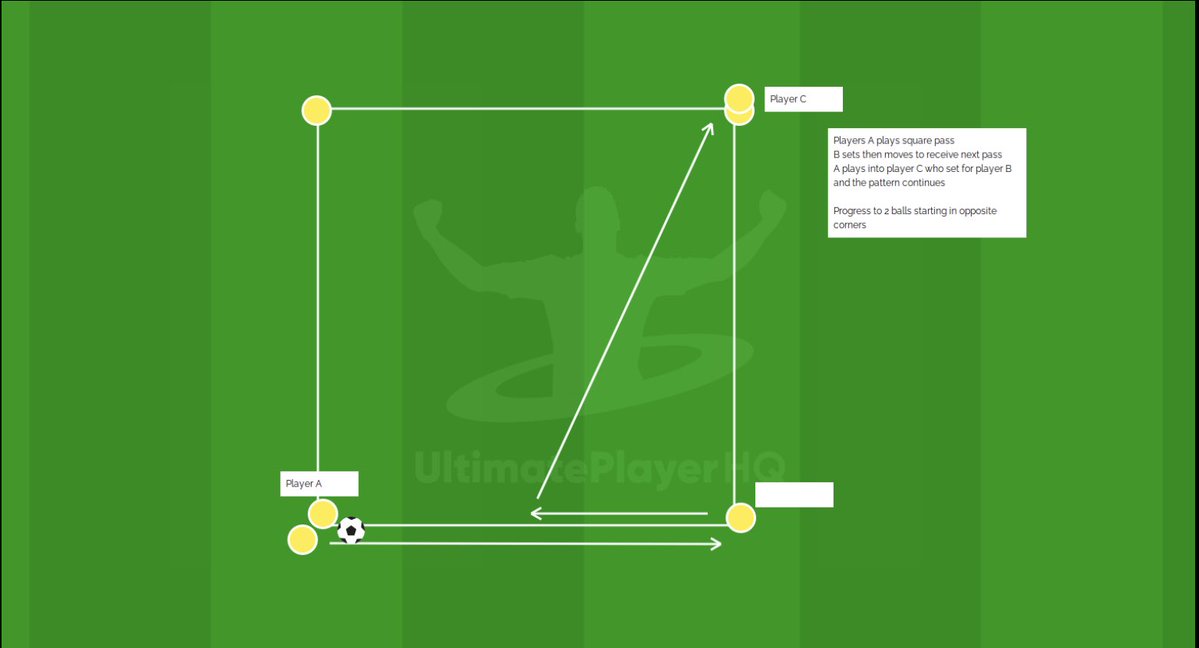
Will you take any of these 2 games into your sessions? Then why not to check all of them in our complete collection of 24 games.
📩 Get your collection today!
https://t.co/Sag70oDsd2
⚽ How do you design effective training sessions at first-team level?
🎙️ Ryan Maye, former Swansea City first-team coach, joins me to discuss session design in professional football.
Great coaching isn’t about collecting drills. It’s about knowing WHY you’re using them.
🎧 Full episode:
https://t.co/SEtnF7hvyM
⚽️ Week 5: Get Close Under Control.
When a defender approaches an attacker, can they close down, slow down, lower their body and show the attacker away?
This week’s session moves from 1v1 Bulldog to 3v3 and 5v5+2 Channels.
#SundayShare
My #SundayShare this week is an appreciation post for grassroots coaches.
People don't see it from the outside, but the image shows how much coaches have to think about.
To put in the hours they do, for free, is something that should be recognised and commended🤝
⚽️ 4v4 Knockout Possession Activity by Jacob Walker
Created with UPHQ Create and now featured in the UltimateplayerHQ Session Vault.
🌐 https://t.co/cBe4Owy5IO
📲 UPHQ Create — free on iOS & Android.
#FootballCoaching#SoccerDrills#PassingDrills#footballtraining
Off-the-Ball Movement is one of my 9 coaching principles. And I believe it's one of the most overlooked aspects of youth football.
Watch a youth football match and pay attention to the players without the ball.
What are they doing?
Too often, I see players standing still and watching their teammate.
They wait for the ball to arrive.
They hide behind opponents.
They move towards the ball even when that space is already occupied.
Or they make runs without recognising what their teammates actually need.
Meanwhile, the player with the ball has limited options.
And we wonder why our team struggles to keep possession or progress forward.
This is why Off-the-Ball Movement is one of my coaching principles.
Let me explain how I approach it.
//
1. Create passing options
Whenever our team has possession, I want players without the ball to recognise how they can help.
Can they create a passing angle?
Can they move into available space?
Can they position themselves between opponents?
Can they offer a forward passing option?
For example, imagine our centre-back receiving the ball during build-up.
Our midfielder is standing directly behind an opposing player.
The centre-back can't pass to them.
What should the midfielder do?
They might move a few metres sideways into a space where the passing lane opens.
Or they might drop into the lower half-space, creating a better angle to receive.
Suddenly, our centre-back has another option.
And if the opponent follows our midfielder, that movement might open space elsewhere.
A small movement can make a big difference.
//
2. Timing matters as much as movement
This is an important distinction.
I don't want players running around constantly just to appear active.
Sometimes moving too early makes the situation worse.
Imagine our striker wants to make a run behind the opponent's defensive line.
If they start running before their teammate is ready to pass, the defender might easily follow them.
Or the striker might end up offside.
But if they recognise when their teammate has time and space to play forward, the same run becomes much more dangerous.
The timing changes everything.
I want players to recognise:
- When their teammate is ready to pass.
- When an opponent is distracted or out of position.
- When space becomes available.
- When to move towards the ball.
- When to attack the space behind.
And sometimes, staying in position is the best decision.
The goal isn't constant movement.
It's purposeful movement.
//
3. Movement can create space for teammates
This is something I believe young players should learn early.
Not every movement needs to end with receiving the ball.
Sometimes your movement creates a better opportunity for someone else.
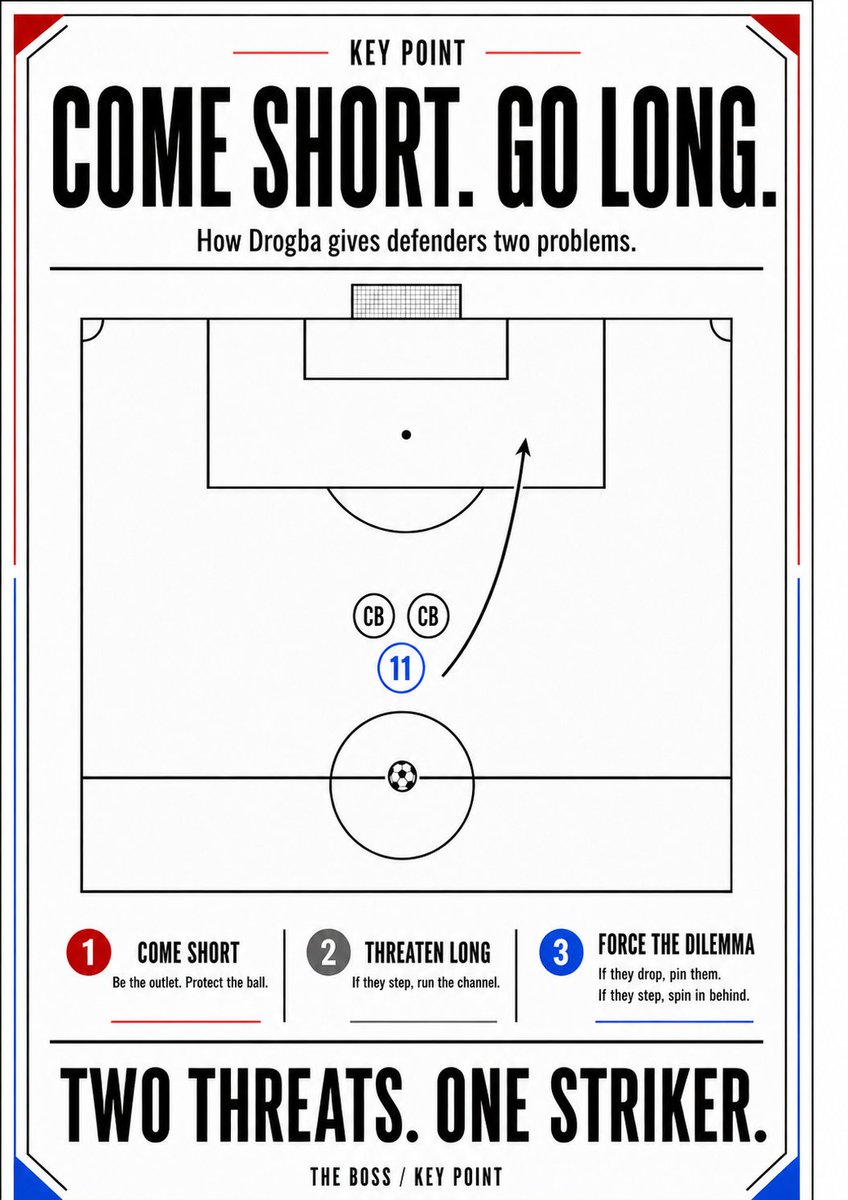
For example, imagine our striker positioned between two centre-backs.
Our attacking midfielder has the ball.
The striker makes a movement towards the ball.
One of the centre-backs follows them.
What happens?
Space might open behind that defender.
Now our winger or another midfielder could attack that space.
The striker might never touch the ball.
But their movement helped create the opportunity.
The same principle applies in wide areas.
A fullback making an overlapping run might drag an opponent away, creating space for the winger to dribble inside.
This is why I want players to understand how their movements influence opponents and teammates.
//
4. Don't stop playing after passing
Another common problem I see is players becoming passive immediately after passing the ball.
They complete a pass.
Then they stand still and watch what happens.
But the game continues.
Imagine our midfielder passing to the winger.
What happens next?
Can the midfielder move forward to support the attack?
Can they offer a passing option inside?
Can they make a run beyond the winger?
Or should they stay behind the ball to maintain balance?
The right decision depends on the situation.
But I want players to remain involved.
Passing the ball shouldn't mean their involvement in the attack is over.
In many situations, it's the beginning of their next action.
//
5. How to develop Off-the-Ball Movement in training
I like using directional small-sided games and positional games where players constantly need to create passing options and recognise spaces.
For example, a 5v5 game with two goals.
Instead of simply telling players to move more, I want them to understand how their movement can improve the situation.
Encourage players to:
- Create passing angles and support the player with the ball.
- Recognise opportunities to receive between opponents.
- Make runs behind the defensive line.
- Create space for teammates through their movements.
- Offer new options after passing.
- Maintain good team positioning when others move.
We can adjust the playing area, player numbers, and starting positions to create different situations.
But I wouldn't automatically introduce rules that force players to move or pass in certain ways.
I want them to recognise the situation and find solutions themselves.
Some simple coaching cues:
- Where could you move to receive?
- Can you create a better passing angle?
- When is the right moment to make your run?
- Can your movement create space for a teammate?
- What can you do after passing?
- Does your team need you to move or hold your position?
I also believe we should recognise good movements even when players don't receive the ball.
A run that creates space for a teammate can be just as valuable as the pass that follows.
//
One final thought.
When we analyse youth football, we naturally focus on the player with the ball.
Their first touch.
Their passing.
Their dribbling.
Their decisions.
But the quality of those decisions often depends on what their teammates are doing.
A player can't make a forward pass if nobody offers a suitable option.
They can't combine if nobody supports them.
And they can't exploit space behind the defensive line if nobody recognises when to attack it.
This is why I believe developing intelligent off-the-ball movement is so important.
Off-the-Ball Movement isn't about running more. It's about recognising when, where, and why to move to create better opportunities for yourself and your teammates.
//
P.S. Want to build brave, fast, and competitive players?
Learn how to apply these 9 principles inside Football Coaching Hub.
Try 7 days free: https://t.co/qy6ChsOQpt
Clear Desire to Score & Win is one of my 9 coaching principles. And I believe it's something we should develop from a young age.
I've watched plenty of youth football matches where teams look comfortable in possession.
They pass the ball well.
They combine with teammates.
They move the ball from one side to another.
But something is missing.
They don't create enough scoring opportunities.
Players hesitate when they have a chance to shoot.
They look for another pass when they could attack the goal.
Or they don't make the runs needed to get into dangerous positions.
I want something different.
I want players who understand that scoring goals and winning games are fundamental parts of football.
Not at the expense of development.
But as an important part of it.
Let me explain how I approach this principle.
//
1. Possession should have a purpose
I believe keeping possession is important.
But possession alone isn't the objective.
We want to use the ball to create advantages, progress forward, and ultimately create scoring opportunities.
For example, imagine our team building an attack against an opponent defending in a compact shape.
We circulate the ball between our defenders and midfielders.
That's fine.
But what are we trying to achieve?
Can we move the opponent to create space?
Can we break a defensive line?
Can we find a player between the lines?
Can we create an opportunity to attack the penalty area?
I want players who recognise these opportunities and have the desire to exploit them.
Sometimes that means keeping possession patiently.
Other times, it means attacking immediately.
The important thing is that our possession has a clear purpose.
//
2. Encourage players to recognise scoring opportunities
One thing I pay attention to is how players behave when they get close to the opponent's goal.
Do they actively look for opportunities to score?
Or do they hesitate?
Imagine our attacking midfielder receiving the ball just outside the penalty area.
There's space to shoot.
But instead of taking the opportunity, they play another sideways pass.
Why?
Maybe they didn't recognise the opportunity.
Maybe they lacked confidence.
Or perhaps they've become so focused on keeping possession that shooting feels like an unnecessary risk.
I want players to recognise when they have a good opportunity to finish.
That doesn't mean shooting from every position.
Sometimes combining with a teammate creates a much better chance.
But when a good scoring opportunity appears, I want players who are willing to take responsibility.
//
3. Scoring goals requires movement without the ball
This principle isn't only about the player who shoots.
It's also about what everyone else does.
Imagine our winger receiving the ball in a wide attacking position.
They have an opportunity to deliver a cross.
What are our other players doing?
Is our striker attacking the space in front of the goal?
Is another player arriving towards the far post?
Is someone supporting around the edge of the penalty area?
Are players prepared for rebounds and second balls?
Too often, I see young players watching the ball instead of actively attacking dangerous spaces.
I want players who anticipate where scoring opportunities might appear.
Players who make runs into the penalty area.
Players who want to be first to the ball.
Players who are prepared to finish when the opportunity comes.
Because scoring goals isn't only about shooting technique.
It's also about the desire and ability to get into positions where goals can be scored.
//
4. Develop the desire to win, not the fear of losing
This is an important distinction, especially in youth football.
I want my players to want to win every match.
I want them to enjoy competing.
I want them to take responsibility when the game becomes difficult.
But I don't want them to become afraid of making mistakes because they're worried about losing.
For example, imagine we're drawing 1–1 with five minutes remaining.
What happens?
Do our players become passive because they're afraid of conceding?
Or do they continue recognising opportunities to attack and score?
I want players who have the ambition to win.
But they must still make intelligent decisions.
Sometimes we should attack quickly.
Sometimes we should keep possession and create a better opportunity.
And sometimes defending well is what gives us the chance to win.
The desire to win should influence our attitude and commitment.
It shouldn't prevent players from thinking clearly or making brave decisions.
And when we lose, I want players to learn from the experience rather than fear it.
//
5. How to develop this principle in training
I believe we should create training situations where scoring goals and competing to win are meaningful objectives.
For example, I like using directional small-sided games with goals and goalkeepers.
A 4v4 or 5v5 game can create plenty of situations where players need to recognise opportunities to score.
Encourage players to:
- Recognise good opportunities to shoot.
- Attack available spaces near the opponent's goal.
- Make purposeful runs into the penalty area.
- React quickly to rebounds and second balls.
- Create better scoring opportunities through combinations.
- Compete to win while continuing to make good decisions.
We can adjust the playing area, player numbers, and rules to create more finishing situations.
But I wouldn't simply demand that players shoot every time they get near goal.
I want them to recognise when shooting is the best decision and when creating a better opportunity makes more sense.
Some simple coaching cues:
- Can you create a scoring opportunity?
- Is there a good opportunity to shoot?
- Can you attack the space in front of goal?
- Where could the next scoring opportunity appear?
- Can you react first to the rebound?
- What can we do to create a better chance?
I also think it's important to recognise the behaviours behind goals.
A player might make an excellent run into the penalty area but never receive the ball.
Another might create a great chance for a teammate who misses.
These are still behaviours we should encourage.
//
One final thought.
In youth football, we often discuss whether winning or player development should come first.
But I don't believe they need to be opposites.
We can develop technically skilled players.
Intelligent decision-makers.
Creative attackers.
Brave defenders.
And players who genuinely want to score goals and win games.
Winning shouldn't be our only measure of successful development.
But the desire to score and win should absolutely be part of the players we're developing.
Clear Desire to Score & Win isn't about winning at all costs. It's about developing players who actively look to create goalscoring opportunities, take responsibility, and compete with the ambition to win.
//
P.S. Want to build brave, fast, and competitive players?
Learn how to apply these 9 principles inside Football Coaching Hub.
Try 7 days free: https://t.co/qy6ChsOQpt
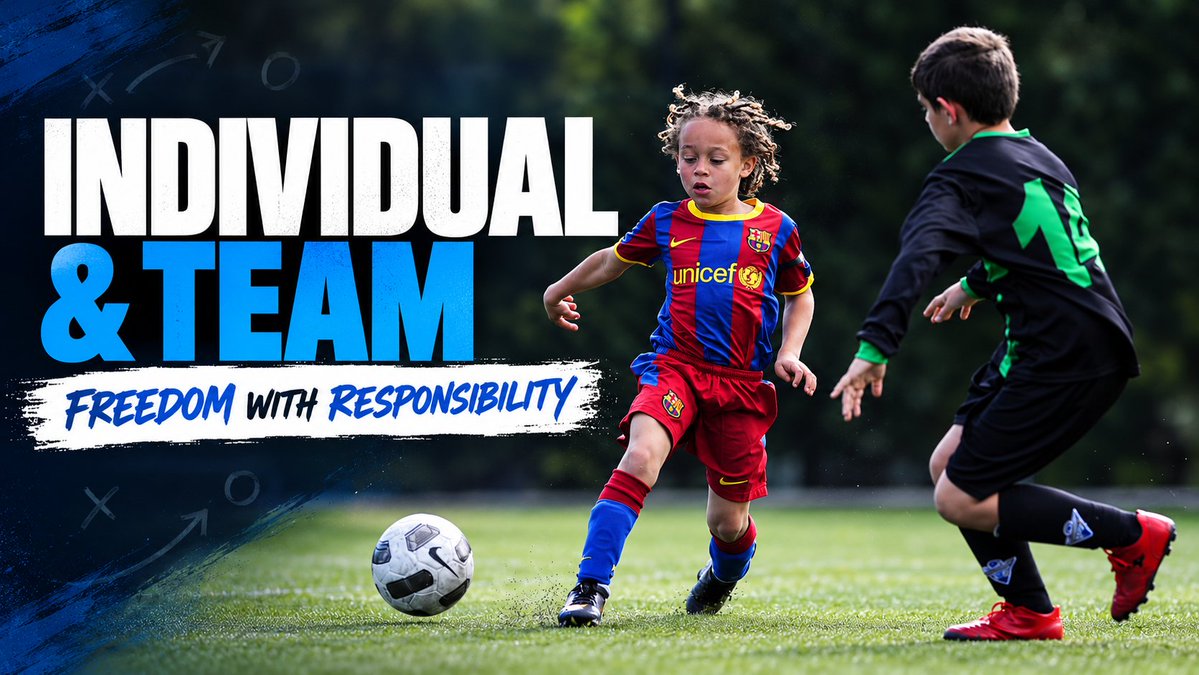
Balance of Individual & Team is one of my 9 coaching principles. And I believe it's something we should pay more attention to in youth football.
Sometimes I see young players who are excellent individually.
They can dribble past opponents.
They can create chances.
They have the confidence to make things happen.
But they don't always recognise when involving a teammate would create a better opportunity.
On the other hand, I see players who always look for a pass.
They follow instructions.
They maintain their positions.
But they rarely take responsibility for solving situations themselves.
I want players who can do both.
This is why Balance of Individual & Team is one of my coaching principles.
Let me explain how I approach it.
//
1. Encourage individual initiative
Football is full of situations where players need to solve problems independently.
Imagine our winger receiving the ball in a 1v1 situation near the opponent's penalty area.
There's space to attack.
The defender is isolated.
I want our winger to recognise that opportunity and have the confidence to take the opponent on.
Not automatically look for a pass.
Not wait for instructions from the sideline.
But recognise the situation and make a decision.
Individual initiative can create advantages that weren't there before.
A successful dribble might eliminate an opponent, open space for teammates, or create a scoring opportunity.
We shouldn't discourage these actions simply because we want players to follow a collective structure.
//
2. Recognise when teammates offer a better solution
Now imagine the same winger receiving the ball.
But this time, two defenders are closing them down.
Our fullback makes an overlapping run.
Our midfielder is available inside.
Suddenly, the situation is different.
Trying to dribble past both defenders might work.
But combining with a teammate could create a much better opportunity.
This is where decision-making becomes important.
I want players who recognise when to:
- Take an opponent on.
- Combine with a teammate.
- Protect possession.
- Create space for someone else.
- Make a supporting run.
The goal isn't to eliminate individual actions.
It's to help players recognise which solution best fits the situation.
//
3. Individual decisions affect the whole team
This principle isn't only about what happens when a player has the ball.
It's also about understanding how individual positioning and movement affect teammates.
For example, imagine our midfielder moving forward to support an attack.
That movement might create an excellent attacking opportunity.
But what happens to the space they leave behind?
Is another midfielder covering it?
Are our centre-backs positioned to deal with a possible counterattack?
Similarly, a winger making a run behind the defensive line might create space for a teammate to receive between the lines.
Even without touching the ball, an individual action can benefit the whole team.
This is why I want players to understand both their own opportunities and their responsibilities to teammates.
//
4. Team structure should support individual creativity
One thing I believe is important:
We shouldn't confuse good team play with players simply following instructions.
A clear team structure can actually give players more freedom.
When players understand where their teammates are likely to be, they can recognise their options more easily.
They know where support is available.
They understand which spaces are occupied.
And they can make better decisions about when to take individual initiative.
For example, if our winger knows that the fullback is providing support behind them and the midfielder is available inside, they have several possible solutions.
They can dribble.
They can combine.
They can recycle possession.
The structure creates options.
The player makes the decision.
//
5. How to develop this balance in training
I like using directional small-sided games where players must constantly decide whether to solve situations individually or collectively.
For example, a 5v5 game with two goals.
Don't automatically restrict players to one or two touches.
Don't demand that everyone passes before scoring.
Instead, create situations where different solutions are possible.
Encourage players to:
- Take opponents on when opportunities appear.
- Recognise when combining creates an advantage.
- Support teammates with and without the ball.
- Maintain balance when teammates move forward.
- Take responsibility for their decisions.
Some simple coaching cues:
- Can you solve this situation yourself?
- Is there a teammate in a better position?
- Can your movement create space for someone else?
- Who supports the player with the ball?
- If your teammate attacks, what is your responsibility?
I also think we should evaluate decisions rather than just outcomes.
A player might make a good decision to dribble but lose the ball.
Another player might complete a safe pass while ignoring an excellent opportunity to progress.
The outcome alone doesn't tell us whether the decision was good.
//
One final thought.
We often talk about developing individual players and developing team play as if they're two separate objectives.
But I don't believe they need to compete with each other.
Individual quality can improve collective performance.
And good collective organisation can create better opportunities for individual players.
The challenge for us as coaches is to develop players who recognise when to take initiative and when to work with their teammates.
Balance of Individual & Team isn't about choosing between individual creativity and collective responsibility. It's about developing players who understand how to use both to make better decisions.
//
P.S. Want to build brave, fast, and competitive players?
Learn how to apply these 9 principles inside Football Coaching Hub.
Try 7 days free: https://t.co/qy6ChsOQpt
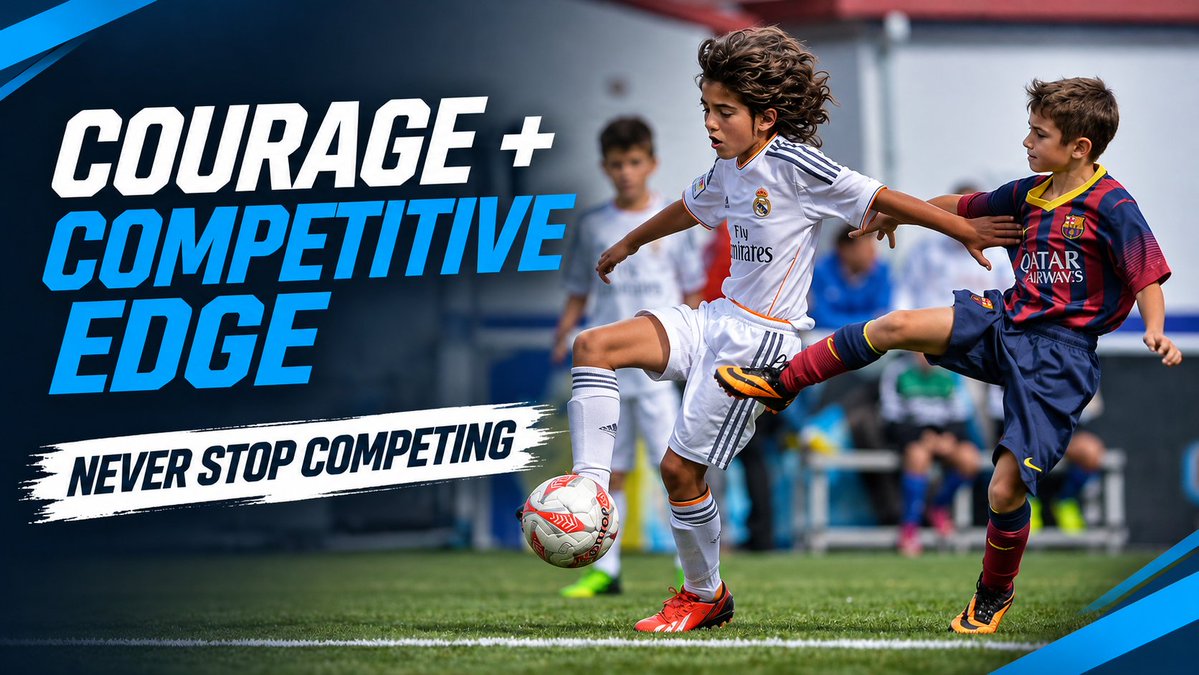
Courage + Competitive Edge is one of my 9 coaching principles. And I believe it's something we should develop from a young age.
#SundayShare
I've seen plenty of talented young players who perform well when everything is going their way.
They look confident when their team dominates possession.
They play well when opponents give them time and space.
They enjoy attacking when chances come easily.
But what happens when the game becomes difficult?
When opponents are stronger or faster?
When they lose a few duels?
When their team is losing?
This is where courage and competitiveness become important.
I want players who don't shy away from difficult situations.
Players who enjoy competing and have the determination to keep trying, even when things aren't going their way.
Let me explain how I approach it.
//
1. Have the courage to compete
Football is full of situations where players must compete against opponents.
1v1 duels.
50/50 balls.
Aerial challenges.
Second balls.
Physical battles for space.
I want players who are willing to enter these situations with confidence.
For example, imagine our midfielder challenging for a loose ball against a physically stronger opponent.
They might win it.
They might lose it.
But I want them to recognise the opportunity and compete with determination.
Not avoid the situation because they're afraid of losing.
This is especially important in youth football, where players develop physically at different rates.
The biggest or strongest player won't always be the best footballer.
And losing a duel doesn't automatically mean the player competed poorly.
//
2. Competitiveness isn't about being reckless
This is an important distinction.
I don't want players making unnecessary tackles, chasing opponents without purpose, or trying to win every ball regardless of the situation.
Good competitiveness also requires intelligent decisions.
For example, imagine our defender facing a fast attacker in a 1v1 situation.
They could immediately dive into a challenge.
But if they mistime it, the attacker might get past them easily.
Instead, the defender might need to control the distance, delay the attacker, and wait for the right opportunity to challenge.
That's still competitive defending.
Being competitive doesn't mean always choosing the most aggressive action.
It means approaching situations with determination while making good decisions.
//
3. How players respond to setbacks matters
This is something I pay particular attention to.
Imagine our winger losing a 1v1 duel.
What happens next?
Do they stop and complain?
Do they become frustrated?
Do they avoid taking on the same opponent again?
Or do they immediately react, help the team defend, and remain willing to attack their opponent the next time?
I want the second response.
Players will lose duels.
They'll make mistakes.
They'll miss chances.
They'll have difficult matches.
That's normal.
What matters is how they respond.
I want players who remain involved, continue competing, and don't allow one unsuccessful action to determine what they do next.
//
4. Competitive Edge is also about actions without the ball
When we talk about competitiveness, we often focus on tackles and physical duels.
But I think it's much more than that.
For example:
- Does our striker make another run behind the defensive line, even after several unsuccessful attempts?
- Does our midfielder react first to a second ball?
- Does our winger recover to help defend after losing possession?
- Does our defender compete to reach a cross before the attacker?
- Do players continue offering themselves for the ball when the team is struggling?
These actions might not always attract attention.
But they can have a significant influence on the game.
I want players who are willing to do these things consistently, not only when they're winning.
//
5. How to develop Courage + Competitive Edge in training
I believe competitiveness develops through repeated experiences where players are challenged to compete.
For example, I like using 1v1, 2v2, and directional small-sided games where players must constantly deal with opponents.
A simple 4v4 game with goals can create plenty of competitive situations.
Players have to:
- Compete for possession and second balls.
- Challenge opponents in 1v1 situations.
- React immediately after losing a duel.
- Make demanding runs to support teammates.
- Keep competing when the score is against them.
We can adjust the playing area, player numbers, and rules to create different competitive demands.
But I wouldn't measure competitiveness only by who wins.
I also want to recognise the behaviours players demonstrate.
Some simple coaching cues:
- Can you compete for that ball?
- Can you react first?
- What do you do after losing the duel?
- Can you challenge your opponent again?
- How can you help your team when things get difficult?
And importantly, I want to create a training environment where players enjoy these challenges.
Where competing is exciting.
Where losing a duel is an opportunity to learn.
And where determination and effort are recognised alongside technical quality and decision-making.
//
One final thought.
We often praise young players for their technical skills.
Their passing.
Their dribbling.
Their ability to score goals.
And these things are important.
But football also demands courage, determination, and the willingness to compete when situations become difficult.
These are behaviours we can develop through training, coaching, and the environment we create.
Courage + Competitive Edge isn't about winning every battle. It's about having the determination to compete, the courage to face difficult situations, and the willingness to keep trying when things don't go your way.
//
P.S. Want to build brave, fast, and competitive players?
Learn how to apply these 9 principles inside Football Coaching Hub.
Try 7 days free: https://t.co/qy6ChsOQpt
Transition Awareness is one of my 9 coaching principles. And I believe it's one of the most important behaviours we can develop in young players.
Football is full of moments when possession changes.
Your team attacks and suddenly loses the ball.
Your team defends and suddenly wins possession.
In these moments, the situation can change completely within seconds.
New spaces appear.
Players are temporarily out of position.
And opportunities to attack or defend can disappear quickly.
This is why Transition Awareness is one of my coaching principles.
Let me explain how I approach it.
//
1. Transitions start with awareness
One mistake I often see in youth football is that players only begin thinking about the next situation after possession changes.
For example, imagine our team attacking near the opponent's penalty area.
Our centre-backs are positioned behind the attack.
What are they thinking about?
Are they simply watching their teammates attack?
Or are they already recognising where the opponents are positioned and what might happen if we lose possession?
I want players who constantly recognise both possibilities.
What happens if we win the ball?
What happens if we lose it?
This awareness helps players prepare for the next situation before it actually happens.
//
2. Winning the ball creates opportunities
When we regain possession, I want players to recognise the situation immediately.
Can we attack forward?
Is there space behind the opponent's defensive line?
Can we exploit an opponent who is temporarily out of position?
For example, imagine our midfielder intercepting a pass in the middle of the pitch.
The opponent's fullbacks have pushed forward.
Suddenly, there's space behind them.
If our players recognise this quickly, we might create a dangerous attacking opportunity before the opponent reorganises.
But there's an important distinction.
Winning the ball doesn't mean we must always counterattack.
Sometimes there's no good forward option.
In that situation, keeping possession and building the attack can be the better decision.
The key is recognising the opportunity and making the appropriate decision.
//
3. Losing the ball requires an immediate response
Now imagine the opposite situation.
Our midfielder attempts a forward pass, but the opponent intercepts it.
What happens next?
Too often, young players stop for a moment.
They become frustrated.
They watch the opponent.
Or they react only after the opponent has already started attacking.
I want a different response.
When we lose possession, players must immediately recognise:
- Can we apply pressure and win the ball back?
- Can we prevent the opponent from playing forward?
- Do we need to delay their attack?
- Should we recover and protect dangerous spaces?
For example, if we lose the ball near the opponent's penalty area and have several players close to it, we might have an opportunity to apply immediate pressure.
But if the opponent has already escaped and has space to attack, chasing the ball might make the situation worse.
Now recovering into a good defensive position could be the better decision.
//
4. Transitions are a collective responsibility
One player reacting quickly isn't always enough.
Imagine our striker loses the ball.
They immediately apply pressure.
But what are our midfielders doing?
Are they closing nearby passing options?
Are our defenders prepared if the opponent plays forward?
The same applies when we win possession.
The player with the ball might recognise an opportunity to counterattack.
But if teammates don't move to support the attack, that opportunity may disappear.
This is why I want the whole team to recognise and react to changes in possession.
//
5. How to develop Transition Awareness in training
I like using directional small-sided games where possession changes frequently.
For example, a 5v5 game with two goals.
When a team wins the ball, encourage them to recognise whether they can attack immediately.
When they lose it, encourage them to react and recognise whether to press, delay, or recover.
Some simple coaching cues:
- What might happen if we lose the ball?
- Can we attack immediately after winning it?
- Where is the space?
- Can we win the ball back?
- If we can't press, what should we protect?
- How can you support your teammates?
We can adjust the playing area, player numbers, and rules to create more transition situations.
But I wouldn't simply demand that every transition happens as quickly as possible.
I want players to recognise what's happening and make good decisions.
//
One final thought.
We often tell players to react faster when possession changes.
But reacting quickly is only part of the solution.
Players also need to recognise what might happen next.
Where are their teammates?
Where are the opponents?
What spaces might become available?
What spaces might need protecting?
The more players recognise these situations, the better prepared they become.
Transition Awareness isn't just about reacting quickly when possession changes. It's about anticipating what might happen next and making good decisions when it does.
//
P.S. Want to build brave, fast, and competitive players?
Learn how to apply these 9 principles inside Football Coaching Hub.
Try 7 days free: https://t.co/qy6ChsOQpt
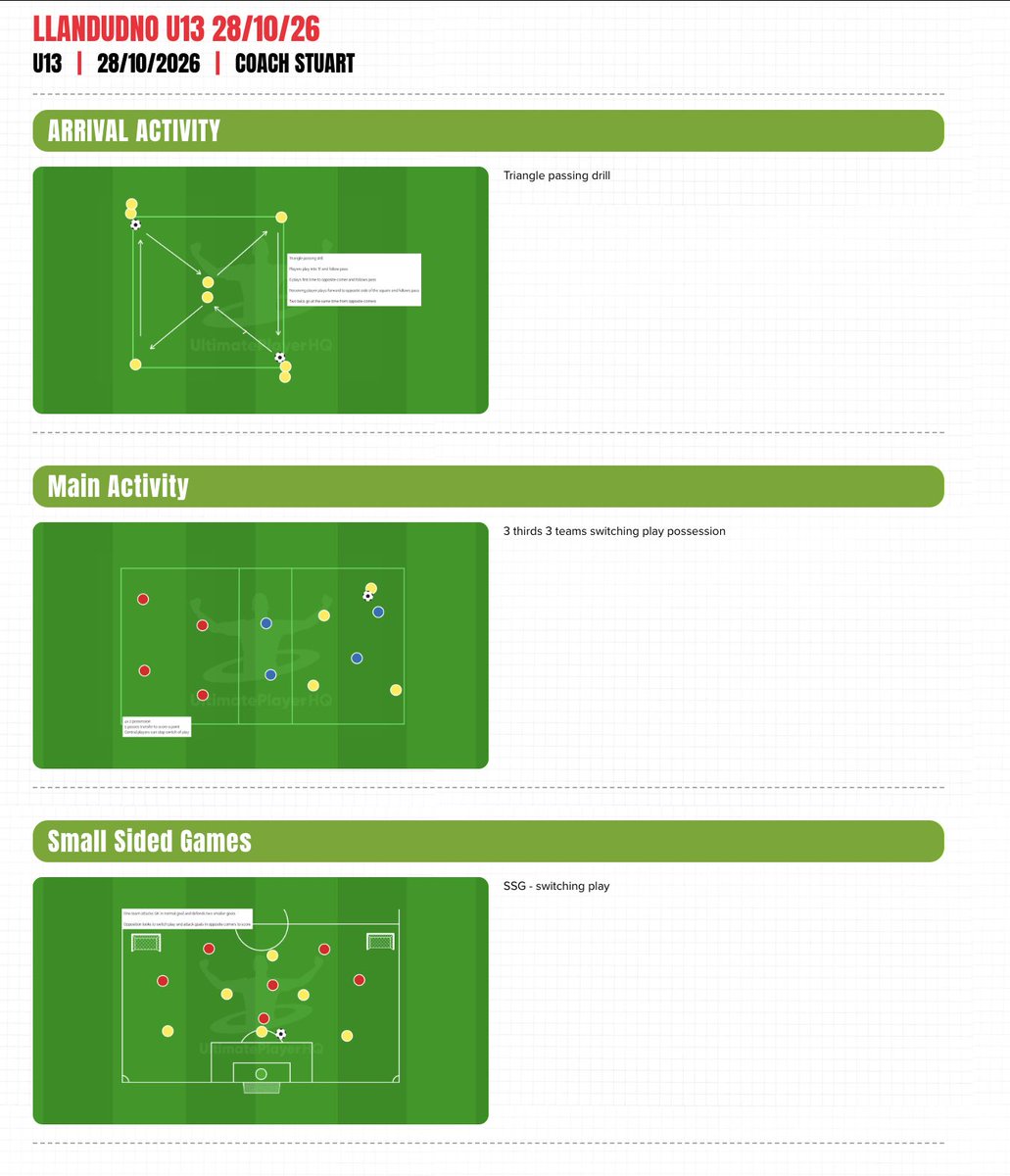
Llandudno U13 training session by Stu Howson.
Created using the Session Builder at https://t.co/cBe4OwyDym and now featured in our Session Vault.
🌐 https://t.co/cBe4OwyDym
Great individual coaching isn’t about collecting drills.
It’s about understanding the player and knowing WHAT, WHY and HOW to coach.
🎓 Upskill with my MPFC 1-to-1 Coaching Course.
🔥 £399 (save £100)
⏰ Ends 31 October
https://t.co/RLrV08ofE1
Technique at Speed is one of my 9 coaching principles. And it's something I believe we should pay more attention to in youth football.
I've seen plenty of young players who look technically excellent in training.
They can pass accurately.
They can dribble through cones.
They can control the ball comfortably.
But when the game becomes faster, things change.
Their first touch becomes less accurate.
Their passing quality drops.
They take too long to make decisions.
And suddenly, the technical skills they demonstrated in training become much harder to execute.
This is why Technique at Speed is one of my coaching principles.
Let me explain how I approach it.
//
1. Good technique must work at match speed
Football is played under constantly changing conditions.
Players have different amounts of time and space depending on the situation.
Sometimes they can take several touches.
Sometimes they must play with one or two.
Sometimes they have time to prepare a pass or shot.
Other times, the opponent is already closing them down.
I want players who can adjust their technical execution to these situations.
It's not enough to execute a skill correctly when there's no pressure.
Players must gradually learn to execute those same skills when the game demands faster actions.
//
2. Faster doesn't always mean better
This is an important distinction.
Technique at Speed doesn't mean rushing every action.
Imagine a midfielder receiving the ball in the centre of the pitch.
If there's space and time, they might take an extra touch to prepare a forward pass.
But what if an opponent is pressing aggressively?
Now the situation is different.
The midfielder might need to:
- Recognise the pressure before receiving.
- Adjust their body position.
- Use their first touch to move away from pressure.
- Execute the next action before the opponent closes the space.
The technical action must match the demands of the situation.
Sometimes that means playing quickly.
Sometimes it means slowing down and waiting for the right moment.
//
3. Technique and decision-making belong together
One mistake I think we can make as coaches is separating technical execution from decision-making too much.
For example, we might ask players to complete hundreds of passes without opponents.
There's value in developing basic technical skills this way.
But eventually, players must learn when, where, and how to use those skills.
Think about a winger receiving the ball near the touchline.
Should they take their first touch forward?
Protect the ball?
Turn inside?
Play a first-time pass?
The correct technical action depends on what the player recognises.
That's why I believe we need to develop technical execution and decision-making together.
//
4. How to develop Technique at Speed in training
I like using game-based exercises where players repeatedly face situations that demand quick technical actions.
For example, a directional 4v4 or 5v5 game.
Players must constantly:
- Receive and control the ball under pressure.
- Adjust their first touch to the situation.
- Pass accurately with limited time and space.
- Dribble at speed when opportunities appear.
- Execute actions quickly without losing unnecessary control.
We can adjust the playing area, number of players, and level of pressure to increase or decrease the difficulty.
But I wouldn't simply demand that players do everything faster.
Instead, I want them to recognise when they need to execute quickly and when they have more time.
Some simple coaching cues:
- What can you see before receiving?
- Can your first touch prepare your next action?
- How quickly can you execute?
- Can you maintain your technical quality under pressure?
- Do you need to play quickly, or do you have time?
//
One final thought.
There's nothing wrong with practising technical skills without opponents.
Especially when players are still learning how to execute them.
But we shouldn't stop there.
We need to gradually introduce the demands players will face in real matches.
Less time.
Less space.
More pressure.
More decisions.
Because ultimately, the game doesn't reward players for how well they can execute a skill without pressure.
It rewards players who can execute the right skills in the situations the game creates.
Technique at Speed isn't about doing everything faster. It's about maintaining technical quality while adapting to the speed and demands of the game.
//
P.S. Want to build brave, fast, and competitive players?
Learn how to apply these 9 principles inside Football Coaching Hub.
Try 7 days free: https://t.co/qy6ChsOQpt
Active Defending is one of my 9 coaching principles. And it's something I believe we should develop from a young age.
Too often, I see young players defending by reacting to what the opponent does.
They wait for the opponent to make a move.
They allow the ball carrier too much time and space.
They follow opponents instead of anticipating what might happen next.
And sometimes, they're simply afraid of getting beaten.
I want something different.
I want players who take responsibility for defending and actively try to influence the game.
Let me explain how I approach it.
//
1. Don't wait for the opponent to make a decision
When an opponent receives the ball, I want our nearest defender to recognise the situation immediately.
Can they close the space?
Can they apply pressure?
Can they prevent the opponent from turning?
Can they force the opponent into a less dangerous area?
The goal is to make the opponent's decisions more difficult.
For example, imagine an opposing midfielder receiving the ball with their back to our goal.
If we allow them time and space, they can turn, look forward, and potentially create a dangerous situation.
But if our midfielder closes the space quickly, the situation changes.
Now the opponent might need to protect the ball, play backwards, or make a quicker decision.
That's Active Defending.
//
2. Aggressive doesn't mean reckless
This is an important distinction.
I want players who defend aggressively, but that doesn't mean running towards every opponent at full speed.
Sometimes the right decision is to press immediately.
Sometimes it's to slow down, control the distance, and prevent the opponent from progressing.
And sometimes it's to delay the attack while teammates recover their positions.
For example, in a 1v1 situation, a defender might approach quickly but then slow down before reaching the attacker.
Why?
To avoid getting beaten too easily and give themselves a better chance of winning the ball.
The key is recognising when to:
Apply immediate pressure.
Challenge and try to win possession.
Delay the opponent.
Protect the most dangerous space.
//
3. Defending is an individual and collective responsibility
One player can apply excellent pressure, but if teammates don't react, the opponent might easily play around it.
This is why I want the whole team to defend actively.
When our winger presses the opposing fullback, what happens around them?
Does our midfielder close the nearby passing option?
Does our fullback support the pressure?
Do the players behind adjust their positions?
Good defending isn't just about the player closest to the ball.
It's also about how teammates support that player's actions.
//
4. Train players to recognise defensive situations
How do we develop this in training?
I like using directional small-sided games where players constantly need to defend, react, and make decisions.
For example, a 4v4 or 5v5 game with goals.
When the opponent has possession, encourage players to:
Close space quickly.
Apply pressure on the ball.
Recognise opportunities to win possession.
Cover teammates and protect dangerous spaces.
React immediately when possession changes.
Some simple coaching cues:
Can you get closer?
Can you prevent them from turning?
Is there an opportunity to win the ball?
If your teammate presses, how can you help?
If you can't win it, what space must you protect?
I also think it's important to recognise good defensive actions even when they don't lead directly to winning the ball.
Forcing an opponent backwards, preventing a forward pass, or delaying an attack can all be successful defensive actions.
//
One final thought.
We often talk about teaching players how to defend.
But I believe we should also teach them to want to defend.
To enjoy competing for the ball.
To take responsibility when their team doesn't have possession.
To see defending as an opportunity to influence the game, rather than something they simply have to do.
Active Defending isn't about chasing the ball. It's about taking responsibility, making good decisions, and actively trying to win the ball or prevent the opponent from progressing.
//
P.S. Want to build brave, fast, and competitive players?
Learn how to apply these 9 principles inside Football Coaching Hub.
Try 7 days free: https://t.co/qy6ChsOQpt
When we created our Position Specific Programme 5 years ago, we analysed Harry Kane profile⚽
We broke down the qualities, explored the technical skills and physical components required to perform at the highest level.
Discover more in the link:
https://t.co/7IbBGOnVDa