Earlier this year, our team attended the Open Healthware Conference in San Francisco, a two-day gathering of clinicians, engineers, and builders working on some of the most overlooked problems in healthcare. The conversations ranged from supply chain challenges in medical technology to new approaches in assistive care and rehabilitation, and what stood out most was the shared conviction that AI and open innovation have the potential to reshape the healthcare industry and improve patient outcomes.
One talk in particular stayed with us. Stephen Applebaum, a neuroimaging engineer with over 25 years of experience, shared the story of a Class II electrical median nerve stimulator his team spent years developing and validating for sedated patients, including children undergoing presurgical mapping for epilepsy. The work had cleared every technical hurdle and was on track for regulatory approval. However, when the 2008 financial crisis hit and the company ceased operations in early 2009, it never reached the patients it was built for.
He is now reviving that work through the Open Neuroimaging Foundation, built around a premise that resonated well beyond the room:
"Medical innovation shouldn't disappear when a company does."
What Stephen's talk and the conference surfaced overall is that the appetite to revive, create, and preserve meaningful medical innovation is real and gradually gathering its momentum.
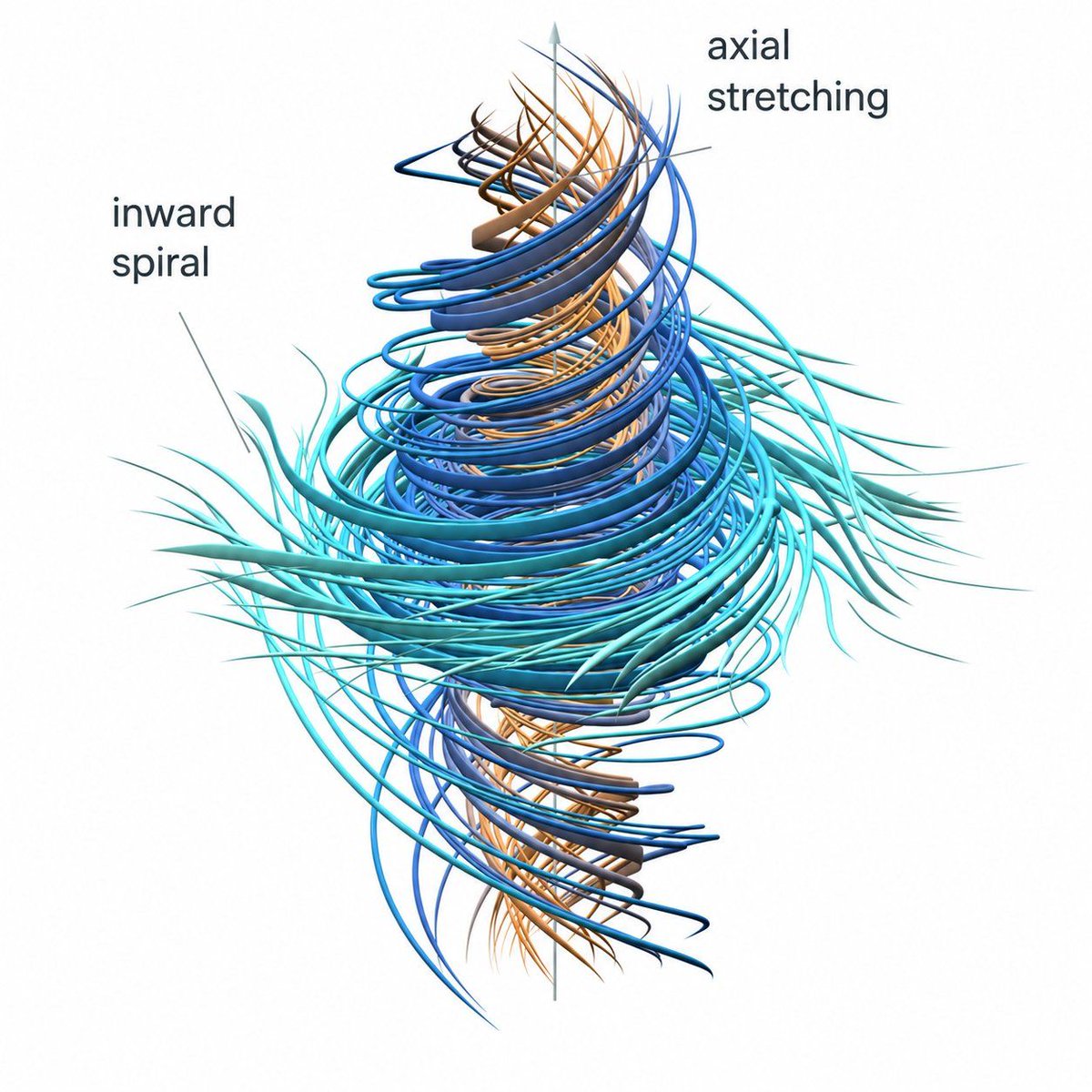
In September, @OpenAI announced a proof that solutions to the three-dimensional Navier-Stokes equations can develop a singularity in finite time. The mechanism is the vortex in the image: a spinning column of fluid that spirals inward while stretching along its axis until the equations break down. The proof came from roughly 10,000 agents running in parallel for 88 hours on an internal model, and it was formalized in Lean.
Two things stand out to us.
First, the proof is machine verifiable. OpenAI released a Lean formalization alongside the written argument, so anyone can confirm that each step follows from the last without relying on the authors. For comparison, the community review of Perelman's proof of the Poincaré conjecture took several years. Machine checking does not replace human review, but it removes most of the uncertainty about whether the argument is internally sound.
Second, machine verification confirms the proof is correct, but not that the proof answers the prize question. The official problem accepts four routes to a solution. OpenAI's proof takes the two that allow a smooth external force, which is why the company said it would not claim the prize. The Clay Mathematics Institute, which administers the Millennium Prize Problems, has acknowledged the result but has not made a formal ruling, and its review is expected to take years. The proof is mechanically correct. Months later, mathematicians are still debating whether it answers the question that matters.
That second point is the interesting one for anyone building AI for real-world applications. Even in mathematics, the field with the strongest verification tools that exist, the final question is one of expert judgment. In most high-stakes domains there is no formal way to check an answer at all. A clinician, an engineer, or an underwriter reasons under incomplete information and competing constraints, toward outcomes that may only become clear months or years later. The closest thing to ground truth is the reasoning of experts who make those decisions for a living.
Cobalt captures that reasoning as structured data: traces from credentialed practitioners, including physicians and surgeons, PhD scientists, and engineers, converted into training datasets and evaluation benchmarks for AI developers. Models are now producing research-grade reasoning in domains where an answer can be checked. The harder problem is building models that reason effectively when no objective verification function exists. That is the challenge Cobalt is built to solve.
Image: @OpenAI's depiction of local incompressible motion.
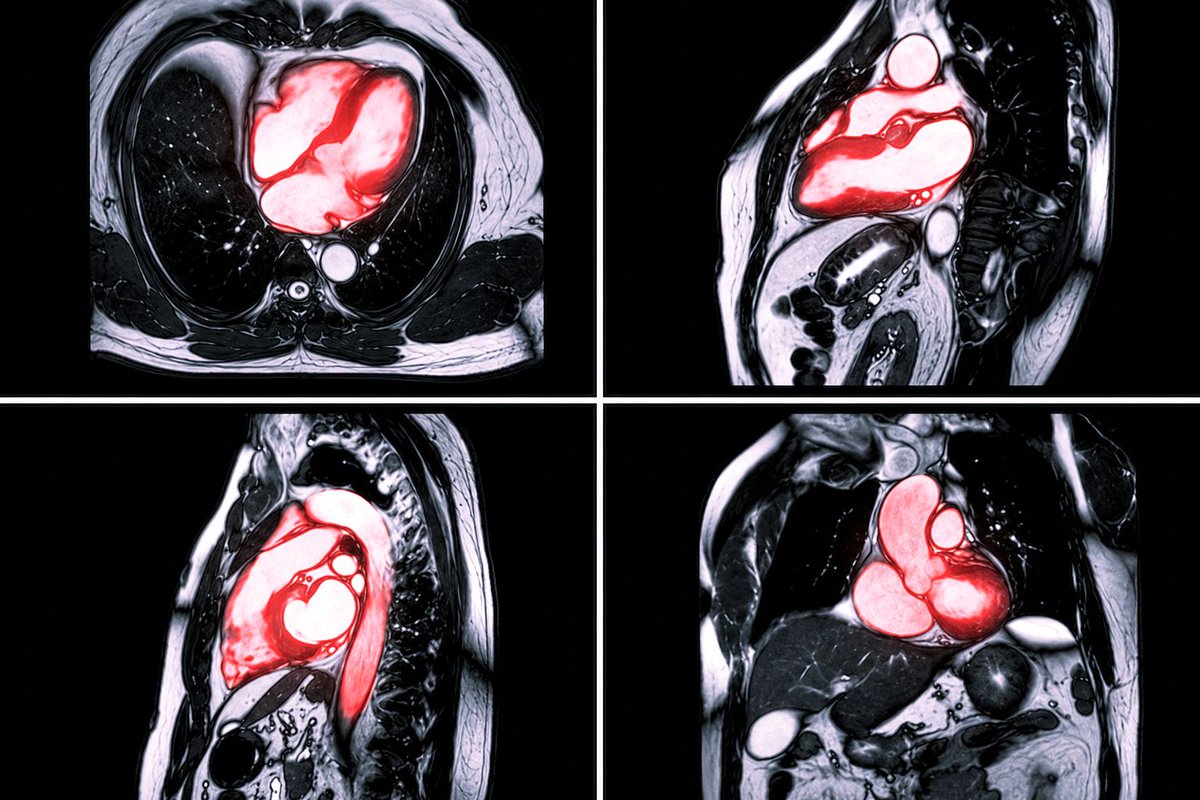
An AI system trained on more than 13,000 patient studies learned to interpret cardiac MRI, one of the most complex scans in medicine, without any manually labeled training data, outperforming general-purpose models by up to 35%.
• CMR-CLIP was developed by @CarnegieMellon in collaboration with @ClevelandClinic's Cardiovascular Innovation Research Center.
• Instead of manual labels, it learned by pairing cardiac MRI scans with the radiology reports cardiologists already write in routine care.
• It treats each study as a video of the beating heart, processing multiple views and time-resolved sequences to capture both structure and motion, the way a clinician does.
• Trained on more than 13,000 de-identified patient studies from Cleveland Clinic, drawn from over a million images collected across more than a decade.
• It outperformed general-purpose AI models by as much as 35%.
• Given a single example of a condition, it often matched systems that required dozens of labeled cases.
• On certain heart conditions, it reached accuracy as high as 99%.
• It stayed accurate on two separate datasets from France and Cleveland Clinic Florida, suggesting it works beyond the hospital where it was built.
• It can search large scan databases using natural language, retrieving similar cases to help compare rare or complex presentations.
• The codebase is publicly available, and the team plans to extend it to perfusion imaging, T2-weighted imaging, and clinical decision support.
What stands out is the practicality of it. Most cardiac imaging AI stalls because labeling scans takes expert time nobody has to spare. This one learns from work clinicians are already doing, and that might be what finally makes a tool like this scalable in the real world.
A research team at @harvardmed developed Dr. CaBot, an AI system built to participate in one of medicine's longest-running educational formats, the clinicopathological conference, where physicians gather to work through a real patient case together, with an expert narrating their diagnostic reasoning step by step. The findings were published in the New England Journal of Medicine in October 2025.
The tool and an expert clinician each worked through a differential diagnosis for a 36-year-old man presenting with abdominal pain, fever, and hypoxemia, independently and without knowledge of the other's conclusions. Both converged on a duodenal origin as the unifying source of the patient's presentation.
Dr. CaBot draws on more than 6,000 published Case Records from Massachusetts General Hospital alongside millions of articles from the clinical literature. Given a case presentation, it produces both a written differential diagnosis and a narrated slide-based presentation in approximately five minutes, using only the information available at the point of referral.
What sets Dr. CaBot apart from other AI diagnostic tools is how it arrives at a diagnosis. Rather than returning a single answer, it moves through possibilities, weighs competing explanations, and surfaces its reasoning at each step, mirroring the cognitive process clinicians use and teach. That transparency is what makes it a viable educational tool, and potentially a useful thinking partner in complex diagnostic settings.
Medicine has spent decades building frameworks for how clinicians think out loud. Extending those frameworks, rather than replacing them, may be where the most durable role for AI in diagnosis takes shape.
Anthropic and Andrew Ng built an agent that uses 90% fewer tokens from scratch:
they dropped the entire book of Frankenstein into a prompt - 108,000 tokens asked one question
the input dropped from 108,000 tokens to 11
here's how:
step 1 → put everything that never changes at the top - tools, then system, then docs
step 2 → mark where the static part ends. everything above it gets cached
step 3 → one stray space breaks it - and you pay full price again
step 4 → the cache dies in 5 min - every read resets the clock
step 5 → cached tokens don't count against your rate limits. free headroom
most people never touch this - it pays for itself on day one
watch & bookmark - this 1-hour brilliant course ↓
Surgical AI benchmarks are still in the early stages of development. We have been particularly impressed by SurgiQ and GoNoGoNet.
SurgiQ has illustrated how far text-based surgical reasoning still has to go. 13,055 source-grounded questions across six surgical domains, and across 35 open-weight models the best reaches only 68.1% accuracy, with smaller models sitting near the 25% random baseline.
GoNoGoNet has illustrated that perception is tractable. By segmenting safe ("Go") and dangerous ("No-Go") zones of dissection in laparoscopic cholecystectomy, validated against an expert surgeon panel, it showed a model can see the surgical field well enough to flag danger, with stronger performance on No-Go zones than Go zones.
This year, our team at Cobalt AI seeks to build upon the research completed thus far at the intersection of surgery and AI. We will be sharing more on this soon.