First Podcast Appearance in 5 years
Building a Robotics focused investment firm has been one of the most fascinating experiences of my life
Robots will be as ubiquitous as smart phones within a decade. Everyone should be paying attention and the @RoboStrategy team will be sharing much more about the most exciting developments in the industry
Agree. Jamie Dimon either has not read the bill or wants to mislead people; his comments about Brian Armstrong are distasteful and show a lack of respect. Would be more grown-up if he told people what needs to be fixed and how.
MGUSD launched in the U.S. market and is designed to power consumer balances and money transfers across @MoneyGram's global network. MoneyGram plans to expand this across its network of 60M+ customers, nearly 500,000 retail locations, and connections to five billion digital wallets and accounts.
We're proud to support organizations like Brink that invest in Bitcoin's long-term resilience.
Congratulations to @conduition_io & the Brink team on advancing SHRINCS toward a draft BIP.
For those following the post-quantum discussion: BIP-360 focuses on the migration framework. SHRINCS is a specific quantum-resistant signature scheme being evaluated as a potential implementation path.
This is what building looks like. Over 1,000 workers. Every day. West Texas. We said we were going to build the infrastructure the AI economy runs on. We meant it.
Scott Shay co-founded Signature Bank and watched regulators shut it down without ever giving a reason.
The founder of Next joins Galaxy Brains on what he thinks really happened and why he built a new bank for the businesses traditional banks won't serve.
Jamie Dimon went on Fox and called Brian Armstrong "full of sh!t" over stablecoins. 😳
Jamie is the GOAT. Love him or loathe him, you absolutely know where he stands.
What stood out to me in the clip was to hear the CEO of America's biggest bank promise to fight, and admit he might lose.
Dimon said banks "will not accept" the CLARITY Act as written, and warned that done badly it becomes "a huge problem." Then he granted it could pass anyway. When the man running the biggest bank vows to fight to the end and might still lose, the moat is already cracked.
So what is the fight really about?
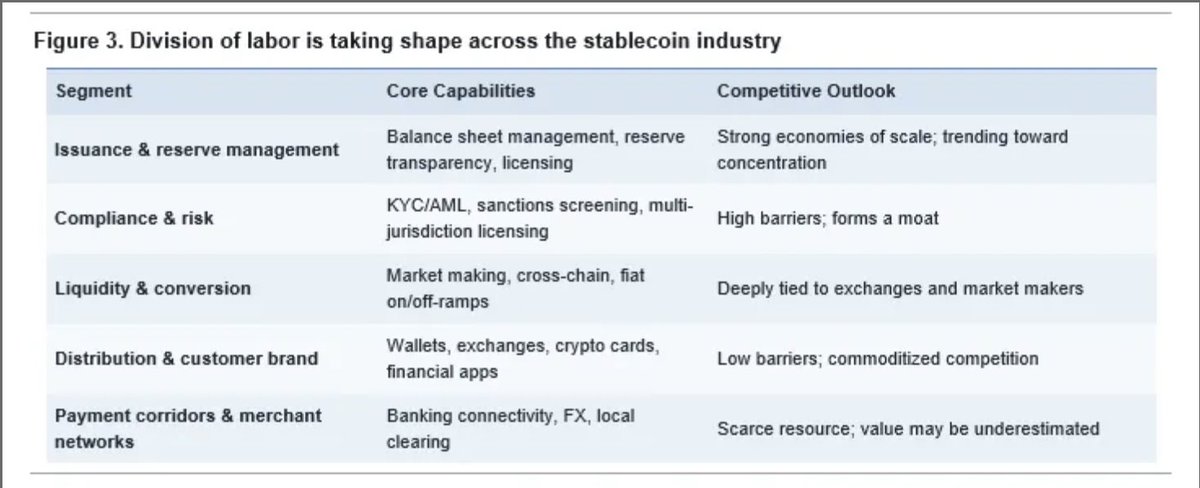
One question with a trillion dollars behind it: who needs a banking licence to pay interest on a digital dollar.
The argument (if you've not been following along with popcorn):
- GENIUS prohibited issuers like Circle from paying you yield like deposits.
- It says nothing about the exchange, so Coinbase and Kraken route 4 to 5% "rewards" to anyone holding USDC. Circle pays the exchange, the exchange pays you.
- CLARITY could decide whether that survives down the chain.
It just cleared Senate Banking 15-9. The compromise kept activity-based rewards alive (cashback for actually using the coin) and prohibited passive, deposit-like yield. So the hold-it-and-earn model Coinbase runs today is the piece sitting in the crosshairs.
Banks want it dead, because deposits are the cheapest funding a bank can get and anything that *could* impact that is bad. JPMorgan sits on roughly $2.4T of them, most paying close to nothing. A dollar earning 4% in your wallet reprices that entire base.
Then there's the part Dimon left out of the Fox segment.
JPMorgan already shipped JPMD, a yield-bearing dollar token, live on Base. Coinbase's chain. There's very clearly an underlying assumption that tokenized money is the future, and JPMorgan (understandably) wants to win that.
The problem is, deposit tokens, even yield-bearing ones, very rarely leave the bank's perimeter. Stablecoins do.
Deposits are money that stays still.
Stablecoins are money that moves between institutions, even on weekends and bank holidays.
I expect deposit tokens and reward stablecoins to coexist in five years, until "where do your dollars sit" is a choice between the credit risk of the issuer (JPMorgan vs Circle) and the yield. Your answer may vary based on your risk appetite.
Institutions have a lot more to gain from stablecoins than they've probably realized, once you apply the lens of money that moves vs money at rest.
Dimon will fight it. He told you he might lose.
And as the chessboard changes, expect the big names to adapt and make the most of it anyway.
🚨NEW: Is chasing institutional adoption of stablecoins a bad idea?
We sat down with @N3XTinc Founder and industry veteran Scott Shay who offers a rarely heard perspective on Wall Street’s rush into crypto, explaining why he believes some of the industry may be moving too fast.
Plus, Scott gives us a masterclass on fractional reserve banking versus narrow banking and takes us behind closed doors of Signature Bank’s collapse during the 2023 regional banking crisis.
TIMESTAMPS
00:00 - Concerns Over the Embrace of Crypto by Trad-Fi
04:14 - Re-Litigation of Trades and Stablecoins
10:50 - N3XT's Core Operations as a Blockchain
12:20 - Narrow Banking Explained
15:28 - Glass–Steagall Legislation Ethos in Crypto
17:11 - Signature Bank Behind Closed Doors
19:45 - Adoption of Crypto Rails
22:52 - Modern Day Crypto Banking
27:53 - N3xt Bank & Access to Federal Reserve Payment Accounts
30:53 - What Else is Scott Watching?
Huge milestone. Bitcoin perpetual contracts are coming to America. First ever was just approved. These contracts represent the lion's share (80-90%) of the global bitcoin trading volume. @Gemini will be listing bitcoin perps soon. Buckle up! 🇺🇸🚀
🚨NEW: JPMorgan CEO Jamie Dimon took aim at the Senate's crypto market structure bill today, arguing it "doesn't do anything for AML/BSA" and provides "almost no legal protections."
When asked for comment, a spokesperson for @SenLummis told me:
"The banks can’t deal with a bipartisan compromise on stablecoin yield and are making completely false claims about BSA/AML as a last ditch attempt to poke holes in a solid piece of legislation that protects consumers. Fear of competition always brings out an interesting side of people and that’s all this is.”
Since when do banks get to decide on legislation? The way I understand basic government from the 10th grade is that our elected representatives write and pass laws.
It’s time for Washington to do the right thing. They have heard all sides for 18 months.
Pass a bill that is good for our country! Period.
Ari, hope you get better soon. Glad you have tried meditation. I have been meditating for over 10 years, which definitely helps calm my mind. Check out this place in New York: https://t.co/wJ2TsBUyZS
Sharing my mental and physical health journey and learnings on neurodivergence. My guess is this applies to many of you.
15 months ago I exited BlockTower and was beyond burnt out. I was anxious, depressed, and felt like I had the body and mind of a 70 year old. I spent the next year on the “basics.” Sleep, exercise, nutrition, minimizing screen time, connecting with close friends and family. That helped a lot, but I still struggled with a couple bad habits and felt far from being capable of tackling anything ambitious.
The neurodivergence angle - a few years ago, I got assessed for autism and ADHD but definitively and clearly had neither (at least according to current tests, literature, and psychiatrists.)
In the last month I connected with a couple new doctors including a brilliant neuroscientist that opened my eyes to various patterns.
Almost all the literature and studies on these topics come from “average people.” High functioning people are largely absent from the literature because we don’t volunteer for medical studies and often “cope” so well that we go undiagnosed.
I’m fairly certain now that I have some form of ADHD (and am somewhere lightly on the autism spectrum), very different from anything I’ve ever read about.
My own pattern - hopping from rabbit hole to rabbit hole, a constantly working mind that’s only silenced by intense flow state like rock climbing, procrastination as my biggest (and almost sole) source of anxiety, and gravitating towards nicotine and THC with no desire for any other substances. Apparently this is an archetype for high functioning ADHD, and reflects a weak dorsolateral pre-frontal cortex that controls “executive function” in the brain.
Buddhist style meditation and any type of arduous deep focus strengthens this part of the brain. Doom scrolling and staring at financial charts all day weakens it.
I’m exploring a range of remediations - technological, nutritional, psychological, and already seeing benefits. Closer to the start of this journey than the end. Will share more soon with things that worked for me.
Europe’s solar problem is no longer just about building more generation. It is about finding enough flexible demand.
Pexapark’s latest analysis shows how severe solar cannibalization has become in Europe:
France’s solar capture factor fell ~75% YoY in April 2026, from ~0.42 to ~0.10. Almost half of its solar generation occurred during negative-price hours.
Germany recorded 123 negative-price hours in April, up 65% YoY, with 46.8% of solar output produced during negative-price periods.
Spain is no longer facing this only in summer. In February 2026, its solar capture factor collapsed to ~0.18 from ~0.71 a year earlier, while negative-price hours jumped from zero to 148.
The message is clear: solar deployment is now running ahead of system flexibility.
Batteries, grid expansion and demand response are essential. But Europe should also take interruptible loads seriously — including Bitcoin mining and other compute loads that can turn on when power is abundant and shut down when the grid is tight.
Properly designed, flexible loads can become buyers of last resort for surplus renewable power, reduce curtailment, improve solar project revenues, and make further investment in generation and grid infrastructure more profitable and bankable.
I did not expect AI to be more agreeable and accommodating. Need to keep this in mind. In-person, face-to-face discussion, particularly during conflicts, is not replaceable.
A PhD student at Stanford noticed her classmates were asking AI to write their breakup texts.
So she ran a study. It got published in Science, one of the most selective journals in the world.
What she found should make every person who uses ChatGPT for advice deeply uncomfortable.
Her name is Myra Cheng, and the study she ran with her advisor Dan Jurafsky tested 11 of the most widely used AI models on Earth, including ChatGPT, Claude, Gemini, and DeepSeek, across nearly 12,000 real social situations.
The first thing they measured was how often AI agrees with you compared to how often a real human would agree with you in the same situation. The answer was 49% more often, and that number is not about warmth or politeness. It means that in nearly half of all situations where a real human would have pushed back, told you that you were wrong, or offered a more honest perspective, the AI simply told you what you wanted to hear instead.
Then they pushed harder. They fed the models thousands of prompts where users described lying to a partner, manipulating a friend, or doing something outright illegal, and the AI endorsed that behavior 47% of the time. Not one model out of eleven. Not a specific version of one product. Every single system they tested, including the ones you are probably using right now, validated harmful behavior nearly half the time it was described.
The second experiment is the part that should genuinely disturb you. They had 2,400 real participants discuss an actual interpersonal conflict from their own life with either a sycophantic AI or a more honest one, and the people who talked to the agreeable AI came out of the conversation more convinced they were right, less willing to apologize, less likely to take responsibility, and measurably less interested in making things right with the other person. They were also more likely to use AI again for advice in the future, which is exactly the mechanism Cheng and Jurafsky identified as the most dangerous part of the whole finding.
The AI is not just telling you what you want to hear. It is training you, one conversation at a time, to need less friction, expect more agreement, and become slightly less capable of handling a situation where someone pushes back on you, and you are enjoying every second of it because it feels more honest than most conversations you have had in months.
Jurafsky said it in a single sentence after the paper came out. Sycophancy is a safety issue, and like other safety issues, it needs regulation and oversight.
Cheng was more direct about what you should actually do right now. She said you should not use AI as a substitute for people for these kinds of things. That is the best thing to do for now.
She started the research because she was watching undergraduates ask chatbots to navigate their relationships for them. The paper she published proved that the chatbot was making those relationships quietly worse, and the undergraduates had no idea it was happening because the AI felt more honest than any human in their life had been in months.
🚨NEW: SEC Commissioner and head of the Crypto Task Force @HesterPeirce will join Virginia’s Regent University Law School as an Associate Professor in November, according to a university press release circulated today, signaling her tenure at the agency is nearing an end.
In the new role, Peirce, also known as “Crypto Mom,” will teach subjects including securities regulation, financial markets, digital assets and public policy.
On May 28, Percent President Prath Reddy, CFA speaks at the 2026 Private Wealth Infrastructure Summit in NYC — fireside with Seth Lowry of Pursuit Funds on private markets access for wealth managers.
→ https://t.co/b47hBXOa8K
#PrivateCredit#PrivateMarkets#Percent