You’ve seen the first look, now dive deeper with the dev team into the features and systems that make every deployment unique in DMZ. #MW4
The DMZ COD POD is here: https://t.co/aDsDEqhu4I
I spend more time instructing LLM to clean up, optimize and remove code than I spend time instructing LLM to write code. Less is more. Code base bloat will eventually kill your iteration time. Pushing 10k lines a day will kill your productivity and entangle your whole product.
@WhaleTub @Acerola_t modern vulkan 1.4 and now with descriptor heaps is not more annoying at all. The only thing it is worse at is that it needs initial boilerplate.
@MrDrElliot What the design philosophy regarding old gpu support? Eg will it be as modern as possible to allow simpler and more powerful code like relying on rt availability and bindless?
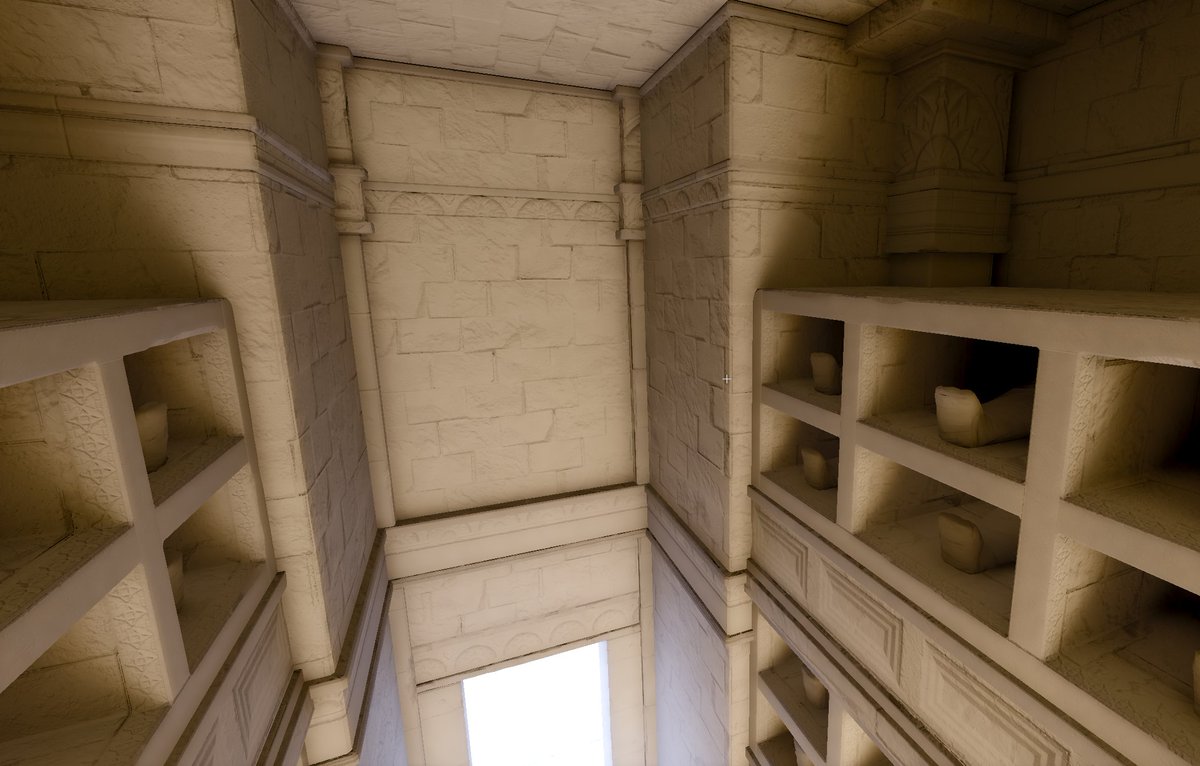
Testing in different settings is very important for graphics techniques. What works in one setting will fall apart in another. Its best to have actual game data to work with. At home i use a lot of dumb test scenes. Very happy to say the GI now works well in all of them 🥳
@SoftEngineer Very nice!
I do the same.
Debug tooling is very underrated.
Good visualizations make a massive difference in actual progress as one can inspect any given technique in much greater detail.
Currently the perception that RT is slow comes from games pushing it mostly for ULTRA settings.
But really, current mid level hardware can ray trace fast. When used moderately, is an absolute game changer.
Prime example is DOOM The Dark Ages.
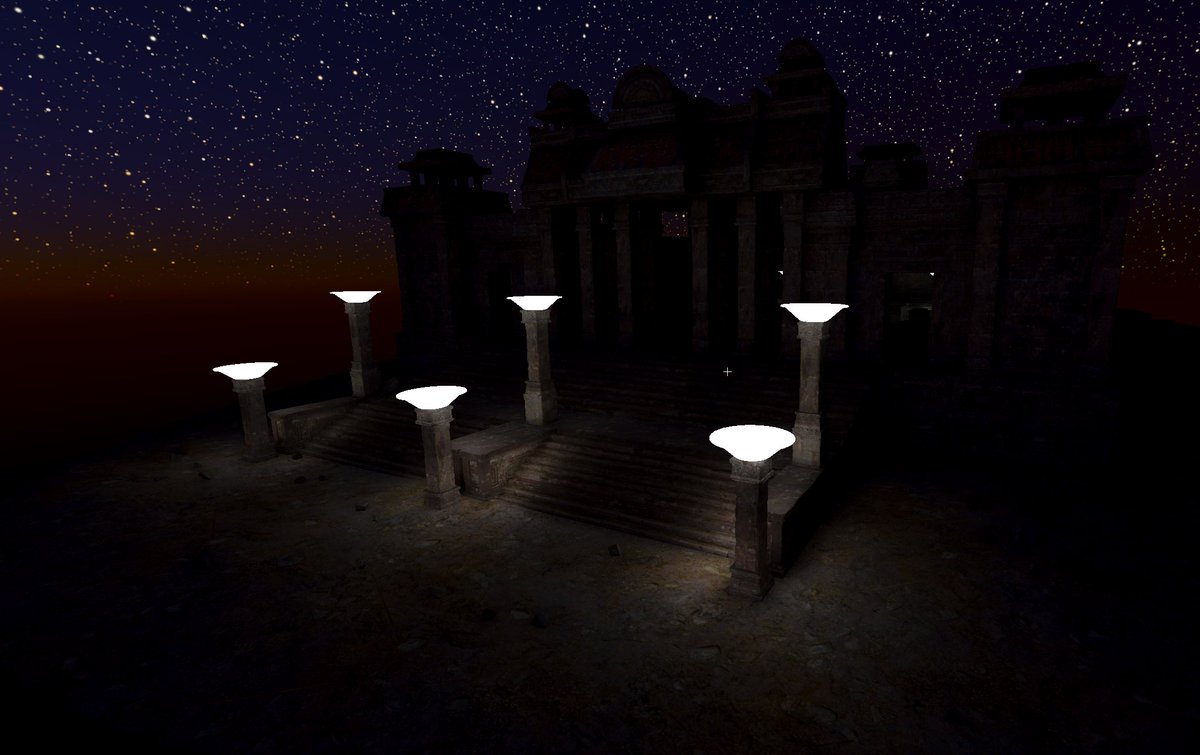
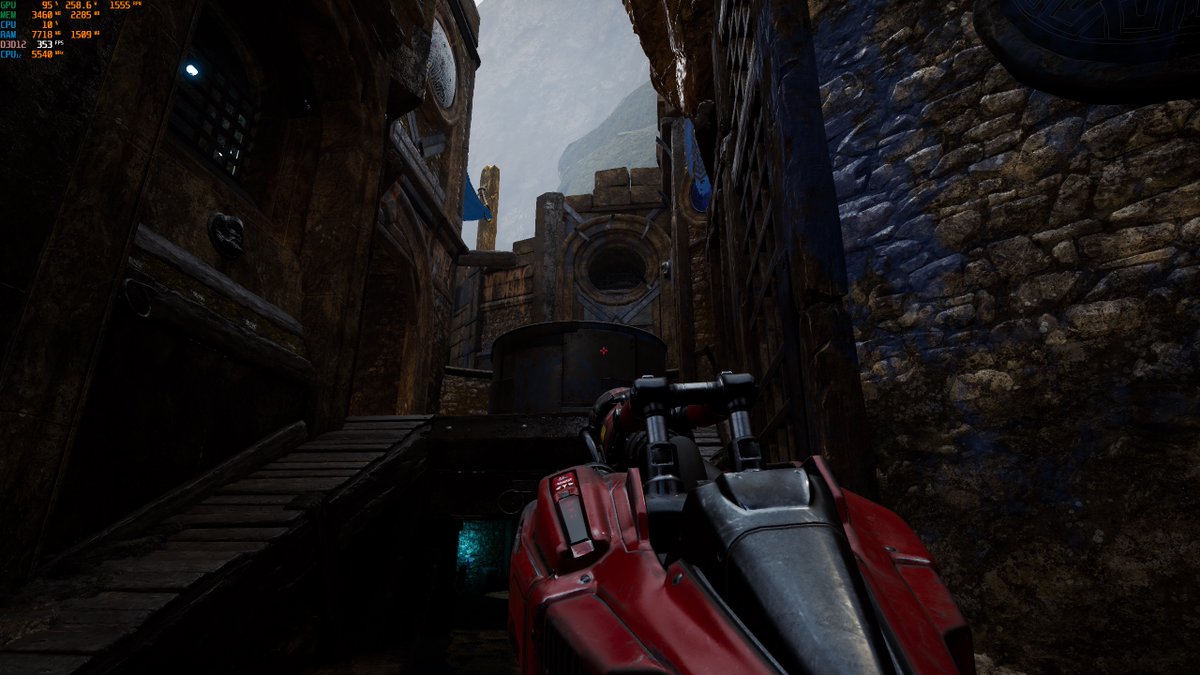
#UnrealEngine#Vite I’ve just published #UnrealTournament Vite Tech Demo.
The performance target is 4K Native 60 FPS for PS5 level hardware (6700/7600/2070) with #Raytraced Global Illumination, #Tessellation#SMAA and Distance Field Ambient Occlusion + #SSAO and some meshes with no LODS.
Image 1(Rtx 4080s 1440p native) Image 2 (rx 7600 4k native)
This is a big jump from UE5.7 that needs to lower rest down to 720p-900p to maintain 60fps with modern rendering features.
Download the Demo: https://t.co/hSlxXwfhD0
Join: https://t.co/0otIbDumxs
#gamedev #rendering
Variance based filter guiding also works, but it reduces overall energy by quite a bit when the input signal is very noisy.
The ray-length guiding also produces sharper contact hardening anyways, so the variance guiding for the most part just causes energy loss.
I experimented more and made two big improvements to my global illumination denoiser recently:
* A new firefly clamp based spatial filter weight recovers a lot of energy post firefly filtering
* Ray-length based filter guiding adds nice contact hardening
@SoftEngineer@UnrealEngine I see.
I wanted to compare that to my rtgi solution.
Currently in flying world, my rtgi takes up to 1.7ms for 1440p on a 4080.
I recently improved the resolve speed and first-frame-result after dis-occlusions significantly.
The denoiser is now very stable in motion even with lots of disocclusions.
And it still runs in around half a millisecond for a 1440p result on my RTX4080.
Today the Vulkan Working Group has released two important updates to the API and ecosystem: an entirely new Descriptor system and the Vulkan Roadmap 2026 Milestone.
These new features will be discussed at the forthcoming Vulkanised 2026 conference.
https://t.co/f1ZkuEoM82
With my rtgi i am also doing something, that i believe, is a novel technique that i have not seen done before. While probes are often used in rtgi for indirect diffuse on hit shading, i use them to replace all rtgi hit shading. On each hit i project the closest probes radiance.
I have been working on a denoiser for raytraced diffuse global illumination in my hobby engine. I am now quite happy with it. It can create a high quality output with only 0.25 rays per pixel. I am particularly proud of how stable it is in movement and on disocclusions.
I have been working on a denoiser for raytraced diffuse global illumination in my hobby engine. I am now quite happy with it. It can create a high quality output with only 0.25 rays per pixel. I am particularly proud of how stable it is in movement and on disocclusions.
I have been working on a denoiser for raytraced diffuse global illumination in my hobby engine. I am now quite happy with it. It can create a high quality output with only 0.25 rays per pixel. I am particularly proud of how stable it is in movement and on disocclusions.
After nine years of development, meshoptimizer has reached its first major version, 1.0!
This release focuses on improvements in clusterization and simplification as well as stabilization. Release announcement with more details on past, present and future is below; please RT!