Co-Author of “Satan in Flames” which covers the Iran/Al Qaeda relationship. History, Geopolitics, Nebraska Football & Sports. Love all things Animal related.
For me it was March 10, 2023 at 10:04 am and it was such an awesome privilege to be there with my Main Man Derpy. He was big & brave and I got to look right in His eyes and tell Him I loved Him to the last moment He was able to be here. It taught me what an honor it was to have Him for those 7 years and how I needed to carry myself moving forward. I just hope that I didn’t let Him down in the days since and that I’m a fraction of being as big & brave as He was. Fly high Derpy, I love you to pieces, still miss You and ask that you guide me so I can have the honor of walking in Your Paw Prints until we’re together again. . .
Blaze you look fantastic in your bandana. I don’t like that you’ve been waiting 551 days but I’ve seen things happen in a new york minute too. That home that is missing you right now will be complete and abounding in joy when you are there. To the staff & volunteers you’re incredible doing this work at a hard time. Goodness are there days out there that try you. But no matter what don’t ever quit!
On This Day in 2000 - Kobe Bryant’s legendary Clutch Takeover in Game 4 of the Finals in Indiana to get the Lakers over the finish line after Shaq fouled out to take a 3-1 Series Lead in the Finals
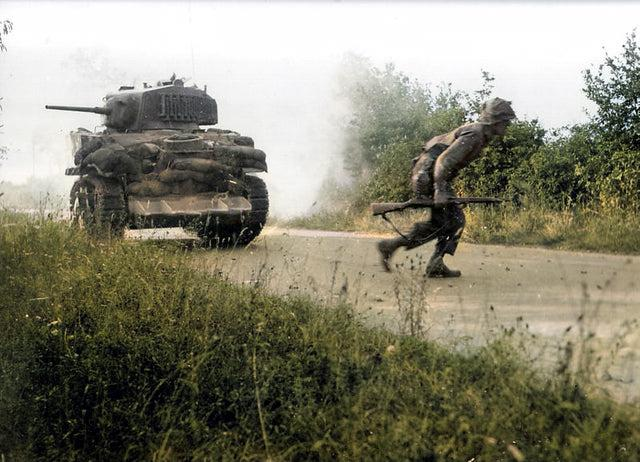
June 12, 1944. D-Day plus 6.
Tonight, for the first time since the invasion began, all five Allied beachheads are joined into a single continuous front.
The plan said this would happen on Day 1.
It took six days and roughly 15,000 Allied casualties to get here.
---
On the evening of June 6, 1944, the five D-Day beaches were five separate, isolated pockets of men clinging to the French coast. Utah and Omaha were separated by seven miles of flooded marsh. Gold, Juno, and Sword were linked but barely. The airborne divisions were scattered across the countryside in hundreds of isolated groups. Supply was chaotic. Communications were partial. Nobody had a clear picture of what anybody else was doing.
The original Allied plan had called for a continuous front by nightfall on June 6. It had also called for the capture of Caen, the largest city in Normandy, on the first day of the invasion.
Caen is still in German hands tonight.
By midnight on June 12, the numbers on the beach are staggering: 326,547 soldiers, 54,186 vehicles, and 104,428 tons of equipment have landed across the five Normandy beaches. One continuous 80-kilometer front now runs from Sainte-Mere-Eglise in the west to Ranville in the east, ten to thirty kilometers deep.
The five beaches are one. The lodgement is real.
But every mile of it was paid for.
---
The gap between Utah and Omaha was only closed yesterday, after days of brutal fighting across the Carentan causeway. If you read yesterday's post, you know what that cost Robert Cole and his battalion.
South of Omaha, American forces have pushed 30 kilometers inland to Caumont, seizing high ground that overlooks the entire region. In doing so, they have opened something the German commanders did not plan for: a gap in the line between the German 352nd Infantry Division and the elite Panzer Lehr armored division. A seven-kilometer hole in the German front, undefended.
When British Lieutenant General Miles Dempsey heard about it this morning, he immediately saw the opportunity. The pivot point of the entire German defense is Caen, which has resisted every direct British assault. But if a strong armored force could slip through that gap west of Caen, drive southeast, and seize the high ground around a small town called Villers-Bocage, they could outflank Caen entirely. They could put British armor on the road behind the German defenders. The whole position might unravel.
Dempsey picked the 7th Armoured Division for the task.
---
The 7th Armoured Division was the most famous armored division in the British army.
They were the Desert Rats.
They had fought from Egypt to Tunisia. They had shattered Rommel at El Alamein. They had followed Montgomery across North Africa and into Italy. Their divisional insignia, the jerboa, a small desert rat, was one of the most recognized symbols in the entire Allied force. Their veterans had been in continuous combat since 1940. They had seen everything.
On the afternoon of June 12, they disengaged from the grinding battle near Tilly-sur-Seulles and turned east, moving fast through the gap. They swept through undefended countryside. French civilians came out to wave at them. The few German soldiers they encountered scattered or surrendered. The tanks rolled.
By nightfall, Brigadier Robert Hinde halted the lead brigade five miles short of Villers-Bocage and the surrounding high ground the maps called Point 213. They would push through to the town first thing in the morning.
The Desert Rats made camp, confident.
They had moved 20 kilometers through a gap in the German lines. In the morning they would be in Villers-Bocage, the key ground west of Caen, with British armor pointing like a dagger at the German rear.
It was, by any reading of the map, an extraordinary opportunity.
---
Seven kilometers away, in a field near the road to Villers-Bocage, a 30-year-old SS officer named Michael Wittmann was moving his tank into position.
Wittmann commanded the 2nd Company of SS Heavy Tank Battalion 101. He had more than 119 confirmed tank kills on the Eastern Front, almost all of them in the previous two years. He held the Knight's Cross with Oak Leaves, Germany's highest military decoration. He had destroyed more Allied tanks than almost any other individual in the entire German military.
His battalion had fewer than 20 Tiger tanks left after weeks of Allied air attacks on their convoy routes. They were the last uncommitted reserve of the 1st SS Panzer Corps.
Tonight, they are sitting in a treeline on a ridge south of Point 213, unseen by British reconnaissance, unknown to British intelligence.
The Desert Rats don't know they are there.
---
Tomorrow morning the 4th County of London Yeomanry will roll into Villers-Bocage to cheering French civilians, order their tanks to a halt, and wait for orders to push on to Point 213.
What happens next will be studied in military academies for the rest of the century.
But tonight, June 12, 1944, the lodgement is real.
The five beaches are one front.
Fifteen thousand men are dead, wounded, or captured to make it so.
And seven kilometers away, in the dark, Michael Wittmann is waiting.
On this day in 1944, the single deadliest 15 minutes in the history of tank warfare unfolded on a country road in Normandy. Here is exactly how it happened.
It is the morning of June 13. The British 7th Armoured Division, the famous Desert Rats, has pushed deep behind German lines and rolled into the town of Villers-Bocage. The advance has gone almost too smoothly. A long column of Cromwell tanks, Shermans, half-tracks, scout cars and supply vehicles is strung out nose to tail along the road and up onto the high ground at Point 213. The vanguard belongs to the 4th County of London Yeomanry, the Sharpshooters.
The crews believe the area is clear. Engines are idling, hatches are open, men are stretching their legs and brewing tea in the sun. It is the kind of relaxed pause that wins or loses wars.
Just off the road, hidden in the trees, sits a single German Tiger tank of the 101st SS Heavy Panzer Battalion. Its commander is Michael Wittmann, already the most decorated tank ace alive. Through his optics he watches the entire British column lay itself out in front of him, completely exposed, with no idea he is there.
He has seconds to decide. Wait for the rest of his Tigers, or strike now while the enemy is blind. He chooses to attack immediately, and alone.
The Tiger lurches out of cover and its 88mm gun fires. The first shell smashes into a tank at the head of the stalled column and it erupts in a tower of flame, throwing burning debris across the road. Seconds later Wittmann puts a round into a vehicle at the rear. Now the column is trapped between two blazing wrecks on a narrow road, hemmed in by hedgerows, unable to advance, reverse, or turn.
Then the Tiger begins to roll down the line.
It moves almost unhurried, the long gun traversing from target to target. Every few seconds the cannon barks and another British tank brews up. Cromwells try to return fire at point blank range and watch in horror as their shells strike the Tiger's thick frontal armor and simply ricochet away. Their guns cannot penetrate it from the front at any range that matters. The crews that can bail out are diving into ditches as their vehicles cook off behind them.
Wittmann works his way through the carriers and the support vehicles too, shredding half-tracks and overrunning anti-tank guns before they can be brought to bear. Smoke blankets the road. The proud spearhead of one of Britain's best divisions is being dismantled one vehicle at a time by a single tank.
In roughly 15 minutes it is finished. A dozen or more tanks are burning, along with numerous half-tracks, carriers and guns. By any measure it is one of the most lopsided actions ever fought by a single armored vehicle.
Then Wittmann pushes his luck. He drives the Tiger into the town of Villers-Bocage itself, into a maze of narrow streets where a tank loses every advantage. A British anti-tank crew with a 6-pounder gun is waiting. They hold their fire, let the Tiger close the distance, and then put a round straight into it. The great machine grinds to a dead stop in the middle of the street.
Beaten at last, Wittmann and his crew throw open the hatches, abandon the Tiger, and escape on foot through the town, slipping away to fight again.
One tank. One column. 15 minutes. Eighty years later historians still argue over the exact number he destroyed, because the truth of what one machine did that morning is almost impossible to believe.
With mass cullings happening right now, this hospital and sanctuary is the only permanent shield our street dogs have. We have to build it piece by piece.
1 Brick = £5 = 1 Life Saved
Let’s keep laying these bricks together
https://t.co/W471sfgaU4
Newsreel footage of the U.S. Coast Guard Treasury-class cutter Spencer (WPG-36) forcing the German U-boat U-175 to the surface off the coast of Ireland, April 17, 1943. The USCGC Spencer was also responsible for the destruction of U-633 off Iceland the previous month.
Michael Jordan is a legend said to possess the greatest skill set in NBA history.
LeBron is nowhere near that level.
Look at Jordan’s plays in this video… Has LeBron ever played like that?
Watch it carefully. If he’s not the GOAT, then who the hell is? 😂🐐
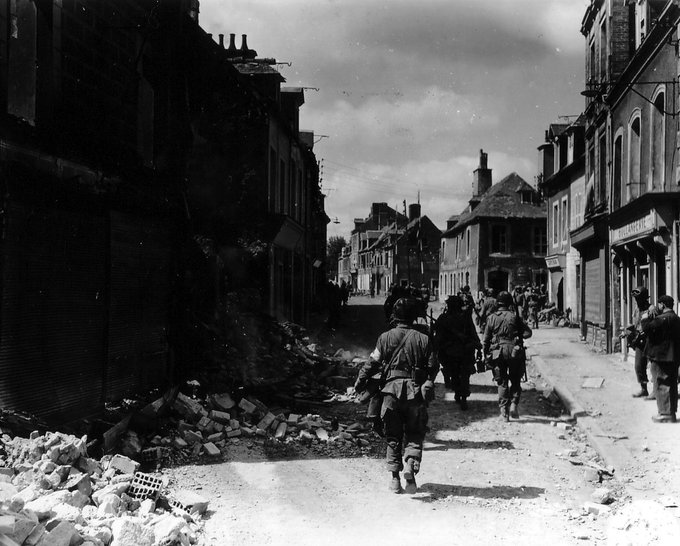
On this day in 1944, the French town of Carentan is liberated by elements of the U.S. Army's 101st Airborne Division. Its capture effectively consolidates the Utah and Omaha beachheads.