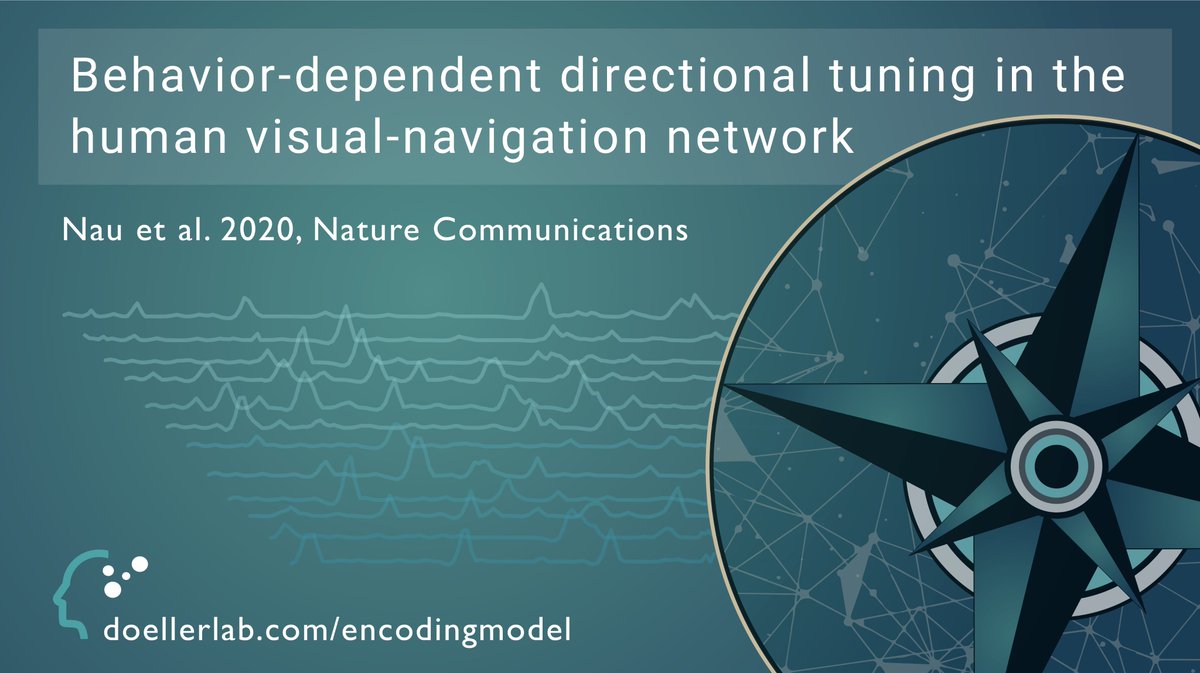
New preprint! We show that we can track the "mind's eye" in the EEG. More scientifically🙂: 1) Inverted encoding models trained on alpha-band power can track dynamic transformations to spatial locations held in working memory. https://t.co/i8VLyYXu3L 1/4
“Nearly 100% of published studies… confirm the initial hypothesis. This is an amazing accomplishment given the complexity of the human mind and human behaviour. Somehow, as psychological scientists, we always find the expected result; we always win!” https://t.co/QPjoUezgWx
This study analyzes pilots' cognitive states and the effects of stepwise increased mental workload (MWL) while controlling for mental fatigue using both #EEG & #fNIRS. fNIRS was more sensitive to low difficulty tasks & EEG to high difficulty tasks. https://t.co/vPKywW1G02
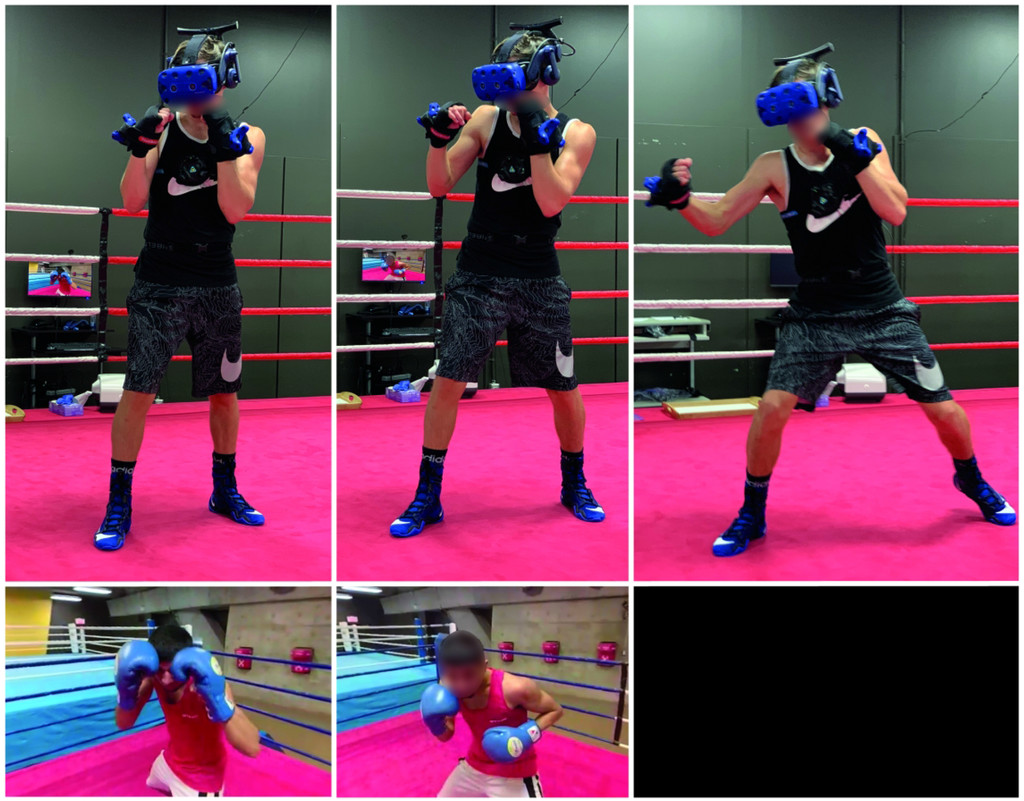
⚠️New paper: Virtual-Reality Training of Elite Boxers Preparing for the Tokyo 2020 Olympics During the COVID-19 Pandemic: A Case Study
With colleagues @FrancoisBieuzen Mathieu Charbonneau @MoreBasil
Credits: @boxing_canada@INSQuebec@ownthepodium
https://t.co/hn1cfkxwyy
1/2
Type I Zoom error: you think people can hear you, but you’re actually on mute.
Type II Zoom error: you think your muted, but actually people can hear you.
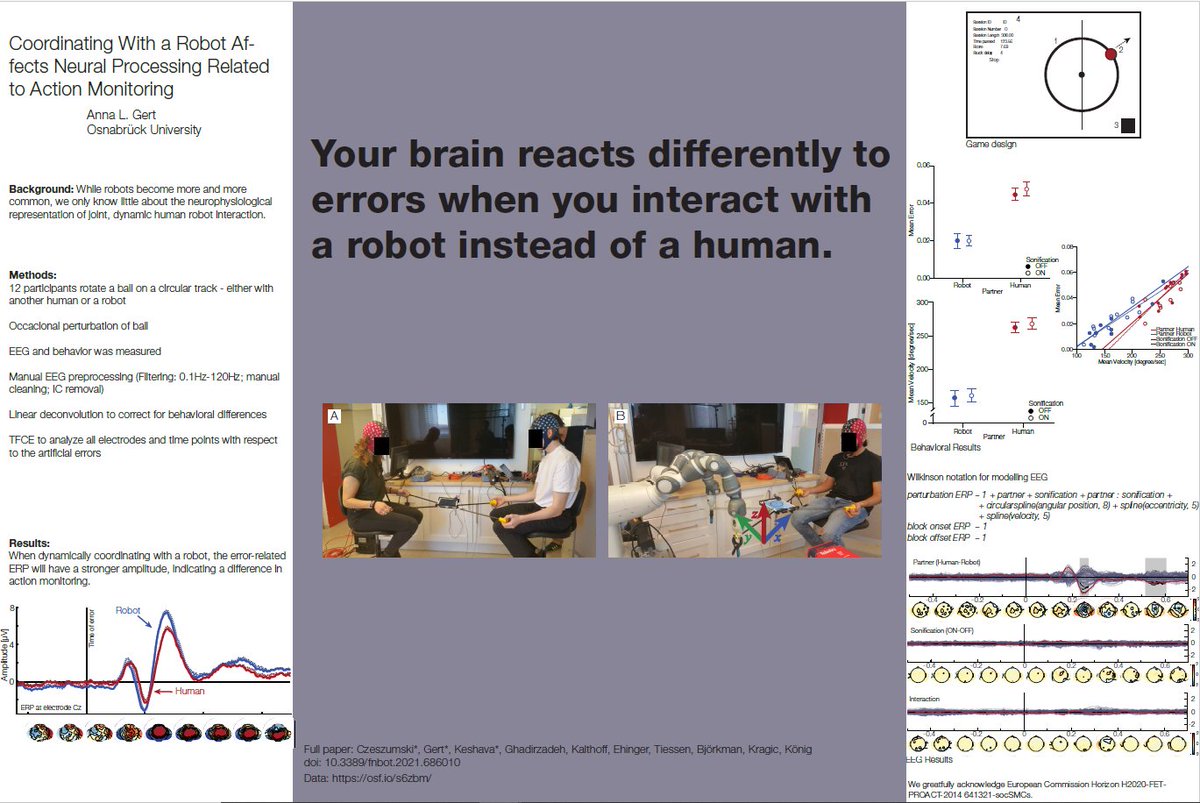
@TheRealSPR This is work with @ashimakeshava and @aczeszum where we joined forces with KTH in Stockholm to investigate the neural signatures of error processing in different social scenarios.
Did you know psychologists agree that the Myers-Briggs is NOT a valid personality test?
It is appealing but doesn't capture fundamental personality constructs or predict meaningful outcomes.
Hear more on the new @PsychScience podcast Under the Cortex: https://t.co/JrnL959C1n
Been a long haul but I can finally share my first, first author paper from my PhD. Findings suggest alcohol-induced blackouts have an impact on next day memory function @plosone: https://t.co/xA0WwKpERm #plosoneauthor
@CoRGiS_UoS @StirUni_Psych @StirlingScience @StirUni
New paper! Predicting visual attention using the hidden structure in eye-gaze dynamics.
We demonstrate successful prediction of future gaze locations in a complex VR environment using long-term dynamics in gaze.
(to appear at #CHI2021 EMICS workshop!)
https://t.co/k0aNd5am5x
New preprint! Here we used EEG while participants are walking *for real* in a maze and find activation in areas of the navigation network! A promising step towards ecological brain imaging for spatial navigation https://t.co/SDDKVT0ncE
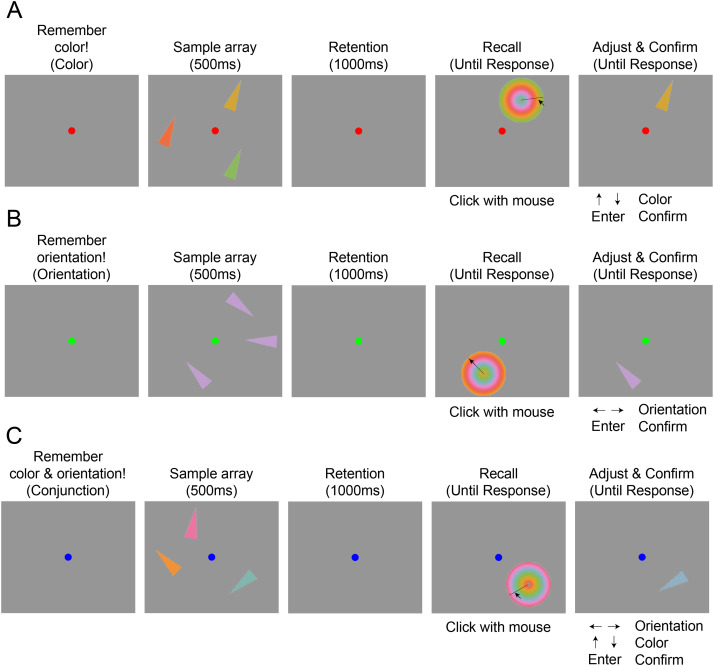
Now out in Cognition! We created a *new* way to capture the detail of multiple features in an object, with a single response. Across 3 experiments, features are held in memory in a dependent (integrated) manner.
Stay tuned for extensions of this task using shape-color objects!
Our latest paper is out!
Continuous decoding of cognitive load from EEG reveals task-general and task-specific correlates.
ML of cognitive state starts to show promise when one can demonstrate task-generalizability.
https://t.co/tDv45ctqw3
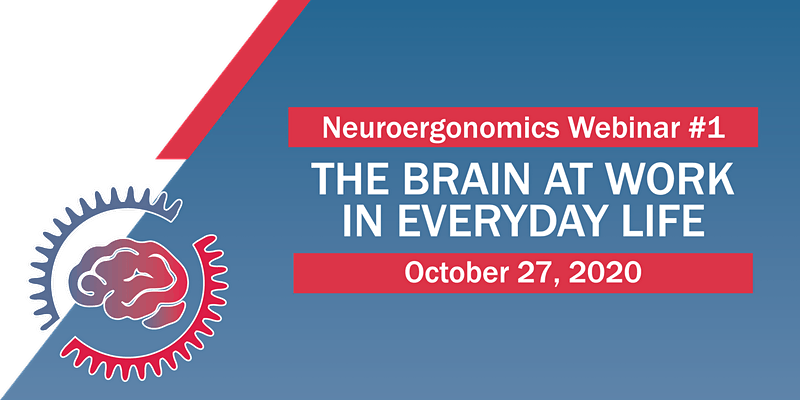
The Neuroergonomics Conference will host a digital webinar series, leading up our conference. Join us!
The first (Oct 27, 2020) begins with a keynote by Prof. Art Kramer on "Implications of Physical Activity & Exercise on Cognitive & Brain Health".
https://t.co/xuJ6oR6d7F
Part 2 of our new series of videos on robust statistics applied to EEG data has now been released. Check it out.
#EEG#eeglab#Statistics
https://t.co/6FGYa6Hhf6
PhD grads/postdocs: We’re hiring!
We have an open postdoc role for someone with deep expertise in eye-tracking and time-series modelling. Come join our adaptive interactions team to invent the future of AR at #FRL!
Highly qualified candidates pls DM resume
(Please RT!)
”It was a mystery how they came to be there. Some suspect that the creatures were illegally released by wildlife activists who, on social media, are called "beaver bombers" 😂😂😂😂 https://t.co/StAv3Nx43M
New opinion piece together with @BottiniRob is now out in @TrendsCognSci!
We describe how image spaces in the parietal cortex complement cognitive maps in the hippocampal formation to organize knowledge in different reference frames
https://t.co/bhOgqakBcJ