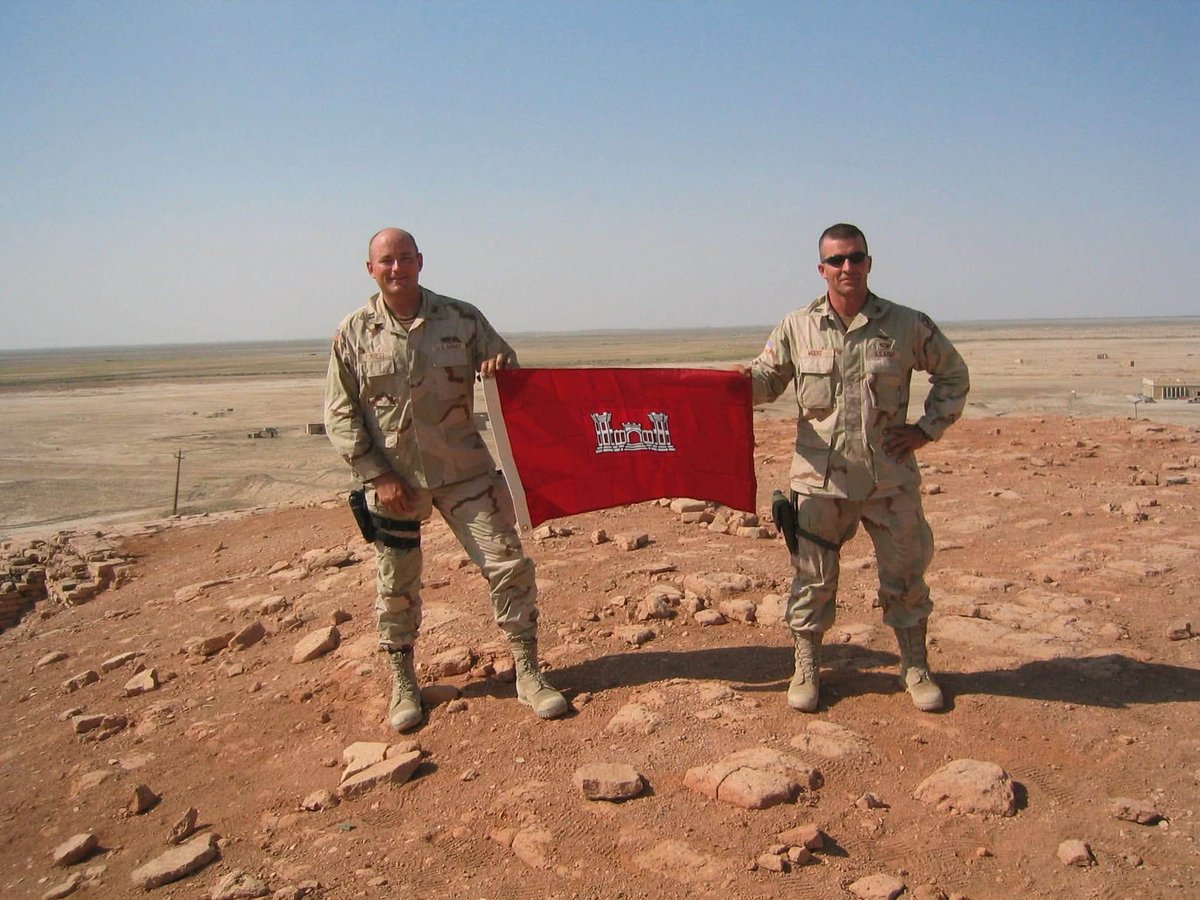
I started out at 17 as a Navy Seabee with no clue where life would take me. Thirty-six years later, I hung up the uniform as an Airborne Engineer and Army colonel, after deployments to Iraq and Afghanistan.
What a ride
Happy Thanksgiving from the Forrest family.
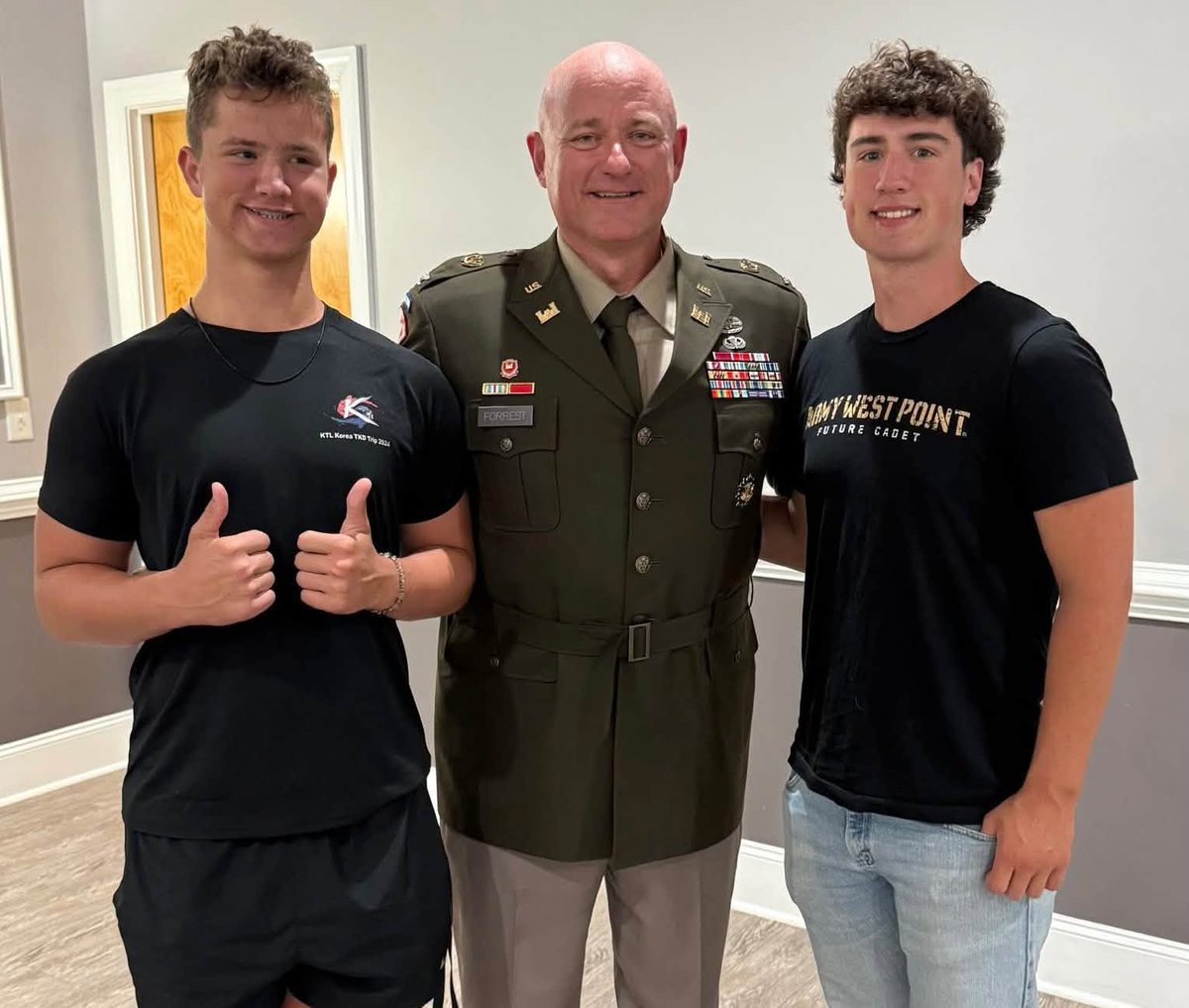
This year I'm grateful for Laura, who carried more than her share through 36 years of service; for a son at West Point and one under the Friday night lights; for my JROTC cadets; and for every veteran and military family.
2011: my son waiting in line for the helicopter ride at the state fair.
2026: he's a West Point cadet riding in Black Hawks.
Same kid. Much bigger helicopter. Hooah.
It's the people
After 36 years, it's not the rank, the awards, or the places I remember most. It's the people: the Sailors and Soldiers I served alongside, and the friendships that lasted long after the assignments ended.
@AntonyRobart Stories like this are why I teach Army JROTC. Cadet programs give young people structure, responsibility and adults who expect a lot from them. Glad it did that for you.
@OUROBBYG1988@CBS11BillJones@FrankBama137928 Congratulations to your daughter, Lieutenant. Holding the flag at midfield on 9/11 is a memory she'll carry for life. From one proud military parent to another.
@starsandstripes Three hours rearranging seats in the middle of the night? That's a well-planned, well-executed mission. Signed, a proud West Point dad and former Navy Seabee. Beat Navy!
@DarronSubVet Ha, I know that feeling from the other direction. I started out as a Navy Seabee at 17 and ended up an Army colonel. Now my son's at West Point. Congrats to both of your boys.
Support the Trojan Battalion Army JROTC!
Please consider donating to help us make JROTC experiences free or greatly reduced in cost for our cadets. Your support opens doors to leadership development, competitions, and opportunities that build confidence and teamwork.
Donate here: https://t.co/ofmTHx07OY
Every contribution helps. Thank you for supporting our cadets and investing in their future!
Are the American People Actually Winning?
By Tim Forrest
Every day, Americans are bombarded with political controversy. Republicans blame Democrats, Democrats blame Republicans, and the media rushes to declare winners and losers. But one critical question gets lost in the noise:
Are the American people actually winning?
Politics has become entertainment, while accountability takes a back seat. Families struggle with rising costs, communities face infrastructure challenges, schools need resources, and taxpayers question where their money goes. Yet headlines focus more on political arguments than meaningful solutions.
Having served over three decades in the Army and in local elected office, I’ve learned that leadership is measured by results, not rhetoric. Excuses don’t build roads, political speeches don’t improve schools, and blaming opponents doesn’t solve problems.
Journalists should be asking tougher questions. Where is taxpayer money going? Are government projects delivered on time and within budget? Are elected officials fulfilling their promises? Who benefits from government decisions?
These questions matter in Washington, state capitals, and especially local communities, where decisions directly affect our daily lives.
Accountability should never depend on political affiliation. Good leadership deserves recognition regardless of party, and poor performance deserves scrutiny regardless of popularity.
Americans deserve safe communities, quality education, responsible spending, economic opportunity, and honest government. Those aren’t Republican or Democratic priorities. They’re American priorities.
It’s time for the media to follow the money, measure results, and challenge everyone holding public office.
Citizens must also demand transparency, question spending, and judge leaders by their accomplishments rather than their political labels.
The biggest story in America isn’t whether Republicans or Democrats are winning. It’s whether the American people are winning.
And that is the question every journalist, elected official, and taxpayer should demand be answered.
https://t.co/NgBGDU5Bjj
A few days ago, I walked along a quiet stretch at West Point overlooking the Hudson River — where the granite walls of the Academy meet the turning leaves of fall. Along the path, a series of black stone plaques tell the story of a nation that once tore itself apart — and then, slowly, found its way back together.
Each stone marks a moment between 1861 and 1913, a span that begins with division and ends with reunion. Together, they tell a story we desperately need to remember.
The Cost of Division
During the Civil War, West Point graduates fought on both sides. Brothers-in-arms became enemies overnight. In one of the plaques, General Ulysses S. Grant — Class of 1843 — said in 1861,
“There are but two parties now, traitors and patriots, and I want hereafter to be ranked with the latter.”
At the time, the divide felt absolute. But Grant’s words weren’t born of hatred — they were born of duty. And duty, at West Point, is never about self. It’s about country.
Today, our divides aren’t drawn in gray and blue, but they are real. We live in an era of polarization where we too often mistake our political opponents for enemies. The lesson from those years is simple and sobering: division is easy; reconciliation takes courage.
Humanity Amid Conflict
Another plaque tells the story of Gettysburg, July 3, 1863. Confederate General Lewis Armistead, mortally wounded during Pickett’s Charge, gasped his last words to Union officers:
“Tell Hancock I have done him and my country a great injustice which I shall never cease to regret.”
Hancock — his old West Point friend — was fighting for the Union. Even in his final moments, Armistead recognized that friendship and conscience transcend ideology.
That’s a lesson for our own time. We can disagree without dehumanizing. We can hold convictions without surrendering compassion. The humanity that binds us is more powerful than the politics that divide us.
Lincoln’s Call for Mercy
In March 1865, as the war neared its end, Abraham Lincoln stood on the Capitol steps and offered a moral vision that still shines:
“With malice toward none, with charity for all… to bind up the nation’s wounds.”
Lincoln’s words weren’t naïve. He had seen the blood and bitterness of war firsthand. His greatness lay in his ability to forgive without forgetting — to choose mercy when vengeance was easier.
That’s leadership. That’s strength.
In today’s political culture, outrage is rewarded and grace is rare. But if we want to preserve this fragile experiment in self-government, we must recover Lincoln’s courage — not just to fight for what’s right, but to heal what’s broken.
Grant and Lee: Dignity in Defeat
At Appomattox Court House, two West Point men — Grant and Lee — met to end the war. Grant offered generous terms to the Confederate soldiers: they could return home, keep their horses, and rebuild. Lee responded,
“This will have the best possible effect upon the men… it will do much toward conciliating our people.”
Imagine that. Two generals, both hardened by years of war, still understood that peace required humility and respect.
Leadership isn’t about victory at all costs. It’s about knowing when to stop fighting, when to show grace, and when to lift others up so the nation can move forward together.
From Division to Reunion
After the war, former West Point cadets began to meet again. They created the Association of Graduates in 1869 “to perpetuate friendships” and “to promote the best interests of the Academy.”
By 1902, at West Point’s Centennial, and 1913, at Gettysburg’s 50th Anniversary, veterans from both sides stood side by side — not as Union or Confederate, but as Americans.
The plaques record their words:
“We meet on this occasion to participate in a ceremony that stands unmatched in history, for nowhere in history have men who opposed each other in mighty battle come together in peace.”
Half a century earlier, they had fought to the death. Now, they shook hands.
“Let Us Have Peace”-read
American politics has officially become a reality TV show where everyone is yelling, nobody is listening, and taxpayers are stuck paying for the subscription. 🇺🇸😂
At this point, I’m just waiting for someone to announce the season finale.
#Politics#PoliticalCircus#CommonSense
Bill Maher is absolutely on point in this video!
There is a difference between advocating for policies that help working families and embracing an ideology that has repeatedly failed throughout history.
We should be able to have honest conversations about socialism, Marxism, capitalism, and the direction of our country without ignoring history or pretending that words and political labels don’t matter.
You don’t have to agree with Bill Maher on everything to recognize when he makes a compelling argument. And in this case, he’s raising questions that deserve serious attention.
Common sense shouldn’t be a Republican or Democrat issue. Neither should intellectual honesty.
Well said, Bill. Worth watching and thinking about! 🇺🇸
🔥 Support Venturing Crew 320 – BBQ Fundraiser! 🔥
Hey everyone! Venturing Crew 320 is selling delicious pork butts for the 2025 Super Bowl to help raise funds for uniforms, trips, and crew supplies!
🐖 Price: $40 per pork butt
📅 Order Deadline: February 5, 2025
Scan to order
Venturing Crew 320 is selling delicious pork butts just in time for the 2025 Super Bowl! 🏈
💰 Price: $40 each
📅 Order Deadline: February 5, 2025
📦 Pickup Date: February 8, 2025
📍 Pickup Location:
100 S Judd Pkwy SE, Fuquay-Varina, NC 27526
⏰ Pickup Time: 10 AM - 2 PM