Still surprised when you google the market size of any category, you mostly get slop market research reports trying to sell you a $3000 PDF with very little credible information about how they triangulated any of this
@pitdesi I think this is the most interesting thing I’ve ever read on X. Thanks sheel!
@grok was there a similar dynamic in Montreal Jewish community that produced rigorous adherence to quality standards? Or any other interesting historical tidbits of the development of bagels in Canada?
@sarahdingwang@justin_kahl@shangdaxu Do you have any insights on enterprise engagement (ie. excl. ChatGPT usage + distribution across functionalities)? All the data I’ve seen suggests this is slow
I think this is one of the main reasons almost no “pre-AI” companies have been able to catch an AI tailwind, despite loads of product initiatives and even more marketing. And it isn’t well understood or appreciated.
TIL: New York bagels are the way they are because of a culinary mafia.
For much of the 20th century, bagels in NYC were controlled by Bagel Bakers Local 338, a union of Jewish bakers who enforced wages and very specific standards around how bagels were made.
The bagelmakers did a great job negotiating... for every date I looked up, the standard salaries for bagelmakers were $75–$100k in todays dollars- far more than teachers or police made at the time.
They also controlled what a bagel was. To be called Bagels (or Beigels) they had to be made of high-gluten flour, water, salt, yeast, and malt- with no sugar or dairy. Bagels had to be hand-rolled, boiled, and baked on stone, and they maintained uniformity across bakeries by random taste tests. There were 6 flavors: Plain, Poppy, Sesame, Salt, Onion, Garlic.
They defended their power like a mafia: they routinely went on strike, and crushed every non-union bagel shop that popped up, by picketing, offering free bagels in front of non-union shops, and by telling all their suppliers that if they supplied to the non-union shop they'd lose the union business, which no supplier could afford to do.
In 1964, they standardized the spelling from beigel, baigel, beygel, or beygl to "Bagel"
The cartel ruled the bagel industry in New York for ~70 years, until a California-based company came in with a technology that made it a lot cheaper (the Uber of its time? Lots of similarities to taxi medallions!).
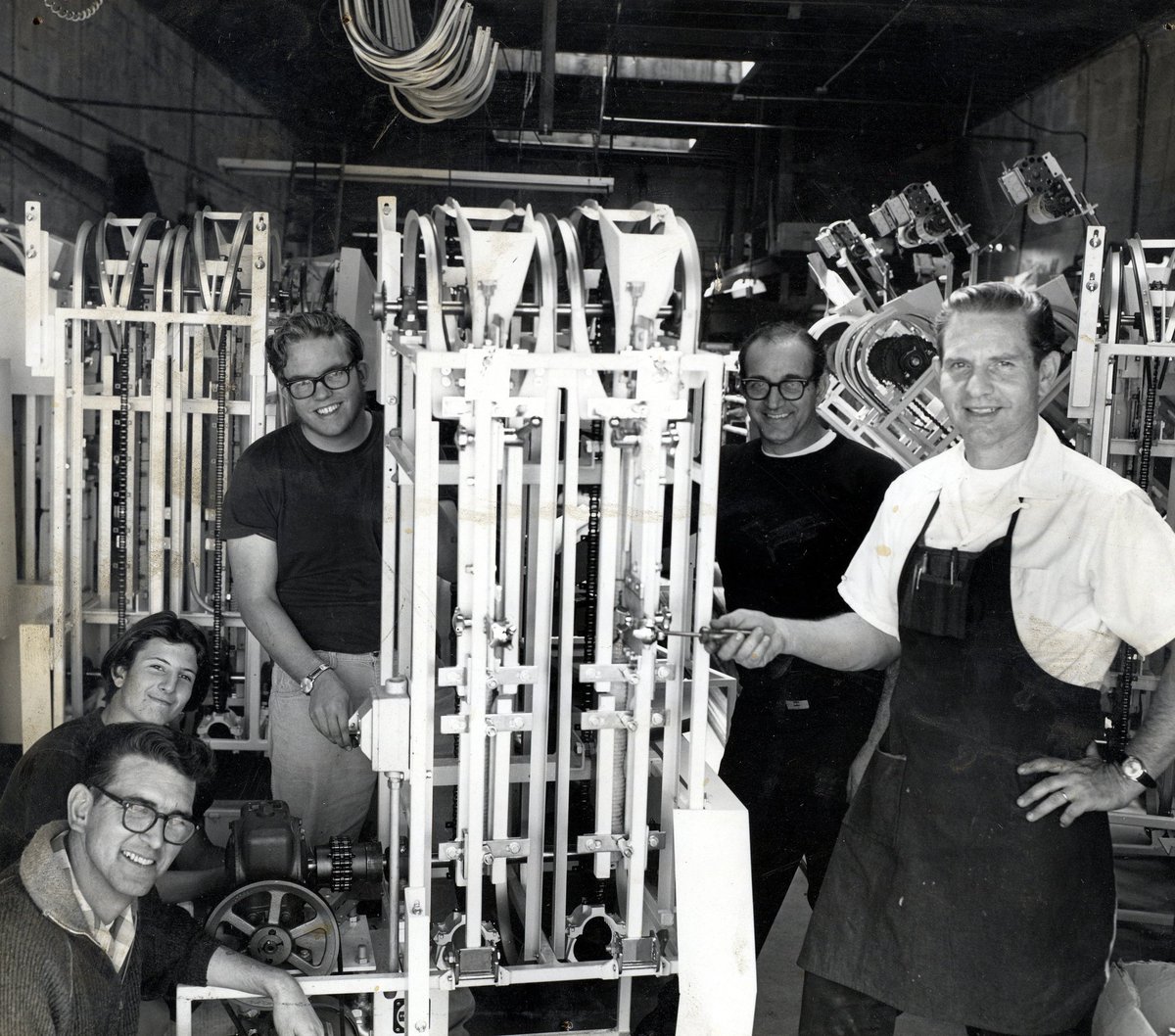
Daniel Thompson, an inventor in LA created a machine that could make bagels way faster and 4x cheaper.
The machine-made bagels didn't taste as good, but they were a lot cheaper and had a longer shelf-life.
By the late ’70s, the Local 338 union had collapsed. Mass-market bagels had won.
The bagel machine was part of a broader postwar trend, and was late to it: food became cheaper, softer, and mass-produced... bagels went from chewy and handmade to frozen and uniform. It fit the era’s obsession with convenience.
Making them cheaper also made them popular... they went from a niche Jewish delicacy to a popular breakfast item for many. Many of us grew up with Lender's frozen bagels... Lender's was the largest buyer of the Thompson bagel machine.
In New York, handmade bagels mostly disappeared from the 70s to the 90s. But now, after decades of industrial food, we crave the opposite, and handmade bagels have made a comeback in New York.
Today’s best bagels look a lot like the ones from a century ago: hand-rolled, boiled, blistered, and slightly uneven. All of our favorite spots (Brooklyn bagel, Apollo, Popup) make their bagels by hand.
Your average deli bagel though? It's made in a machine, steamed not boiled, and done on a rotating rack oven. It looks like a bagel but does not have the chew or crust of a real handmade bagel. The average deli bagel, even in New York, is absolute crap!
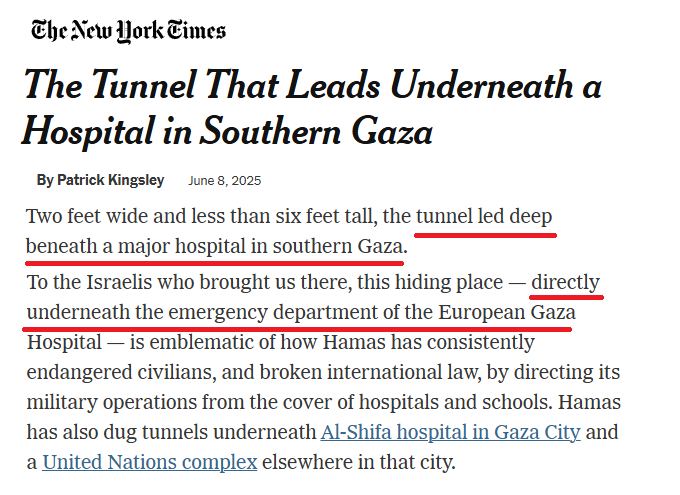
Hamas tunnels under hospitals 100% verified—by uncut videos and "foreign journalists" everyone demands. Shifa Hospital. European Hospital. Evidence is overwhelming. Yet UN, fake NGOs & much of the media will still claim Israel “targets healthcare.” But truth was never the point.
Best pitch advice: refine after every meeting based on questions.
Small upgrades can compound fast and allow you to preemptively address questions before they’re asked, which makes your audience think…
“Wow they must know exactly what they’re doing b/c they think like me”