"But the dispute which the diplomats have failed to settle is proving to be even less amenable to settlement by means of gunpowder and human blood." -Tolstoy
Something that is underrated but awesome about working with documents is that you see policymakers performing in the years (or decades even) before they are in the spotlight. Here is a memo from late 1982 where Paul Bremer [later of notoriety over Iraq] is doing some great analysis work on a recent speech by Andropov.
I think this teaches one to have lots of humility: No one gets everything right, and no one gets everything wrong. Of course, one hopes to nail the big stuff. [From Reagan FRUS Vol. 3 #243] @HistoryAtState
Here's a Correlates of War "Did You Know"
There are over 600 wars recorded in the War Data, with at least 2 wars occurring each year from 1815 to 2007 (and that trend did not stop after 2007).
By far the most serious attempt I have seen to truly AI-proof a real course.
Of course, the cost is an enormous time/effort commitment from the instructor; it speaks to Paul's dedication as a teacher that he's willing to pay it. No doubt it will seem dauntingly high to many.
Attending APSA? I will host a book roundtable on my recently published book TAMING THE CAREERISTS! The roundtable will take place on Saturday, September 5, from 10am to 11:30am in Marriott Salon C.
Going to APSA this week? Interested in American Grand Strategy?
Come to this great panel that Matt Conklin and I put together! Saturday, noon at the Sheraton.
Be someone who proposes SOLUTIONS rather than just identifies PROBLEMS:
"On one occasion, I [Kissinger] reported to Nelson [Rockefeller] that, in a conversation with President Kennedy, I had pointed out a number of policy mistakes. Nelson asked whether I had offered and remedy and, when I replied that I had confined myself to analysis, he grew impatient: 'Always remember,' he said, 'that Presidents are overwhelmed with problems. Your obligation is to help them find solutions.'"
[From Years of Renewal, pp 186-7, emphasis added]
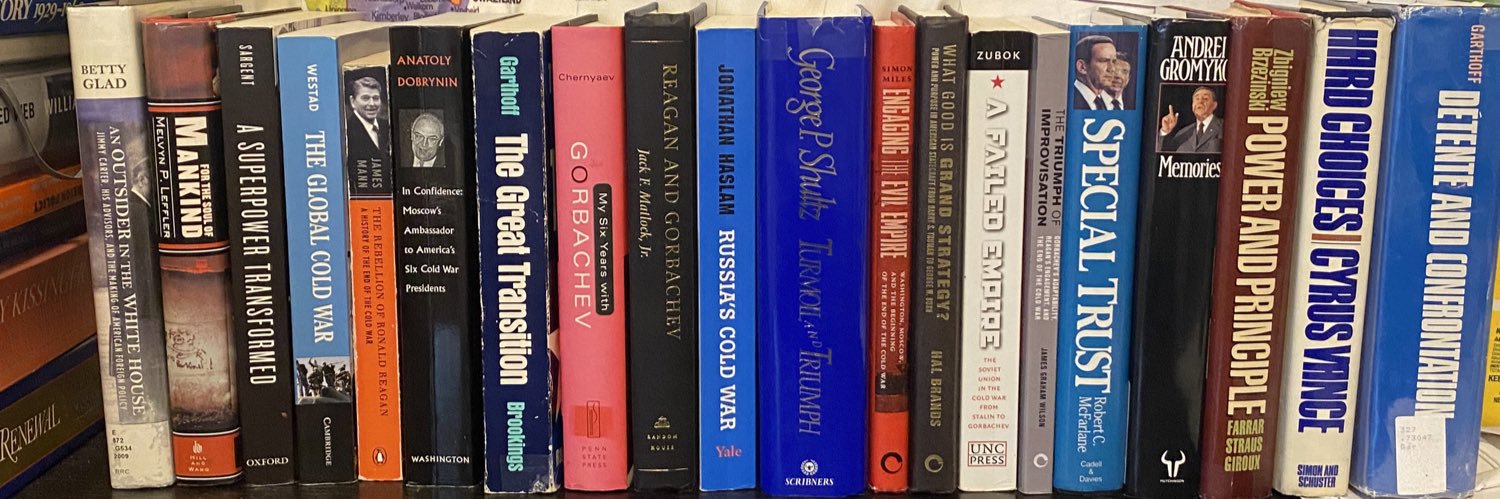
See I am the total opposite: "read lots of books" guys are free. We flit from subject to subject, get to 90% on a variety of topics, draw connections the experts could never make, and don't get caught up in byzantine technical debates that nobody actually cares about
Why do states use proxies when they could intervene directly?
Just published, Andrew L. Peek's "War Without Footprints: Plausible Deniability and the Future of Proxy Warfare" examines how states use proxy forces to pursue strategic objectives while avoiding the visible costs of direct intervention.
At the center of the book is plausible deniability: the ability to act without clear attribution. Drawing on cases involving Russia in Georgia and Ukraine, Iran and Hezbollah, Pakistan and the Haqqani network, and Saudi Arabia in Chechnya, Peek develops a new model of proxy warfare emphasizing distance, deniability, and indirect control.
“Andrew L. Peek has written an extraordinary book that provides nonpareil comparative insights into the different levels of plausible deniability of state sponsors of proxy forces. Well-researched and persuasive, the book advances a unique model and examination of Russia, Iran, Pakistan and Saudi Arabia and their distinct sponsorships.” —Ambassador Paula J. Dobriansky, former Under Secretary of State for Global Affairs
📚 Visit the Cambria Press booth (#522) at #APSA2026 to see the newly published "War Without Footprints" https://t.co/HdSa4Rimk8 and other titles in the Cambria Rapid Communications in Conflict and Security (RCCS) series https://t.co/toZ7YbvtaU
You made the right call. I took a ME history course by a then very junior female professor who said early on that she loved maps and used them very effectively. The course was terrific. When we did Israel and Palestine stuff she’d spend a few days explaining the history from the Israeli perspective and then a few days from the Palestinian perspective. I don’t remember any conflicts among students and it was incredibly informative. Feels like the halcyon days.
Be someone who proposes SOLUTIONS rather than just identifies PROBLEMS:
"On one occasion, I [Kissinger] reported to Nelson [Rockefeller] that, in a conversation with President Kennedy, I had pointed out a number of policy mistakes. Nelson asked whether I had offered and remedy and, when I replied that I had confined myself to analysis, he grew impatient: 'Always remember,' he said, 'that Presidents are overwhelmed with problems. Your obligation is to help them find solutions.'"
[From Years of Renewal, pp 186-7, emphasis added]
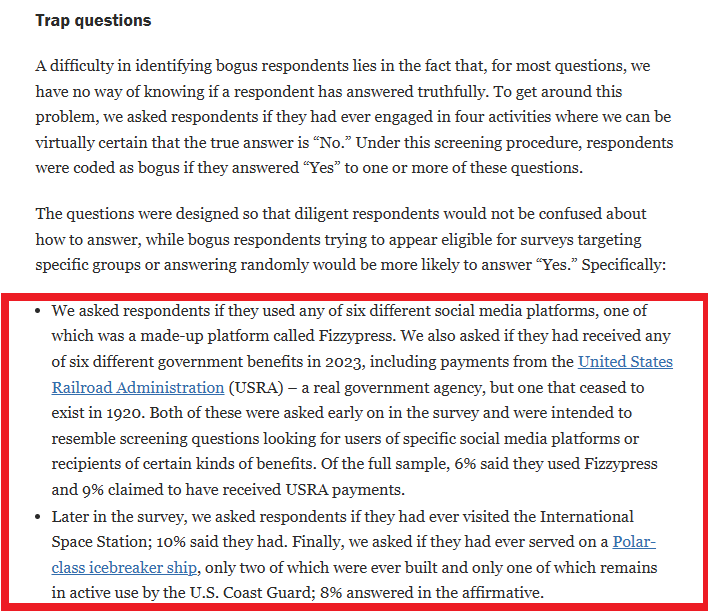
Admittedly, a detailed report about survey methodology isn't for everyone. But this new @pewresearch study has some hilarious examples of "trap questions" used to weed out bogus survey respondents. 10% said they've visited the International Space Station. https://t.co/Vb6wzjCk4O
I’ve read countless books and articles on US foreign policy and international politics, but none has changed my thinking about a subject as much as Dark Skies has about planetary space expansion: https://t.co/p6mw4PJ1uf
@sambodenmannDC@james_acton32 Got it. Thank you. It’s a fascinating insight. I know Tanisha Fazal has the book on State Death, but I also don’t know anyone looking into the regime vs state death as it relates to nuclear weapons. Certainly a thread worth pulling on!! Good luck.
“Hence Bessent’s dilemma: events in Iran not only show the limits of Trump’s military power, but the potential limits of Washington’s financial power too.” -@gilliantett@ft https://t.co/bLjBKowPfG
People seem to like the graphics I use. Here is another useful one illustrating the classic Spiral Model vs. Deterrence Model.
**Key Insight**: the SAME behavior under different circumstances can lead one down the path to peace, or to war.
A great summary: https://t.co/F1YphgYJtc




![ColinLahiff's tweet photo. Something that is underrated but awesome about working with documents is that you see policymakers performing in the years (or decades even) before they are in the spotlight. Here is a memo from late 1982 where Paul Bremer [later of notoriety over Iraq] is doing some great analysis work on a recent speech by Andropov.
I think this teaches one to have lots of humility: No one gets everything right, and no one gets everything wrong. Of course, one hopes to nail the big stuff. [From Reagan FRUS Vol. 3 #243] @HistoryAtState](https://pbs.twimg.com/media/HRG4YqxWoAAz-lA.png)



![ColinLahiff's tweet photo. Be someone who proposes SOLUTIONS rather than just identifies PROBLEMS:
"On one occasion, I [Kissinger] reported to Nelson [Rockefeller] that, in a conversation with President Kennedy, I had pointed out a number of policy mistakes. Nelson asked whether I had offered and remedy and, when I replied that I had confined myself to analysis, he grew impatient: 'Always remember,' he said, 'that Presidents are overwhelmed with problems. Your obligation is to help them find solutions.'"
[From Years of Renewal, pp 186-7, emphasis added]](https://pbs.twimg.com/media/HQ7IeHUXoAAIEai.jpg)