.@BernieSanders , it is a time to celebrate. @elonmusk has created enormous value for society by building @SpaceX, driving down the cost of rocket launches and creating a global satellite communication network that has brought high speed, low-cost internet and communication access to hundreds of millions and eventually billions of people along with critical advantages for our military and our nation’s defense.
SpaceX and its technologies will cause an acceleration in the growth of wages and wealth creation globally, including in some of the poorest communities in the U.S. and around the world.
Access to low-cost, high speed communications everywhere will allow children around the world to be educated, families to build businesses, and life-saving medical knowledge and care to be available everywhere.
SpaceX will materially bring down the cost of compute, advancing AI and humanity.
Meanwhile, 4,000 SpaceX employees yesterday became millionaires, including hourly wage employees who you claim you are trying to help.
The Elon Musks of the world drive growth, global GDP, and provide access to goods and services at lower cost that would otherwise not exist.
Elon’s nominal trillionaire status is due to his ownership of SpaceX, Tesla, Neuralink, the Boring Company and his other initiatives that have brought new technologies that improve our everyday lives.
Elon is not sitting on a trillion dollar pile of cash, jewelry and gold. He is using his controlling stakes in his companies to advance mankind. Elon’s companies don’t pay dividends. They reinvest all of their capital to accelerate innovation and value creation.
Elon is working 24/7 for all of us. He deserves respect and appreciation, not smears.
Bernie, your socialism would never allow a SpaceX to be built. Socialism has only proven to impoverish mankind and lead to death and destruction.
We need to create the conditions for more SpaceXs to be built, not attack the great entrepreneurs who are helping to advance our country.
Remember the ESG craze a few years ago?
Banks were scared to finance oil and gas. Bitcoin mining was supposedly boiling the oceans. Cow farts were destroying the planet.
That same anti-growth mentality has now shifted toward AI data centers.
Yes, they use enormous amounts of electricity. Fine, let’s figure out how to put more power on the grid. That’s what major technological revolutions require. And energy markets are already responding. Many data center companies want to build their own power sources and I have legislation that would streamline permitting to do that.
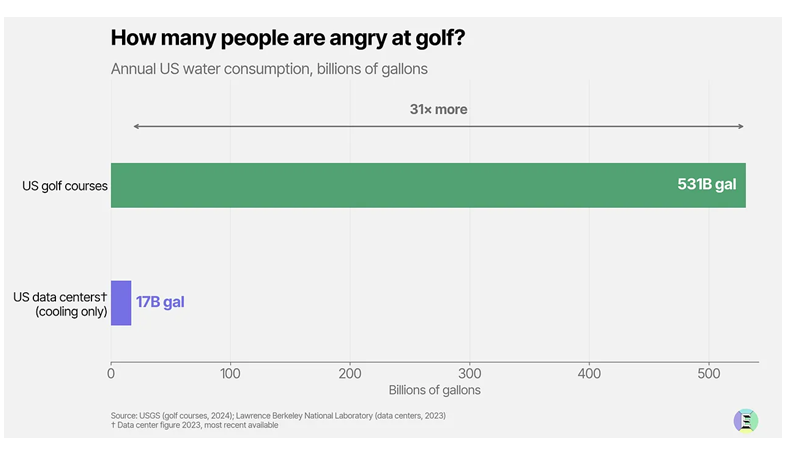
Yes, they use water for cooling. Mostly water that would otherwise flow out to sea.
In return? Trillions in private infrastructure investment. American jobs. AI leadership over China. Breakthroughs in medicine, engineering, and science.
America became powerful by building things. We shouldn’t start apologizing for it now.
https://t.co/UrqZWWOZ15
Mostly true. What matters is securing the long-term future of consciousness, both on Earth and other heavenly bodies.
We cannot just focus on Earth, because there are irreducible external (eg massive meteor) and internal (eg global nuclear war) cataclysmic risks.
The Moon is faster to make self-growing, but is more susceptible to problems on Earth. Mars will take longer to make self-growing, because it is so hard to reach, but is more secure from Earth disasters for that same reason.
Both the Moon and Mars should have self-growing civilizations. Making this happen is the prime directive of SpaceX.
I just interviewed a CEO who said three things that blew my mind:
1. We replaced our $600K Salesforce contract with a vibe-coded CRM, built within 3 weeks.
2. We will get rid of 80% of the SaaS we use internally.
3. If Anthropic doubled pricing, we would not change usage in any way.
At Sohn, Gavin Baker provided a pretty compelling argument as to why CoreWeave's $CRWV business model is differentiated and durable, lamenting that he couldn't invest in their 2023 round at a $1B valuation (due to a conflict stemming from an existing investment in competitor Crusoe).
"CoreWeave, Crusoe, Nebius, Lambda.. is the category durable today? Is it a transitional arbitrage on hyperscaler capex and token friction?"
"I absolutely think it's durable... The way to think of running one of these clusters is like driving a Formula 1 race car... It looks easy but it's really hard... The reason a company like CoreWeave can charge a huge premium for their GPU hours is because all GPU hours are not the same. And those CoreWeave GPUs are being utilized 2-3x more per hour on average than the GPUs from a bottom of the barrel provider. And by the way, this all goes for Crusoe and Nebius and the other high-quality neoclouds...
The hyperscalers were competing with people running these Formula 1 cars and they were doing overnight shifts in 18-wheelers trying to stay awake to deliver the lower cost. And that's not what AI is about. Now, I think they're making this mental and cultural shift and they've made it, but some of these neoclouds have a very durable business model."
$CRWV $NBIS
In three years AI is the default execution layer for digital work.
One year from now, the change is obvious inside work but still uneven across society. Software engineering, research, writing, finance, marketing, support, recruiting, legal drafting, operations, analytics, and internal tooling are all agent-assisted by default in serious companies. The average worker still has a job title that sounds familiar, but the task stack underneath it has already changed. The people who use AI well look superhuman. The people who do not use it look slow.
The most visible labor shock in year one is hiring compression, not mass unemployment. Fewer junior roles. Fewer backfills. Smaller teams. More “productivity” language. More companies discovering that one strong operator plus agents can replace three to ten mediocre workers. Management will pretend this is augmentation while quietly changing headcount plans.
Two years from now, agentic workflows become normal inside elite firms. Not just chatbots. Actual work loops: pull data, write code, test, summarize, compare, create reports, update dashboards, draft contracts, reconcile accounts, screen candidates, monitor markets, generate customer responses, build internal apps, and escalate exceptions. The human becomes reviewer, commander, taste layer, and accountability node.
That is when the white-collar ladder starts visibly breaking. The entry-level layer gets hollowed first because agents can do the grind that used to train juniors. The senior people become more leveraged, but the pipeline that creates future senior people becomes unstable. This is the part institutions are not ready for.
Three years from now, AI is no longer treated as “software.” It becomes infrastructure. Companies will be judged by whether they have an agent operating layer, proprietary data context, workflow control, model routing, evaluation systems, security permissions, and human override. The winners will not be the companies with the flashiest demo. The winners will be the ones that turn AI into governed production.
The app layer gets slaughtered. Lightweight SaaS, generic tools, simple workflow products, and seat-based software without data gravity or control-plane status keep getting repriced. The middle of software takes the most damage. The top survives by becoming the rail through which agents act. The bottom gets generated on demand.
The model layer becomes more brutal too. A few frontier players remain, but pure model advantage gets harder to monetize cleanly because enterprises need deployment, governance, security, integration, and trust. The labs move deeper into services and workflow because raw intelligence alone does not capture the whole value chain.
Power and capital become the physical constraint. Data centers keep spreading. Electricity politics intensify. The public backlash grows because the social pitch starts sounding insane: higher power bills, higher tech capex, more layoffs, more billionaire wealth, and a promise that society will be better later. That narrative will not hold without visible benefits for ordinary people.
The biggest surprise: the economy can look strong while the labor market feels worse. GDP can rise because machine cognition increases output. Workers can still feel poorer, less secure, and more replaceable because the surplus flows to owners, platforms, infrastructure, and the people who command the systems.
By year three, the divide is clear.
People who can command AI become dramatically more valuable.
People whose work was mostly repeatable cognitive production get repriced.
Companies that own workflow, data, distribution, compute, power, and trust compound.
Companies selling generic software or generic labor get compressed.
The deepest truth: AI will not feel like one product category anymore.
It will feel like a new economic atmosphere.
Everyone will breathe it. Not everyone will own the oxygen.
Who would want us to stop building our electrical grid? Who would wanna stop us from having compute capacity to develop AI? Which adversary would want that? There's only one. It's China. We noticed an immediate spike in misinformation on two platforms, Instagram and X, formerly Twitter. Why is this happening across America? Why every time we announce national defense in terms of giving us compute power do we get pounded by all of these IP addresses? So these are proxies for the Chinese government is my argument. They're just spreading falsehoods. This is the CCP at work here. There's no question about it.
Attitude is a choice.
Gratitude is a discipline.
Bitterness is expensive.
Nobody accidentally has a great attitude.
Nobody stumbles into gratitude.
And nobody means to end up bitter, it just quietly moves in when you stop choosing something better.
Guard your peace like it cost you something.
Because it did.
@bitcoinbutcher1 Appreciate you sharing this post BB! I respect what you do for this community and the time commitment that it takes. Keep growing and pushing forward!
I’m the only developer of data centers on earth that graduated from environmental studies. I'm pretty aware of what these concerns are. They are around air, water use, heat, noise pollution. So sustainability is at the heart of what we do in terms of all these proposals. We search for the best technology. There's many air-cooled turbines now, so you're blending in air-cooled versus water. There's so many different ways to generate power. We can also put a percentage of the power generation through solar, wind, and batteries because the battery technology is 10X more efficient than it was just five years ago. So that's very helpful because it makes the cost of energy lower.
He is risen!!
Happy Easter fam!
Today we celebrate the greatest moment in human history. Jesus conquering death so that we could truly live.
No greater love, no greater gift, no greater reason to celebrate. Wishing you and your families a blessed Easter full of joy! 🙏
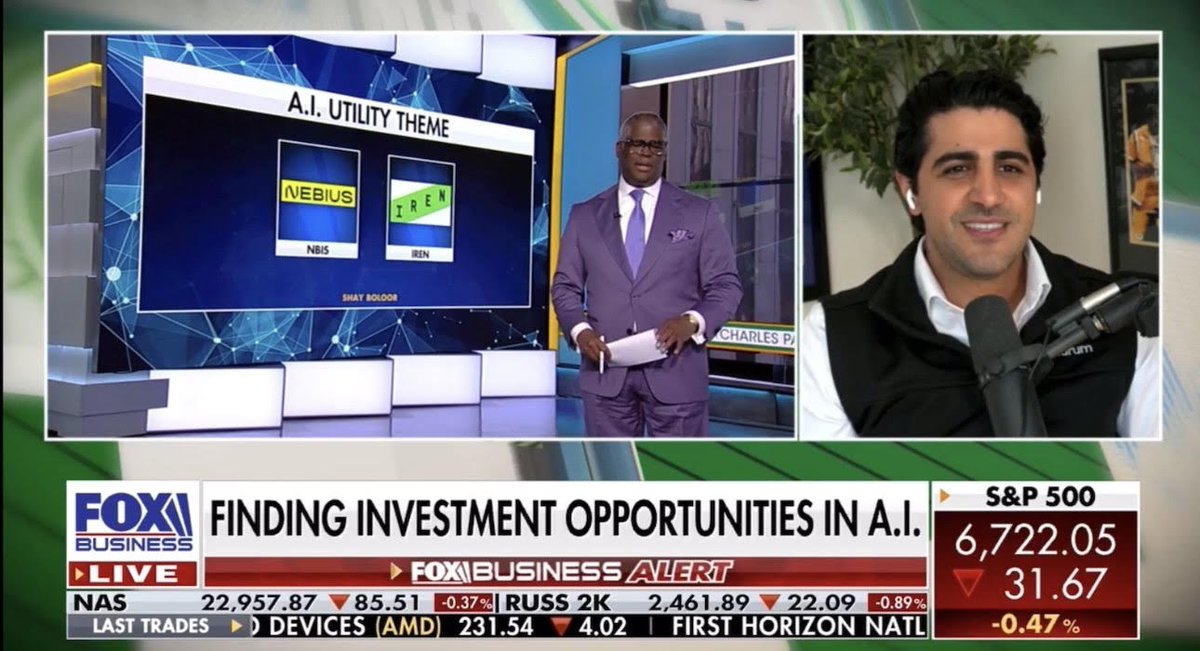
5 REASONS WHY $NBIS, $IREN, $CIFR, $WULF & $GLXY ARE GETTING HIT THIS WEEK
1. The $APLD bond blowup broke the dam & exposed the weakest link in the AI-infra chain.
A 10% yield on more than $2B of debt with only $634M of equity is the market telling you the model doesn't work without cheap money. Especially when they're paying $275M a year in interest alone on a ~$300M rev base so once the market sees a structure that fragile, it revalues the entire sector because it shows what happens when debt-funded expansion runs into expensive money.
2. The same dollar of AI demand is effectively being financed twice.
Applied Digital borrows heavily to build data centers while their biggest customers $CRWV is also borrow heavily to rent that same capacity, so one balance sheet is stacked on top of another. When both sides of the relationship are levered then any credit stress on the tenant becomes credit stress on the developer & I think that's exactly what the market reacted to this week.
3. The fragility now sits in the mismatch between power, GPUs & timelines.
These data centers cannot generate returns until they have power, grid interconnection & the GPUs required to fill capacity so any delay pushes rev out while interest costs start immediately so lenders are now beginning to question whether the project will produce cash fast enough to service the debt.
4. Every industrial revolution goes through this exact cleanup cycle.
Railroads expanded faster than financing structures could handle then telecom overbuilt fiber before demand arrived then cloud infra front-loaded capital years before returns materialized & the same pattern is emerging here. Capital intensity outruns return visibility, leverage magnifies every hiccup & weak operators lose access to funding long before the winners do. Markets are simply doing what they always do in a capital-heavy boom so I don't see this as a big deal and very healthy.
5. The AI Utility trade is not ending but entering its first real maturity test.
The market is demanding proof that these digital power plants can earn their cost of capital & the winners will consolidate the rest. I’ve chosen my horses in this race & will be monitoring the thesis closely as it develops.
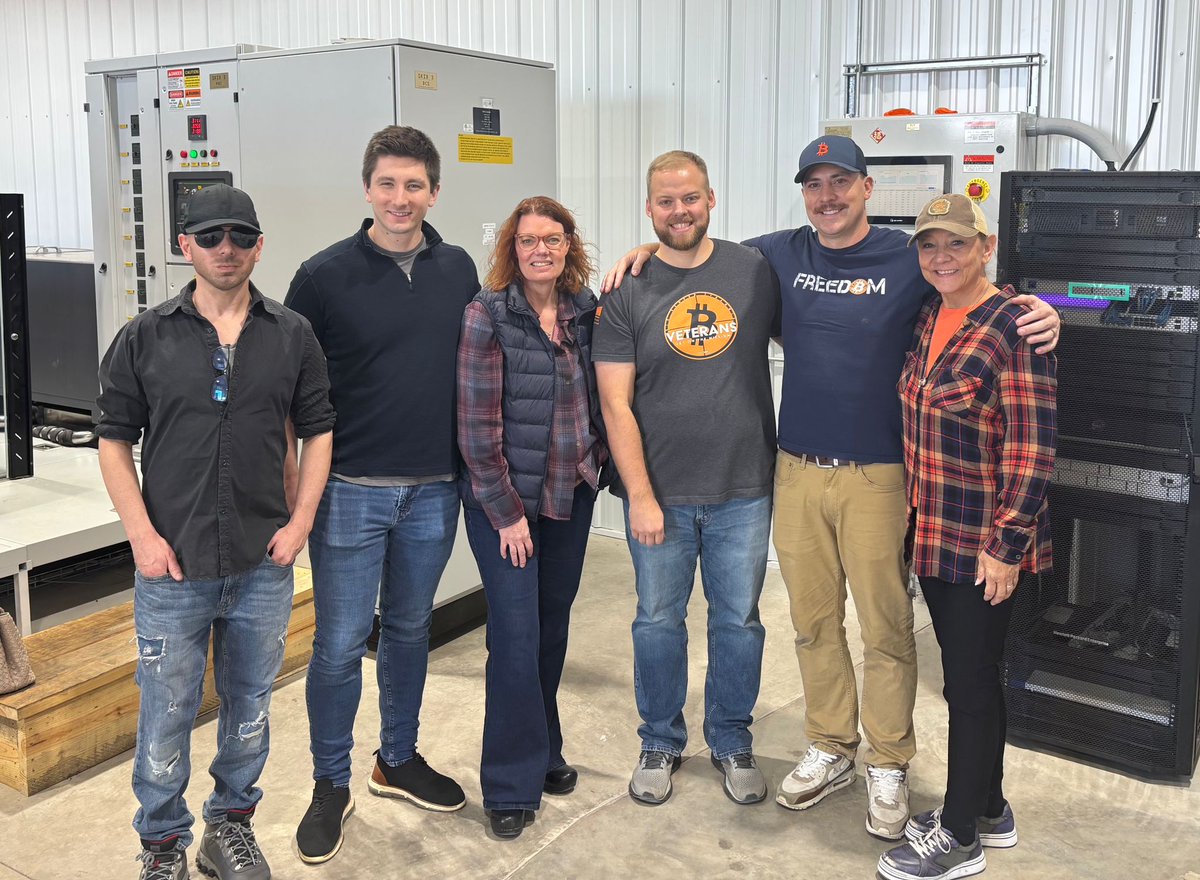
Huge thanks to @ColtonShoults for hosting our Bismarck Bitcoin Meetup at Northern Immersion!
Our biggest event yet with 10 people! 🙌
We saw immersion Bitcoin mining up close, learned a passionate local entrepreneur, & shared great food.
Bitcoin is growing in North Dakota!💡
🚨 Major DOE Move on Flexible Loads
The U.S. Department of Energy just proposed giving FERC jurisdiction over large load interconnections nationwide — and requiring expedited connection for flexible loads like Bitcoin mining and data centers.
This is a major signal that DOE recognizes the value of flexible demand in strengthening the grid.
🔗 https://t.co/2SXKuGO8Jw