We are a research lab in Computational Biology. In particular, we conduct research in COmputational Modelling of Biological DYnamics and biological Engineering"
How does structured sparsity—from biological synapses to engineered deep-learning architectures—reshape our understanding of efficient computation? @romanbauer111@UniOfSurrey@ComputingSurrey discusses: https://t.co/5Em1m7vF9b #AI#Innovation
Learn from the great Dr. Bauer and make cryo possible. Cryosleep will be one of the most enabling technologies this decade (and yes I do mean it), saving millions of lives and making us multiplanetary.
🔬🤖AI + Cryobiology PhD Opportunity!
Thousands of organs are discarded yearly due to short shelf lives. We’re using AI, Machine Learning, and BioDynaMo to revolutionize organ banking through better cryopreservation.
🔹The Project:
• AI-driven discovery of new cryoprotectants
• 3D Agent-Based Modelling (@BioDynaMo_org )
• In-vitro experimental validation
• Collaboration with Oxford Cryotechnology
📍 @UniOfSurrey 💰UK Home fees + travel/conference funding covered. Collaboration with Oxford Cryotechnology and @jpsenescence .
If you have a background in CS, Data Science, or CompBio: apply now!
Learn more: https://t.co/GOZ1PRfSYe
#PhD #AI #Bioinformatics #MedTech @BioDynaMo_org@jpsenescence
New AI Technology Uses 1% Of The Power Of Current Technology!
New Paper: Increases AI Efficiency Using Human Brian-Like Technology
Topographical Sparse Mapping Explained
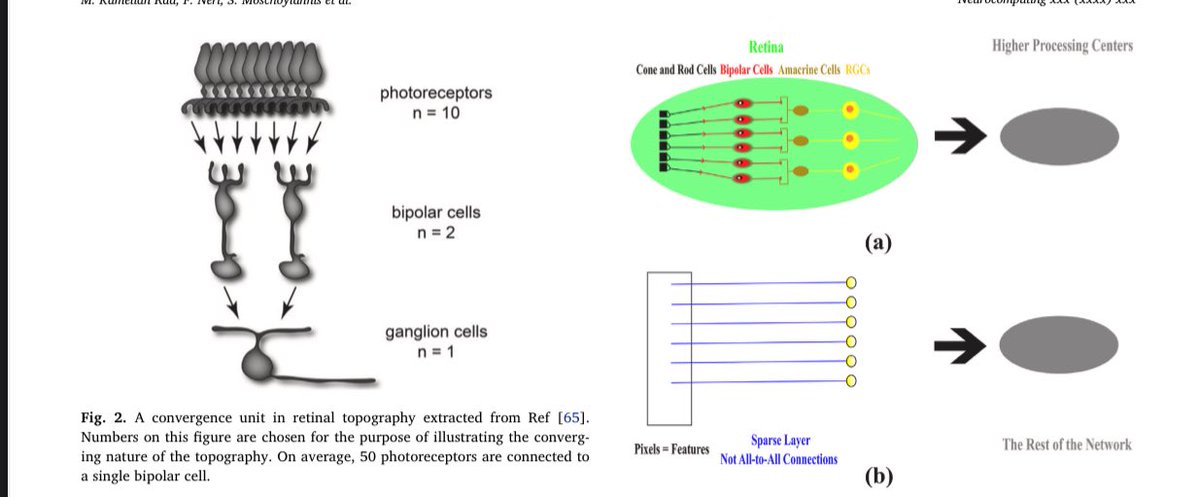
AI models are growing larger and using more energy, raising concerns about sustainability. A new paper from the University of Surrey, published in Neurocomputing, introduces a method inspired by the human brain to make AI more efficient. Titled "Topographical Sparse Mapping: A Neuro-Inspired Sparse Training Framework for Deep Learning Models," it shows how to reduce connections in neural networks while keeping or improving accuracy.
Training big AI models can cost millions and use as much power as hundreds of homes. By 2030, data centers may match a country's energy use. Researchers Mohsen Kamelian Rad, Ferrante Neri, Sotiris Moschoyiannis, and Bauer drew from the brain's organized wiring in the visual system.
They created Topographical Sparse Mapping (TSM), which connects input features, like image pixels, only to nearby neurons in the next layer. This cuts unnecessary links from the start, speeding up training and improving results.
They also developed Enhanced TSM (ETSM), which prunes weak connections during training, like the brain refining pathways.
This leads to 99 percent sparsity—removing most links—while matching or beating dense models on tests like MNIST (handwritten digits), Fashion-MNIST (clothing), CIFAR-10 (simple images), and CIFAR-100 (detailed categories). On CIFAR-100, ETSM improved accuracy by 14 percent over other sparse methods, using fewer resources.
The key benefit is energy savings: These models use less than 1 percent of the power of standard ones, with faster training and lower memory needs. This could help build brain-like hardware and reduce AI's environmental impact.
Key points…
1. Brain-inspired design: TSM limits connections to local neurons, reducing waste and aiding generalization without extra steps.
2. Pruning in ETSM: Removes low-value links during training, reaching 99 percent sparsity without losing accuracy.
3. Strong results: Matches or exceeds dense models on benchmarks, with big gains on complex tasks like CIFAR-100.
4. Efficiency gains: Cuts energy to under 1 percent of norms, speeds training, and lowers memory use.
5. Future potential: Could apply to other AI types, supporting sustainable growth and new hardware.
This work points to a shift: Smarter structures may outperform bigger models, aiding AI's long-term development.
I am beginning to build these ideas out and will test them. It is really interesting.
Citations:
1. https://t.co/XOpFHz06mS
A new computer simulation of how our brains develop and grow neurons has been built by scientists @UniofSurrey, paving the way for future disease treatments: https://t.co/asbFCQmfjU
@oneinbillion#health#research
Interested in computational biology and medicine? Check out this @CERN position in collaboration with @BioDynaMo_org . Application deadline is 12th of June. Check the eligibility criteria. DM me if you have questions. #JoinOurTeam https://t.co/0Dp130sMVx
"#Calibration of stochastic, agent-based #neuron growth models with Approximate Bayesian Computation" by Tobias Duswald, @breitware, Thomas Thorne, Barbara Wohlmuth, and @romanbauer111 https://t.co/2QEBW7yt2a #ABMs
We are looking for you! Apply to join our team and gain experience in one of the most thriving and exciting laboratories in the world!!!
https://t.co/SfHWmsDxaH
Scientists have developed a new approach of freezing and thawing brain tissue without affecting its function, opening the door to improved ways of studying neurological conditions. https://t.co/L44XZ1JIVf
Excited to announce our latest review on agent-based modelling in cancer biomedicine!
Great collaboration with @romanbauer111 , @v_vavourakis and @cristian_axenie
https://t.co/Ju58rR73kx
Congratulations to 2024 fellow @romanbauer111 who recently published on radiotherapy cancer treatment modeling: https://t.co/MXpPWoFbCi and neural self-organization in the retina: https://t.co/OljtSmkv1S
Would you like to conduct fundamental and/or applied research as part of the R&D project “Brain Neuronal Networks Development via Multiscale Agent-based Modelling"? Don't miss this "Special Scientist - Post-Graduate Researcher (Research Assistant)" vacancy https://t.co/fYq83COCZR
Interested in how neural networks develop? Check out our recent paper where we use computer modelling to better understand how retinal waves shape complex network properties in the retina: https://t.co/oDPN9OaxHZ
Interesting, two studies that arrive at the exact opposite conclusion with regards to dimorphism of the human brain (male vs female): Eliot et al 2021 (Neuroscience & Biobehavioral Reviews): no difference beyond size vs Xin et al 2019 (Frontiers Neurosci): very clear differences
Research carried out @UniofSurrey and the GSI Helmholtz Centre for Heavy Ion Research, could lead to more targeted treatments for #cancer and reduce the damage caused by #radiotherapy: https://t.co/Xtrn3ZyaUj
@oneinbillion#Surrey
⭐️ NEW RESEARCH @CommsMedicine – Cogno et al. develop & characterize a hybrid agent-based & Monte Carlo model of radiotherapy-induced lung fibrosis | @nicogno_@romanbauer111
https://t.co/zeW5H06zUD
Are you interested in digital twins? Is in silico medicine your thing? Apply to this position at @CERN and join the #BioDynaMo community in making high performance computing strategies accessible to biomedical researchers and practitioners!