📢New paper with @amandarob10 and @cogcompneuroout out now in @AnnualReviews! It's a round-up on how neural decoding has advanced our knowledge of visual representations in the🧠 https://t.co/RSUTW5S1HM
@TimKietzmann@konigpeter@OpenAI Not sure is anyone has pointed this out yet. The problem with using it for cheating is the AI will generate similar responses to the same question. So if you have multiple student submissions using AI they potentially can be flagged as plagiarism — the AI is plagiarising itself.
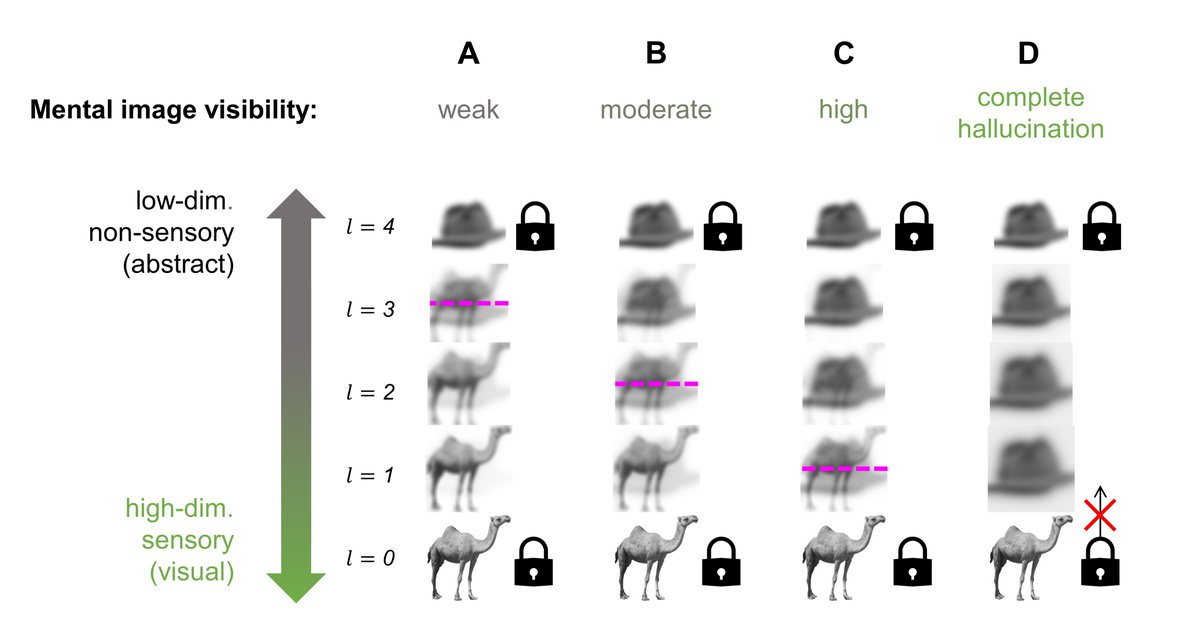
Why do mental images look different to real images, and to hallucinations? Our new #preprint answers these questions by considering a simple premise: mental imagery never occurs in a vacuum.
Check it out: https://t.co/5esLlrtmj0
With @amandarob10 & @CompCogNeuro#mentalimagery
Great team effort with critical contributions from many:
@martin_hebart@OliverContier @lina_teichmann Adam Rockter Charles Zheng @LexKidder Anna Corriveau @mvazirip
Hope to have the data fully publicly available soon!
@PessoaBrain@sd_marlow@benrayfield@sd_marlow was in this thread. @benrayfield was in the one from @Neuro_Skeptic. Interesting neither seems to have a neuroscience background - sometimes it’s better not to be too close to the problem. Me, I’m just going with my gut. Sensory systems give reliable EEG responses.
@PessoaBrain Yes, IMHO best solution would keep it simple. Average all the participant data. Measure the mean luminance for each frame correlate that with occipital electrodes. Correlate the audio track with the temporal electrode. Combine the two and the video w the highest score wins.
@NicoleCRust@StevenDakin I particularly appreciate the deaths of despair reference. Really speaks to how big picture your passion project is. Look forward to reading it.