Computational Linguistics, established in 1974, is the official flagship journal of the Association for Computational Linguistics (ACL).
Tags:#CLJournal#NLProc
Our Editor-in-Chief, Dr. Wei Lu, presents a new vision for the journal in the editorial 'Opening a New Chapter for Computational Linguistics', marking a forward-looking transition as the journal enters its second half-century.
Read: https://t.co/Wo5fefUpDK
Reminder: Call for Papers – Special Issue on the Ethics of NLP and CL, Computational Linguistics (deadline: 27 November 2026): https://t.co/1iScc0V4w7 #CLjournal#NLP#NLProc
Reminder: Call for Papers – Special Issue on the Ethics of NLP and CL, Computational Linguistics (deadline: 27 November 2026): https://t.co/1iScc0V4w7 #CLjournal#NLP#NLProc
🎉 Review time for the CL Journal: "Computational Linguistics maintains a rigorous yet efficient editorial process. As of 2025, the average time to first decision is 16.5 days (including desk rejections) and 55.0 days (excluding desk rejections)." So it is less than 2 months!
While we're waiting for the next issue of the CL journal, feel free to check the upcoming articles, using the @mitpress online early: https://t.co/YAR0Hl004n #CLJorunal#NLProc
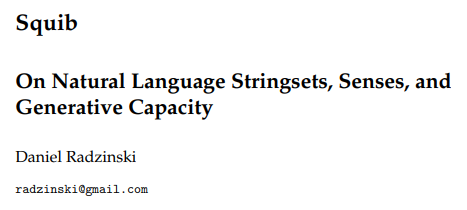
For those interested in grammars, esp. weak generative capacity, this squib has some novel insights. It demonstrates that the proofs given in prominent and well-established weak generative capacity arguments for natural language are flawed: https://t.co/DBmJ2iCmmj #CLJournal#NLP
Squibs should possess at least one of the following attributes: (1) unexpectedness; (2) genuine novelty; and (3) being targeted to a large segment of our readership. #CLJournal#NLProc (2/3)
CL journal has long accepted some articles as "squib". In absolute terms, an squib is "A short, witty, or satirical piece of writing". That is almost what we expect Squibs is reserved for very short articles that constitute more than programmatic versions of regular papers.(1/3)
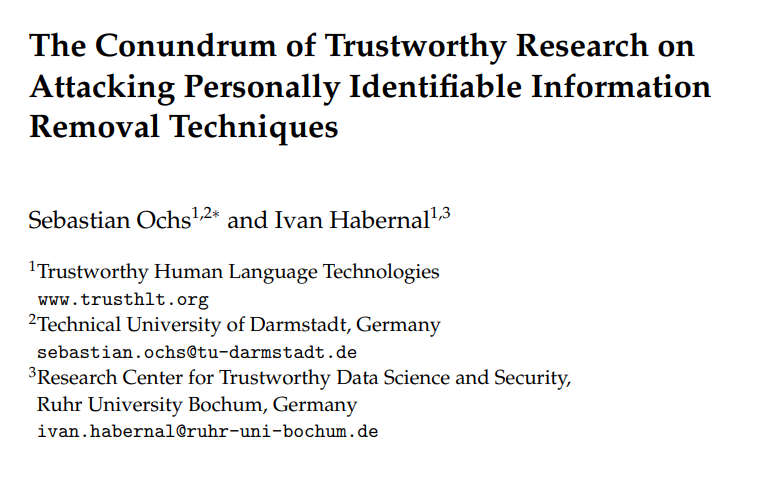
Have you wondered if personally identifiable information removal techniques truly protect privacy in real-world scenarios? The authors of this article suspect that reported success of these attacks is largely overestimated. Read what they find here: https://t.co/m12neeqGsu
Real-world tasks often involve complex, multi-step instructions that remain challenging for current NLP systems. This article provides a comprehensive survey that systematically analyses the landscape of complex instruction understanding & processing: https://t.co/smPIB4BZBZ
How do LLMs compare against other semantic measure algorithms in assessing semantic relation (SR) strength? Are LLMs’ evaluations of SRs influenced by exposure to datasets during training? Answers in: https://t.co/D5uyXTYLiX #CLJournal
If you're an author of an upcoming paper in CL, plz make yourself known (follow us or make your affiliation and field clear in your profile), so we can tag you when your paper is out! Thanks! #NLPRoc#CLJournal
PS. Ok, the photo is from the past, but hope it gets your attention🙃
Mis-and disinformation continue to propagate online & cause significant harm due to the rapid evolution of such content. Out-of-Distribution generalisation datasets can be very difficult to build & this is the major focus of this paper:https://t.co/AqPDnIEdxe #CLJournal@verhivo
Call for papers for our Special Issue on the Ethics of NLP and CL in Computational Linguistics: https://t.co/2BrO42rQjL (Submission deadline: 27 November, 2026) #CLJournal#NLProc
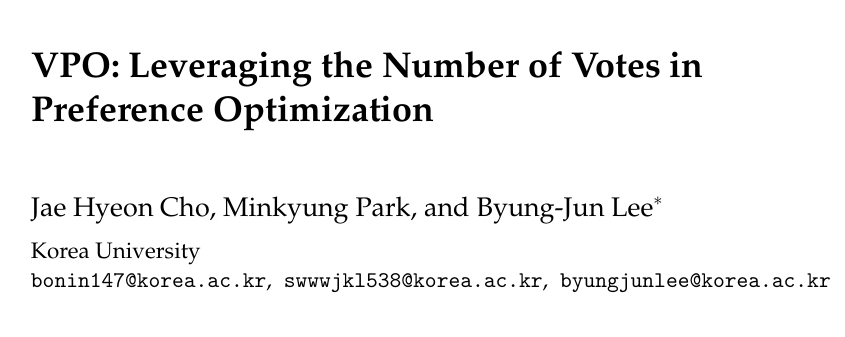
Have you noticed that preference datasets in reinforcement learning/DPO are not fully utilised? This article proposes a framework called Vote-based Preference Optimisation to address that: https://t.co/gGmnSSNxoO #NLProc#CLjournal
Do you know what Multimodal OXYmorons are? If you're curious, read this research, which introduces this concept by constructing and communicating meaning through the interplay of multiple modalities: https://t.co/mXZbqDghte #CLjournal#NLProc@elaiza1996@FraMasini_@FersiniE