The ‘ten martini’ problem asks about a surprising connection between fractals and physics. It was proved in 2004, but in a piecemeal way that left mathematicians unsatisfied. Now, by developing a powerful new theory, they’ve come up with a high-proof solution. https://t.co/OBHQBBVOFX
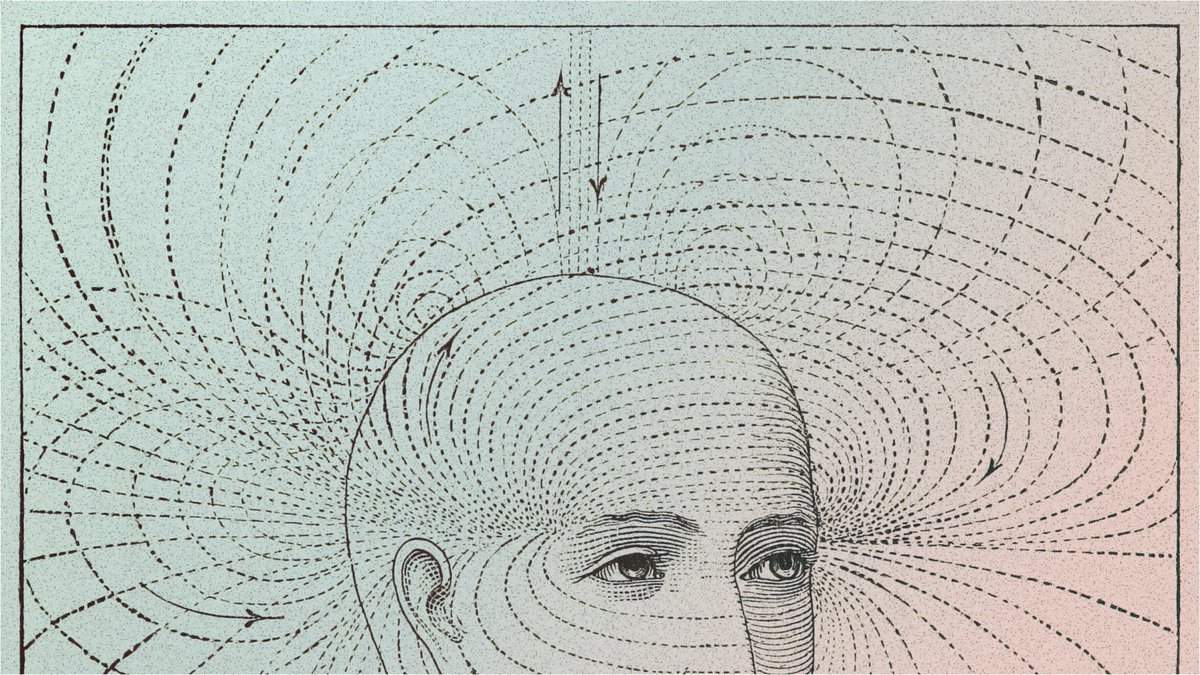
Your mind’s eye exists somewhere on a sprawling continuum. Some people have visions so vivid that they are indiscernible from reality — and others cannot form mental images at all. https://t.co/aRJOvTWgYC
A powerful electrical motor propels bacteria in virtually every gut and puddle on Earth. After 50 years, it has finally been understood. @nattyover reports: https://t.co/nAvtH7Jrqv
For decades, neuroscientists mocked the idea that the brain could have intense selectivity for specific ideas, objects or people down to the level of an individual neuron. But then, in the 2000s, researchers identified concept cells. And the laughter started to fade. https://t.co/33yWqlU97L
58 years after it first appeared, string theory remains the most popular candidate for the “theory of everything.” This is much to the chagrin of its rather vocal critics. @nattyover reports: https://t.co/uWWCqxHuaE
The longest nerve in your body is a conduit between your brain and your body, regulating mood, digestion, blood flow, learning, sexual arousal and fear. https://t.co/N4LQqMyYWT
Behold the inner channel of the nuclear pore complex in all its messy glory. New high-def microscopy is revealing its intricacies like never before. @yasemin_sap reports: https://t.co/NOfp9O5Aiu
An estimated 1 billion biochemical reactions occur every second in every cell of our bodies. New research is revealing how cells harness physics by packing molecules into tiny spaces to make these reactions happen.
https://t.co/EqDWWFdegh
You’ve heard the old real estate adage: Location, location, location! Bosilikja Tasic, a “biological cartographer,” says this is true for the brain too. Tasic used AI to build amazingly detailed maps of the mouse brain. “Location is everything,” she said. https://t.co/ZhqbQCSCfX
Is life itself, and perhaps consciousness and higher intelligence, inevitable in the universe? That depends on how complexity evolves. https://t.co/ck3DIZiwPe
For a long time, astrocytes were considered mere support and scaffolding for all-important neurons. The new experiments reveal in great detail the cells’ influence over neuronal signaling in the brain. https://t.co/9R5oDQw7q4
We trust our memories because they feel natural, and because time seems to flow in only one direction, from the past to the present. Physics, however, allows for stranger possibilities that challenge our intuition.
In a new paper, SFI researchers examine the Boltzmann brain hypothesis, a longstanding thought experiment that raises fundamental questions about memory, entropy, and the direction of time. The work clarifies how arguments for or against these ideas depend on assumptions about the past that are not fixed by physical laws alone.
https://t.co/hbixt3ip0Y
What happens when AI upends an entire field? Where do the experts go? What do young people do? Researchers studying natural language processing were among the very first to find out. This is their story, told in their own words. https://t.co/NIh0sPV6C1
Three thought experiments contribute to the unmistakable suspicion that space-time is not the most fundamental layer of our universe. https://t.co/6hqHQmrnoU
In the quantum world, you can never truly empty a box; “Zero-point energy” is just another form of something. @gmusser explains: https://t.co/xqnaIZbgHU
A cell is fundamentally a container—a vessel that encapsulates life at the most basic level. Biologists believe encapsulation of chemicals may have been necessary for life to originate.
But how does encapsulation occur? Is it achieved easily—or is it elusive? SFI Professor Chris Kempes and colleagues investigate crucial aspects of this process in a recent paper in a special edition of Philosophical Transactions of the Royal Society B focused on the origins of life.
https://t.co/zKA4lWrfG7
Area-minimizing surfaces are an important mathematical tool, so long as mathematicians can guarantee that singularities are rare, and can be wiggled away when they do appear. For decades, no one could prove this beyond dimension 8. Now that’s finally changed. https://t.co/x6F5hHhmIE
Our best descriptions of nature, quantum mechanics and general relativity, are failing us. To dig into the deepest levels of reality, we’re going to need new physics.
https://t.co/h3xfNaIpbm
Climate science is the most significant scientific collaboration in history, and its lessons are a massive human achievement. “How We Came To Know Earth,” our new series, is a guide to the modern understanding of fundamental climate science. https://t.co/3poxAelvqH
One of our most primitive ancestors possesses the same tube-like building blocks that make complex life possible. @vero_greenwood reports: https://t.co/HXuml22KUr