Investment Professional in UK Equities for 24 years, since retiring early have been working on living life, growing my net worth & income in real terms.
I have been Compounding with dividend growth stocks for 10 years now using the Compound Income Scores. Here's a review of how that has been & lessons from that. See here if that is of any interest: https://t.co/i44k5jwy2p
J.P. Morgan JUST released its 2026 principles to long term investing-
And it’s the ultimate case for long term compounding.
I pulled out 10 charts every investor should see, because these numbers are staggering: 🧵👇
I remember back in the 90's I think it was MP's arguing that lower funding would lead to less quality dramas & more low quality TV. I didn't really get it back then, but I do now!
I believe tickets for the Oasis tour went on sale today, if you have been stuck in a queue, had to pay over the odds or didn't get any - then maybe console yourself with this cover version it might make you smile hell laugh even: https://t.co/DcsBdVyh36
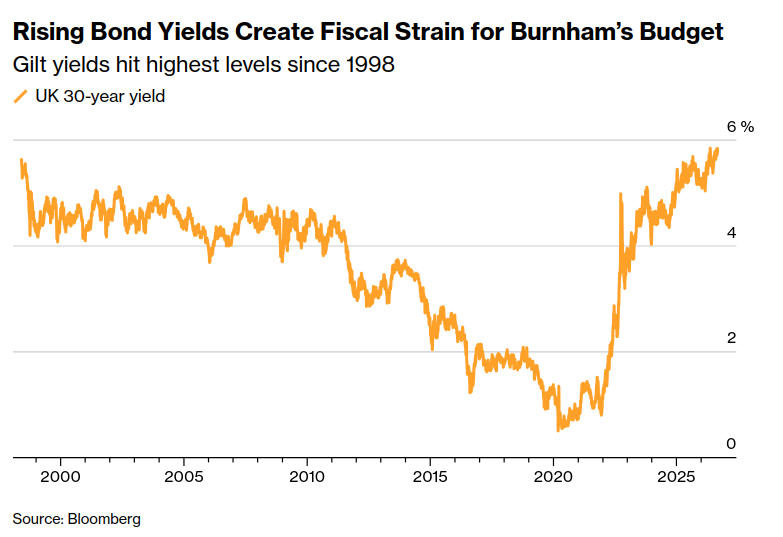
@statsjamie Fixed rate mortgage have gone up already reflecting bonds yield / swap rates. People coming off of a cheap 5 year fixes will be in shock. https://t.co/kejXls4jo8
@BrilliantLeader 100% right as you say, but probably 0% chance of the new PM & Chancellor doing anything like this. I think Andy Haldane got it 100% right when he said "they are traditional tax and spend socialist government just with better Tik Tok videos.
Insane statistic no one ever talks about-
The ridiculous outperformance of the Dow Jones U.S. Dividend 100 Index versus the S&P 500 since 1998.
Most people see this data and assume it is “cherry-picked” because it starts immediately before the dot-com bubble burst.
However, that misses a very important point.
I recently interviewed David Bahnsen, a dividend growth investor who manages $10B+ about this very statistic.
The reality is investors who retired right before the dot com bubble ran out of money if relying on the 4% rule.
In early 2000, investors who refused to chase unprofitable technology companies were mocked.
Today, everyone dismisses that period as an obvious bubble, but it was only obvious in hindsight.
That is precisely why the starting date matters.
As David put it:
“No one knows what the timing is. Something that failed with one start date but doesn’t fail with another still failed.”
Investors don’t get to choose the market environment that follows the day they begin investing or retire.
Dividend growth investing’s success through that period wasn’t a flaw in the data.
It demonstrated exactly what the strategy was designed to do:
Avoid overpaying for speculation, emphasize profitable companies, and continue producing growing cash flow through brutal market environments.
A few important things to understand about this data:
1. This is official back-tested data from S&P Global
2. Again, some people have pointed out that the data starts immediately before the dot-com bubble burst.
But what happens if we adjust the starting date?
In another S&P Global study covering June 2001 through June 2023, the Dow Jones U.S. Dividend 100 Index produced an 11.7% annualized return, compared with 10.2% for the broader Dow Jones U.S. stock market benchmark.
The outperformance remained even after moving the starting date.
This also supports what Hartford Funds found when studying dividend stocks over approximately 50 years.
Dividend growers have outperformed over the long term, largely because their relative performance has been so strong during market downturns.
During the average bear market:
• Non-dividend payers declined 30.3%
• Dividend growers declined just 11.7%
Dividend growth stocks don’t need to outperform during every bull market to outperform over a full cycle.
Sometimes, the most important part of compounding is simply losing significantly less.
@MichaelAArouet Your graph only goes up to 2023 - do you have any updated figures to say the end of 2025? As I suspect the gap has only widened since then under the current Labour administration.