I used Hermes and Kimi to build an agentic workflow for creating custom typefaces. @NousResearch@Kimi_Moonshot
A visual interface works alongside Hermes chat to facilitate collaboration between agent and designer. The designer provides two hand-drawn sample glyphs, which Hermes uses to generate the full typeface in the target style, requesting feedback along the way.
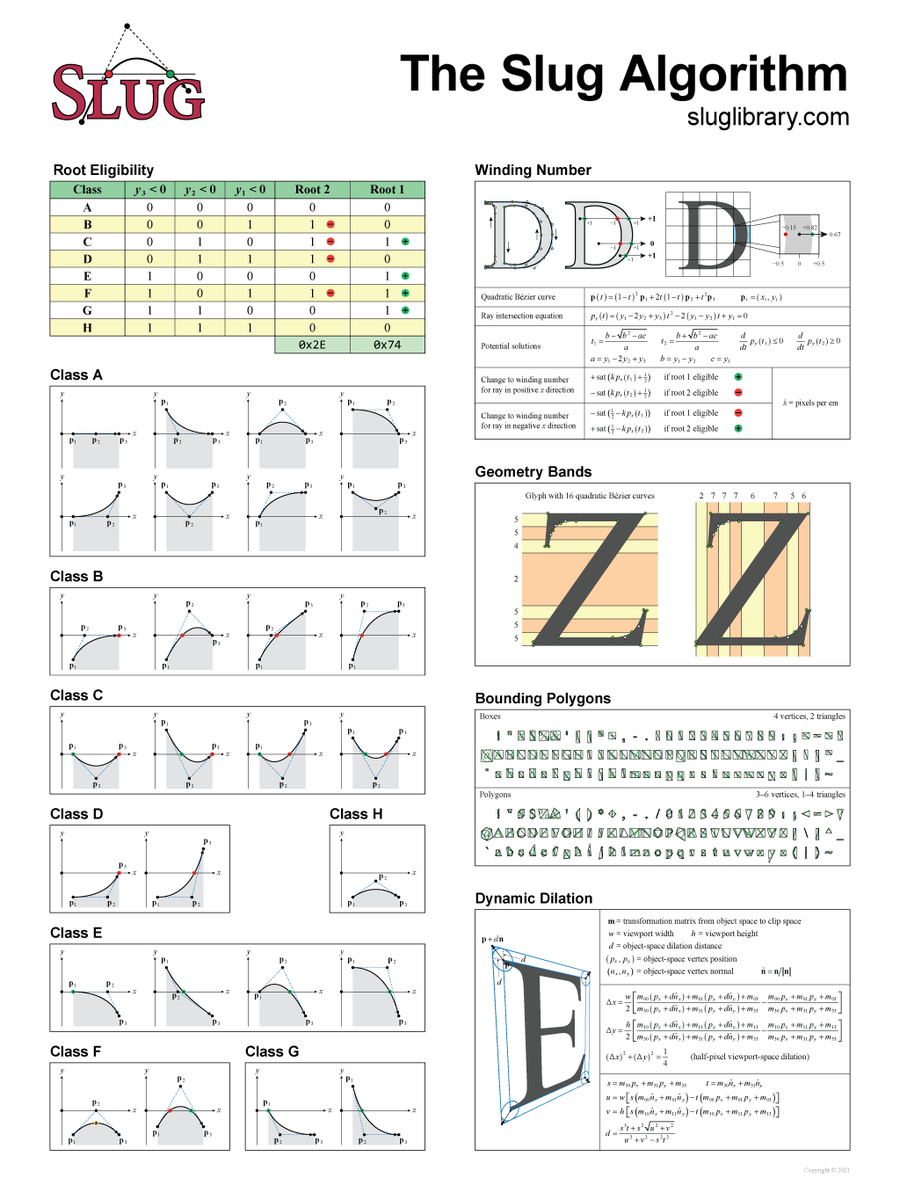
New blog post: A Decade of Slug
This talks about the evolution of the Slug font rendering algorithm, and it includes an exciting announcement: The patent has been dedicated to the public domain.
https://t.co/xWEz0q2c4N
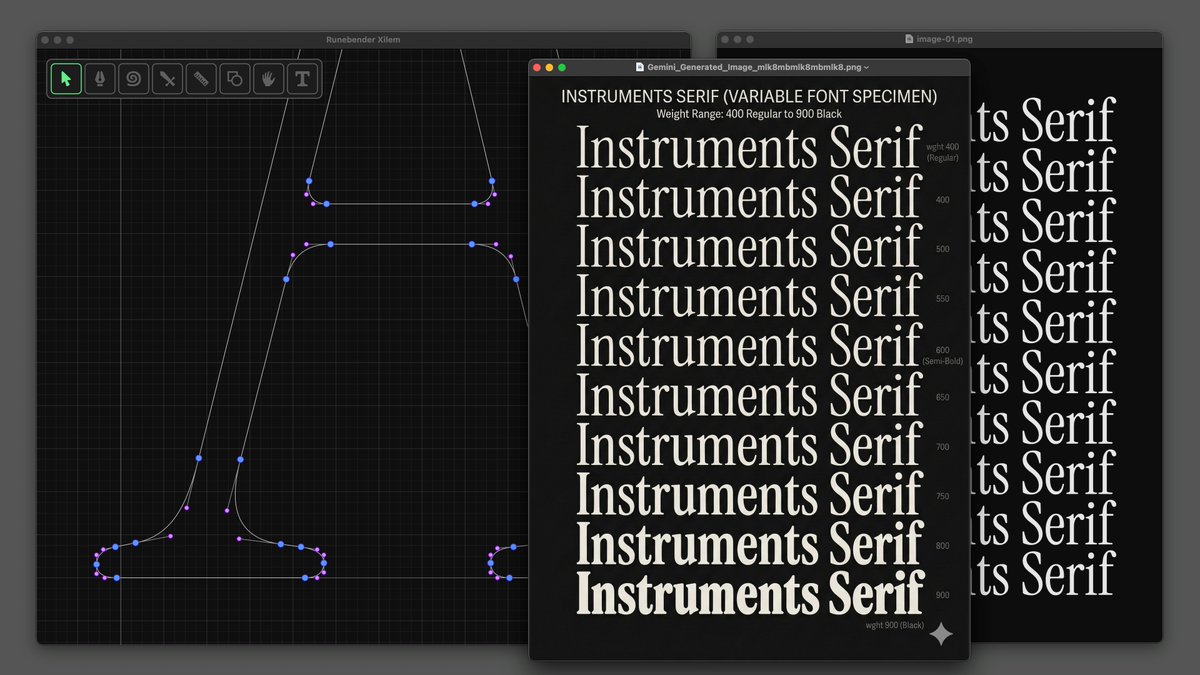
I'm working on a new feature for img2bez in Runebender Xilem that lets you use an existing outline and refit it onto a raster image.
To test this out, I'm using Claude Code and Nano Banana to make a variable font fork of Instrument Serif called Instruments Serif (weight range 400–900).
This is the quality of the autotrace output I'm getting with img2bez now.
I'm not using AI at all to do the tracing. I'm just using AI to write a better autotrace tool than existed before.
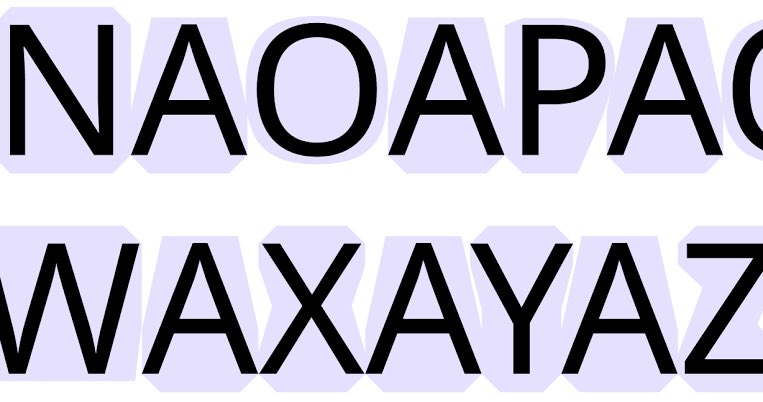
Font design is about to get a huge upgrade. Traditionally, given the same font, the letter ‘A’ looks identical everywhere.
How about a smart & magical font that draws ‘A’ differently based on the semantic meaning of the word? Smells like Stable Diffusion?
Deep dive with me: 🧵
Let's shed some light on the dark art of font engineering. I've added 12 resources to the new Font Engineering category at Type Design Resources. Please share and contribute!
https://t.co/Gq8GCS2agV
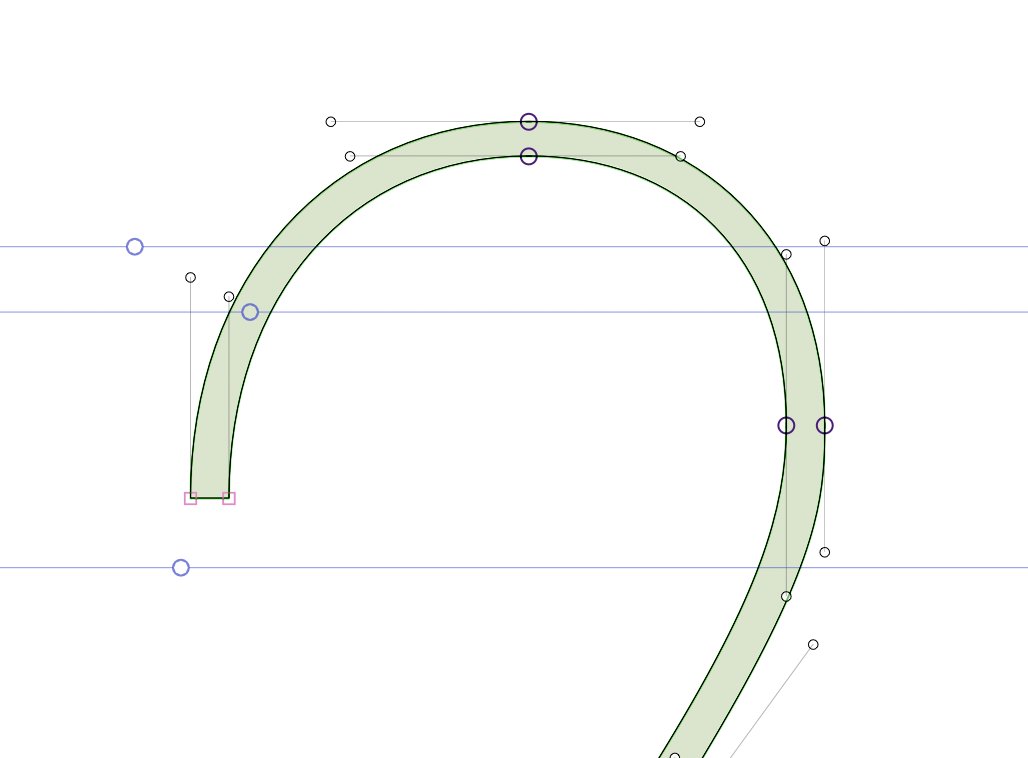
✨ BIG UPDATE: introducing Path Editing on iPad, the easiest way to refine your glyph shapes!
- Select & move path points
- Drag edges (if you’re allergic to Bézier :)
- Convert strokes to outlines
- Simplify paths in one tap 🪄
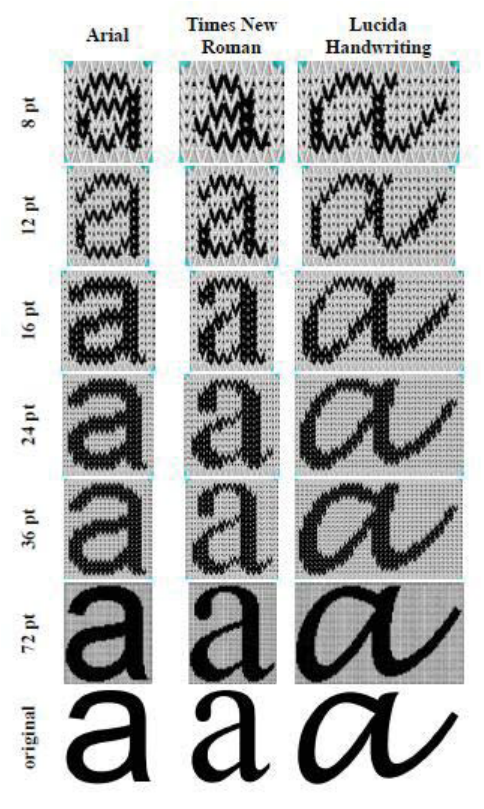
This is so beautiful... from 'Typography and logos in knitted structures' presented at the International Symposium in Knitting and Apparel, 2013 by Andrej Vilar, Klementina Mozina and Alenka Pavko-Cuden.