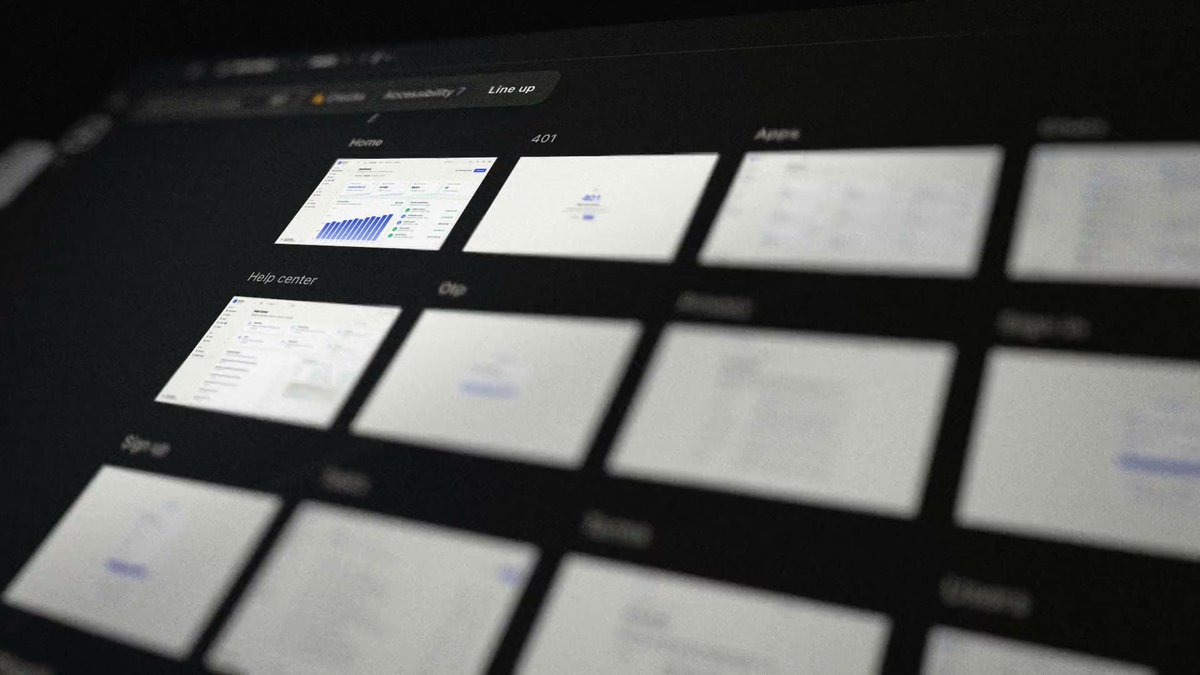
Your design system isn't the one on a canvas. It's the one your users see.
So I built Fragments: a design tool where the canvas is your running app. Point at anything, ask your agent, and it changes in your code, held to your design system.
Every app has three buttons that are nearly the same button.
Fragments lines up the headers, buttons and fields that look almost alike. Keep one look, and your agent brings the rest to it.
Join the waitlist: https://t.co/rTdssWremq
Change a token. Watch the page follow.
Drag a value and see it on the page before anything is saved. Save it, and every page it reached is marked Changed.
Join the waitlist: https://t.co/rTdssWremq
@MichaelFilipiuk@MichaelFilipiuk I'd love to hear some of your pain points with designing in code. I'm building Fragments to eradicate design system drift - promo vid here - DM if interested!
https://t.co/mdReRG42FA
Your design system isn't the one on a canvas. It's the one your users see.
So I built Fragments: a design tool where the canvas is your running app. Point at anything, ask your agent, and it changes in your code, held to your design system.
@valerioamirani Good shout. I can already see which channel people come in from. Although I'll definitely add a “how’d you hear?” for the welcome survey instead. Thanks!
Your agent builds a new page. It quietly invents a new button.
Fragments lays out every page of your running app on one canvas. See what drifted from your design system, fix it everywhere at once, then ask your agent for the next page.
Join the waitlist: https://t.co/rTdssWremq
4. Off-brand never lands. A colour typed by hand instead of your token is boxed on the page, matched to its token, and put back in one press.
Join the waitlist: https://t.co/rTdssWremq
How Fragments works, in four steps.
1. Open your React app. Fragments runs it and lays out every page on one canvas. Not a picture of your app. The app.
3. Ask your coding agent for a change right there. Claude Code or Codex works inside Fragments, and the change lands in your code, held to your components and tokens.
Yesterday I showed Fragments in public for the first time.
The short version: the canvas is your running app. Point at anything, ask your agent, and the change lands in your code, held to your components and tokens.
Join the waitlist: https://t.co/rTdssWremq
Your design system isn't the one on a canvas. It's the one your users see.
So I built Fragments: a design tool where the canvas is your running app. Point at anything, ask your agent, and it changes in your code, held to your design system.