"You wanted to see me, Professor?"
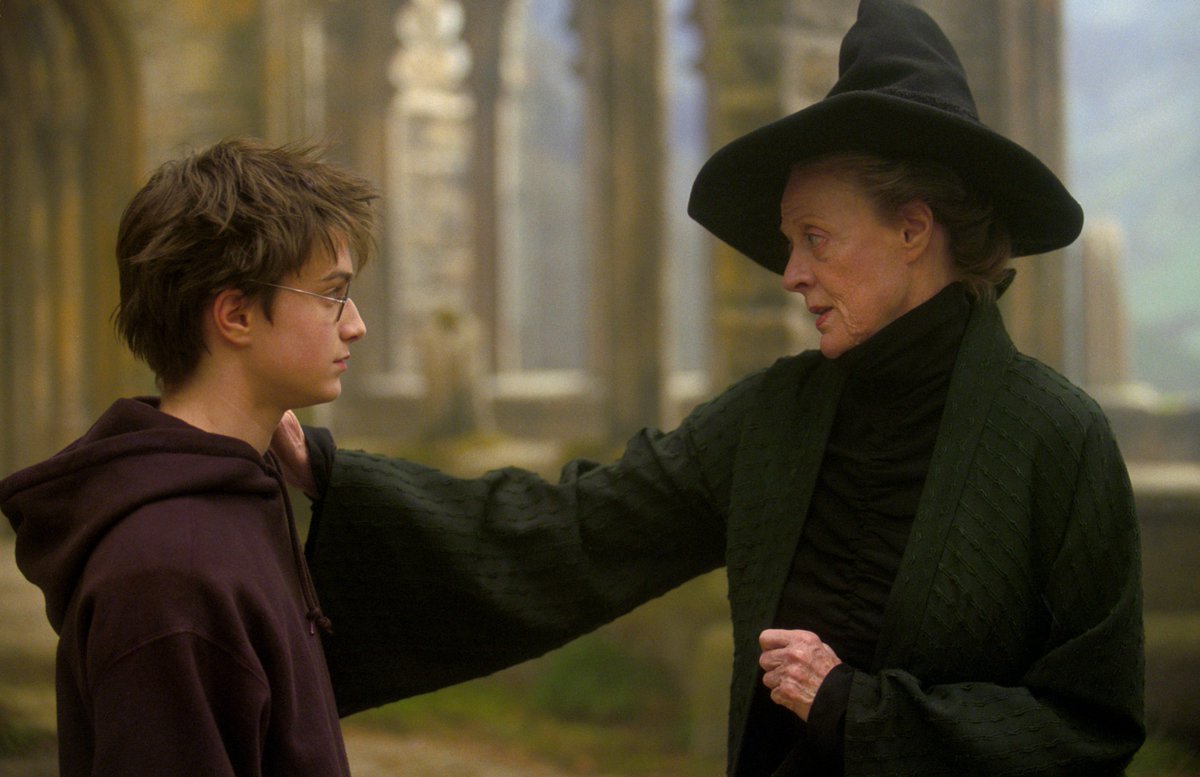
"Yes, Harry. As Head of Gryffindor House I'm responsible for addressing your latest...activities."
"You mean Dumbledore's Army, Professor?"
"Quite right, boy. Quite right."
"...I suppose punishment is going to be worse than a bit of detention, innit."
"D-Detention? Mr. Potter you think I summoned you because you're in trouble?"
"Didn't you, Professor McGonagall?"
"Potter...Harry. You started a paramilitary organization. I couldn't be more proud of you. I'm awarding 500 points to Gryffindor for esprit de corps, and you are getting extra lessons!"
"500 points to Gryffindor sounds fantastic. That's really great, Professor...but extra lessons still sounds like punishment."
"Mr. Potter, by the time I was your age I had already started three different paramilitaries and overthrown two dictatorships and minor principality. "
"Professor that's--"
"Don't interrupt, boy, this is important. I know you had dreams of becoming an Auror, but after discussing it with Dumbledore we have decided you shall follow me into Spec Ops, and I won't be entertaining any objects. Now, do you remember Igor Karkaroff? Head of Durmstrang Institute, talks like a cheap Bond villain. You briefly encountered him during the Tri-Wizard tournament."
"Yes, Professor. I remember him. Seemed a bit of a right git if you ask me."
"Too right. Well it seems he's become something of a dictator, oppressing the local population and the like. The worst sort horror stories are coming in on the wire."
"And we're going to do something about it? You want me to do something about it?"
"Operation Tyranus Deletus has already begun. Your Weasley friends, Fred and George, have been running arms and supplies to the local Mugglehideen for the past two months. We are going to slip in and teach them how to fight a guerrilla war."
"Bloody brilliant."
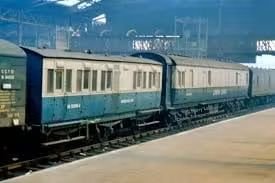
Ancient 6 wheel coach generator van (de320104e) ex great Eastern railway built in 1898 at Stratford & scrapped at Doncaster works in late 1971
Seen here at Manchester Victoria
📷 unknown
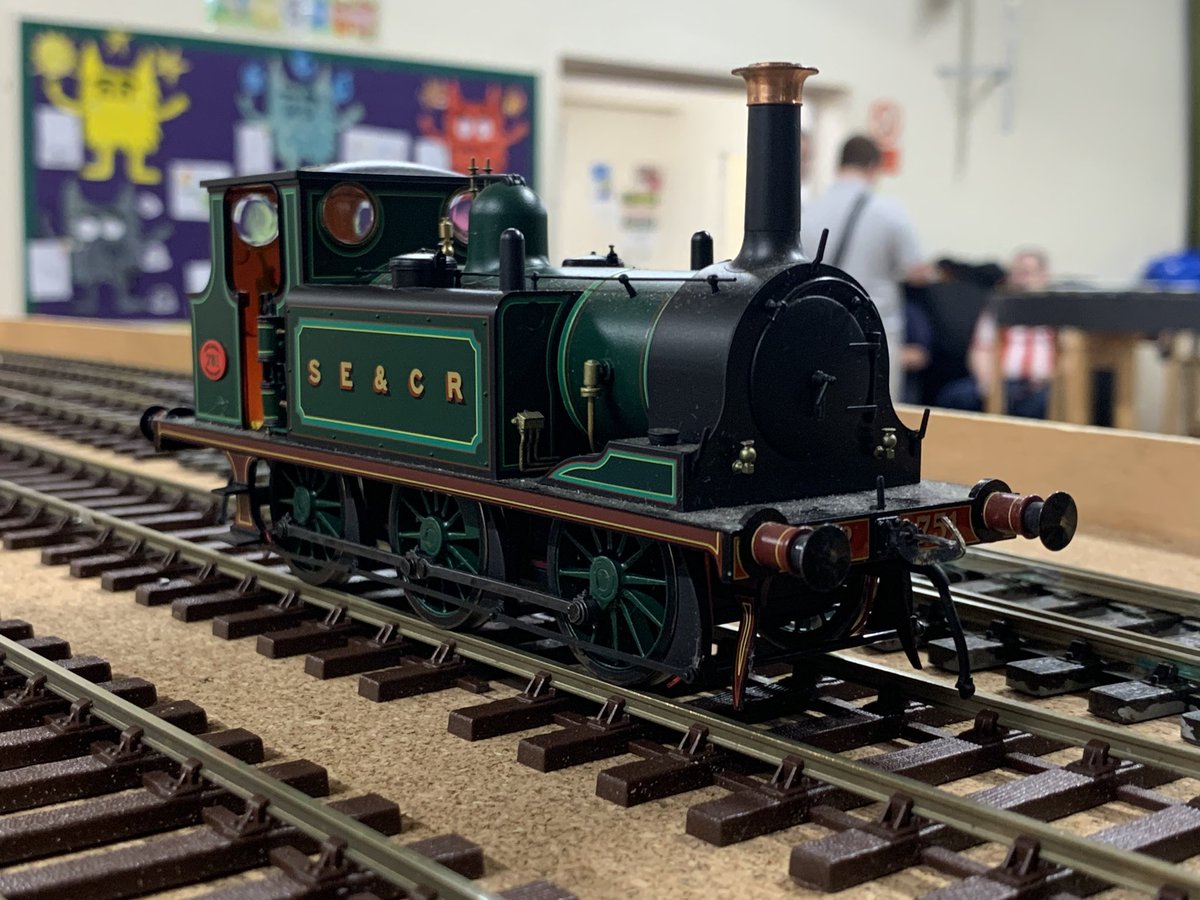
🚂 The second of a trio of new announcements from Rapido today is one many of you have been asking for - a newly tooled LB&SCR D1 Class 0-4-2T steam locomotive in OO Gauge! Pre-order yours for £144.45: https://t.co/pC5BTfSaEQ
THINGS WE DID DO:
Built This City
Shot the Sheriff
THINGS WE DIDN'T DO:
Start The Fire
Shoot the Deputy
THINGS WE WANT TO DO:
Break Free
Hold Your Hand
THINGS WE WILL DO:
Rock You
Survive
Anything for Love
THINGS WE WON’T DO:
Take It
Get Fooled Again
Talk About Bruno
Back Down
Stop Believin’
That
THINGS WE CAN’T DO:
Get No Satisfaction
Make You Love Me
Fight This Feeling
THINGS WE WILL NEVER DO:
Get Back Together (Like, ever)
Give You Up
Let You Down
Run Around
Desert You
Make You Cry
Say Goodbye
Tell A Lie
Hurt You
It’s not playing with trains, well, not always, it’s railway modelling.
Railway modelling in the UK is not a dusty relic of bygone times. It is a living craft with a complex history, Hornby, Bachmann, Peco, countless clubs, large and small and many exhibition halls full of people who are new to the hobby and those who have spent decades building a miniature Britain. It also happens to be one of the most complete hobbies you can start: engineering, art, history, electronics, geology, architecture, community and quiet focus, all in one box.
Hornby commissioned a UK survey of 2,000 adults, which revealed more than 60% of scale-modellers reported mental-health benefits. Nearly half specifically cited stress relief and improved mental activity. Among people who actually make models rather than just run trains, that figure rose to around 80%.
The reasons are practical, not mystical: You build a world you control, the trains run on time, but only if you want them to, the weather is whatever you paint. The work is tactile and sequential, laying track, ballasting, constructing buildings, wiring points, creating scenery, weathering a wagon; each and every task demands attention without serious consequences when you get it wrong, which even the most experienced modeller does. The hobby maps almost perfectly onto the NHS “five ways to wellbeing”: connect (clubs and shows), keep learning, give (help a newcomer, run a layout at an exhibition), take notice (the meditative act of watching a train crawl through scenery you made), and a modest amount of physical activity.
Modelling scales with your energy. Some days you only run trains. On other days, you may rebuild a cutting or perhaps plant some trees.
People describe model railways as meditation with ballast. That is not marketing copy; it is a recurring phrase in first-person accounts.
The costs: from modest to magnificent. You do not need a spare bedroom and a second mortgage to get started. Models can be built on a shelf, in a bookcase, on a board under the bed, right through to taking over a whole garage, using a shed or venturing out into the garden.
There are various gauges, but by far the most common in the UK is OO, which is the British version of the American HO. The track is the same width, but the model scale dimensions are different.
With a starter layout, expect to pay between £50 and £200. For that, you'll get an oval, maybe with a siding or passing loop with a Hornby or similar starter set: loco, coaches/wagons and controller.
For a small finished layout, expect to spend £250–£600, with extra stock, basic scenery, a 4×2 ft board that actually looks like a place you'd recognise.
For a serious enthusiast, it's open-ended, a layout is never finished, there are always things to improve, new stock to buy, DCC control (full computer control of the layout), sound-fitted locos and scenery, better track, lighting - it goes on and on.
A good OO-gauge locomotive now sits around £90–£220 ready-to-run; sound versions cost more. Kits, 3D-printed bodies and the huge second-hand market keep the floor low. N gauge shrinks the space (and sometimes the bill). O gauge does the opposite.
This hobby is unusually good at letting you pause. A half-finished goods yard can wait months. Nothing expires. It's one very long, for some, life-long learning curve.
This is where the case becomes strongest for older people.
Fine motor skills and coordination. Handling 16.5 mm track, minute couplings, paintbrushes and wire is a continual practice of hand-eye coordination and dexterity. Gerontology research on similar close work shows these skills are exactly the ones that decline with age if they are not used. Modelling keeps them in use without feeling like physiotherapy.
A layout is a long-term project with many moving parts: geometry of track, electrical circuits, historical accuracy, scenery textures and operating sequences. You plan, problem-solve, remember where you put the spare fishplates, and then start again. Studies of “serious leisure” in older adults have used railway modelling as a case study of successful ageing, containing purpose, skill development, and engagement with life rather than passive retirement.
Hobbies in general are associated with lower depressive symptoms, higher life satisfaction and better cognitive outcomes in older adults across many countries. Creative, hands-on hobbies also appear in research on reduced cortisol and blood pressure. Model railways combine the creative and the technical in a way few other pastimes do.
One club survey (not a clinical trial) of more than 1,000 members with an average age of 64 reported a strikingly low rate of diagnosed dementia compared to the national average. The suggested mechanism is “cognitive dexterity”: tasks that keep the prefrontal “front office” of the brain engaged and busy, rather than letting everything become muscle memory, it matches the broader evidence that varied, concentrated hand-and-mind work is protective.
Clubs and exhibitions are everywhere. There are hundreds of model railway clubs in the UK and a year-round calendar of shows. For many retired folk, the weekly club night is the most reliable social appointment they have. Social engagement itself is linked to slower cognitive decline.
Almost half of the current enthusiasts in the Hornby study were under 35, and 28% were female. The hobby is no longer only “the old boys in the church hall”, though we old boys remain its backbone and its teachers.
OO gauge (4 mm to the foot on 16.5 mm track) became the national standard after the war, mainly because of the size advantage over the O gauge, which preceded it.
Exhibitions still draw thousands. Clubs still last, successfully run for many decades. That continuity is itself a form of well-being: you join a conversation that started before you and will continue long after you.
It can become expensive if you chase every new limited-edition loco. It can take a lot of space or just a bookshelf. Fine work gets a little harder with arthritis or failing eyesight; magnifiers, better lighting and changing to larger scales help.
The industry has had a rocky few years as shops close and the average club member ages. None of that cancels the core advantages. The hobby is seeing a reawakening now, with many new enthusiasts catching the bug.
To get going, buy a second-hand starter set and join a club before you buy a roomful of baseboards; it will save a little frustration. The community is generally generous with advice.
Railway modelling will not cure loneliness, depression or dementia, but it will certainly help. It gives people a reason to use their hands and their head, a place where things work because you made them work, and a room full of people who understand why that matters. It’s a hobby that never ends – a layout always needs a tweak here and an upgrade there and above all, it provides an overwhelming feeling of achievement.
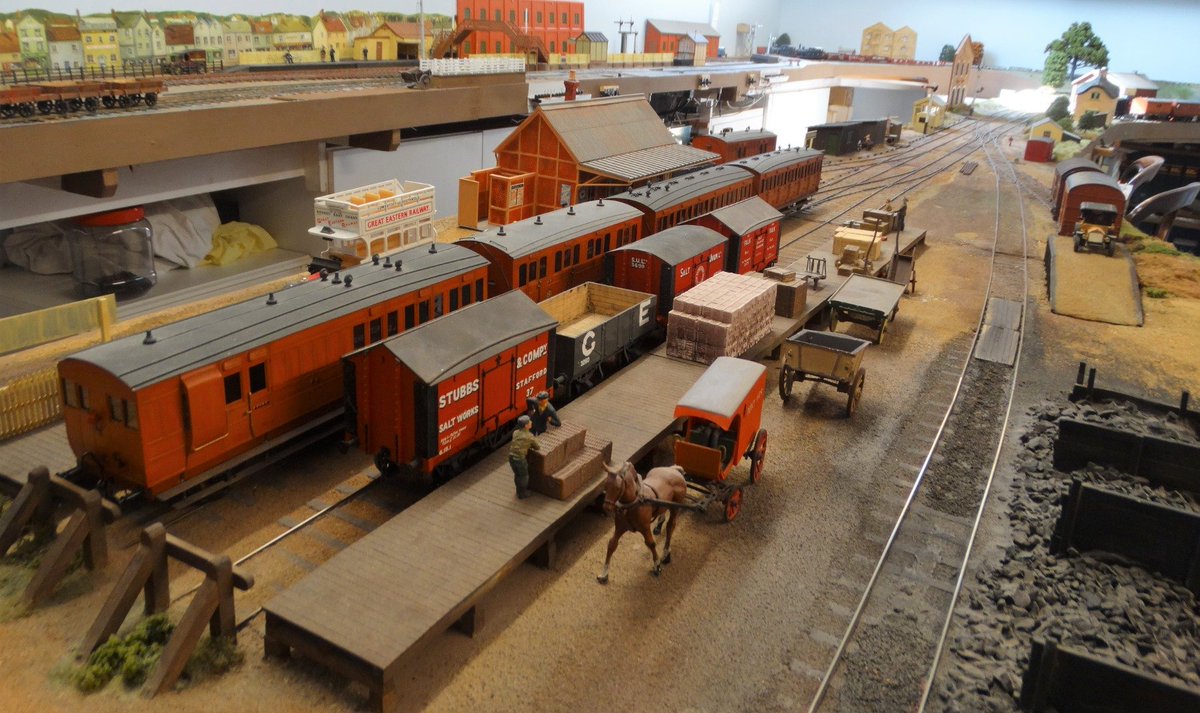
Photos from the modelling group on the Great Eastern Railway Society show what can be achieved. More photos are available on the website.
Mid-Suffolk Railway. Roger Kingstone
Blakeney. Nigel Burbridge
Romford. Gary Day
Canfield. Nigel Seaman
@Leonard07816662@SudrianRailFan Also a Z Class, No. 30952, and an LSWR G6 (the departmental one) - both set aside for the Bluebell but of course they couldn’t save either of them and both were scrapped - interestingly they were midway through finalising the payment for the G6 when BR cut it up at Meldon Quarry
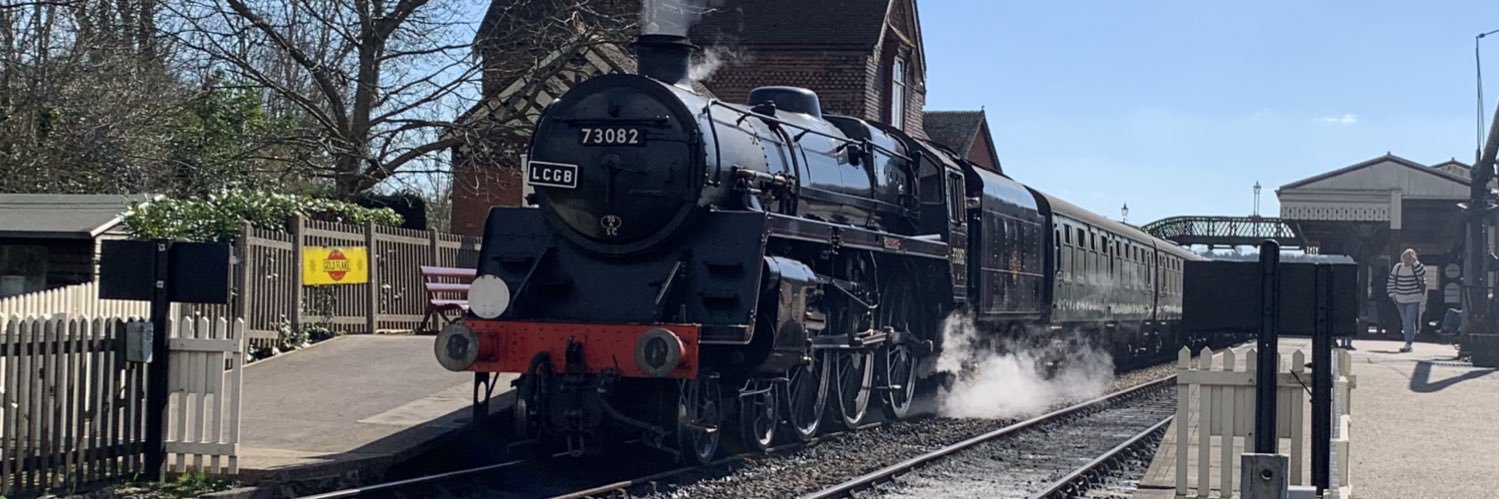
A new display at the Bluebell Railway Museum at Sheffield Park tells the remarkable story of Barry Scrapyard and the steam locomotives that were saved from the cutter’s torch.
The Bluebell Railway Museum is situated on Platform 2 at Sheffield Park.
Visiting locomotive LSWR T3 No. 563 will be in steam for our Annual Steam Gala, 24-27 Sept.
📸 John Hunt
Book your tickets today: https://t.co/Jf928vH1QN