Hondo is a cultural critic and behavioral analyst whose writing examines the hidden architectures shaping Black experience across the African diaspora.
@b0mbchell_ Him saying he’d rather have a kid with his homegirls because “no romance = no jealousy” misses the real point. Emotional bonds don’t need sex to form. Building a whole parenthood unit with friends creates new attachment and dynamics he’s pretending won’t exist.
@AttorneyCrump I’m genuinely happy for this young man. But it’s 2026 and we’re still saying “first Black ___” in spaces that were never built for us, as if it validates us. Meanwhile others are fighting #OscarsSoWhite and #EmmysSoWhite. I don’t see how these narratives complement each other.
@Heron_xz Viola Davis naming this matters. Early in your career you take what you must, but survival shouldn’t become a permanent identity. At some point the goal is sovereignty; building yourself up so you no longer have to negotiate your dignity for the work.
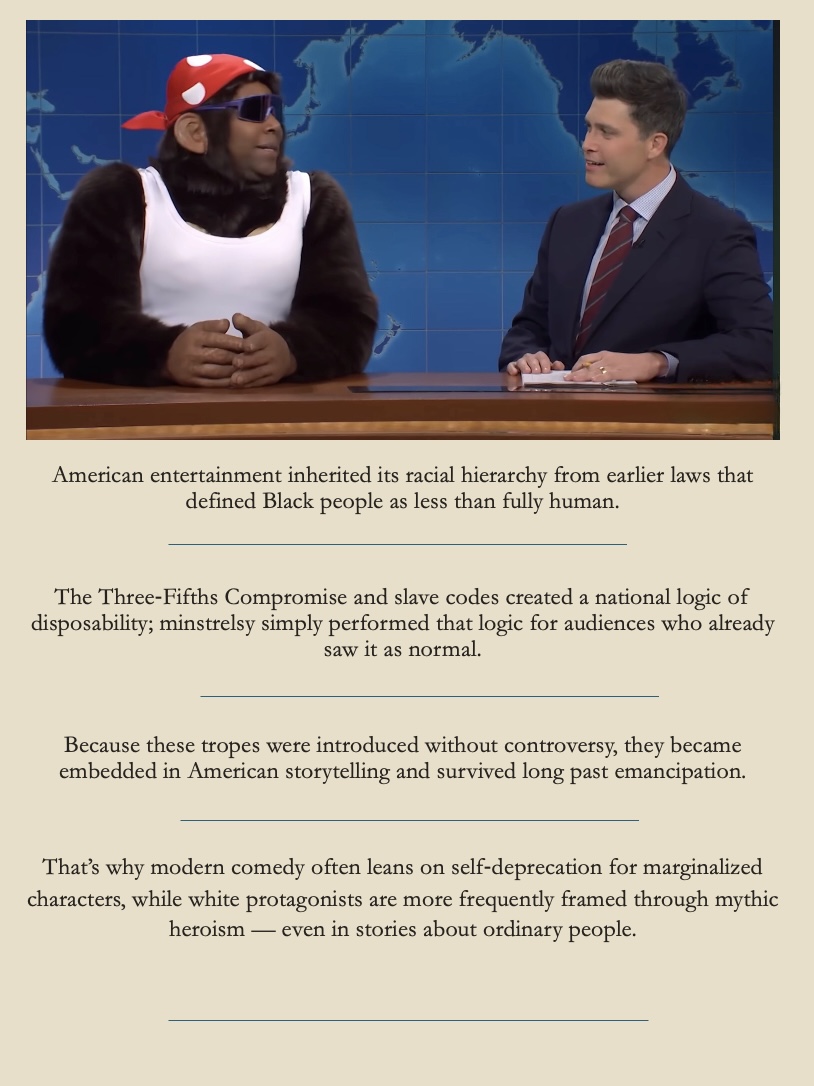
@ShegunTweets As you’re watching this, just remember Wilde’s point: life imitates art far more than art imitates life. If we want different outcomes, we have to start showing different stories — ones that don’t recycle negative stereotypes.
@laflame_xq A man doesn’t need to be insecure to feel displaced; he only needs to notice that his woman’s emotional loyalty is still partially living in her past. And I think this is the part most people in relationships shoot themselves in the foot unwittingly.
@SlickmediaX Question why filmmakers keep staging Black trauma as a ritual performance, replaying domination as though it belongs to the past rather than the present. These narratives don’t liberate the imagination; they train it. They desensitize the viewer & disguise the continuity of harm.
@ClubShayShay@Jokoy I hope that’s not what’s happening here, but if the ex still has partner‑level privileges while a new relationship is forming, the system becomes structurally unstable. Not because of jealousy; but because the architecture itself can’t support two primary attachments.
@wildfreakouts The real problem isn’t the bonnets, it’s that line: “Ya’ll should be ashamed wearing bonnets with all these white folks in here.” That’s the actual violence, because it treats white comfort as the standard and Black autonomy as something that must shrink in its presence.
@ValaAfshar I’ve never connected with the idea that gratitude should come from knowing someone else is struggling more. It always felt off to me — like a reversed form of keeping up with the Joneses, where your sense of “enough” depends on someone else having less.
I’m genuinely curious:
Does anyone else notice this pattern in Hollywood’s emotional framing of Black and Hispanic characters? The constant distress, the survival mode, the panic — contrasted with white characters written as calm and in control.
Is it just me?
@polo_man404 When a system produces unequal outcomes, the system itself becomes invisible, and the people inside it get blamed or praised as if they created those conditions themselves. Very reminiscent of Willie Lynch - so sad to see!
@LorrieAnn25 Because we’ve built a culture of instant everything: instant opinions, instant attraction, instant dismissal, even the things that require slow observation get forced into a rushed timeline. You can’t see someone’s behavioral patterns @ the same speed u can swipe past their face.
@Wayzor93@OneJoblessBoy Your question has nothing to do with what I’m addressing. The issue isn’t who introduced suits; it’s the habit of flattening 54 countries into 1 climate and 1 cultural pattern. Saying “Africans wear suits even though it’s hot” is just a stereotype. The problem isn’t the suit.