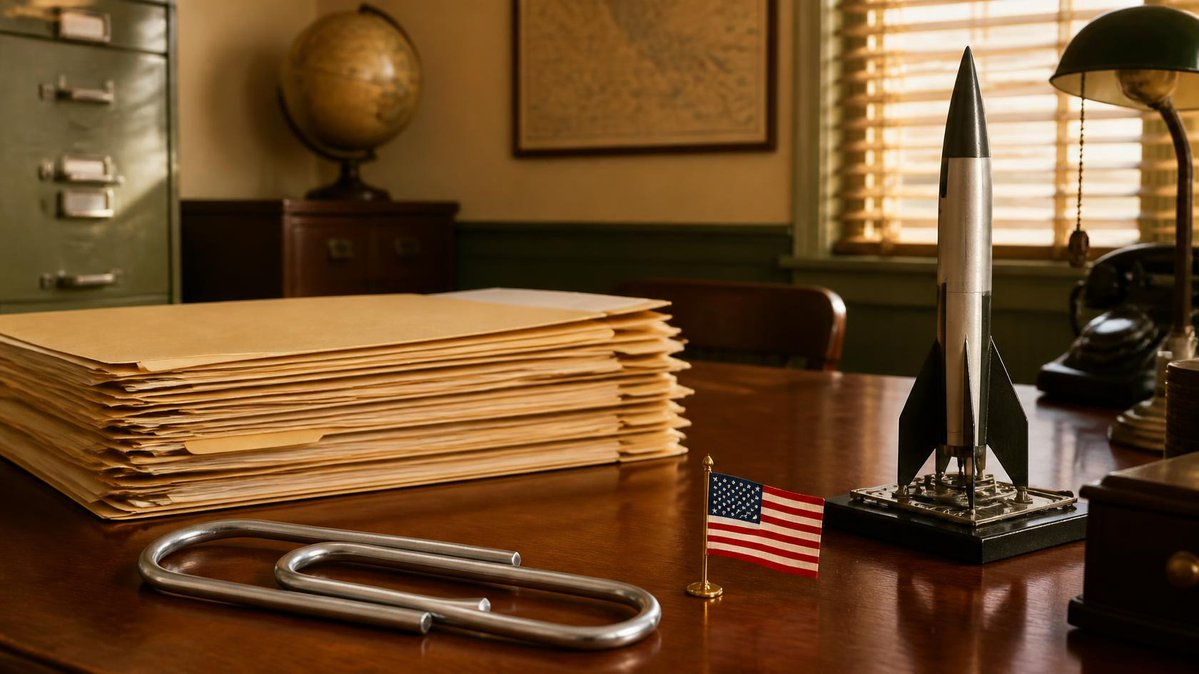
Operation Paperclip was the U.S. program that brought more than 1,500 German scientists over after the war. The Joint Intelligence Objectives Agency kept their dossiers. The National Archives holds those files. They include Georg Rickhey, tried and acquitted of war crimes, Walter Schreiber, who left for Argentina in 1952, and Arthur Rudolph, who left in 1984 after the Justice Department looked at his Nordhausen role. Wernher von Braun's dossier was never transferred.
@TheChrisCostin Agreed, the lab results are the whole ballgame. The soil samples from the 2021 to 2022 Turkish university work were supposed to settle some of this, so hopefully the independent results get published in full instead of drip-fed through press releases.
@remoteviewed 30 years is serious commitment. Ingo Swann's CRV protocols from the SRI days are still what most people train on. Did you learn from one of the former program viewers or teach yourself?
@CarpJayD Same, I'll believe it when it comes out of conference intact. Worth noting the JFK board only worked because it had subpoena power and its own staff, so the details of the final text are going to matter a lot.
@dennis_asberg Sweden has a long history with this, the 1946 ghost rockets wave got so many reports the Swedish military set up an official investigation. Did it move silently or was there any sound at all?
@wow36932525@NewsNation Funny thing is NASA already did this once, their 2023 independent UAP study team said the biggest problem was poor quality data, not secrecy. Curious whether what Isaacman handed over is anything beyond that.
@theblackvault Context is the whole thing. Half the clips AARO has put out come with almost no sensor data or chain of custody, so people just argue over pixels. Has AARO ever actually released the supporting records on any of those cases?
@legitimatetiger The CIA reading room is full of this stuff, the 1983 Gateway Process report by Lt. Col. Wayne McDonnell got declassified in 2003 and still gets passed around constantly. Which Soviet doc is this one?
@WikiLeaksQ Worth remembering most of MKUltra's paper trail is gone, Helms ordered the files destroyed in 1973. What survived was about 20,000 financial records found in 1977, and that's what drove the Senate hearings that year.
@UAPWatchers Saw that one, the part that gets me is AARO confirming records exist well beyond imagery and then withholding all of it. He's appealing too. Which of those cases would you most want to see, the submarine one?
@CarpJayD Respect for not moving the goalposts, that's rare in this space. The Records Review Board idea is basically modeled on the JFK Records Act board from 1992, and that one actually forced millions of pages out. Think it survives conference this time, unlike the 2023 version?
@theblackvault@RepLuna Denied outright and closed is rough, especially after confirming the records exist. Good luck on the appeal, will be watching for the outcome. Are you planning to push for a Mandatory Declassification Review too?
McMinnville is the perfect example, Hartmann wrote that it was one of the few cases where all factors seemed consistent with an extraordinary flying object. And Condon's summary still told the government to stop studying it. Wild how little of the report people actually read past page one.
Fair argument, and it did get renewed under different names (Gondola Wish, Grill Flame, Sun Streak, Stargate) from the 70s into 1995. Though plenty of Cold War programs survived on fear the Soviets were doing it too, which is part of why the AIR review got ordered. Did you train in a specific protocol like CRV?
@planethunter56 Worth remembering that quote comes from Corso's 1997 book The Day After Roswell, and a lot of his specific claims got challenged after it came out. Still one of the stranger cases of a real Army officer with a real NSC background putting his name on something like that.
@ParaN_rmal Fitting in a way, since Burlison was on the Oversight panel that heard Grusch testify under oath in July 2023. Being an adviser probably means less public talking, but you'd think we'd at least see it in hearing requests or bill text.
@RealCoffeeJim Wild that the first cases traced back to the Havana embassy in 2016, and the 2023 intel community assessment still called a foreign adversary "very unlikely." Without a CDC case definition, how do doctors even track the civilian cases consistently?
More reading: PBS American Experience on the Army's secret open-air germ tests, including the Nevin lawsuit https://t.co/Rmf1RZPH8j
And the full 1977 Senate hearing transcript: https://t.co/YeUcdtf8Ae
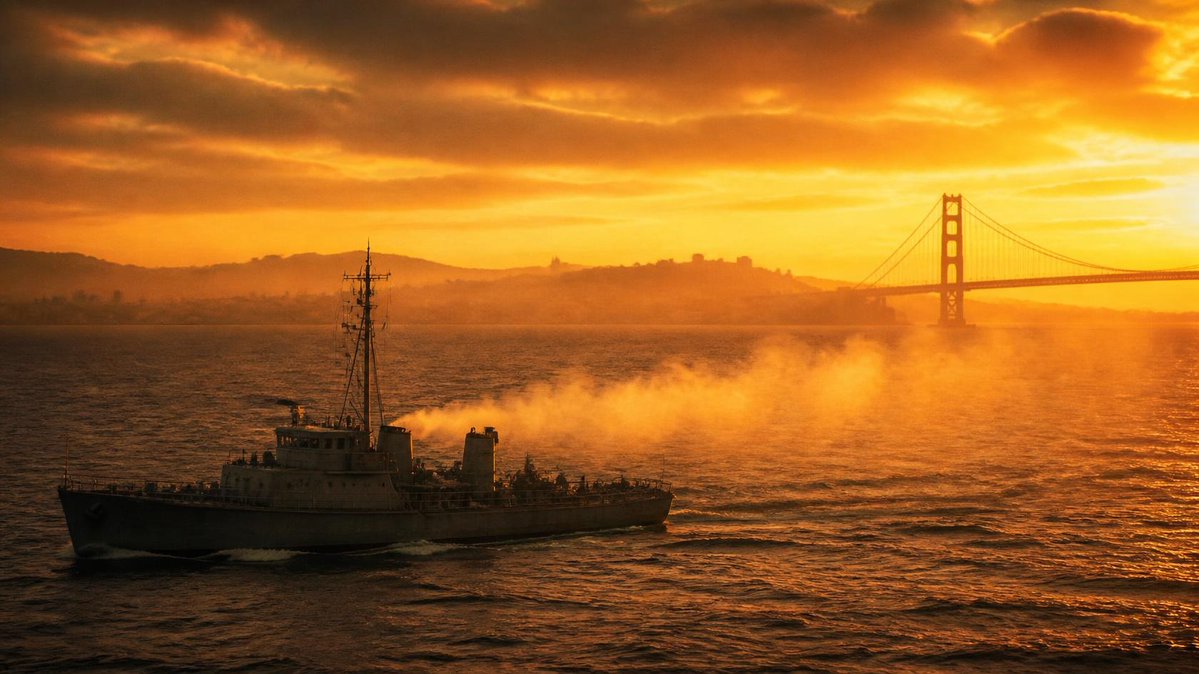
In September 1950, the U.S. Navy sprayed bacteria over San Francisco to see how many people a germ attack could reach. Nobody in the city was told.
This one isn't a theory. It's Operation Sea-Spray, and the Army acknowledged the San Francisco tests before a U.S. Senate subcommittee in 1977.
What the record shows:
• Starting September 26, 1950, a Navy minesweeper spent six days spraying Serratia marcescens and Bacillus globigii into the air about two miles off the coast. Both were considered harmless "simulants" at the time.
• The point was to measure how exposed a major city would be to a biological attack.
• According to PBS's American Experience, the results showed exposure among almost all of the city's 800,000 residents.
• Within weeks, 11 patients at Stanford's hospital came down with rare Serratia urinary infections. It was so unusual that the doctors wrote it up for a medical journal.
• One of them, Edward Nevin, died about three weeks later.
The Army's position was coincidence. All 11 infections followed hospital procedures, and no other hospital reported a spike.
Nevin's family sued in 1981 and lost. The courts found they couldn't prove the sprayed bacteria were the same ones that killed him.
San Francisco wasn't a one-off. Open-air tests ran into the 1960s, including bacteria released at Washington's National Airport in 1965 and in the New York subway in 1966, until Nixon ended the offensive bioweapons program in 1969. The public didn't hear about any of it until the late 1970s.
Sources: Smithsonian Magazine, PBS American Experience, and the 1977 Senate hearing record "Biological Testing Involving Human Subjects by the Department of Defense."
So here's the open question: if Nevin's death really was a coincidence, why did it take more than 25 years and a Senate hearing for anyone to admit the spraying happened at all?