Howard Marks: “Buffett said, ‘I would rather have a lumpy 15% [return] than a smooth 12%.”
“Risk is the probability of a negative outcome, of an undesirable outcome. It is not the volatility of the stream.”
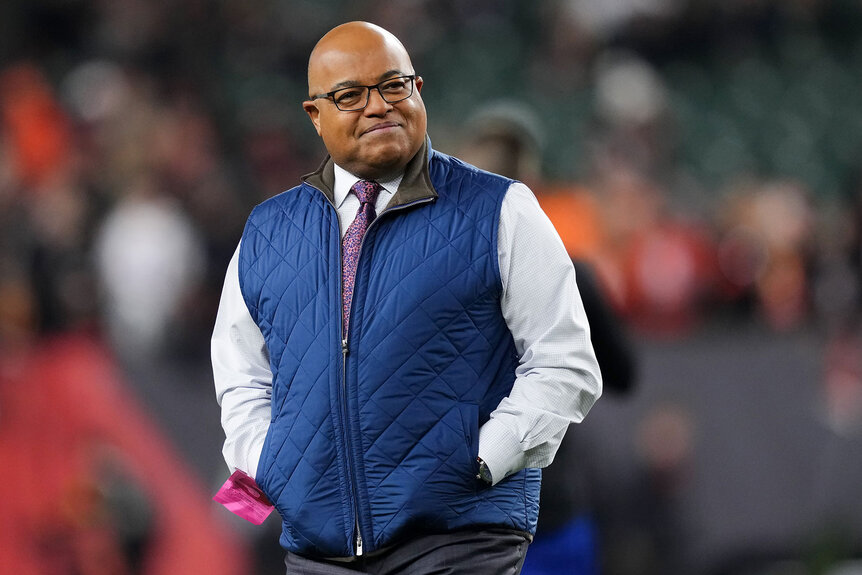
Mike Tirico told me his secret.
It wasn't talent.
It wasn't luck.
It was what he does on every flight home.
A few years ago, I met him at a restaurant bar in Indianapolis during the Big Ten tournament. One of the biggest voices in sports.
He didn't lead with his résumé. He introduced himself. He asked questions. He cared about every person in the room before anyone cared about him.
Eventually, I asked him what made him great.
He said after every game he calls, on the flight home, he pulls up the broadcast and watches it back.
Listens to his own voice. Hunts for the misses. The dead air. The calls he wishes he could have over.
Every game. Twenty-plus years in.
He wasn't born world-class. He worked his way there one flight at a time.
The best in any room are usually the ones still grading themselves the hardest.
World-class isn't a personality.
It's a habit.
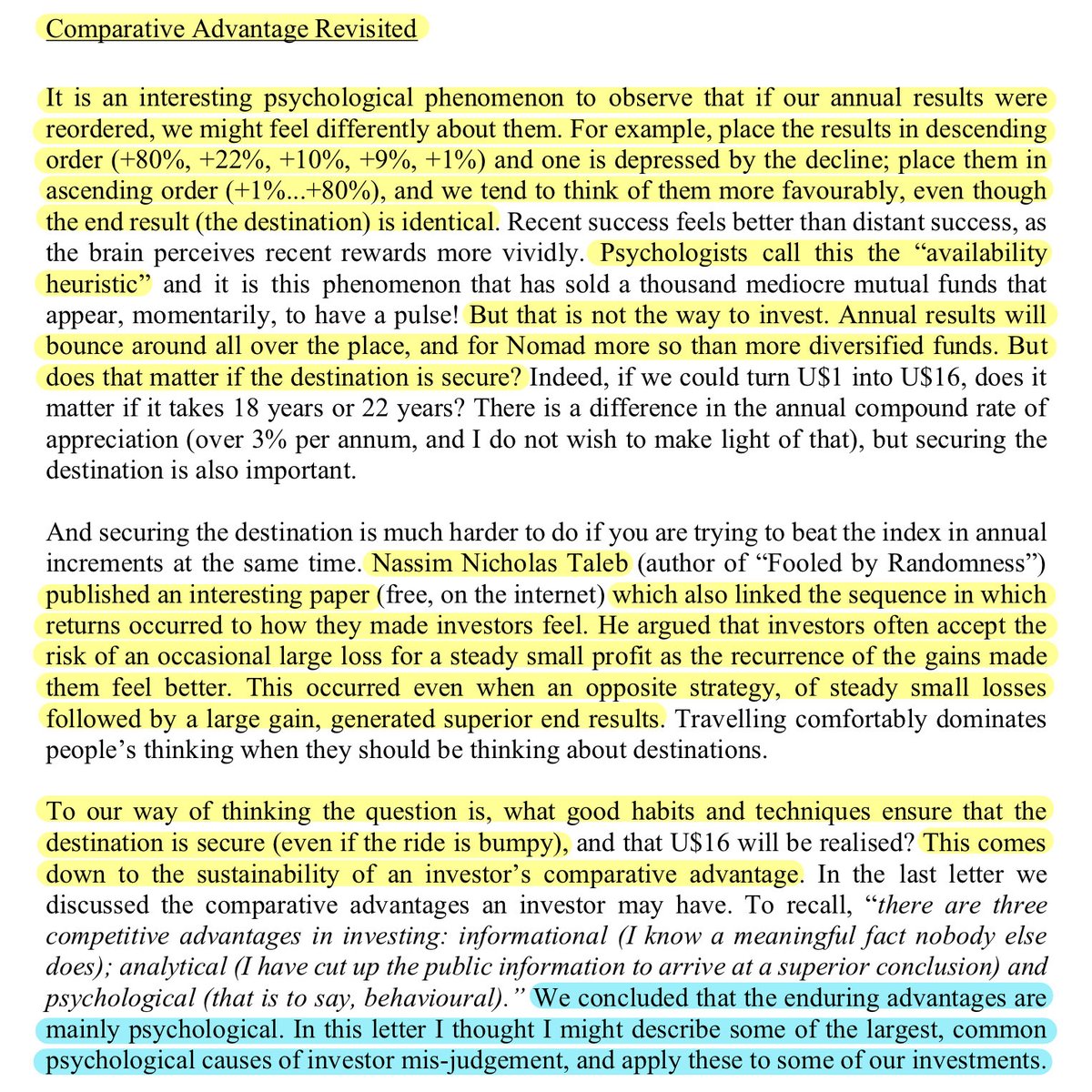
Nick Sleep wrote something in his Nomad Partnership letters (2005) that every investor should read many times.
Sleep posed a simple thought experiment. Take the same sequence of annual returns — +80%, +22%, +10%, +9%, +1% — and arrange them in descending order. You feel depressed. The trend is deteriorating. Now reverse them — +1%, +9%, +10%, +22%, +80%. Suddenly you feel optimistic. The momentum is building.
Same destination. Completely different emotional experience.
Sleep called this the 𝐚𝐯𝐚𝐢𝐥𝐚𝐛𝐢𝐥𝐢𝐭𝐲 𝐡𝐞𝐮𝐫𝐢𝐬𝐭𝐢𝐜 — 𝙩𝙝𝙚 𝙗𝙧𝙖𝙞𝙣’𝙨 𝙩𝙚𝙣𝙙𝙚𝙣𝙘𝙮 𝙩𝙤 𝙬𝙚𝙞𝙜𝙝𝙩 𝙧𝙚𝙘𝙚𝙣𝙩 𝙚𝙭𝙥𝙚𝙧𝙞𝙚𝙣𝙘𝙚 𝙢𝙤𝙧𝙚 𝙫𝙞𝙫𝙞𝙙𝙡𝙮 𝙩𝙝𝙖𝙣 𝙙𝙞𝙨𝙩𝙖𝙣𝙩 𝙚𝙭𝙥𝙚𝙧𝙞𝙚𝙣𝙘𝙚. It is, as he noted, the phenomenon that has sold a thousand mediocre mutual funds that appear, momentarily, to have a pulse.
But 𝐡𝐞𝐫𝐞’𝐬 𝐭𝐡𝐞 𝐝𝐞𝐞𝐩𝐞𝐫 𝐢𝐧𝐬𝐢𝐠𝐡𝐭 he was building toward.
𝐌𝐨𝐬𝐭 𝐢𝐧𝐯𝐞𝐬𝐭𝐨𝐫𝐬, 𝐰𝐡𝐞𝐭𝐡𝐞𝐫 𝐭𝐡𝐞𝐲 𝐫𝐞𝐚𝐥𝐢𝐳𝐞 𝐢𝐭 𝐨𝐫 𝐧𝐨𝐭, 𝐚𝐫𝐞 𝐨𝐩𝐭𝐢𝐦𝐢𝐳𝐢𝐧𝐠 𝐟𝐨𝐫 𝐭𝐡𝐞 𝐣𝐨𝐮𝐫𝐧𝐞𝐲 — 𝐟𝐨𝐫 𝐡𝐨𝐰 𝐭𝐡𝐞 𝐫𝐢𝐝𝐞 𝐟𝐞𝐞𝐥𝐬 𝐪𝐮𝐚𝐫𝐭𝐞𝐫 𝐭𝐨 𝐪𝐮𝐚𝐫𝐭𝐞𝐫, 𝐲𝐞𝐚𝐫 𝐭𝐨 𝐲𝐞𝐚𝐫. 𝐓𝐡𝐞𝐲 𝐚𝐜𝐜𝐞𝐩𝐭 𝐭𝐡𝐞 𝐫𝐢𝐬𝐤 𝐨𝐟 𝐨𝐜𝐜𝐚𝐬𝐢𝐨𝐧𝐚𝐥 𝐥𝐚𝐫𝐠𝐞 𝐥𝐨𝐬𝐬𝐞𝐬 𝐢𝐧 𝐞𝐱𝐜𝐡𝐚𝐧𝐠𝐞 𝐟𝐨𝐫 𝐭𝐡𝐞 𝐬𝐭𝐞𝐚𝐝𝐲 𝐜𝐨𝐦𝐟𝐨𝐫𝐭 𝐨𝐟 𝐬𝐦𝐚𝐥𝐥, 𝐟𝐫𝐞𝐪𝐮𝐞𝐧𝐭 𝐠𝐚𝐢𝐧𝐬. 𝐍𝐚𝐬𝐬𝐢𝐦 𝐓𝐚𝐥𝐞𝐛 𝐟𝐨𝐫𝐦𝐚𝐥𝐢𝐳𝐞𝐝 𝐭𝐡𝐢𝐬 𝐢𝐧 𝐚 𝐩𝐚𝐩𝐞𝐫 𝐒𝐥𝐞𝐞𝐩 𝐫𝐞𝐟𝐞𝐫𝐞𝐧𝐜𝐞𝐬: 𝐢𝐧𝐯𝐞𝐬𝐭𝐨𝐫𝐬 𝐫𝐨𝐮𝐭𝐢𝐧𝐞𝐥𝐲 𝐜𝐡𝐨𝐨𝐬𝐞 𝐭𝐡𝐞 𝐬𝐭𝐫𝐚𝐭𝐞𝐠𝐲 𝐭𝐡𝐚𝐭 𝐟𝐞𝐞𝐥𝐬 𝐛𝐞𝐭𝐭𝐞𝐫 𝐨𝐯𝐞𝐫 𝐭𝐡𝐞 𝐬𝐭𝐫𝐚𝐭𝐞𝐠𝐲 𝐭𝐡𝐚𝐭 𝐞𝐧𝐝𝐬 𝐛𝐞𝐭𝐭𝐞𝐫. 𝐓𝐫𝐚𝐯𝐞𝐥𝐥𝐢𝐧𝐠 𝐜𝐨𝐦𝐟𝐨𝐫𝐭𝐚𝐛𝐥𝐲 𝐝𝐨𝐦𝐢𝐧𝐚𝐭𝐞𝐬 𝐩𝐞𝐨𝐩𝐥𝐞’𝐬 𝐭𝐡𝐢𝐧𝐤𝐢𝐧𝐠 𝐰𝐡𝐞𝐧 𝐭𝐡𝐞𝐲 𝐬𝐡𝐨𝐮𝐥𝐝 𝐛𝐞 𝐭𝐡𝐢𝐧𝐤𝐢𝐧𝐠 𝐚𝐛𝐨𝐮𝐭 𝐝𝐞𝐬𝐭𝐢𝐧𝐚𝐭𝐢𝐨𝐧𝐬.
Sleep’s alternative framework was disarmingly simple: if the destination is secure, does the path to get there matter as much as we think?
If you can turn $1 into $16, does it matter whether it takes 18 years or 22 years?
Mathematically, yes of course — there is a meaningful difference in annualized returns. Sleep acknowledged that. But his point was about 𝐩𝐫𝐢𝐨𝐫𝐢𝐭𝐲.
𝙈𝙤𝙨𝙩 𝙞𝙣𝙫𝙚𝙨𝙩𝙤𝙧𝙨 𝙨𝙖𝙘𝙧𝙞𝙛𝙞𝙘𝙚 𝙩𝙝𝙚 𝙙𝙚𝙨𝙩𝙞𝙣𝙖𝙩𝙞𝙤𝙣 𝙚𝙣𝙩𝙞𝙧𝙚𝙡𝙮 𝙞𝙣 𝙥𝙪𝙧𝙨𝙪𝙞𝙩 𝙤𝙛 𝙖 𝙨𝙢𝙤𝙤𝙩𝙝𝙚𝙧 𝙟𝙤𝙪𝙧𝙣𝙚𝙮 — 𝙨𝙚𝙡𝙡𝙞𝙣𝙜 𝙜𝙧𝙚𝙖𝙩 𝙗𝙪𝙨𝙞𝙣𝙚𝙨𝙨𝙚𝙨 𝙖𝙛𝙩𝙚𝙧 𝙖 𝙙𝙞𝙛𝙛𝙞𝙘𝙪𝙡𝙩 𝙮𝙚𝙖𝙧, 𝙧𝙤𝙩𝙖𝙩𝙞𝙣𝙜 𝙞𝙣𝙩𝙤 𝙧𝙚𝙘𝙚𝙣𝙩 𝙬𝙞𝙣𝙣𝙚𝙧𝙨, 𝙙𝙚𝙢𝙖𝙣𝙙𝙞𝙣𝙜 𝙦𝙪𝙖𝙧𝙩𝙚𝙧𝙡𝙮 𝙥𝙧𝙤𝙤𝙛 𝙩𝙝𝙖𝙩 𝙩𝙝𝙚 𝙩𝙝𝙚𝙨𝙞𝙨 𝙞𝙨 𝙬𝙤𝙧𝙠𝙞𝙣𝙜. 𝙀𝙖𝙘𝙝 𝙤𝙛 𝙩𝙝𝙤𝙨𝙚 𝙙𝙚𝙘𝙞𝙨𝙞𝙤𝙣𝙨 𝙥𝙧𝙞𝙤𝙧𝙞𝙩𝙞𝙯𝙚𝙨 𝙩𝙝𝙚 𝙛𝙚𝙚𝙡𝙞𝙣𝙜 𝙤𝙛 𝙩𝙝𝙚 𝙧𝙞𝙙𝙚 𝙤𝙫𝙚𝙧 𝙩𝙝𝙚 𝙘𝙚𝙧𝙩𝙖𝙞𝙣𝙩𝙮 𝙤𝙛 𝙩𝙝𝙚 𝙙𝙚𝙨𝙩𝙞𝙣𝙖𝙩𝙞𝙤𝙣.
𝐓𝐡𝐞 𝐞𝐧𝐝𝐮𝐫𝐢𝐧𝐠 𝐞𝐝𝐠𝐞 𝐢𝐧 𝐢𝐧𝐯𝐞𝐬𝐭𝐢𝐧𝐠, 𝐒𝐥𝐞𝐞𝐩 𝐜𝐨𝐧𝐜𝐥𝐮𝐝𝐞𝐝, is not informational or analytical. The enduring edge 𝐢𝐬 𝐩𝐬𝐲𝐜𝐡𝐨𝐥𝐨𝐠𝐢𝐜𝐚𝐥. The ability to hold a correct thesis through a bumpy ride, to resist the availability heuristic, to keep your eyes on the destination when the sequence of recent returns is telling a discouraging story.
That is the comparative advantage that compounds. The psychological discipline to let the destination guide decisions when the journey is uncomfortable.
The @nntaleb paper Sleep references is linked below — worth reading in full.
https://t.co/WULemeQTJp
“Her portfolio has probably outperformed our fund by 500 basis points a year for almost 20 years. And you say, how's that possible? She doesn't own a single company that we don't own.”
Chris Davis on how his mom outperformed him - and the investing lesson that comes from it.
“Your job is to say ‘no.’”
- Ajit Jain, $BRK’s insurance chief
“It is very difficult to recruit people to sit back and do nothing.
“You will get bombarded with deals, day in and day out. Your base case is, ‘just say no.’
“Every now and then, you will come across a deal that will hit you with a 2x4 and it will be screaming money.
“That’s when you come to me.”
Ajit and Greg note that insurance, investing, and capital allocation all share this trait.
Personally, I am not worried that Berkshire will lack wisdom or lose its way - I look forward to seeing what comes next.
While many are turning to founder-led, family-run or super CEO as their "holy grail" attribute when making bets, Warren Buffett views the situation differently:
“If a business requires a superstar to produce great results, the business itself cannot be deemed great.”
Michael Jackson and Quincy Jones listened to 800 songs to find 9. Then Quincy threw out 4 of those 9 and went back into the studio. Beat It, Human Nature, P.Y.T., and The Lady in My Life were emergency replacements for songs that were not good enough.
They spent four months just listening. Quincy and Rod Temperton sat in a Los Angeles studio in 1982, going through song after song after song from every songwriter they could pull a favor from. Most got cut after a few seconds. Of the 800, they only ended up recording around 30 with Michael actually singing. Of those 30, only 9 made the final list. And then Quincy listened to the finished album, decided 4 of his own picks were not strong enough, and pulled them. The four songs he replaced them with became some of the most famous in pop music history. The four he cut went on to become hits for other artists.
Recording those replacements almost broke the team. During the Beat It sessions, Quincy had three studios running at the same time. Eddie Van Halen was in one of them laying down his guitar solo for free. He had thought the call from Quincy was a prank his friends were pulling on him. Michael was in the next room, singing a vocal part through a cardboard tube. Engineers were mixing in the third studio. They worked five days and five nights with no sleep. At one point the speakers overloaded and caught fire. Quincy later told the BBC they had to carry engineers out of the studio on stretchers. Musicians too. Greg Phillinganes, the keyboard player on the album, said there was a moment where everyone thought it was finished, that they had nothing left to give, and Quincy was still standing there saying "It is not there yet" while Michael, almost falling apart, kept asking what they were supposed to do now.
They finally finished mixing in early November. Then they sat down to play the master back, and the album sounded weak. They had crammed too much music onto a normal vinyl record, and the grooves had to be cut so narrow that the punch was gone. So they cut a verse from "The Lady in My Life," shortened the famous 29-second intro of "Billie Jean" that Quincy had been trying to drop the entire time, and remixed almost the whole album from scratch. One song a day. Eight straight days. The only track they left alone was "The Girl Is Mine" because it was already on the radio. The final mix wrapped on November 8, 1982. The album came out 21 days later.
The wolves you hear at the start of the song "Thriller" are Michael. The engineer set up tape recorders in a barn overnight to catch his own dog howling, and the dog never made a sound. So Michael did the howls in the booth himself. Some of the background vocals on the same track were sung in the studio's shower stall. Vincent Price did his entire spoken-word horror section in three takes, and the verses he was reading had been written by Rod Temperton in a taxi on the way to the studio that same morning. Michael never wrote his songs on paper. He recorded them on a small handheld tape recorder and then sang them back from memory in the studio.
The album ended up selling around 70 million copies. It won 8 Grammys, sat at number one for 37 weeks, and produced 7 Top 10 hits out of 9 songs. At its peak it was moving a million copies a week. But all of that came after the work was done. The work itself was 800 demos, 30 recordings, 4 last-minute saves, three studios running until the speakers caught fire, and a producer who refused to put out something he did not believe in even when it meant pulling his own album apart twice. Nine tracks because they could not find more that were good enough.
Terence Crawford says a lot of boxers talk about getting the better of each other in sparring especially young fighters but there is no winning in a spar, as you’re there to work on your craft to have more tools to get better so you don’t become dimensional.
@JaiMcAllisterx
I was fired today. Well, laid off. "Budget cuts," my boss said. I packed my box. I was terrified. I have a mortgage. As I walked to the elevator, the CEO—the big boss who never talks to anyone—stepped in with me. "You're Sarah, right?" he asked. "Yes sir." "You stayed late last month to help the interns fix that presentation. You didn't ask for overtime." I nodded, surprised he knew. "I can't stop the layoffs," he said. "Board's decision. But I made a phone call." The elevator dinged. He handed me a card. "My friend runs a firm across town. He's expecting your call at 9 AM tomorrow. He needs a manager who cares about people. The pay is 20% higher." I stared at him. "Why?" "Because you held the door for the cleaning lady every single morning," he said. "I notice things." Character is what you do when you think no one is watching.
Credit: Nancy brooks
I asked @_willcompton a simple question: How did he stay in the league as an undrafted free agent?
His answer was genuinely great. On preparation, being smart, reading the offense in practice and more.
"All of those little details, I obsessed over and I lived it."