Comprehensive genetic analysis of the human lipidome identifies loci associated with lipid homeostasis with links to coronary artery disease. https://t.co/0TuEYtJOcx
Pheweb at https://t.co/jGlBxQpXTi
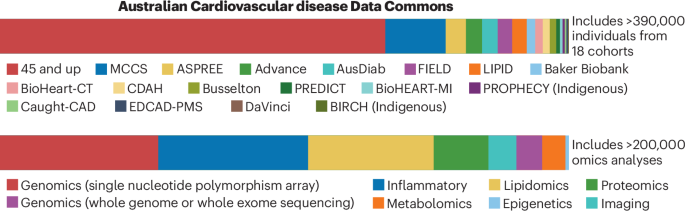
📢ACDC is a platform for discovery & validation of #CVD mechanisms, biomarkers & predictive risk models. It brings together almost 400,000 individuals from Aust clinical & population cohorts, many of which have molecular profiling @OzCvA
Depression often co-occurs with chronic illness, e.g. heart disease, diabetes and obesity, which may be explained by chronic inflammation & metabolic dysfunction. But, what is the course of immunometabolic dysfunction in depression and how that may relate to brain changes?🧵1/6
Not only will you be working with industry leading AI scientists, you will be working on Australia's newest Cardiovascular disease resource: The Australian Cardiovascular disease Data Commons (ACDC) - bringing together approximately 400,000 individuals from 18 cohorts nationwide.
PhD Scholarship opportunity!
Funded by the Australian Centre for Artificial Intelligence in Medical Innovation (ACAMI), we have a PhD scholarship to Accelerate Cardiovascular Disease Risk Prediction with Artificial Intelligence.
https://t.co/ytQaaRMNUo
🎉 Congrats to @CoreySGiles, winner of the 2024 Baker Symposium John Funder Award for best presentation by an #ECS in discovery #research for his multi-ancestry lipidomic genome-wide association study that revealed novel genetic drivers of lipid metabolism & links to disease.
📣 @PeterJMeikle paper finds lipidomic-based metabolic age is associated with ⬆️ risk of #CVD, #diabetes & all-cause mortality, independent of chronological age. mAge score has potential to identify those at ⬆️ risk of #metabolicdiseases. https://t.co/Duk8IKnjVq @OzCvA @latrobe
Our study across ~15,000 participants shows strong links between the Pls Score and lower risks of type 2 diabetes, heart disease, and mortality. In a placebo controlled trial, we show it responds to dietary supplementation!
Exciting news from our latest research! We've developed a plasmalogen score (Pls Score), a new biomarker that could change how we assess metabolic health.
https://t.co/7MKs2ANM8A
@BedimoBeyene@BakerResearchAu
Our SBayesRC method is now published in Nature Genetics! SBayesRC is a full Bayesian method for polygenic score prediction that can analyse all common variants jointly with functional annotations in a single step. @zhili_zheng@IMBatUQ https://t.co/r41yL58PWK
Lipidomics, the study of fats in the body, is a key area of focus for us. This is a rapidly growing field of science and a critical one because lipids play a big part in regulating our #metabolism and our risk of disease. Here's a brief insight into our #lipidomics work.
New paper from the @BakerResearchAu Metabolomics Lab. Imputation of lipid species to facilitate integration of lipidomic datasets
https://t.co/CTYoO3d6RP
Congrats Aleks!
An @nhmrc Investigator Grant will build on our exciting #lipidomics work. Delighted to share that @CoreySGiles from our Metabolomics lab has received a grant to decipher genetic drivers of lipid dysregulation in cardiometabolic diseases. Congrats Corey!
https://t.co/O3EMaE0hRk
HELP ALERT 📣
Help us name our #Metabolomics team’s newest #MassSpec after an inspiring historical female #scientist. Choose from the options below or suggest one in the comments.
https://t.co/JoHhUizEBx
@CoreySGiles@Dr_YKTham
Exciting new research published in @NatureComms!
We (@BedimoBeyene, @BakerResearchAu) introduce the metabolic BMI score (mBMI) to evaluate metabolic health beyond just weight. This sheds light on the concept of “metabolically healthy obese”.
https://t.co/7y9zzdLOWy
Great representation from the Metabolomics laboratory at @LipidomicsForum! It was great being able to talk about our work & also see some really interesting research in the lipid space.
@BakerResearchAu@SABE_latrobe
https://t.co/D4t6nudq6D My latest work in human milk lipidomics. Does a lack of exposure to unique human milk lipids contribute to increased disease risk? A huge effort from a huge team, >600 human milk samples & ~1000 lipid species #lipidomics#breastfeeding#DOHaD