What is the pullback pressure gradient (PPG)? And how to perform it? 👇
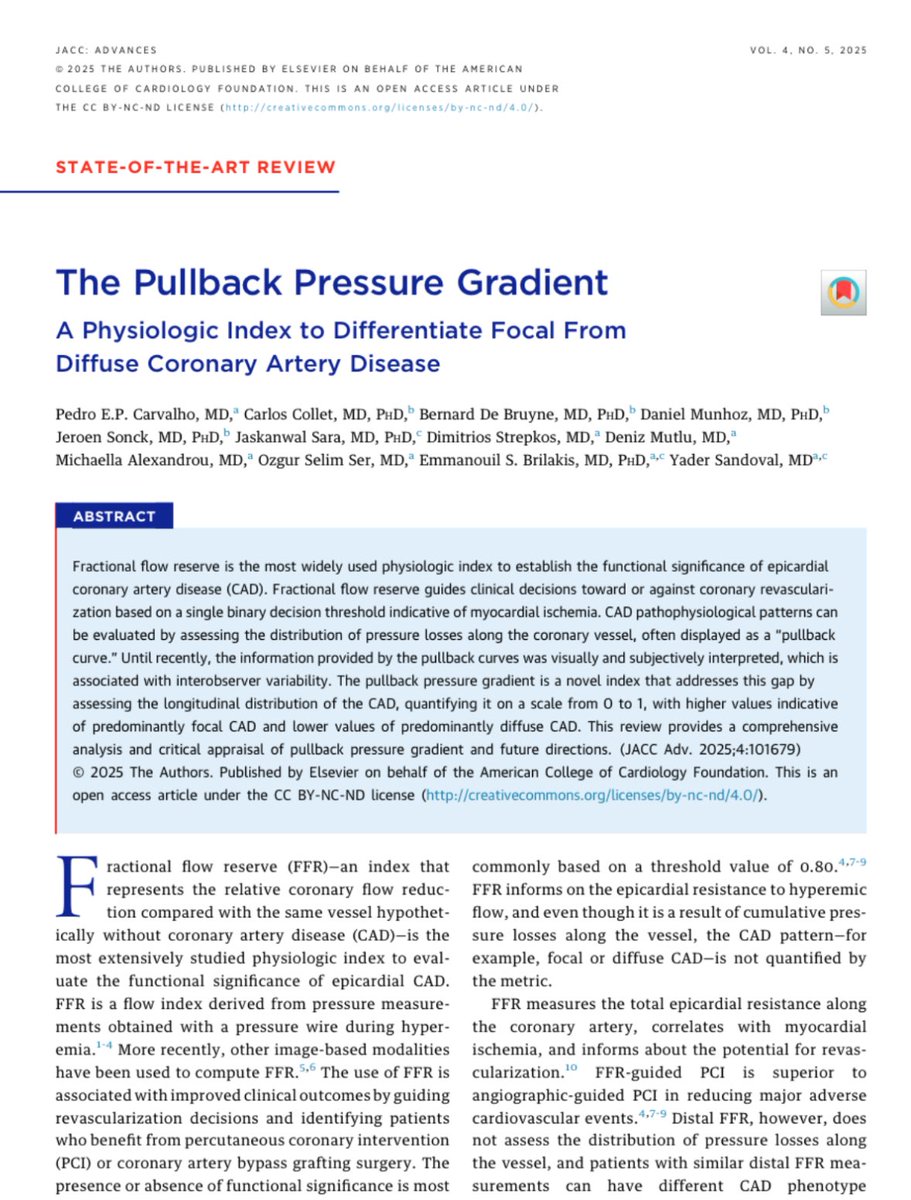
📄 What is PPG? @JACCJournals State-of-the-art review: https://t.co/1uC9iBKdVl
🎥 How to perform PPG? Step-by-step live case (Minneapolis Heart Institute): https://t.co/3sQ8ZkQGxO
• Favor steady hyperemia for a slow, continuous pullback (~15 s) https://t.co/uytZhD1Uyx
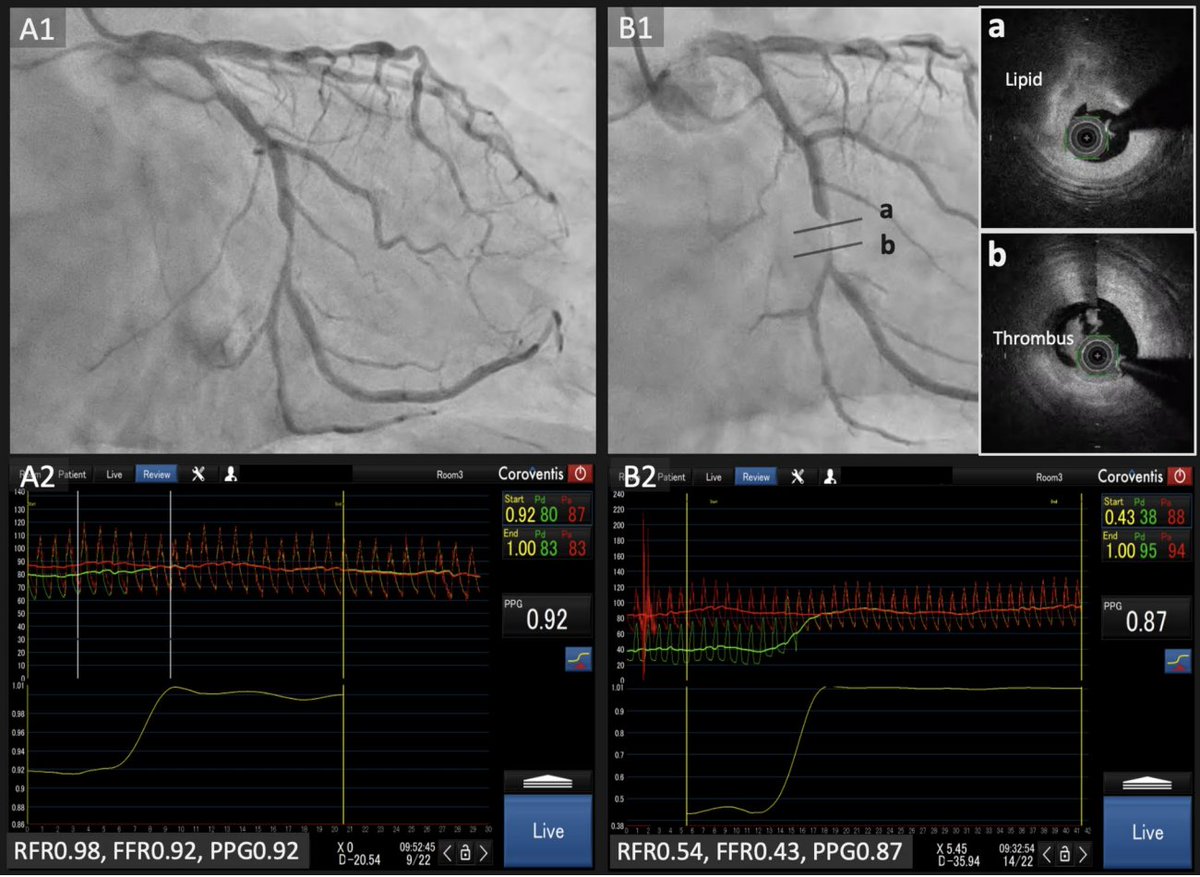
• Objective PPG quantification classifies disease as focal, mixed, or diffuse
• Ensure good technique. Confirm no pressure drift
@CCAD_MHIF@MHIF_Heart@AbbottCardio@coroventis@ColletCarlos@esbrilakis
Outstanding work! 👏
This is the first randomized study comparing resting and hyperemic pullbacks.
🔑 Key finding: Both resting (iFR) and hyperemic (FFR) pullbacks are equally influenced by lesion cross-talk.
✅ This settles a long-standing debate in the physiology field.
Could #PPG be the key to identifying vulnerable plaques with precision? 🔬🧠
Fascinating insights from the pioneers of PPG in Japan 🇯🇵
The future of coronary imaging might be closer than we think. @PCRonline@TCTMD
https://t.co/hfY4UbSgwy
This is the new #PPG Pullback Pressure Gradient - a new physiology-based paradigm in coronary decision-making
High PPG = focal CAD / Low PPG = diffuse CAD
We hope PPG helps us become better interventional cardiologists🙏
@PCRonline@AbbottCardio@coroventis@TCTMD@CoreAalst
#CoronaryPhysiology#MedEd
My new
favorite 3-letter word:
P P G
Pullback Pressure Gradient
Explained by a master
👨💻 Join VIRTUALLY
via the OPTIMA app
https://t.co/SLY3HimhxD…
T H E PHYSIOLOGY COURSE
➡️ 28-29/04 Belgium🇧🇪
https://t.co/QrregKxdTp
👋@divaka_perera
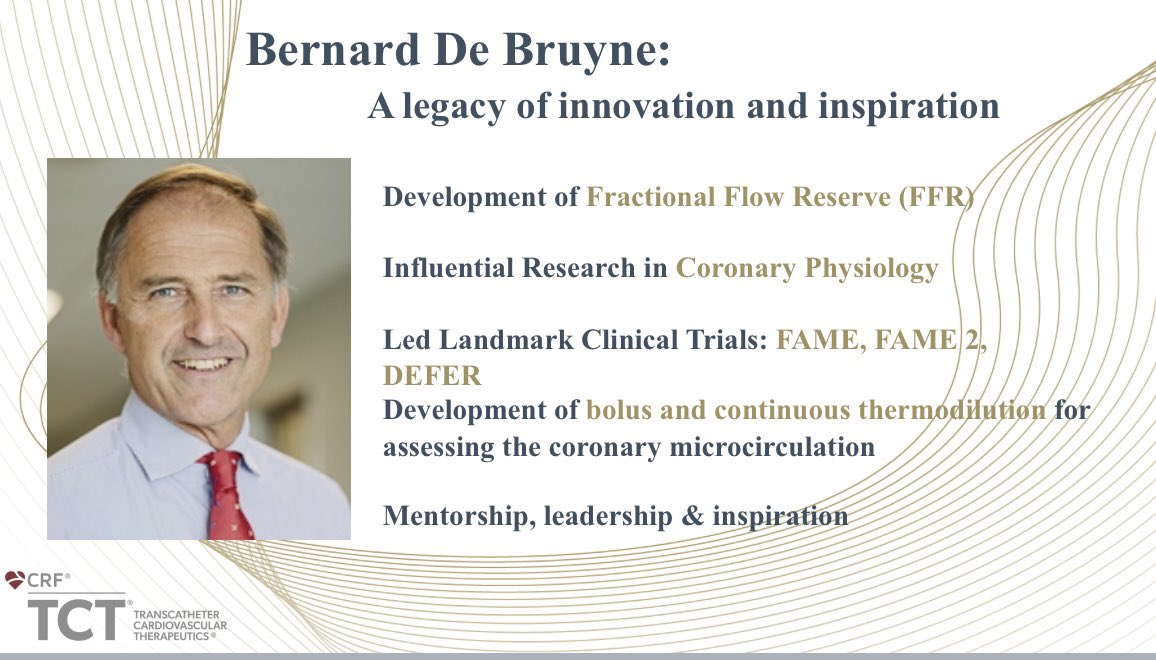
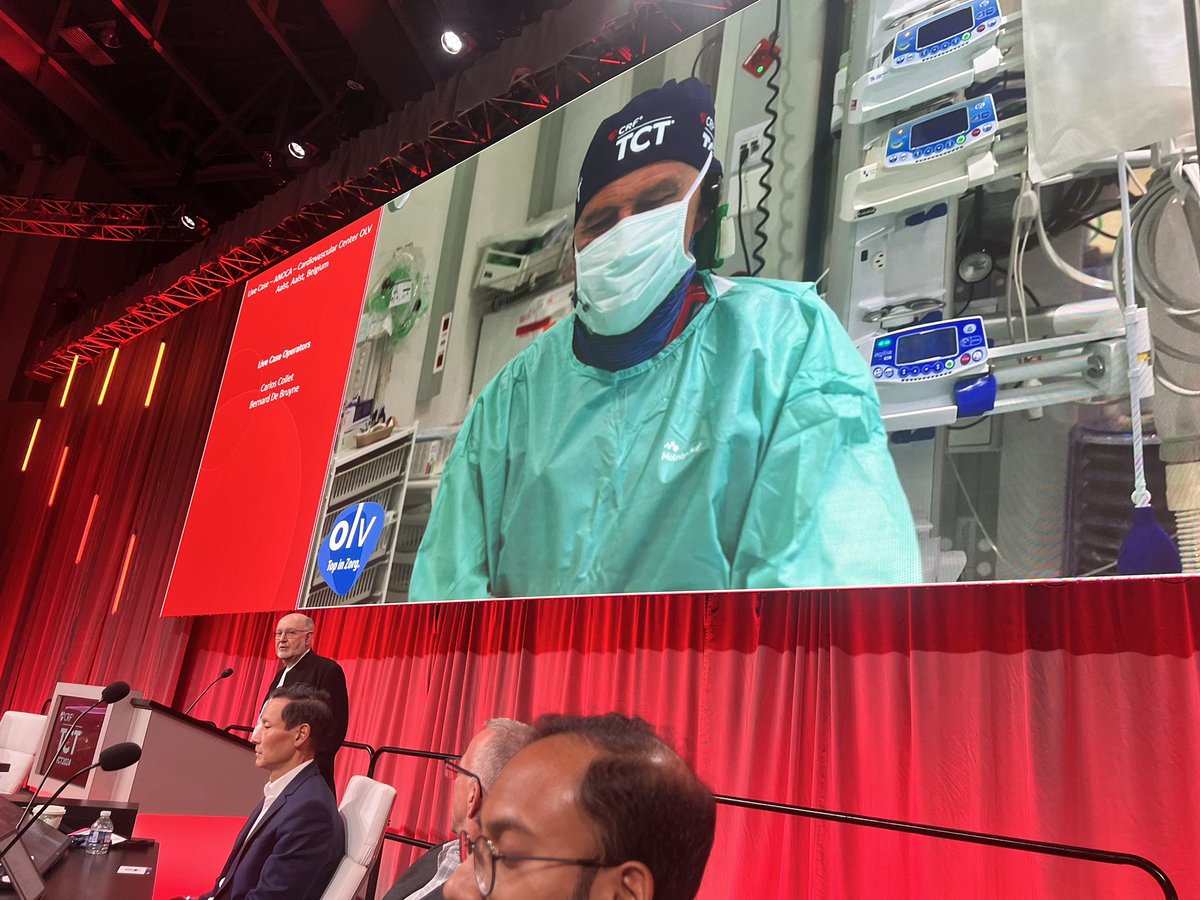
Honoring @BernardBruyne at #TCT2024 for his remarkable contributions and exceptional career, during his last live case from @CardioAalst.
A fitting tribute to a legacy of excellence and dedication in cardiovascular care.
🙏🏻@crfheart and Dr. Gary Mintz @PCRonline@MortonKern
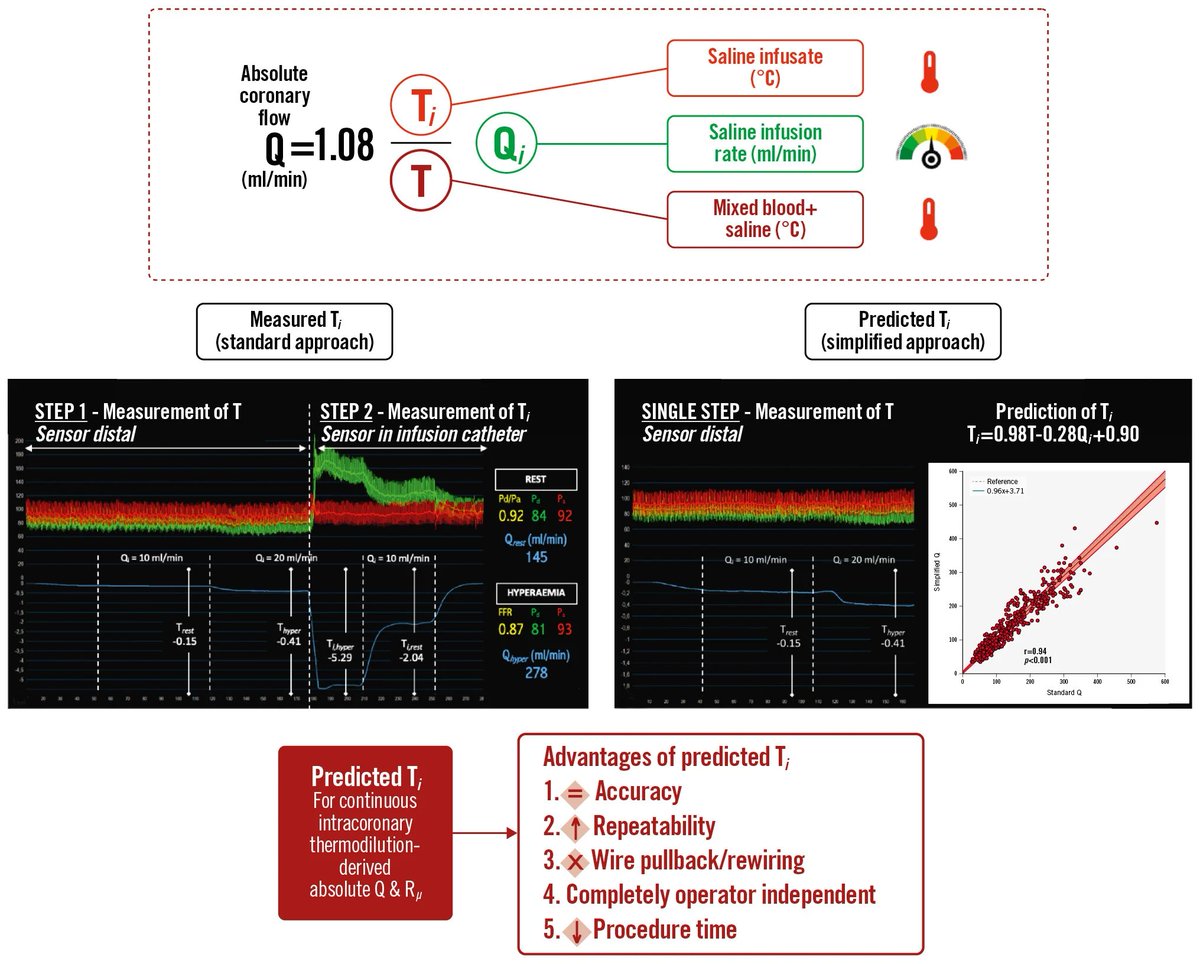
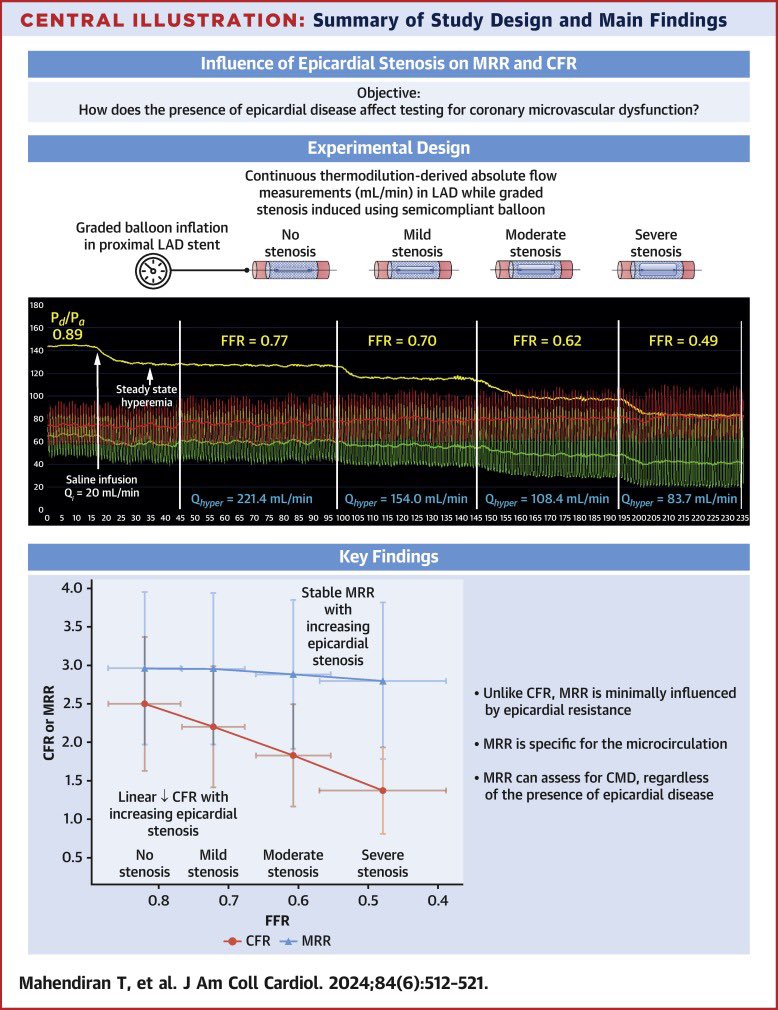
Continuous intracoronary thermodilution for the measurement of absolute coronary flow is now even easier - and completely operator independent. Read about our simplification in @EuroInterventio@BernardBruyne
https://t.co/sTZAY1sanq
🔥FFR with PPG for detecting vulnerable plaques @JACCJournals
💡The more severe and focal the disease, the higher the likelihood of a high-risk plaque.
🛟In diffuse disease (low PPG), the chance of a high-risk plaque drops significantly.
@PCRonline
https://t.co/OxRNlwzOPE
Major update to ESC-Guidelines for Chronic Coronary Syndrome (CCS) - emphasis on ANOCA/INOCA patient population and elevation of invasive functional assessment to 1B.
This represent a paradigm shift in the diagnosis and treatment of these patients.
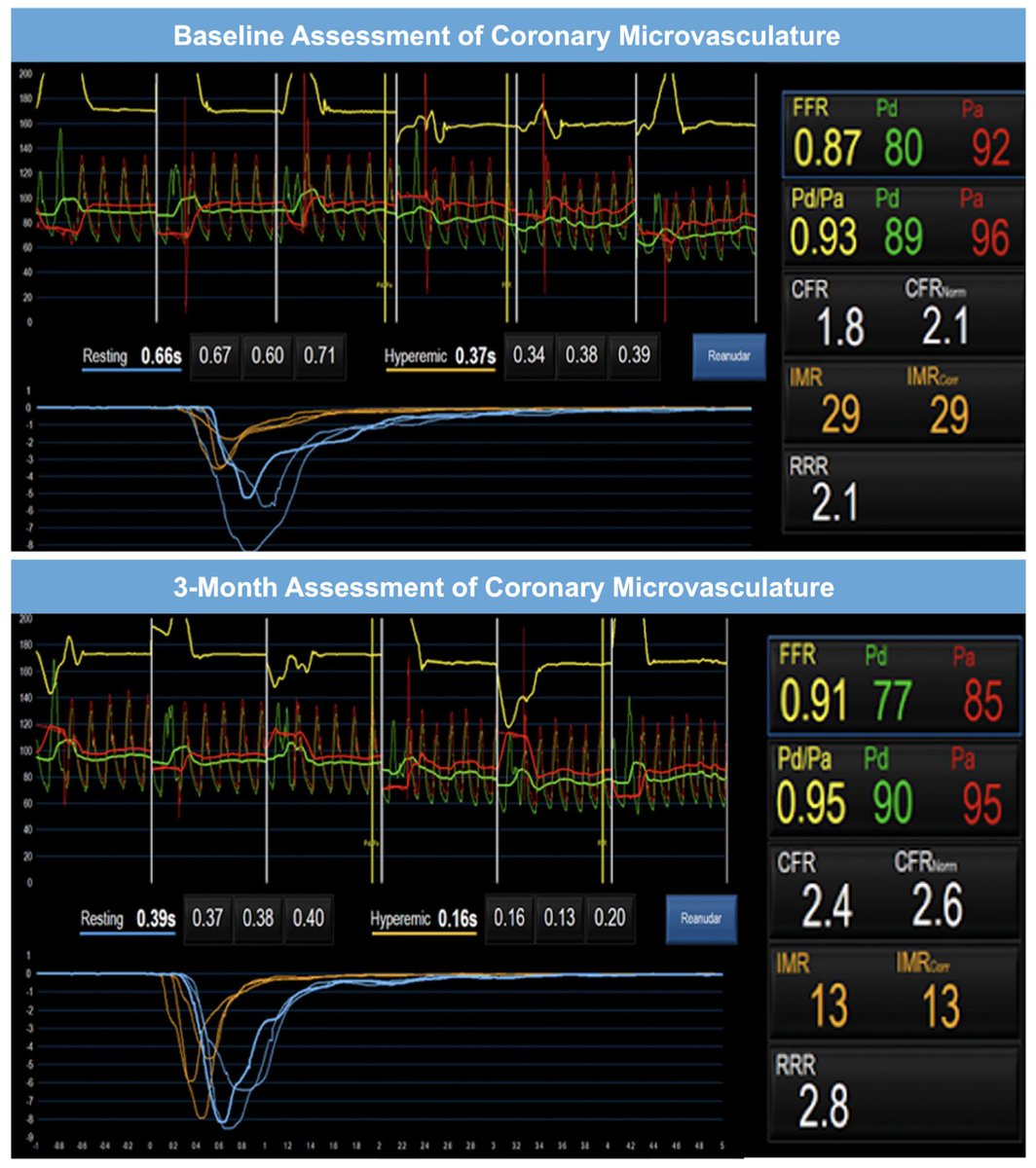
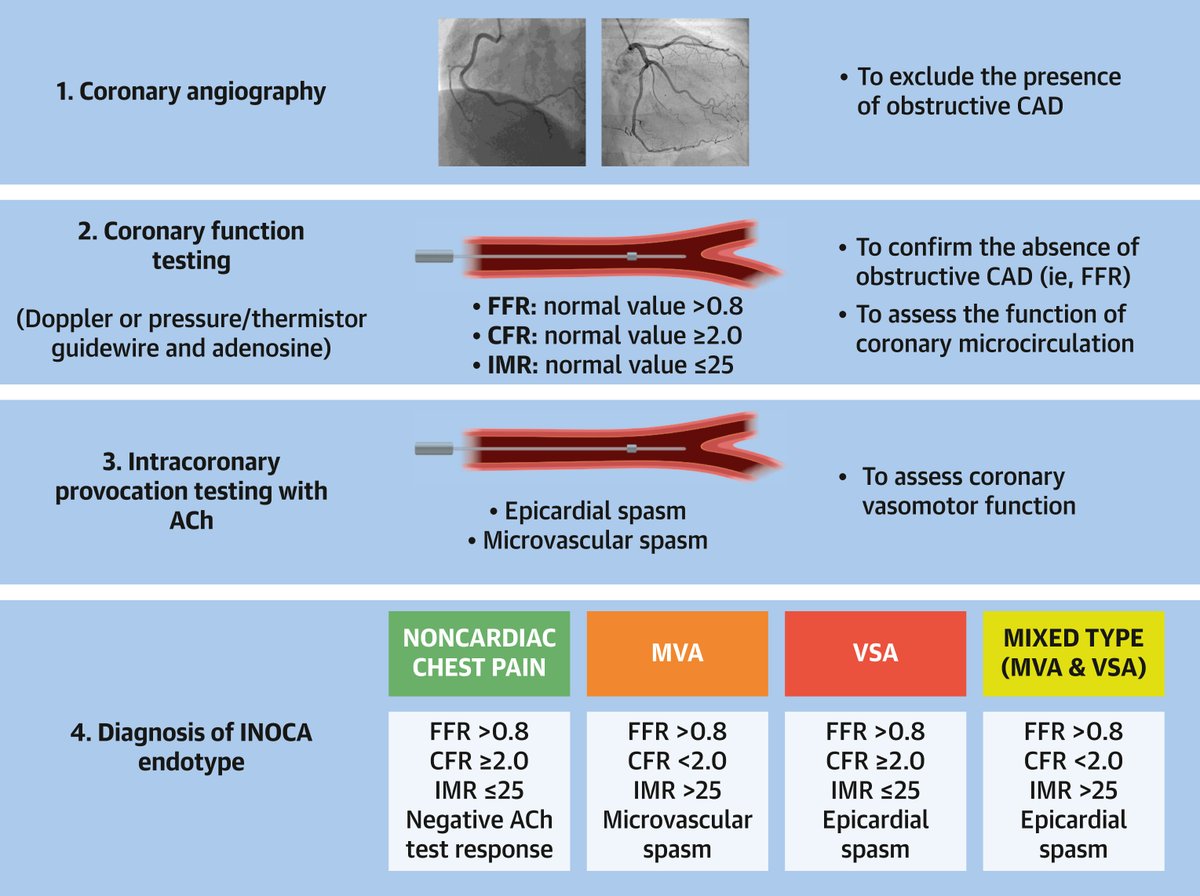
🆕 #JACC state-of-the-art review highlights a shift toward a more tailored approach in the management of stable angina by performing a precise endotype diagnosis in patients with INOCA.
👀 Read more: https://t.co/3f5dTEuGZ7
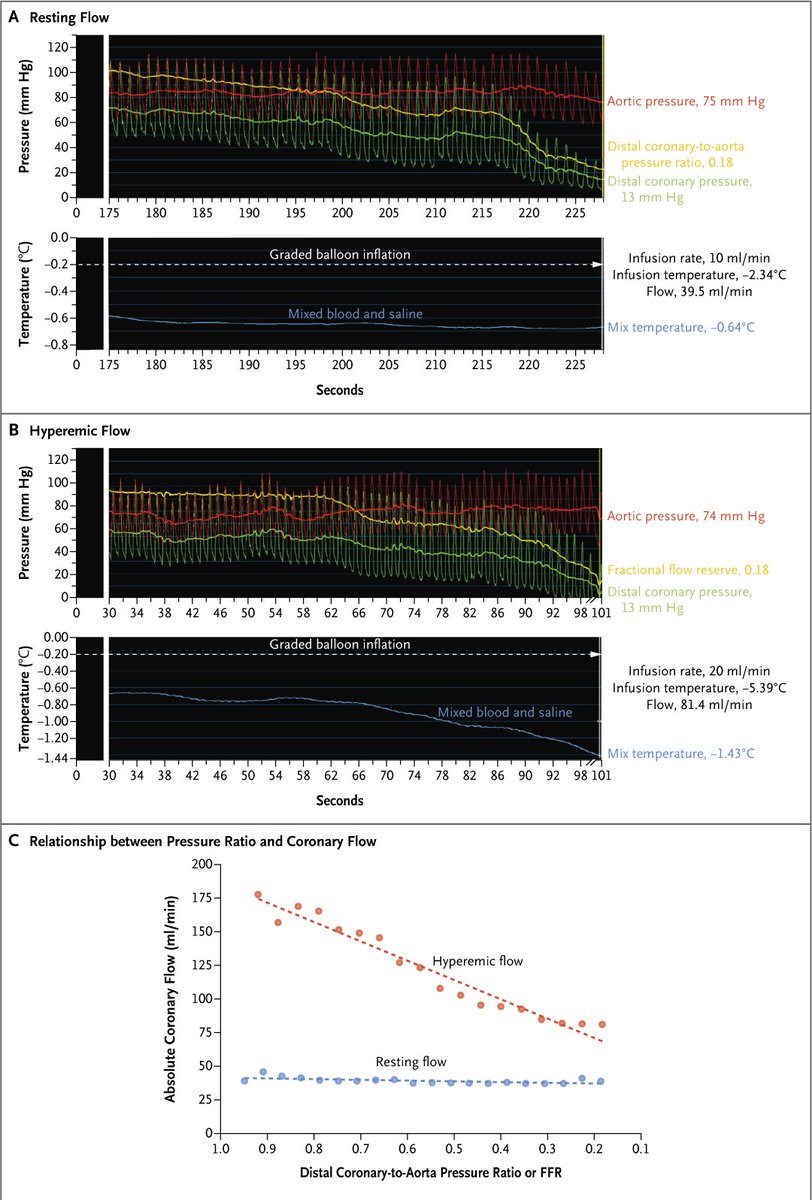
Fifty years since Gould's seminal work on coronary autoregulation, we are honoured to contribute with the first proof of coronary autoregulation in humans.
https://t.co/cqL9Ukb1He
This advances our understanding of coronary physiology significantly. @NEJM@BernardBruyne