Don’t miss your chance to read the new Cambridge element, Analogical Reasoning in Science by Francesco Nappo and Giovanni Valente! Free access available until 23 June at
https://t.co/Px0hfcxUvJ
#cambridgeelements#philosophy
@dylanwiliam@cbokhove@EducEndowFoundn I agree. I also think that specifying confidence levels, what works for whom, and contextual variability should be the standard for evidence-based edu (ie no need for alternative terms such as evidence-informed).
This paper from Harvard and MIT quietly answers the most important AI question nobody benchmarks properly:
Can LLMs actually discover science, or are they just good at talking about it?
The paper is called “Evaluating Large Language Models in Scientific Discovery”, and instead of asking models trivia questions, it tests something much harder:
Can models form hypotheses, design experiments, interpret results, and update beliefs like real scientists?
Here’s what the authors did differently 👇
• They evaluate LLMs across the full discovery loop hypothesis → experiment → observation → revision
• Tasks span biology, chemistry, and physics, not toy puzzles
• Models must work with incomplete data, noisy results, and false leads
• Success is measured by scientific progress, not fluency or confidence
What they found is sobering.
LLMs are decent at suggesting hypotheses, but brittle at everything that follows.
✓ They overfit to surface patterns
✓ They struggle to abandon bad hypotheses even when evidence contradicts them
✓ They confuse correlation for causation
✓ They hallucinate explanations when experiments fail
✓ They optimize for plausibility, not truth
Most striking result:
`High benchmark scores do not correlate with scientific discovery ability.`
Some top models that dominate standard reasoning tests completely fail when forced to run iterative experiments and update theories.
Why this matters:
Real science is not one-shot reasoning.
It’s feedback, failure, revision, and restraint.
LLMs today:
• Talk like scientists
• Write like scientists
• But don’t think like scientists yet
The paper’s core takeaway:
Scientific intelligence is not language intelligence.
It requires memory, hypothesis tracking, causal reasoning, and the ability to say “I was wrong.”
Until models can reliably do that, claims about “AI scientists” are mostly premature.
This paper doesn’t hype AI. It defines the gap we still need to close.
And that’s exactly why it’s important.
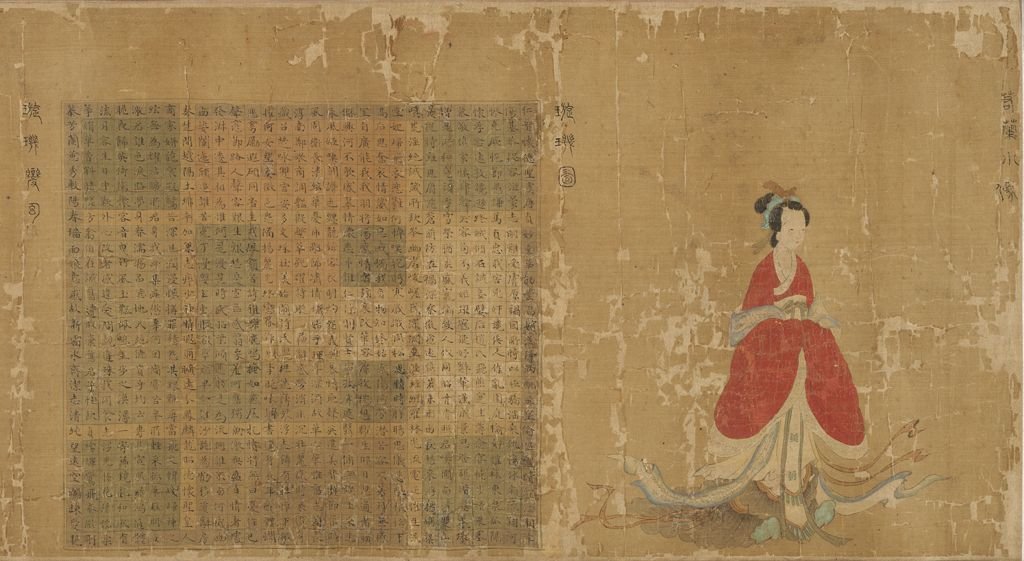
This strange square 👇 is undoubtedly the most extraordinary work of literature in human history. Yet, unfortunately, barely anyone in the West has ever heard of it.
There was this woman poet in 4th century China called Su Hui (蘇蕙), a child genius who had reportedly mastered Chinese characters by age 3.
At 21 years old, heartbroken by her husband who left her for another woman, she decided to encode her feelings in a structure so intricate, so beautiful, so intellectually staggering that it still baffles scholars to this day.
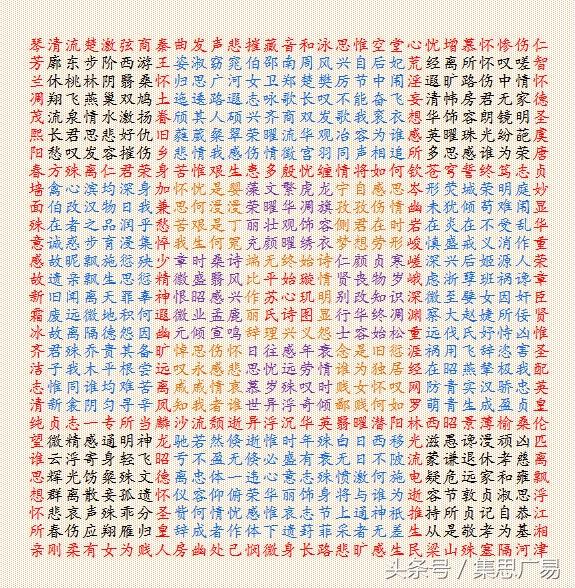
Came to be known as the Xuanji Tu (璇璣圖) - the "Star Gauge" or "Map of the Armillary Sphere" - it's a 29 by 29 grid of 841 characters that can produce over 4,000 different poems.
Read it forward. Read it backward. Read it horizontally, vertically, diagonally. Read it spiraling outward from the center. Read it in circles around the outer edge. Each path through the grid produces a different poem - all of them coherent, all of them beautiful, all of them rhyming, all of them expressing variations on the same themes of longing, betrayal, regret, and undying love.
The outer ring of 112 characters forms a single circular poem - believed to be both the first and longest of its kind ever written. The interior grid produces 2,848 different four-line poems of seven characters each. In addition, there are hundreds of other smaller and longer poems, depending on the reading method.
At the center a single character she left implied but unwritten: 心 (xin) - "heart." Later copyists would add it explicitly, but in Su Hui's original the meaning was even more beautiful: 4,000 poems, all orbiting the space where her heart used to be.
Take for instance the outer red grid of the Star Gauge. Starting from the top right corner and reading down, you get this seven-character quatrain:
仁智懷德聖虞唐,
貞志篤終誓穹蒼,
欽所感想妄淫荒,
心憂增慕懷慘傷。
In pinyin, it is:
Rén zhì huái dé shèng yú táng,
zhēnzhì dǔ zhōng shì qióng cāng,
qīn suǒ gǎnxiǎng wàng yín huāng,
xīn yōu zēng mù huái cǎn shāng.
Notice how it rhymes? táng / cāng / huāng / shāng
The rough translation in English is: "The benevolent and wise cherish virtue, like the sage-kings Yao and Shun, With steadfast will I swear to the heavens above, What I revere and feel - how could it be wanton or dissolute? My heart's sorrow grows, longing brings only grief."
Now read it from the bottom to the top and you get this entirely different seven-character quatrain:
傷慘懷慕增憂心,
荒淫妄想感所欽,
蒼穹誓終篤志貞,
唐虞聖德懷智仁。
The pinyin:
Shāng cǎn huái mù zēng yōu xīn,
huāngyín wàngxiǎng gǎn suǒ qīn,
cāngqióng shì zhōng dǔzhì zhēn,
táng yúshèngdé huái zhì rén.
It rhymes too: xīn and qīn, zhēn and rén
And the meaning is just as beautiful and coherent: "Grief and sorrow, longing fills my worried heart, Wanton and dissolute fantasies - is that what you revere? I swear to the heavens my constancy is true, May we embody the sage-kings' virtue, wisdom, and benevolence."
That's just 2 poems out of the over 4,000 you can construct from the Xuanji Tu!
At the very center of the grid, the 8 red characters wrapped around the central heart, she "signed" her poem with a hidden message:
詩圖璇玑,始平蘇氏。 "The poem-picture of the Armillary Sphere, by Su of Shiping."
Or reversed:
蘇氏詩圖,璇玑始平。 "Su's poem-picture - the Armillary Sphere begins in peace."
Many scholars, and even emperors, throughout Chinese history have been completely obsessed by Su Hui's puzzle.
For instance, in the Ming dynasty, a scholar named Kang Wanmin (康萬民) devoted his entire life to the poems (https://t.co/4exP9zpqbc), ending up documenting twelve different reading methods - forward, backward, diagonal, radiating, corner-to-corner, spiraling - and extracting 4,206 poems. His book on the subject ("Reading Methods for the Xuanji Tu Poems", 璇璣圖詩讀法) runs to hundreds of pages.
Empress Wu Zetian herself, the legendary woman emperor of the Tang dynasty, wrote a preface to the Xuanji Tu around 692 CE (https://t.co/yW7aR73MPc).
Incredibly, there's even far more complexity to the Xuanji Tu than just the poems:
- The name 璇玑 (Xuanji) - Armillary Sphere - is astronomical in meaning and the way the poems can be read mirrors the way celestial bodies orbit around a fixed center. It's a model of the heavens.
- Her original work, with the characters woven on silk brocade, was in five colors (red, black, blue/green, purple, and yellow) which correspond to the Five Elements (五行) - the foundational Chinese philosophical system that explains how the universe operates. So it's also a model of the entire cosmic order according to ancient Chinese philosophy.
- It's also of course deeply mathematical with this 29 x 29 perfect square grid, with sub-squares, lines and rectangles, and a structure which allows for symmetrical reading patterns in all directions
- Last but not least, the content of the poems themselves contain multiple registers. On top of expressing her personal grief and longing for her husband, it's also filled with accusations against the concubine (Zhao Yangtai) he left her for, reflections on politics (with many references to sage-kings) and philosophical reflections.
So the Star Gauge is simultaneously:
- A love letter (expressing personal longing)
- A legal brief (arguing her case against her rival)
- A cosmological model (structured like the heavens)
- A Five Element diagram (encoding the fundamental structure of the world according to ancient Chinese philosophy)
- A mathematical construction with perfect symmetry and precision
And yet, for all this complexity, we should not forget this was all ultimately in service of the simplest human message imaginable: a 21-year-old woman asking the love of her life "come back to me".
Her husband did, eventually. According to what empress Wu Zetian herself wrote in her preface to the Xuanji Tu, when he received Su's brocade he was so "moved by its supreme beauty" that he sent away his concubine and returned to his wife. As the story goes, they lived together until old age.
The heart at the center was filled after all.
“What makes the self is a whole big collection of memories and projects and plans and likes and dislikes. […] Now, what holds that all together? Nothing!”
—Daniel Dennett on the nature of personal identity
Ny kurs till våren: Evidensbaserad pedagogisk praktik!
Startar till våren. Perfekt för verksamma men också för övriga intresserade i skolfrågor
Ges på distans. Anmälan öppen till 15 oktober.
Hjälp mig gärna att sprida ordet!
Nu @jonasvlachos och resursfördelningsmodeller och hur förslag läggs i riksdagen och röstas ner innan val för att sedan läggas fram på nytt ett halvår innan nästa val och så går det runt och inget behöver nånsin beslutas
In 1972, John Conway posed an intriguing question about the Game of Life: could there exist a still life pattern that has no predecessor other than itself?
A configuration that could only arise from itself in the previous generation, never from any other arrangement of living and dead cells. Conway attached a $50 prize to this problem.
Fifty years later, in 2022, mathematicians Ilkka Törmä and Ville Salo finally provided an answer. They constructed a finite still life of 306 cells that indeed has the property Conway had wondered about - it has no predecessor other than itself.
Ett förslag till lösning: Antal publikationer och publikationslista får inte längre inkluderas i ansökningar om anställningar, meriteringar eller anslag. Ange enbart de 3 publikationer som tydligast visar ditt bidrag till fältet. Då försvinner incitamentet till artikelfabrikerna.
Okay I read the MIT "Your Brain on ChatGPT" preprint. (well, it's 140 pages long, so I read about 1/3 of it and skimmed the boring parts)
Here are my takeaways: 🧵
Jag håller helt med. Många saker är i princip rimliga, men läroplansreformen kommer troligen inte ge någon effekt på lärarnas situation eller elevernas lärande, om man inte fixar de strukturella faktorerna.
Jag önskar så att Susanne Nyström får rätt, men oj va långt det är kvar till att de saker hon skriver här blir verklighet. Det räcker inte med att göra upp med nittiotalets ideologiska syn på undervisning. Vi måste även ändra den ekonomiska styrningen. https://t.co/v8qKA9FIAE
Längtar du efter ett nytt inlägg i debatten om kognitionsvetenskap och lärarutbildning? Här kommer mitt bidrag i diskussionen!
#kognitionsvetenskap#lärarutbildning
https://t.co/dhU6Fpy30v
Längtar du efter ett nytt inlägg i debatten om kognitionsvetenskap och lärarutbildning? Här kommer mitt bidrag i diskussionen!
#kognitionsvetenskap#lärarutbildning
https://t.co/dhU6Fpy30v
Om tanken är att vi ska berätta för studenterna "A och B är evidensbaserade metoder, planera och genomför nu undervisning utifrån A och B", då har detta inget att göra med evidensbaserad praktik.
Första intryck från SOU "Ämneskunskaper och lärarskicklighet ":
Evidensbaserad praktik handlar om att fixa evidensbasen, och så fort den är fixad blir lärarnas arbete evidensbaserat.
Hela dimensionen om beslutsfattande är helt bortglömd. #lärarutbildning
Grundlärarstudenter med inriktning F-3 ska "visa fördjupad förmåga att planera och genomföra evidensbaserad läs-, skriv- och matematikundervisning". Vad innebär det?