CLA is dedicated to seeking customers who have the passion and mindset of practicing non-traditional ways with their farming operation and having fun with it.
Cut Fertilizer Costs Without Cutting Yield
Unlock tied-up nutrients already in your soil
Reduce NPK needs while driving stronger plant health and higher yield potential
Increase your ROI with BioCast Max
https://t.co/82dSFaPGut
Some absolutely gorgeous corn. Dryland Kansas. Lord I’m not asking for much but just enough moisture through the growing season to be able to see what this corn can do! 🔥
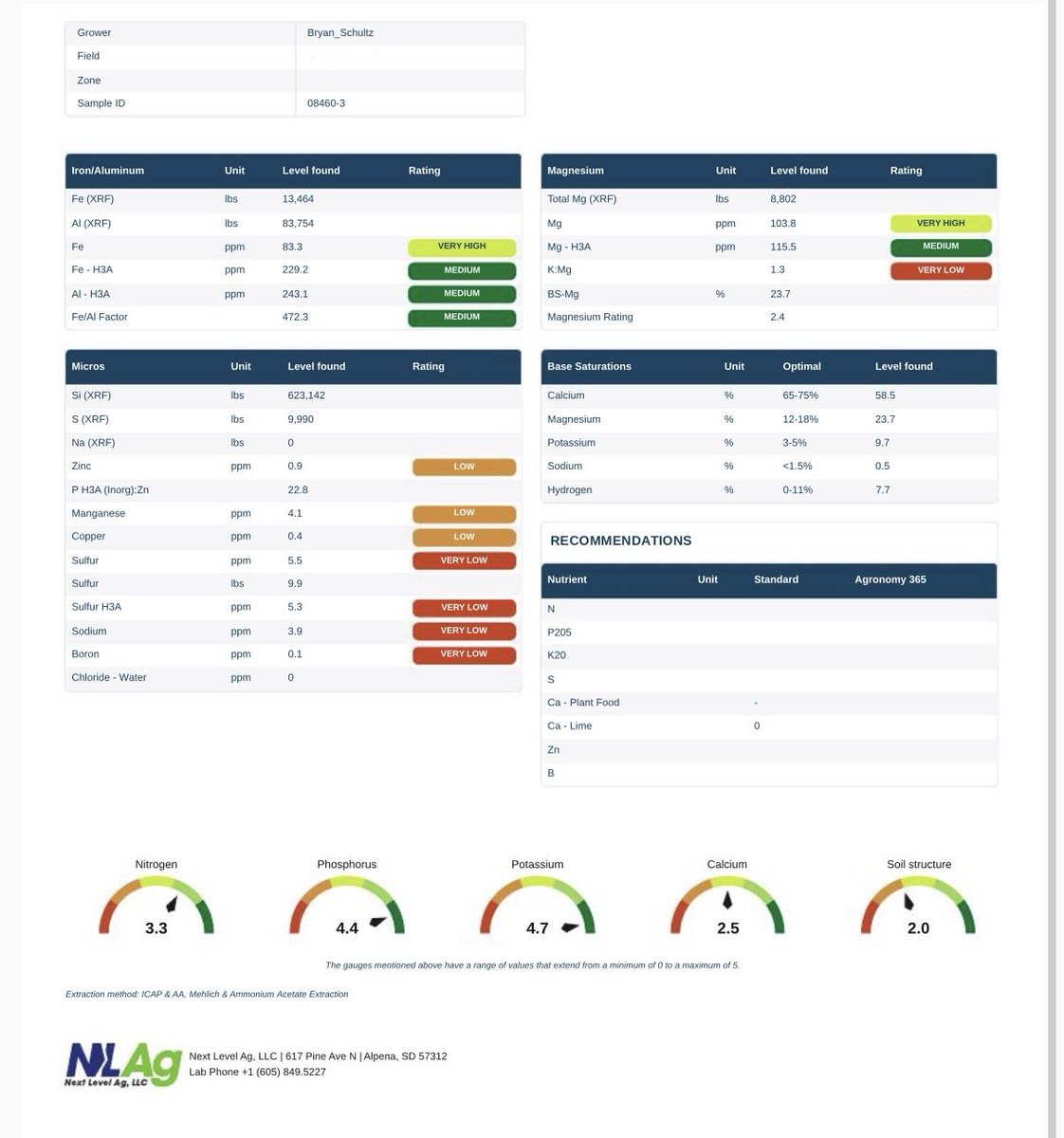
Soil sample from a native grass pasture in north central OK that, in my 40 years on earth, has not been fertilized.
You’re not mining your soil of nutrients, you’re mining your soil of biological life by over fertilizing.
@CorrectionAg@bw_fusion
Universities have proven growers get 20–40 cents back on every fertility dollar spent. Over-application isn't the answer. It makes the system worse. Jason Schley broke down the fix at Commodity Classic 2026.
30 minutes. Worth every one of them.
https://t.co/o6jUuyKYZo
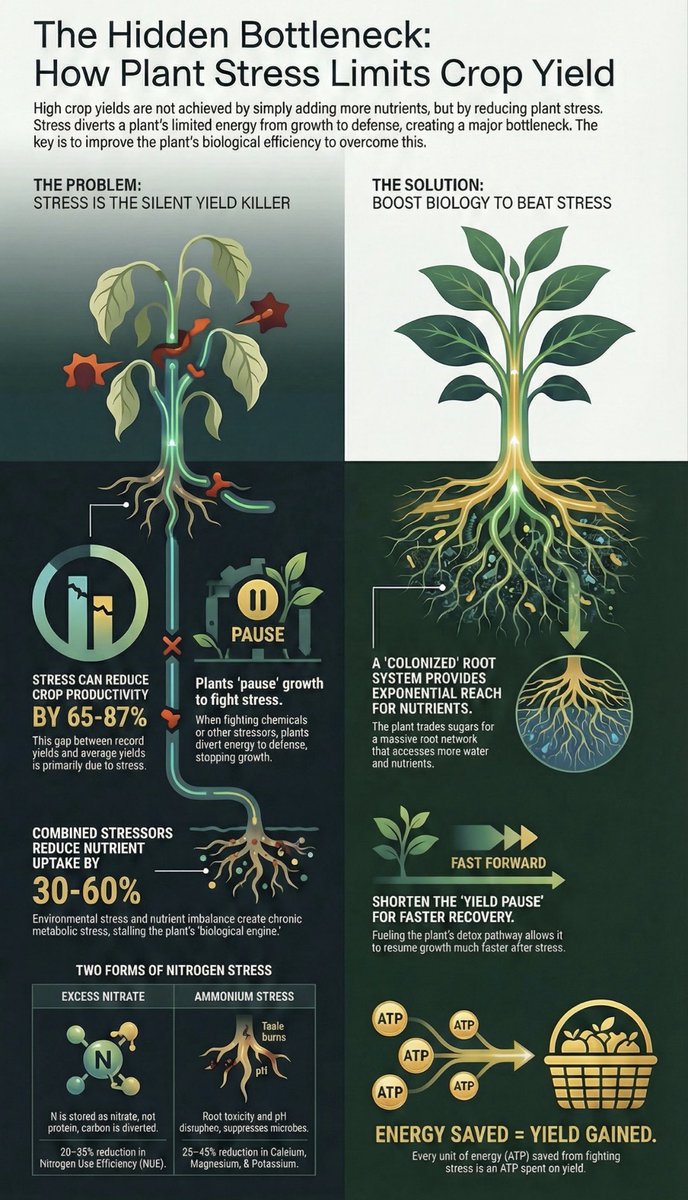
Stress in my opinion impacts nutrient uptake > then ppm levels do. I’ll take it a step further, you can pour the fertilizer on and if your plants don’t have extra energy to drive the exudation it won’t matter, as the plant still can’t eat efficiently.
I personally believe plant nutrition & stress management are tied together and need to be when creating a fertilizer plan/budget.
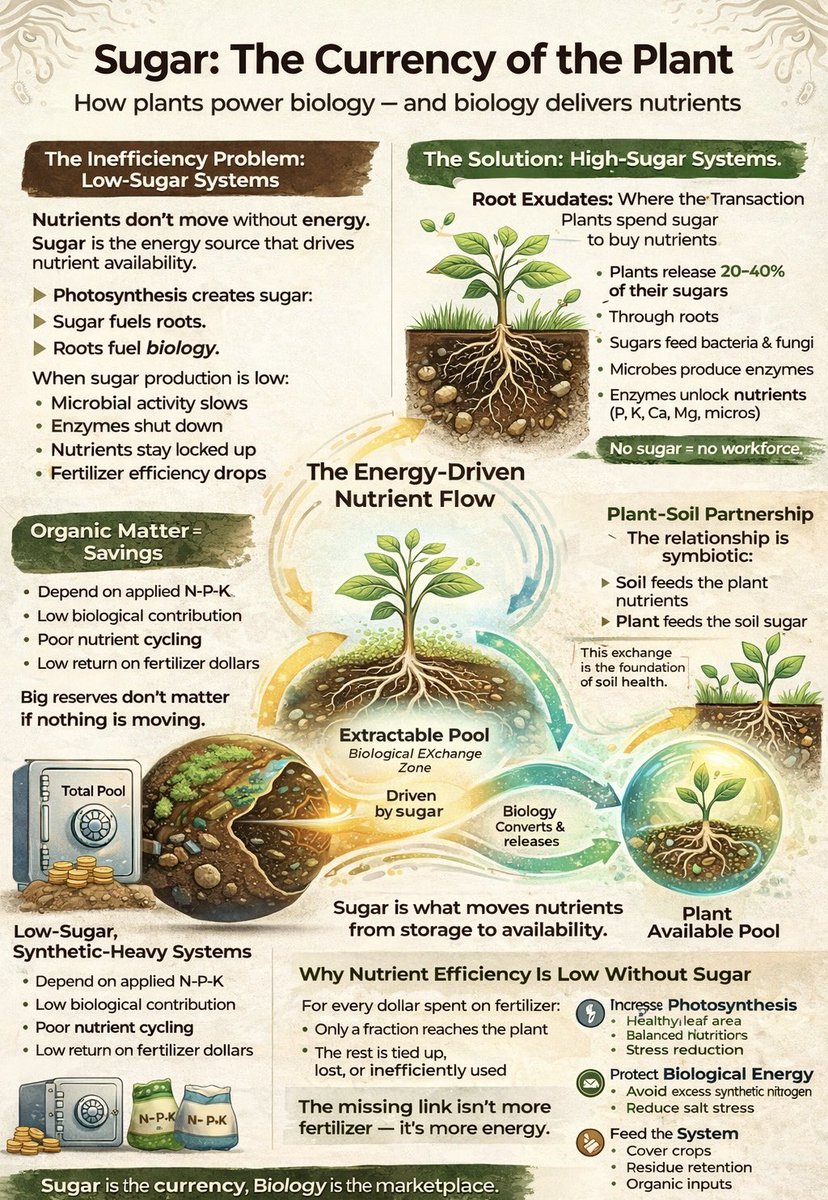
Most fields don’t suffer from a true nutrient shortage, they suffer from a nutrient access problem. Decades of fertilizer application have built large nutrient reserves in the soil, but without energy, those nutrients stay locked up. That energy starts with plant-created sugar, which is the currency of the plant. Through photosynthesis, plants produce sugar and spend it through their roots to power nutrient uptake and biological activity. In the soil, that energy shows up as WEOC (water-extractable organic carbon) — the currency of the soil that feeds microbes and drives nutrient exchange.
This message isn’t about eliminating fertilizer or ignoring crop removal. It’s about a systems approach that improves how nutrients cycle and move. When sugar production increases and WEOC is present, biology becomes active, enzymes function, and stored nutrients begin to flow into plant-available forms. That’s how fertilizer efficiency improves over time. Growers don’t simply decide to use less fertilizer, they EARN the right by building a system where nutrients are unlocked, not wasted, and every input works harder.
Get ahead of the 2026 growing season and join us on the road for an agronomy event you won't want to miss!
📍 January 26th: Noblesville, IN
📍 February 3rd: Sioux Falls, SD
📍 February 5th: Manhattan, KS
Get insights from agronomists, microbiologists, and farmers who are doing more with fewer inputs and seeing the payoff in a bigger ROI.
Register today! https://t.co/iZ8Zp5MQNH
Seems like someone else has been talking about this for quite some time…@MasonClaude5 ?? We know it. This guy knows it. But hey keep throwing money away at lime chasing that “perfect pH
Check out Travis Shaddox's video! #TikTok https://t.co/nOvVD5aibF
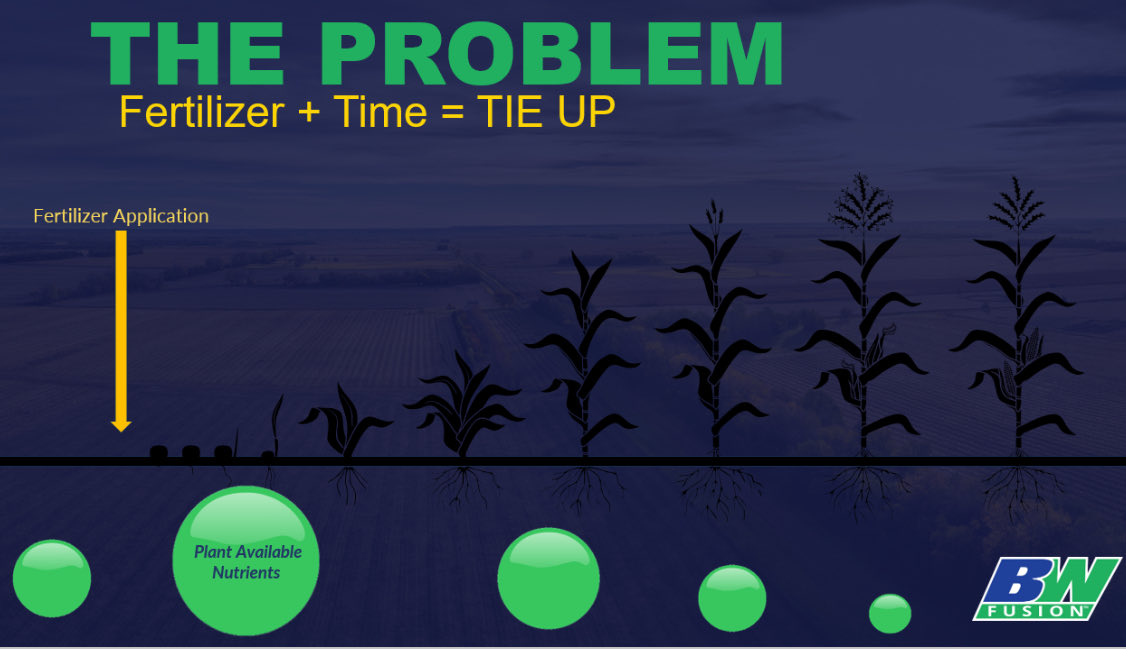
Fertilizer is guaranteed to work, season long availability is not
1/4 in rainfall will solubilize 150 lbs MAP+KCl at the wrong time if the crop isn’t growing
Only 20-50% of fertilizer gets in the plant, the rest is tied up
If you’re not managing mineralization you’re guessing
Probability matters more than potential
Farming is all about predictive outcomes. You need to increase your odds of a yield response to fertilizer
Fertilizer has a large opportunity to help and hurt profit
Hold your fertilizer to a higher standard and improve profit potential.
We apply $100 of phosphorus—so why can’t the crop get $100 back?
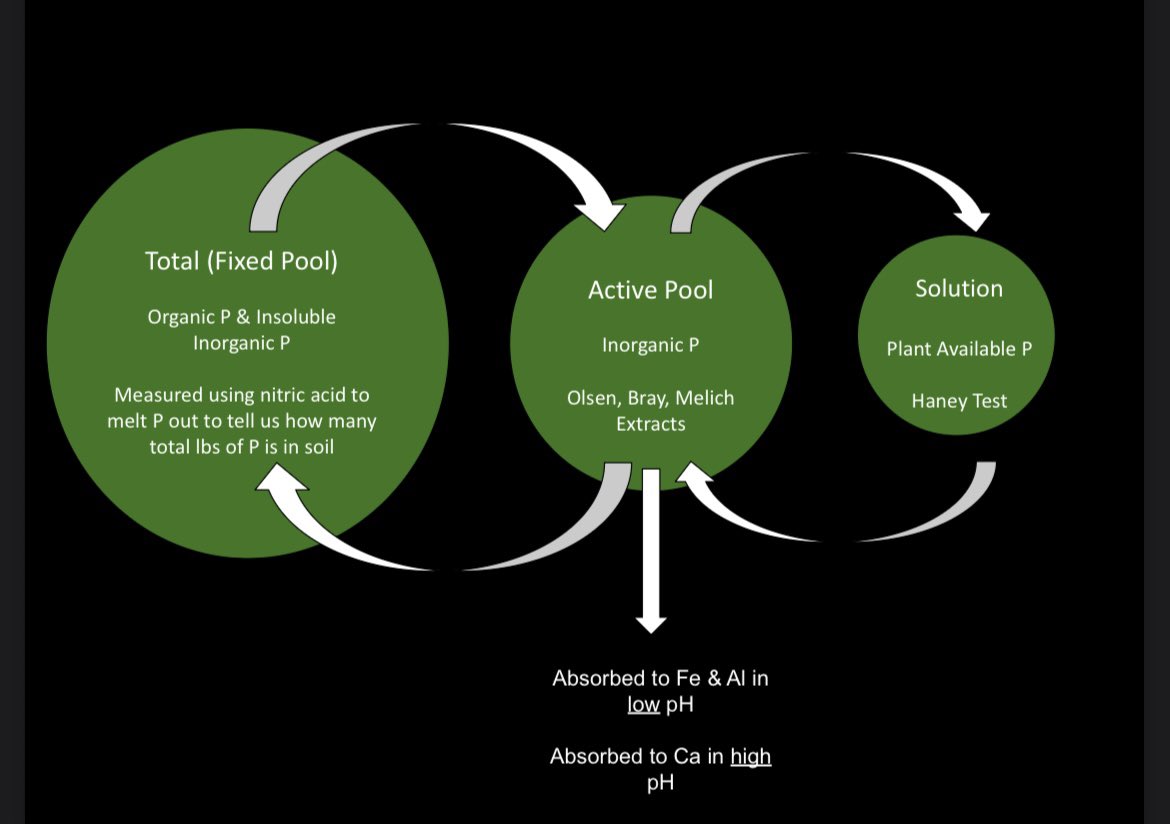
Because phosphorus is constantly cycling, not sitting “available.” Soil P exists in three pools: total P (large reserves that are mostly insoluble or organic), active P (what Bray and Olsen soil tests measure), and solution P (the very small fraction roots can actually take up). Even active P is often fixed—tied to iron and aluminum in low-pH soils or calcium in high-pH soils… making it temporarily unavailable. The movement between these pools happens every minute of the day and goes both directions. What drives that movement is soil biology. Microbes produce enzymes that mineralize organic P and release fixed P back into plant-available forms. Healthy plants fuel this system by feeding microbes sugars through root exudates. When plants are stressed or late in the season, exudation slows, microbes back off, and phosphorus refixes. True P efficiency comes from managing the cycle, not just the rate.
Every biological and chemical reaction in your soil traces back to one thing: carbon. Join the conversation with
@sean_nettleton, @JasonSchley, and @Bkitch1Bodie on how WEOC shapes stress, mineralization, nitrogen management, and yield potential. 👇
https://t.co/ibf7WxK7tf
Thanks John, look forward to watching the you tube video you provided.
It’s interesting that the majority think along the lines of more is always better but very very few people actually audit any part of the fertilizer program, and if they do we tend to look at the low end and assume the high rates are the best.
This is not talked about enough in ag production. I feel if people know the truth we will focus on the things that can make an impact. The subject line is much deeper than what I recorded but want to get people to think outside the box without confusion. These are facts. Dig deeper, we can’t afford not to focus on carbon. If you want to call me out go ahead, but the industry isn’t telling the truth to be efficient in what we all risk it all for. And this is the truth.
Some food for thought… what happens when you reached a “magical” PPM value on a soil test?! The grower in this clip said he had multiple record crops with a low soil test… don’t think availability was the issue. Maybe the method of measure is…
I would agree with this comment, N deficiency limits the potential gain in soil carbon, it also limits a system from creating a healthy plant, so it’s a double whammy on WEOC.
***Microbes need N. They don’t like excessive N. most farms have excessive N at a minimum for at least an extended period of time.
Lower N rates favor fungal-dominated communities, which efficiently incorporate C into stable WEOC fractions. High N shifts to bacteria, which respire more C as CO₂, reducing WEOC by 10-20%.
High N accelerates microbial breakdown of labile C, depleting WEOC as microbes mineralize organic matter faster for energy. Lower N limits this “priming effect,” preserving WEOC. A 2019 study in Midwest maize systems showed N fertilization suppressed SOM mineralization by 13-21% at optimal rates but increased overall C turnover at excess levels, leading to 10-15% lower WEOC in high-N plots.
This is from papers, our data which is much deeper and has more years to it, shows high N usage has even greater destruction of Weoc than the above papers. I only respond as I think what you shared is good, but it doesn’t tell the story. It only captures the eye of N is good for soil carbon.
I don’t know which company will best lead us into this biological future, but the science behind the premise/claims is rock solid. At some point, this will become the future.